
In search of a hero…
A weekend in Northern France following the final story of Captain Patrick Garstin. Why?
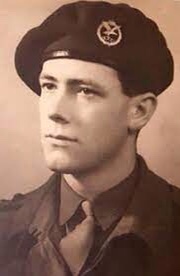
Capt. Garstin is a distant relative of the de Garstons, Charlie’s 4th cousin, twice removed to be precise and the recently published book ‘SAS Band of Brothers’ by Damien Lewis, brought Patrick’s remarkable story to our attention. Also, our son has a fascination with World War II history and is a member of the ‘Monty’s Men’ living history group.
Garstin to de Garston?
Garstin was the name all my husband’s ancestors carried until 1864. Charlie’s Great x 3 Grandfather was born in Ceylon, now Sri Lanka. The family were Irish of English extraction. The first recorded Garstin, was Capt. Symon Garstin, likely a Protestant Englishman, who may have been part of Cromwell’s forces that re conquered Ireland around 1650. The Garstin sons were either clergy in the Church of Ireland or in the Armed Forces. Rev. Norman Garstin, was Chaplain to Duke of Richmond when he was Lord Lieutenant of Ireland from 1807. In 1821 the Rev Norman became 2nd Colonial Chaplain in Ceylon, where his 3rd son, Norman was born.
Norman followed in his father’s footsteps and became Colonial Chaplain in Ceylon. He married Marianne Wilson in Bath, returned to Ceylon where they had 3 of their 4 children. Around 1852 the family returned to Europe, living first in France and then in the Channel Islands where there had their 4th child. By 1864 family life had gone horribly wrong, with the Rev Norman being filed for divorce by Marianne on the account of his adultery. The case was probably scandalous, the Reverend, a laundress and a claim of kidnap, as the Rev would not hand over custody of the youngest child. After the divorce, Marianne emigrated to the US with her children and the Rev Norman placed an ad in The Times, declaring he would be now known as de Garston, returning to the ancient family name. He then returned to France, married Mary Lockley (not the laundress) and had 2 further children, one of which was Charlie’s Great, Great Grandfather. The Rev Norman died in Lille in 1877. So that’s how Garstin became de Garston.
Our hero’s story…
So back to our search for a hero. Patrick Garstin enlisted in the Royal Ulster Rifles in 1939 and was awarded the Military Cross in 1940 for action at the Battle of Louvain and was injured in rear guard action at Dunkirk. By Christmas 1940 he was in East Africa with the Northern Rhodesia regiment and was repatriated to the U.K. for medical reasons. He then volunteered for airborne operations after receiving Parachutist’s Wings and by 1943 was serving with the Long Range Desert Group in Tunisia and Algeria but again ongoing medical problems meant he was returned to England. The medical problems were due to wounds suffered at Dunkirk and acute appendicitis. On this basis he was due to be discharged on medical grounds but managed to avoid this and volunteered for the 1st Special Air Service Regiment, Army Air Corps, ‘D’ Squadron headed up by Lieutenant Colonel ‘Paddy’ Mayne. Part of ‘Paddy’ Mayne’s story is currently being dramatised in the BBC series, SAS – Rogue Heroes.
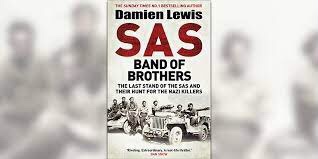
Garstin and his ‘stick’ (patrol) were parachuted into France to disrupt and cause general chaos whilst the Allies landed on the D-Day beaches. Their exploits should be legendary, blowing up trains, ammo dumps, airfields and making one of the most daring escapes in history, however on their final mission, they were betrayed. Captured and taken to Paris where they were tortured by the Gestapo, they were then driven to Noailles near Beauvais. From there into the forest where they faced execution on Hitler’s own orders. Garstin was barely able to walk due to bullet wounds sustained during their capture, and the subsequent torture, but told those fit enough to make a run for it on his shout. As the firing squad prepared to open fire, Garstin shouted ‘Now’ and those that could ran for it. Miraculously 2 men escaped, managed to make it back to England and set in train one of the most extraordinary Nazi-hunting operations. If you want to find out more, then please read Damien Lewis’ book, ‘SAS – Band of Brothers, The last stand of the SAS and their hunt for the Nazi killers.’
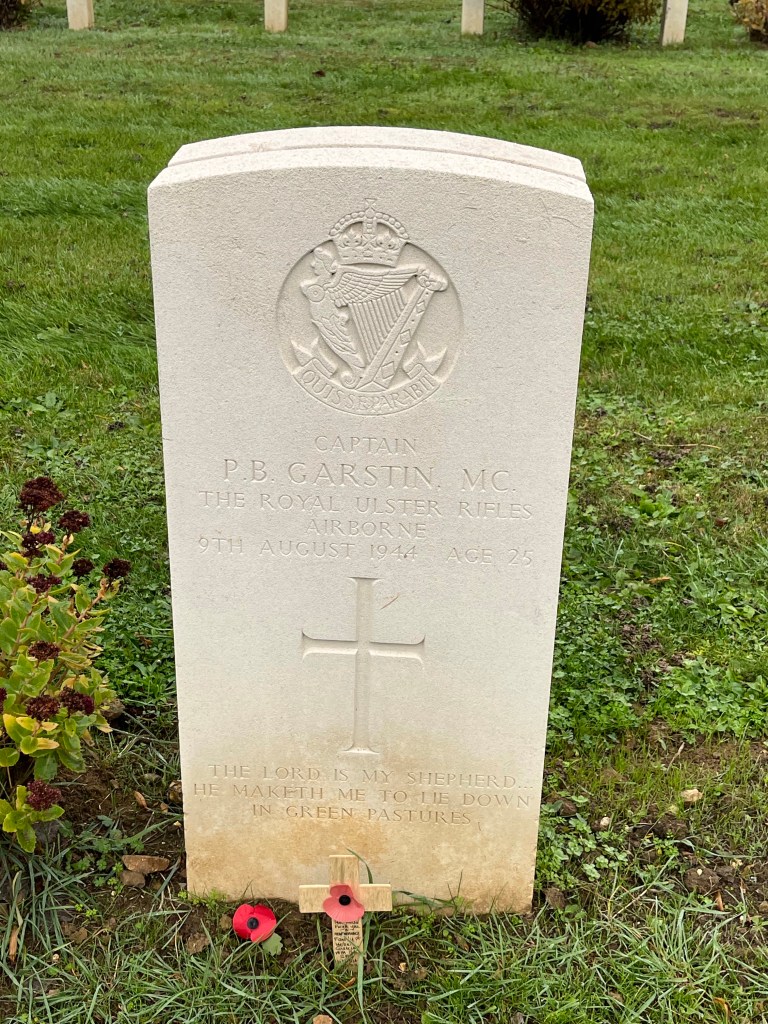
So that brings us to the present day and our journey to Capt Patrick’s final resting place at the military cemetery in Beauvais, finding the memorial at the edge of the forest where the murder took place and the Chateau where they were held just before their murder.
The military cemetery in Beauvais was our first stop, where we located the graves of Garstin and his ‘stick. After a few moments of silent contemplation we placed a poppy on the grave and then left to find the woods where the patrol faced the firing squad and the memorial.
Where we found ourselves in the firing line…
The day had started in thick fog and as the afternoon progressed, the sun broke through intermittently, meaning the fog was patchy. One minute driving in warm sunshine, the next in foggy gloom. This all added to the sombre atmosphere. From the book and other sources, we located the woods and decided to walk through them to get a sense of the history and find the memorial but the wood was surrounded by temporary signs ‘CHASSE EN COURS’ – Hunt in progress ….
We stopped in a small hamlet, were we accosted an elderly woman and explained that we were looking for the memorial to the SAS men murdered by the Gestapo, she directed us to the Mayor’s house. Here we spoke with the Mayor’s elderly wife, via my very broken French and Google translate we learnt the Mayor was out but would be back later if we wanted to return. The hamlet had a track that led to the wood and as there were no ‘chasse’ signs, found a track and walked along the edge of a large field skirting the woods. We could hear gunfire way over to our left, so we carried on and a few moments later there was crashing of branches and I saw the white tail of a deer skipping out of sight.
The wood was crisscrossed with wide tracks, and our track led straight into the wood, where just a few meters in, we came across the chasseurs. Each on his stand, dressed in bright orange to stand out in the green wood. Luckily Charlie and Oliver were wearing bright clothes, I was wearing my Barbour. Oliver approached one of the huntsman, who didn’t speak any English, but who directed Oliver to a man further along the line. The hunter spoke a little English and again with the help of Google translate, Oliver ascertained that he didn’t know where the memorial was but we were in a very dangerous place and should go back the way we came, as there were hunters spread throughout the wood line, waiting for the deer to come through. Apart from some distant shots and sounding of a horn, we didn’t see any more hunters or deer until we were back at our motorhome.
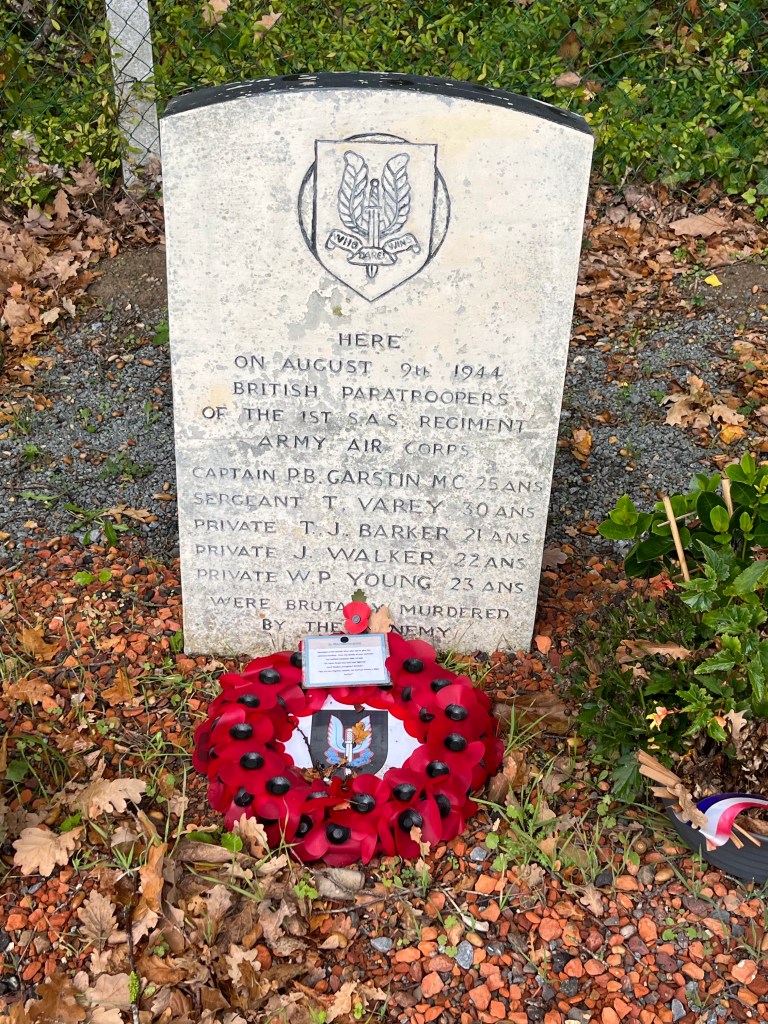
We decided to drive around the lanes that encircled and crossed the wood and look for the Chateau where the men were held before their last journey. As we popped in and out of the fog, 3 hunters stood out in the murk. They were returning to their cars parked at a large junction and there just behind them I caught a glimpse of a memorial stone, set back from the crossroads, at the edge of the wood. We had found the memorial. The memorial had 3 tributes laid at it. A poppy wreath left in October by a relative of one of those remembered, and 2 floral tributes laid by local veteran associations. After laying a single poppy and a few moments contemplation, the fog descended again and we set off again to find the Chateau. Oliver marked the location of the memorial on Google maps, so if you would like to visit, then type Sabu-70 Memorial into Google map search and the location is marked.
The chateau was a Luftwaffe HQ and it was here that Garstin’s patrol was held before their drive to the woods to face their execution.

Reflection – where our story ends…
Captain Patrick Garstin was 25, Sergeant Varey was 30, Private Barker was 21, Private Walker was 22 and Private Young was 23. Corporal Vaculik and Corporal Jones escaped the execution and got back to England. Trooper Castelo escaped capture at their last drop and fought with the Resistance until the end of the war. Lieutenant Wiehe was shot in the spine on capture and was kept in the hospital in Paris post interrogation until liberation. He was only saved from transfer to Beauvais by nurses who hid him. Corporal Lutton was shot and killed on the final drop into France. Troopers Morrison and Norman landed outside the drop zone, escaped capture and made it back to Allied lines.
Please read Damien Lewis’ book if you would like to find out how justice was fought for and found for these men.
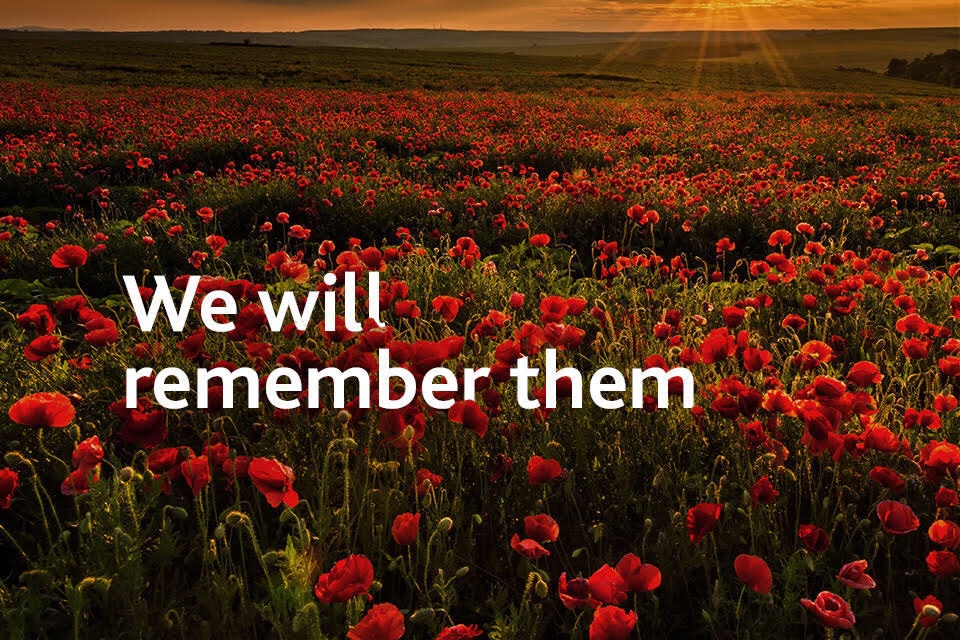
We will be on the road at 11 am on Sunday but we will remember them.
 RoundandAbout