
79th Anniversary – D-Day Landings

5th June
We’ve headed to Normandy to experience what is now called the D-Day Festival for a few days. We are pitched at a very lovely campsite just across from the Utah landing sector and site is full of military re-enactors and their vehicles. We arrived late in the afternoon in the sunshine that was accompanied by the same fierce wind with a real chill to it that we’ve experienced at home over the past couple of weeks. There was haze in the air were sand and dust were swirling around. Sitting lee side of the motorhome was lovely but out in the open, it was cutting.
We were delighted that as we were setting up, we heard a distinct sound of heavy aircraft, we looked up but couldn’t see anything, our mistake was to look up! Flying at around 300 ft along the coast and directly overhead our pitch, lumbered 4 x 4 engine turbo prop, heavy aircraft, similar to the Dakota/C47!
As part of the Festival, there were meant to be a number of parachute drops, but due to the winds, I don’t think any have taken place, so the planes are doing fly pasts up and down the coastline, whichis very exciting.
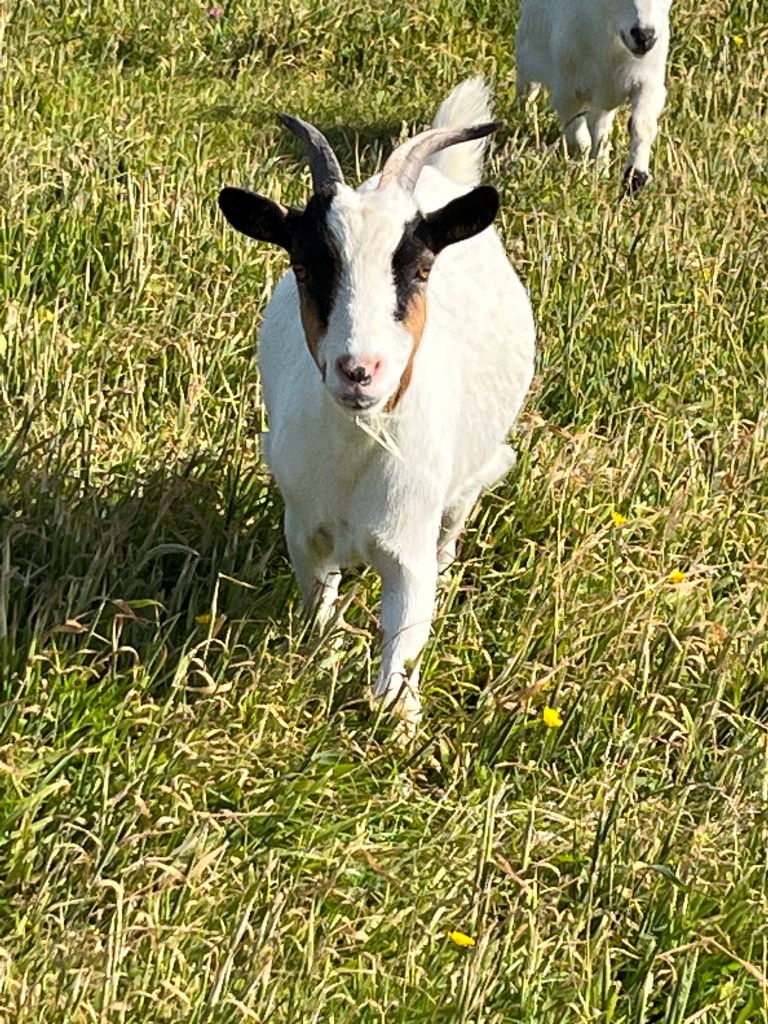
The next best thing about this campsite is that we are parked next to goats! The site has little farm and our pitch overlooks the goats paddock and I love goats.
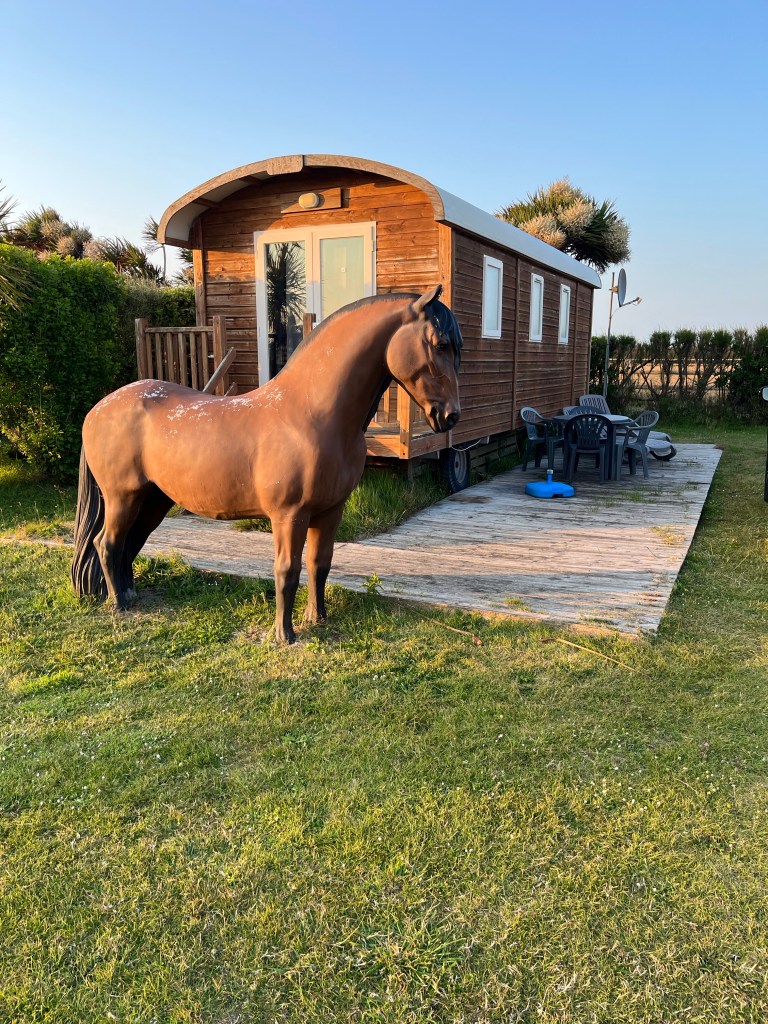
The campsite has pitches for tents and motorhomes, but also static chalets, some of which are Western-themed that come complete with your own horse!
On 6th June, long after the first parachute drop and the first landing craft had hit the beaches in 1944, we had finally woken up to a very chilly, (13 degrees) grey and breezy day. By the time Charlie took a work Zoom call and we had organised ourselves, we didn’t leave the campsite until 11 ish. But we needn’t have worried as there was plenty to see above us.
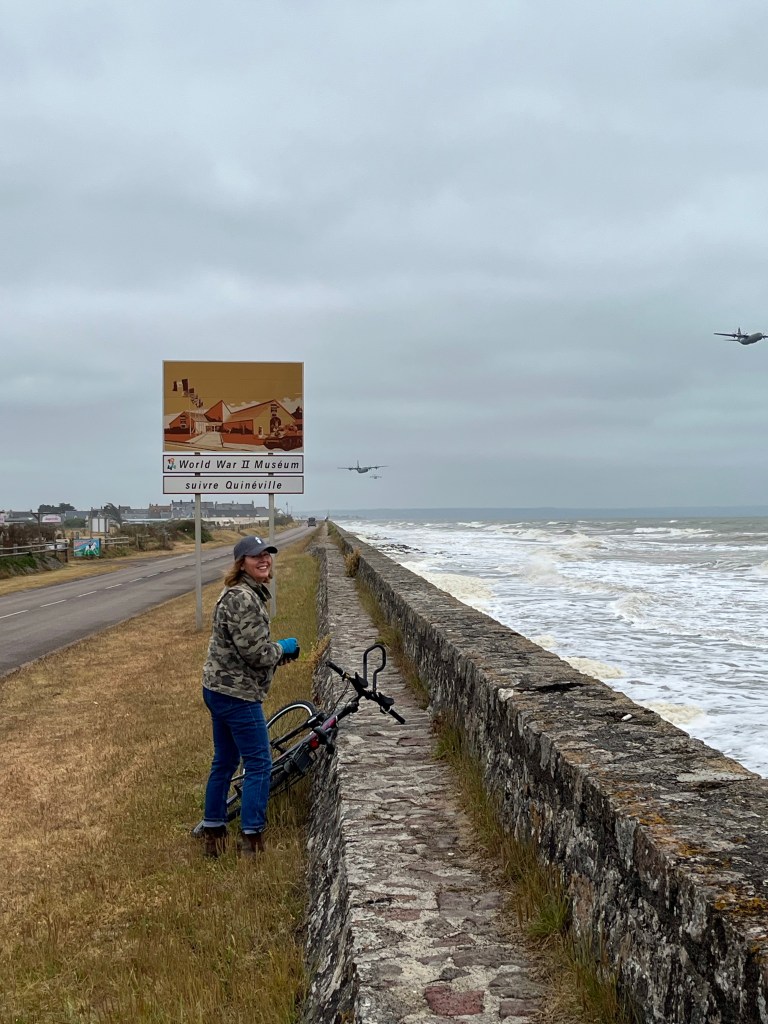
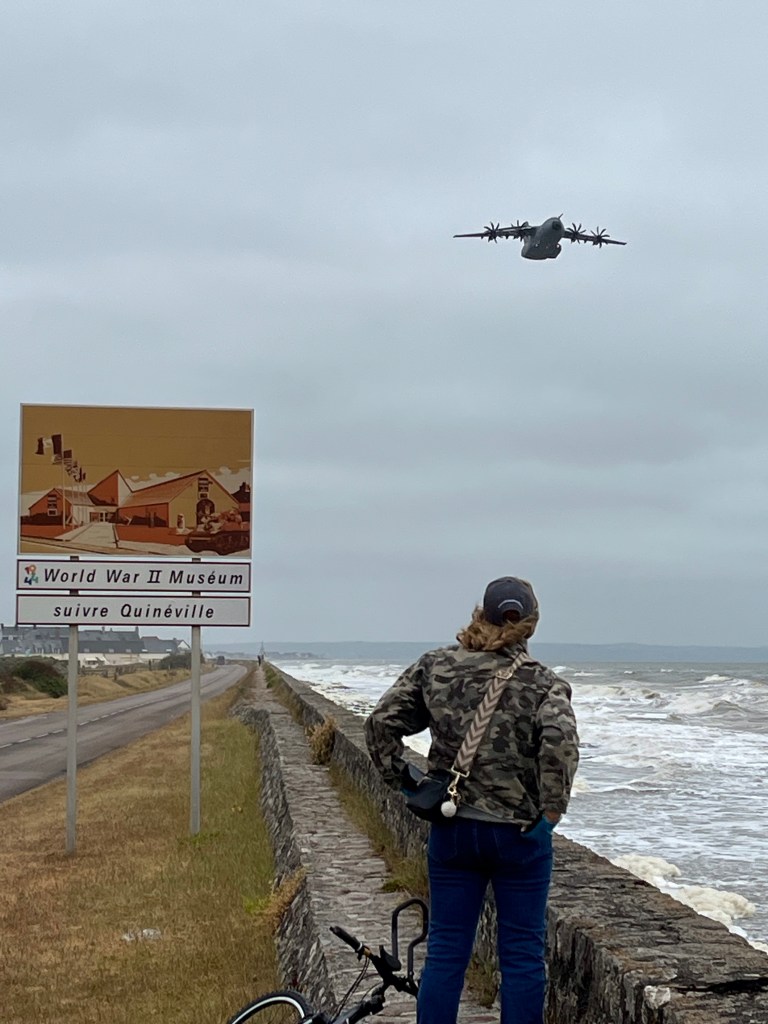
We had only cycled for few mins along the coast road when we saw the planes coming straight towards us, very low, it was thrilling!
From our campsite we cycled around 10k into Sainte Mere Eglise. Sainte Mere Eglise was at an important crossroads in the fight to control road and rail links to Cherbourg. The paratroopers of the 82nd Airborne who were parachuted behind enemy lines during the early hours of 6th June in order to take Sainte Mere. However, the paratroopers’ drops did not go to plan. Many landed in the marshes that had been deliberately flooded by the Germans, either drowning or were bogged down. Many were scattered across the Normandy countryside and had to regroup and/make their way across hostile country to their targets.
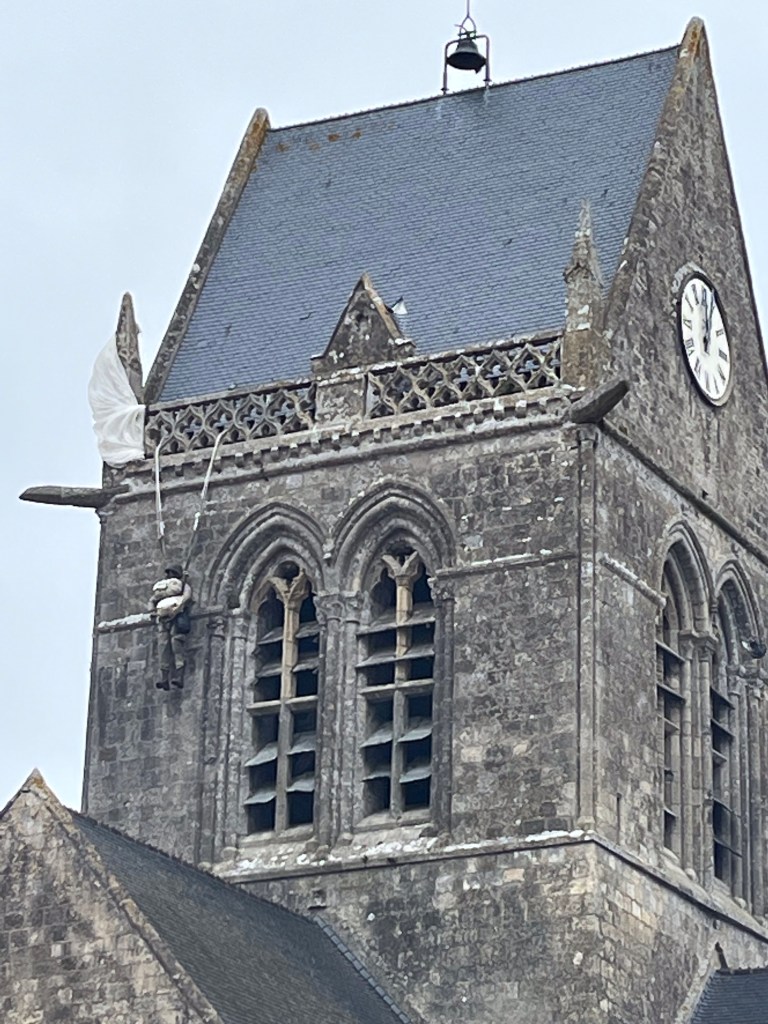
In Sainte Mere, a house in the centre of town caught fire in early hours, the townspeople were allowed to assist in putting out the fire under the eyes of the German soldiers stationed in the town. Mistakenly the paratroopers were dropped right above the town and as they drifted into view were either shot or captured by the Germans, one paratrooper drooped straight into the fire whilst another, John Steele, onto the church tower where his parachute became entangled and he ended up hanging precariously above the town. Although he played dead for a couple of hours he was eventually cutdown and taken prisoner but later escaped. The town is eventually taken by the Americans by 6 am. Today an effigy complete with parachute hangs from the church tower as a reminder of that night.
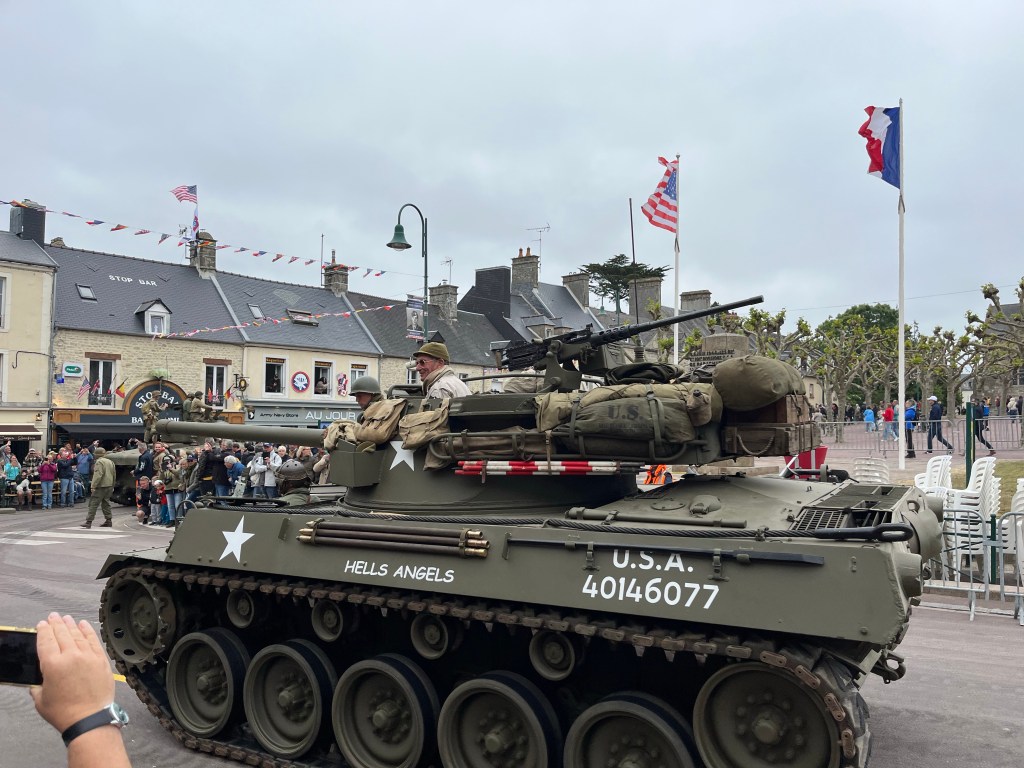
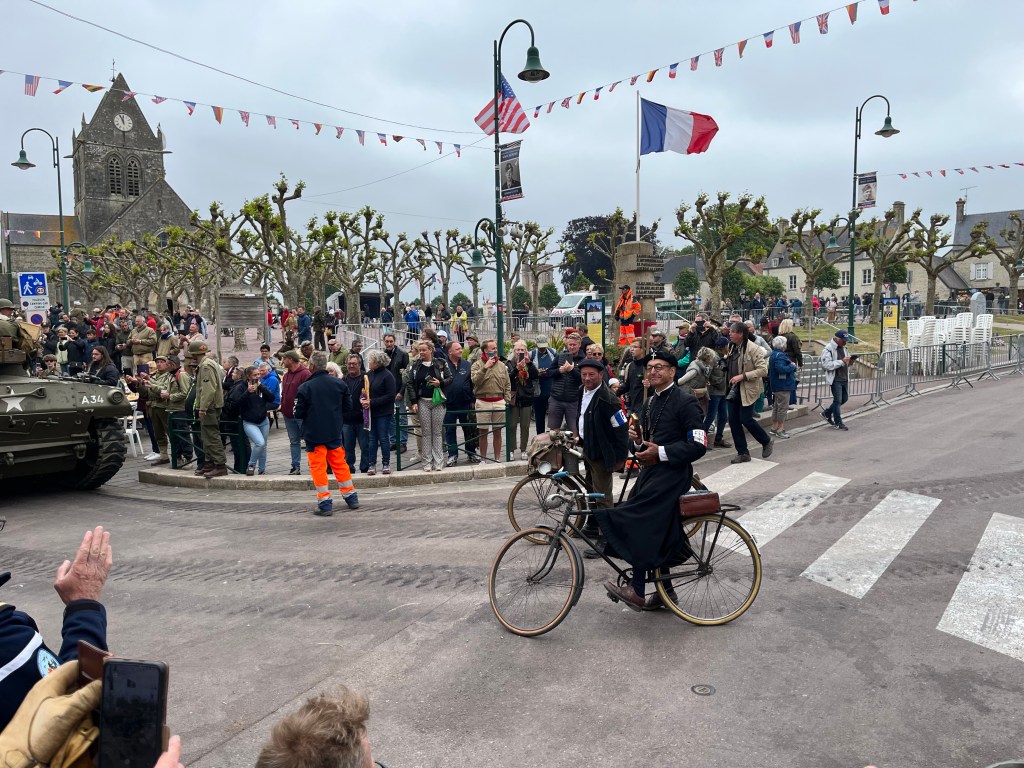
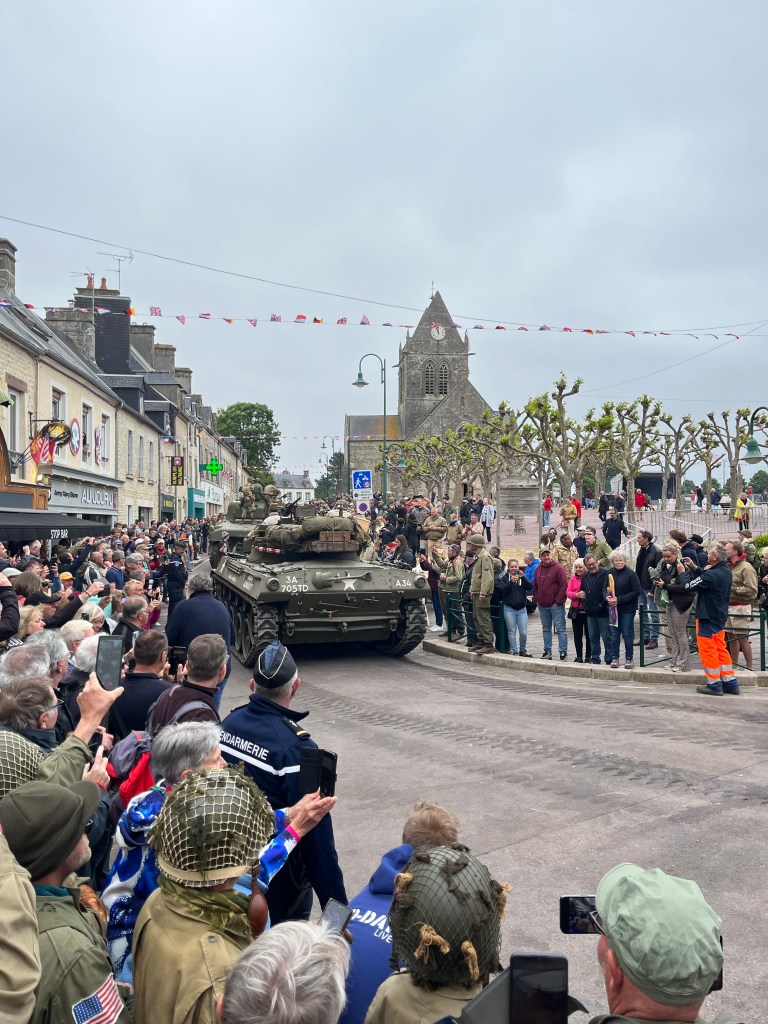
We arrived just as a parade of American tanks and military vehicles accompanied by members of the ‘local Resistance and the town’s Priest’ make their way around the square. The town is full of military reenactors from around Europe plus serving British, American & French serving military who are taking part in the Commemorations.
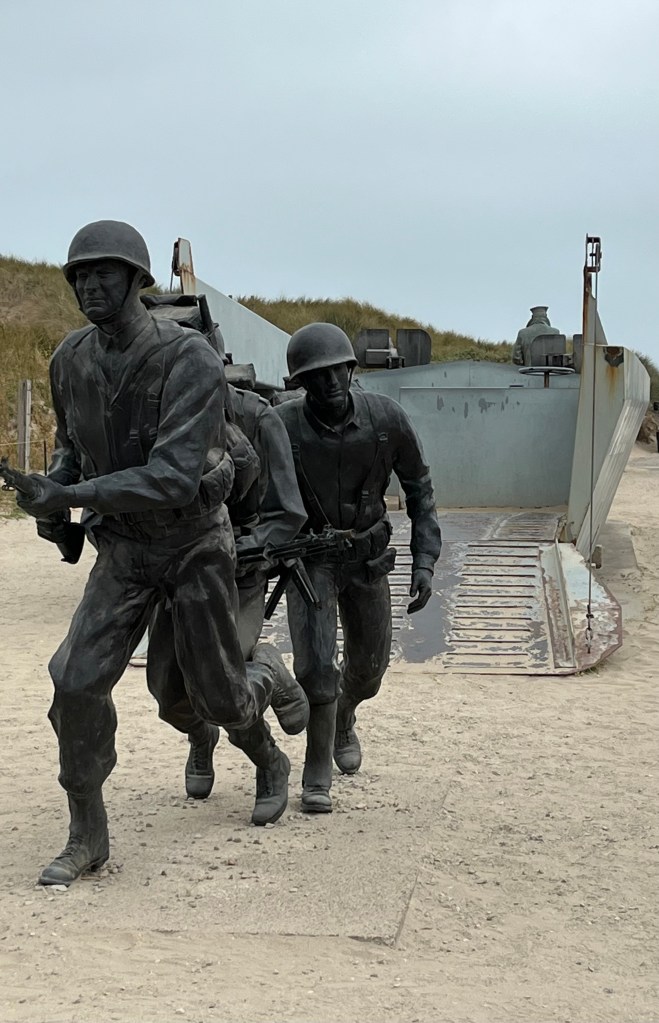
The next day we decided to use the motorhome as again the weather wasn’t kind and we could cover more ground. Our first stop was the Utah Beach Museum and Monuments. Utah Beach had the lightest casualties of the landings, with 300 men killed or wounded out of the 22,000 troops that landed on D-Day. Compared to Omaha where nearly 3,000 were killed or wounded.
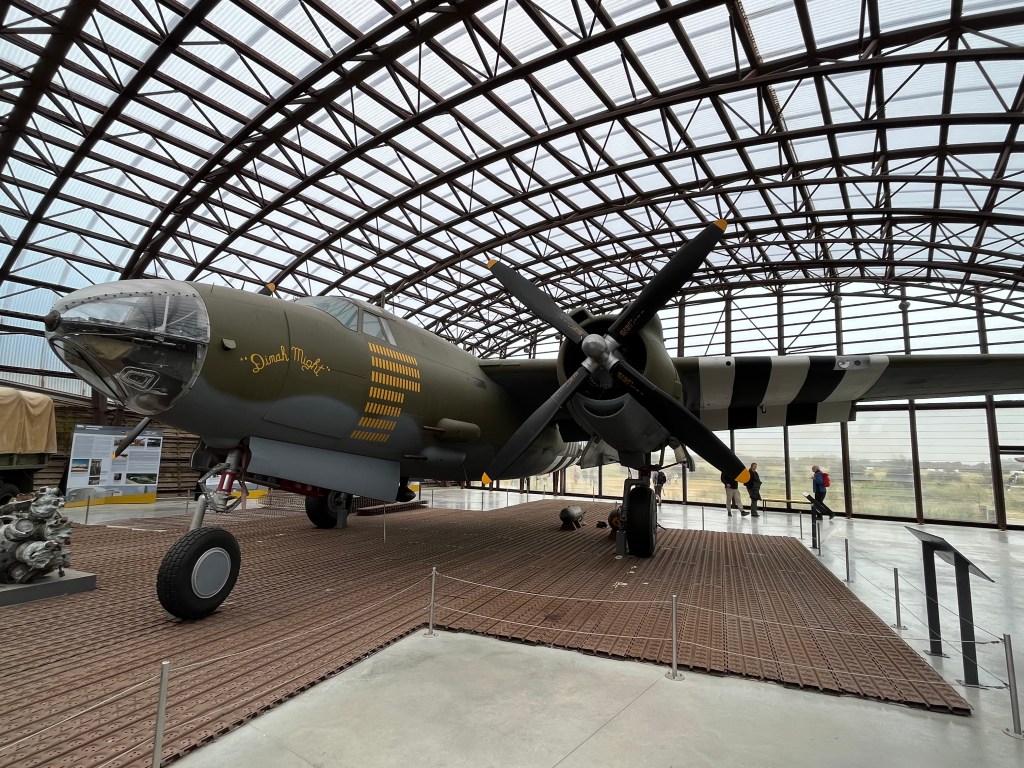
The Utah Beach Museum is well worth a visit. There is an authentic B52 Marauder ‘Dinah Might’ on display plus other static vehicles both in and outside the museum. Don’t miss the film ‘Victory’ Beach’.
After the museum we made a way just a short way along the causeway leading from Utah Beach inland to the Major Richard (Dick) Winters Memorial.
I am a huge ‘Band of Brothers’ fan having first read the book by Stephen Ambrose and then mini-series. Damien Lewis playing Dick Winters became my on-screen heart throb! Dick Winters fought across Europe from Utah Beach to finally taking Hitler’s Alpine retreat at Berchtesgaden, just 3 days before the end of the war in Europe. Dick Winters died in 2011 aged 93.
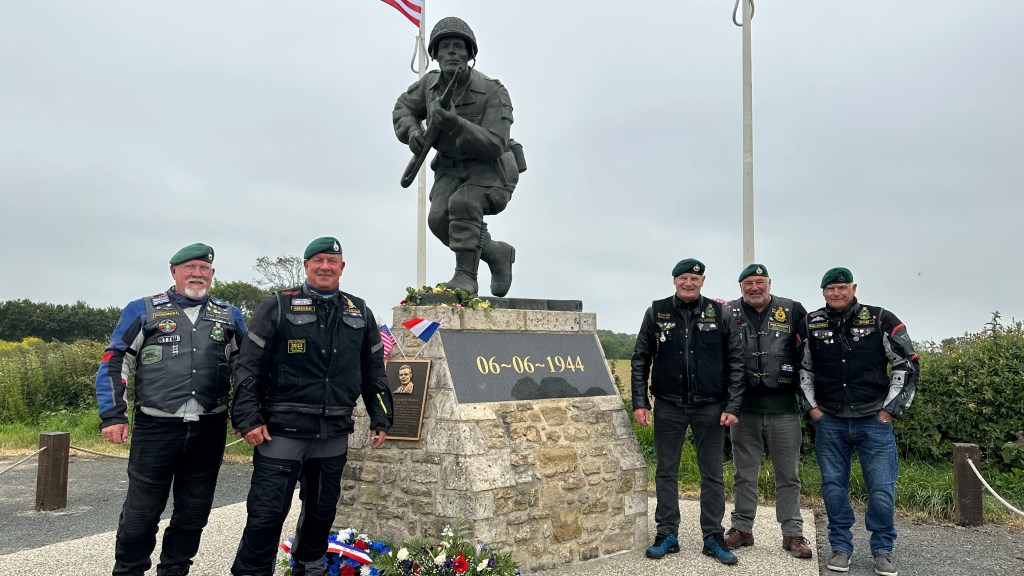
At the Memorial we met a group of ex-Royal Marines who were on a motorbike tour of the Normandy Battlefields. Just down the road, is the Memorial to Easy ‘E’ Company of the 101st Airborne which Winters led. On 6th June Dick Winters and a team of 12 men destroyed a German Artillery Battery which had been firing on forces exiting Utah Beach. In one of the gun positions a German map containing all artillery and machine gun positions in the Cotentin Peninsula area was discovered. This information was passed up the chain of command.
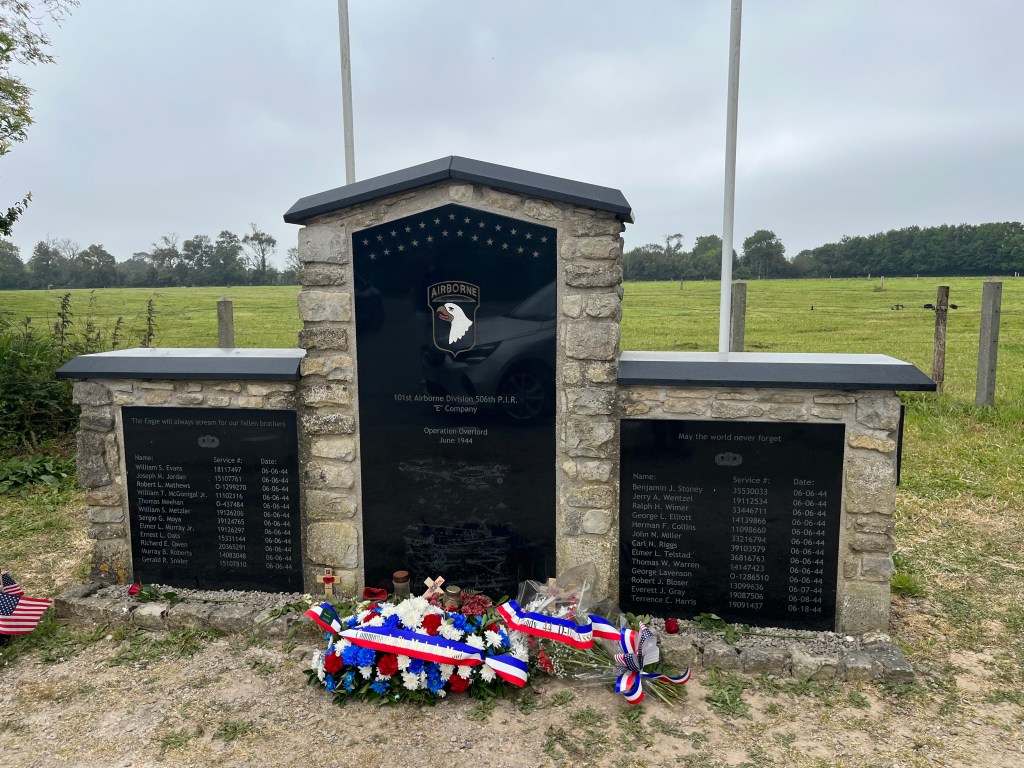
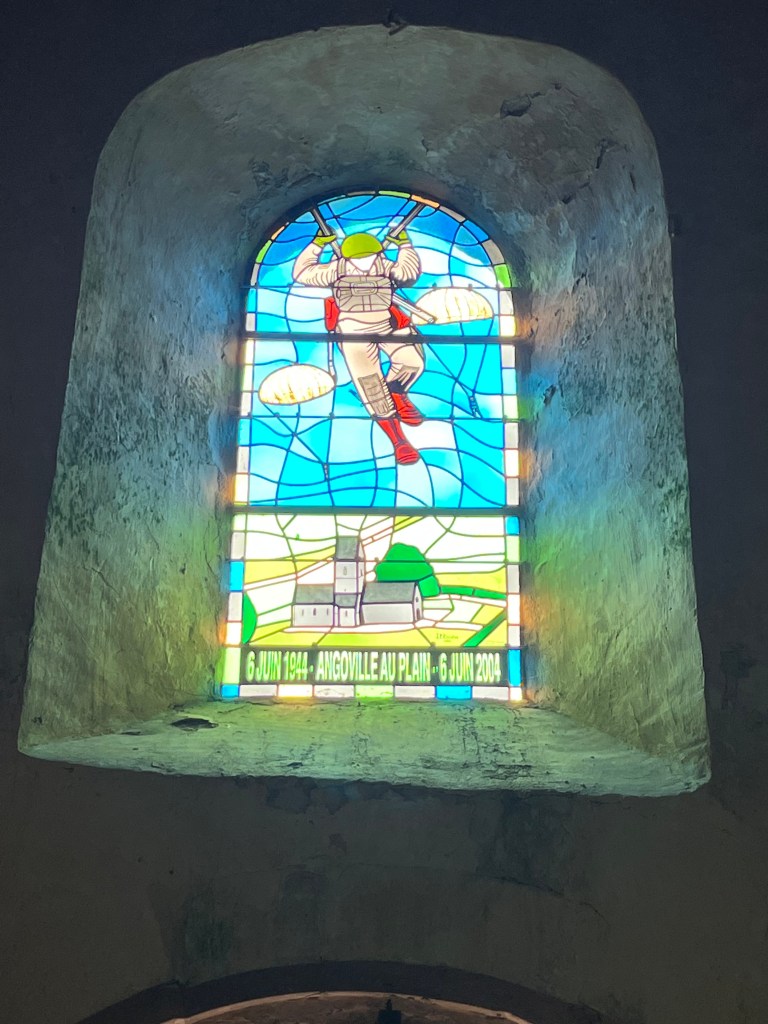
We then had quick stop in Carentan, where the 101st Airborne battled with the Germans between 10-12 June for control of the town. From Carentan we made our way to the small town of Angoville. Here 2 medics from the 101st set up an aid station in the Church, just 3 miles from the beach on D-Day. The areas was the scene of intense fighting and the medics commandeered a farm cart to collect the wounded from the surrounding fields, the Germans seeing they were also taking wounded Germans, gave them free passage and began taking their wounded to the Church under a ‘No Guns’ rule. A German sniper who had been hiding in the Church belfry, came down and helped the medics. The injured sat or lay on the pews, where more serious cases were laid around the Communion Table which was used to operate on and the dead behind the Church or in the sacristy. Today those same pews are in the Church still stained with the blood of the injured soldiers.
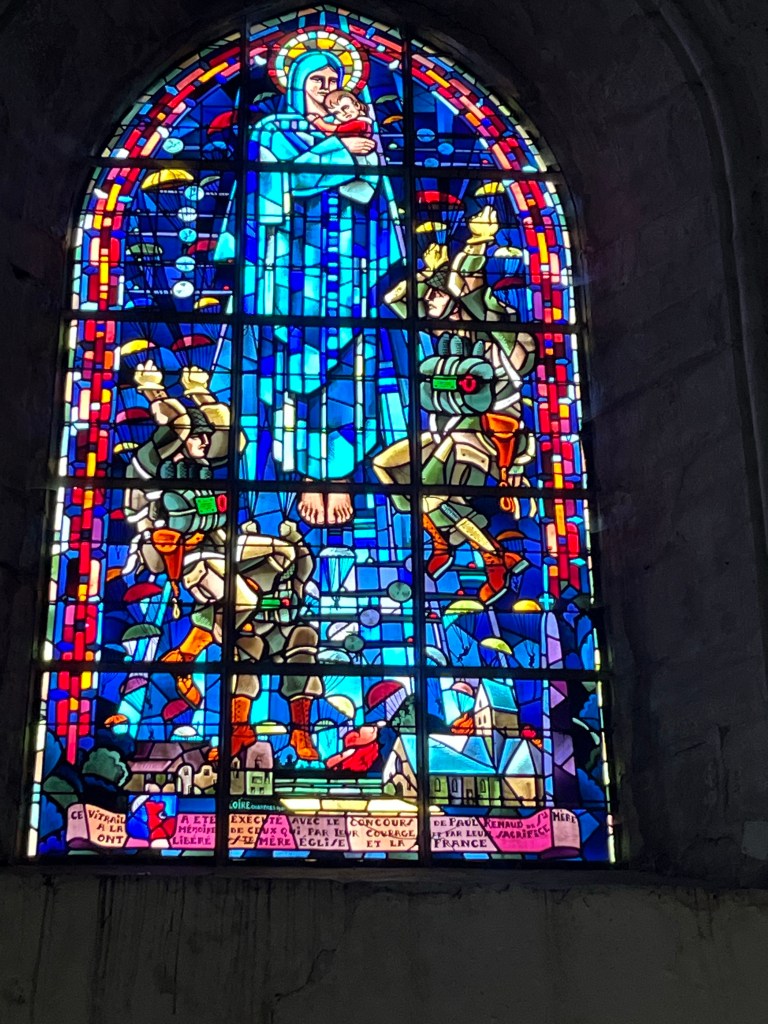
The Church suffered some war damage, when an American tank accidentally blew the front doors off and a mortar crashed through the roof but luckily did not explode. The Church, as with the Church in Sante Mere Eglise replaced its shattered stained glass windows with those commemorating their Liberation.

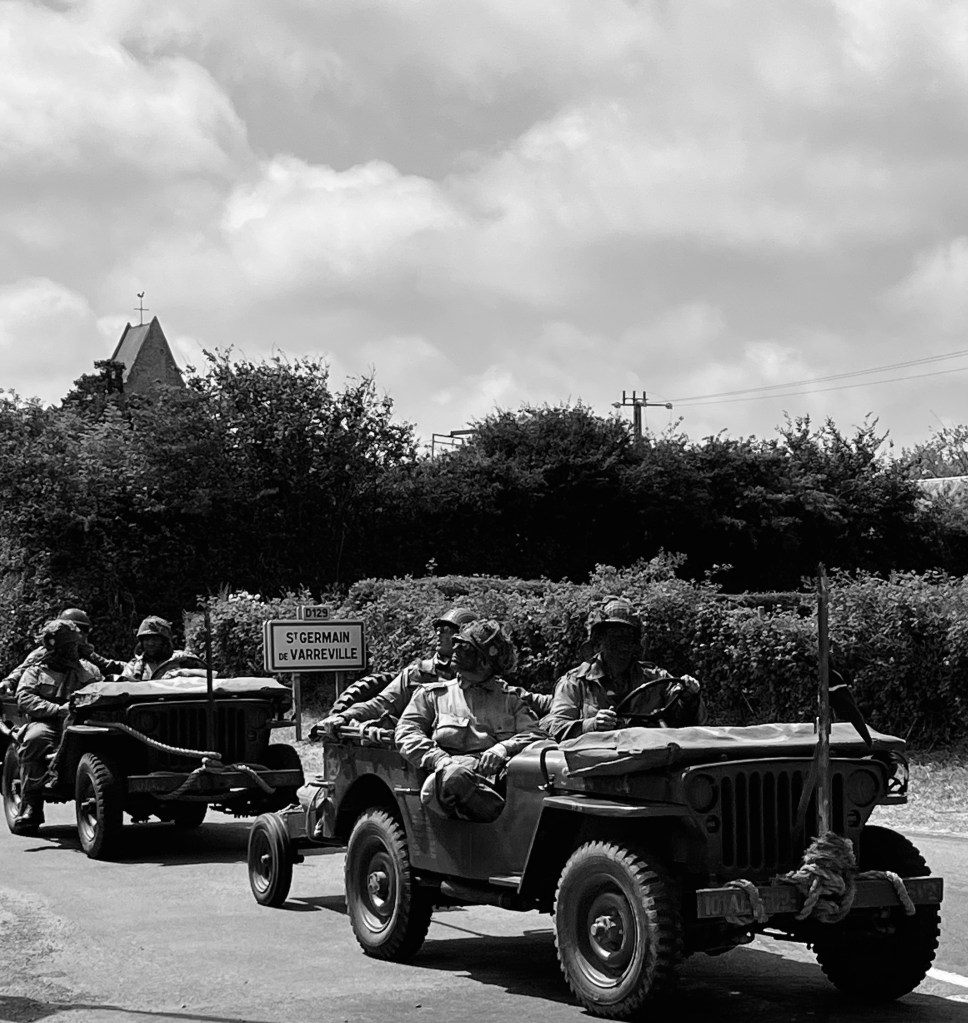
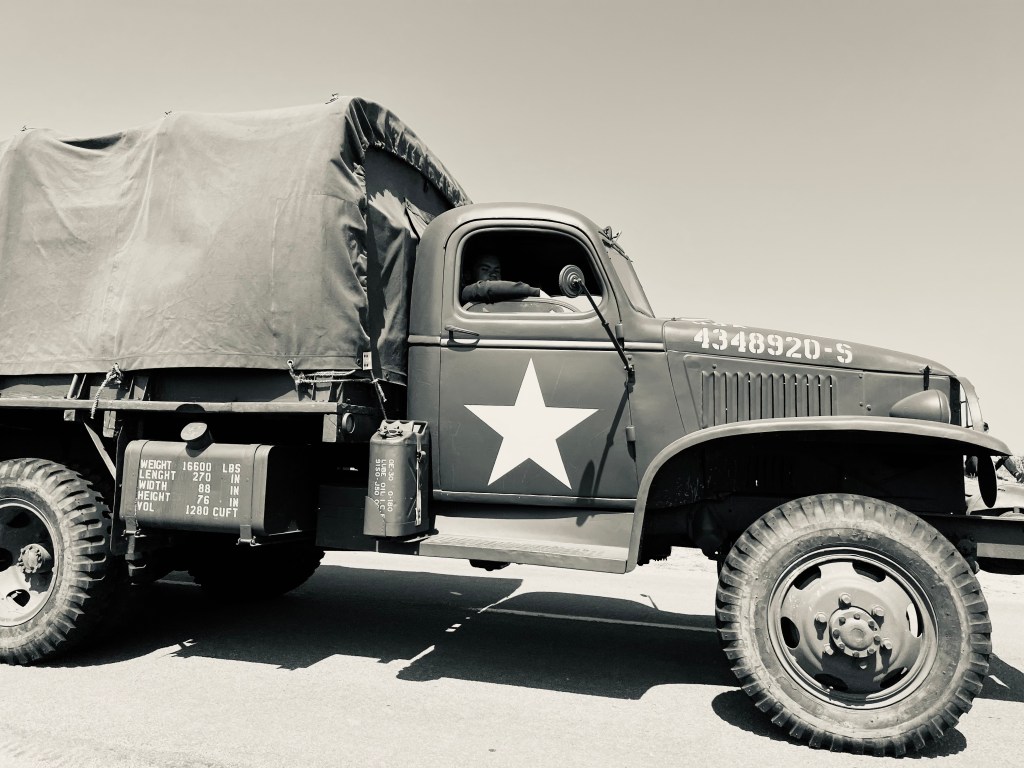
As we had been driving down the lanes of Normandy we had come across a variety of vintage WWII vehicles driven by appropriately dressed re-enactors. It was quite surreal to come across a jeep of American ‘soldiers’ down a tiny lane, it was the closest thing to time travel that we would ever experience. I have displayed the photos in black and white as they are more atmospheric.

So ended our visit to the American Sector and we are making plans to return next year for the 80th Anniversary, making a return visit to the British and Canadian beaches.
Le Mans is now in our sights…
 RoundandAbout