
Following in the Footsteps of Heroes – 80th Anniversary of D-Day
We have arrived in Normandy to commemorate the 80th Anniversary of D-Day. We are at a campsite in Merville-sur-Plage for the next 7 days, we are meeting up with our friends, 10 members of the Redhead/Weeks family and Charlie’s brother Jim, wife Jane and our nephew Toby.
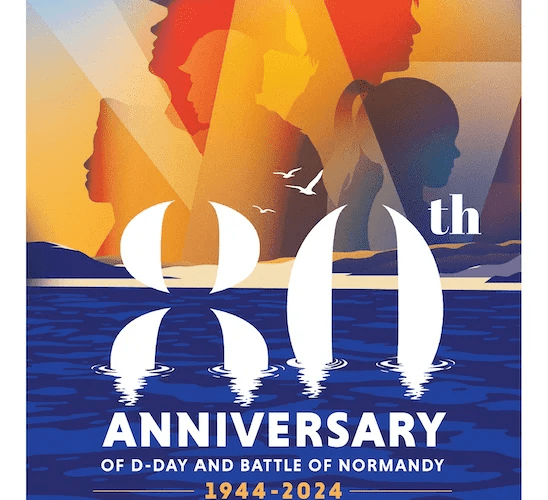
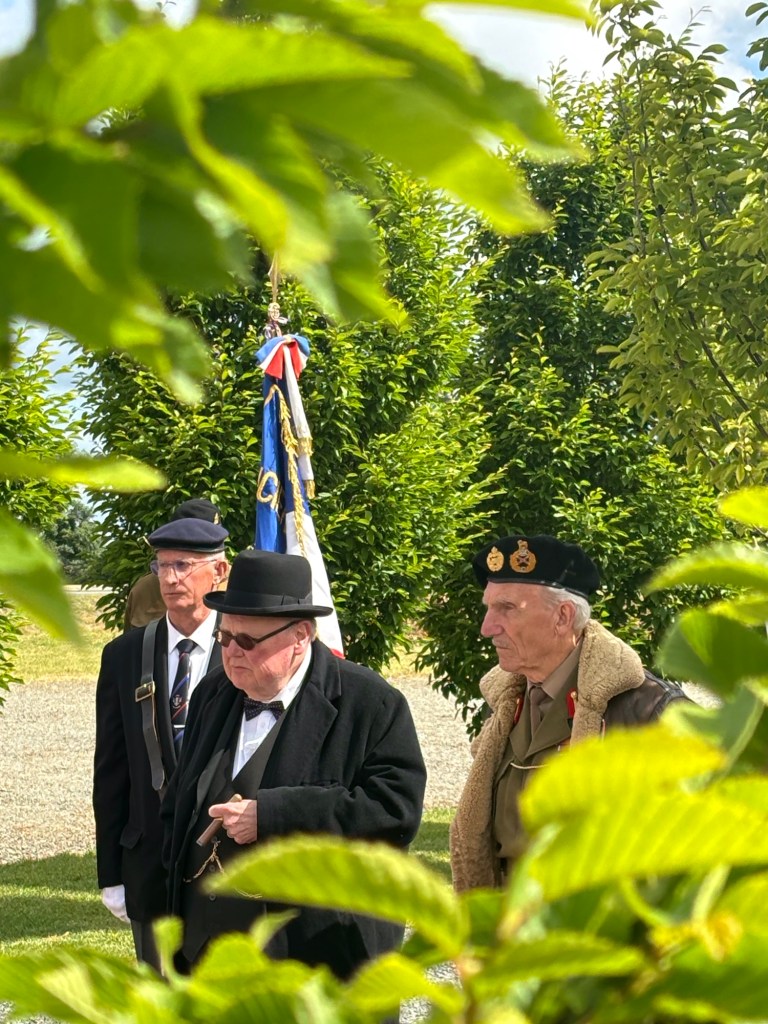
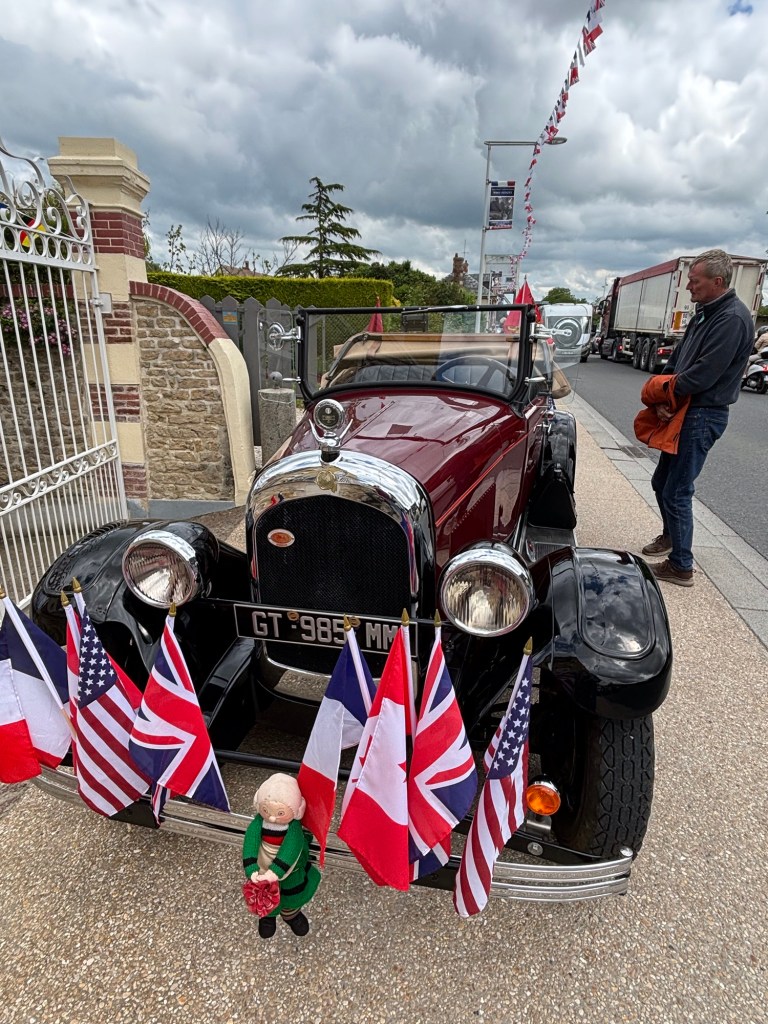
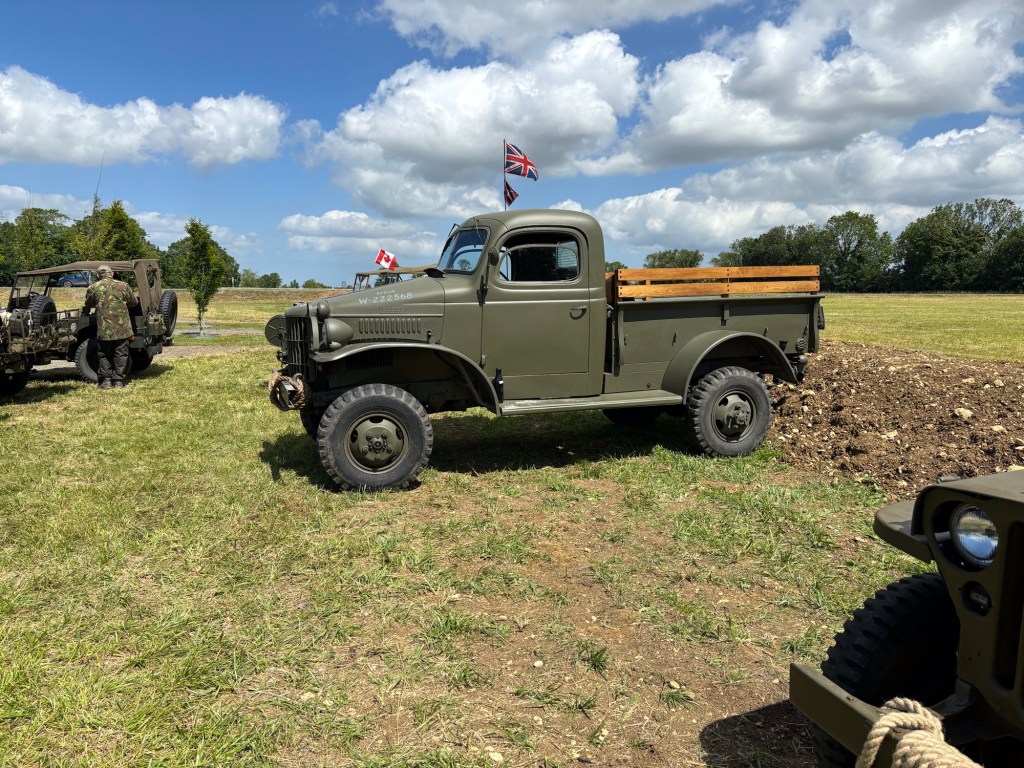
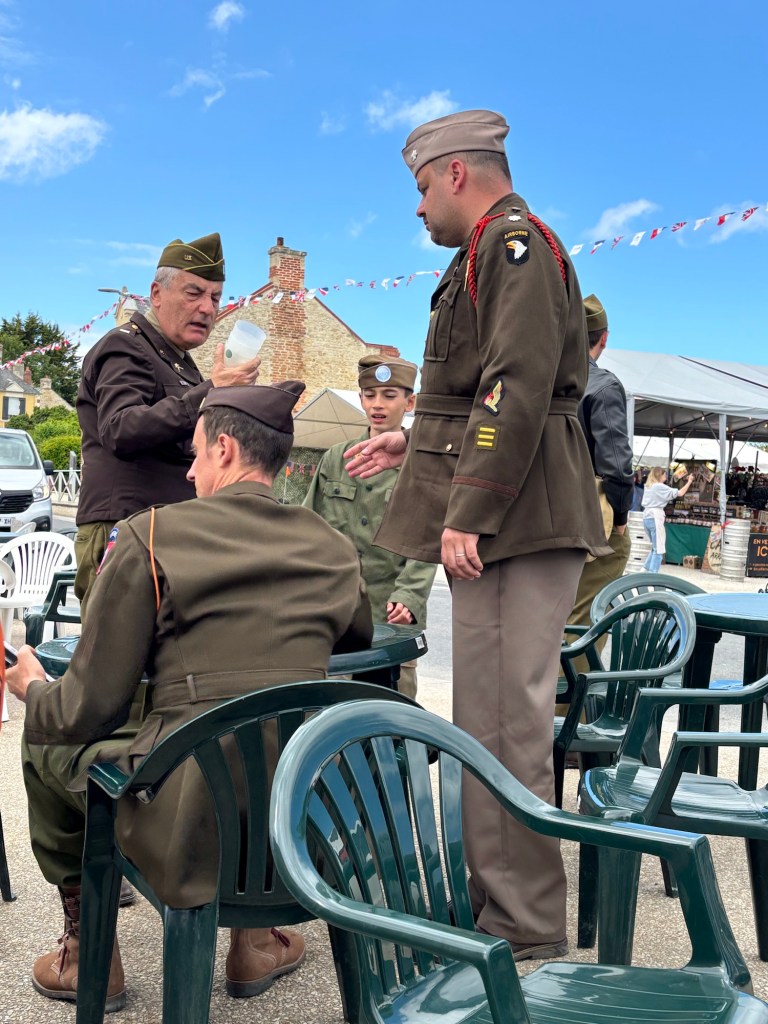
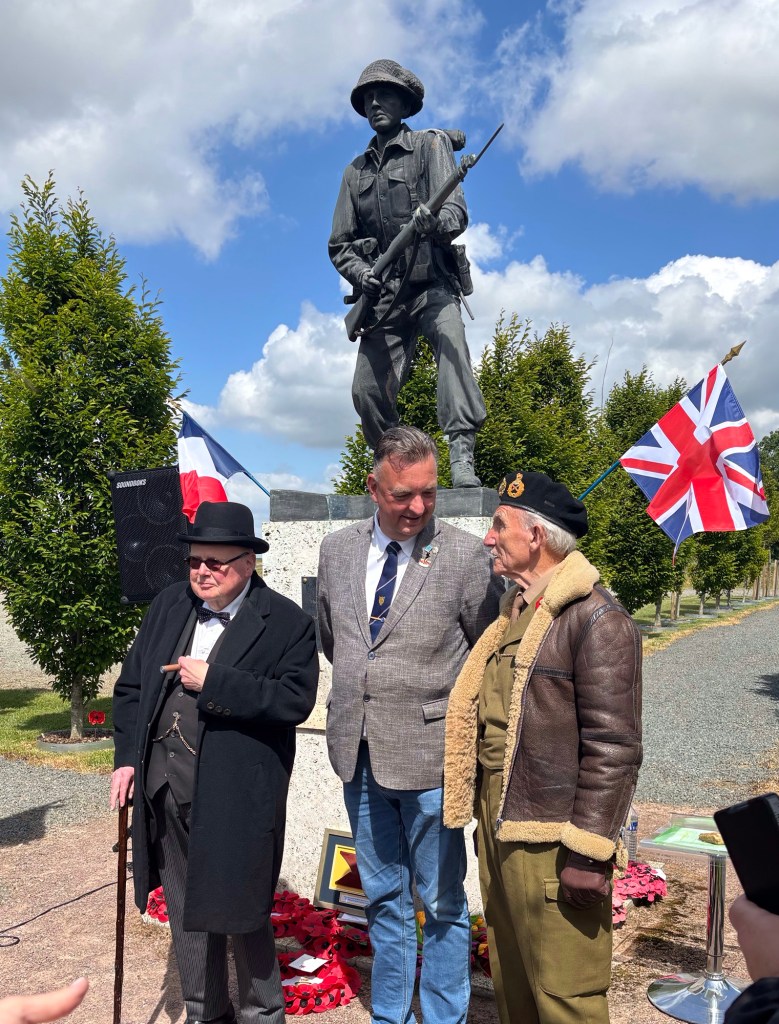
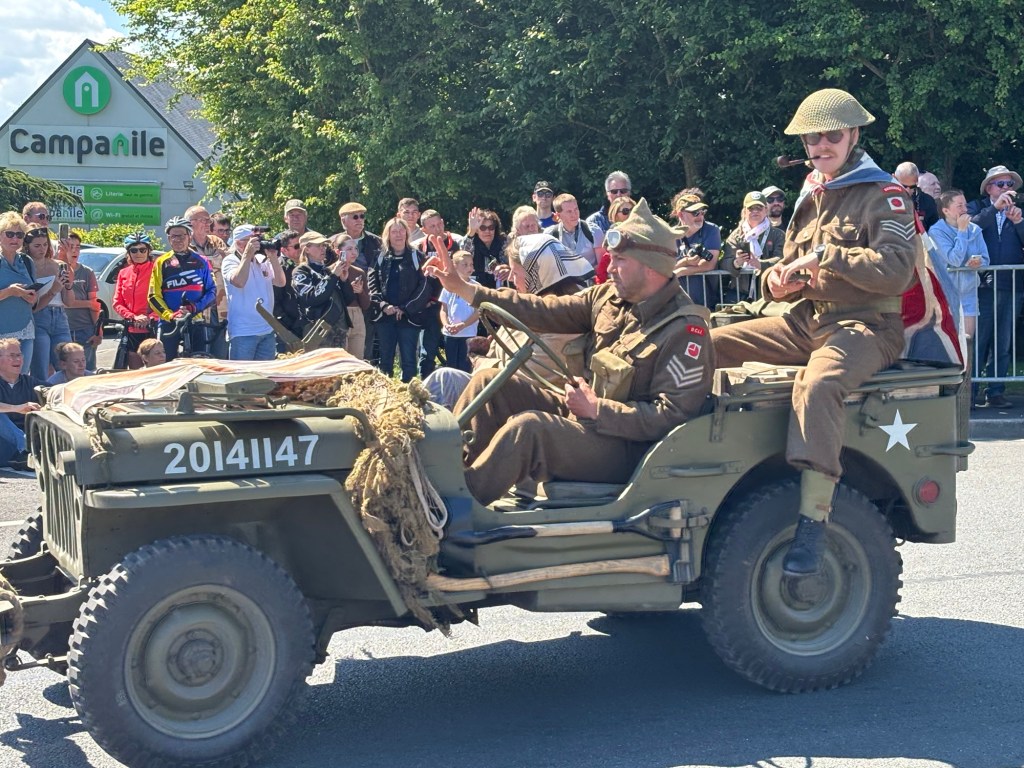
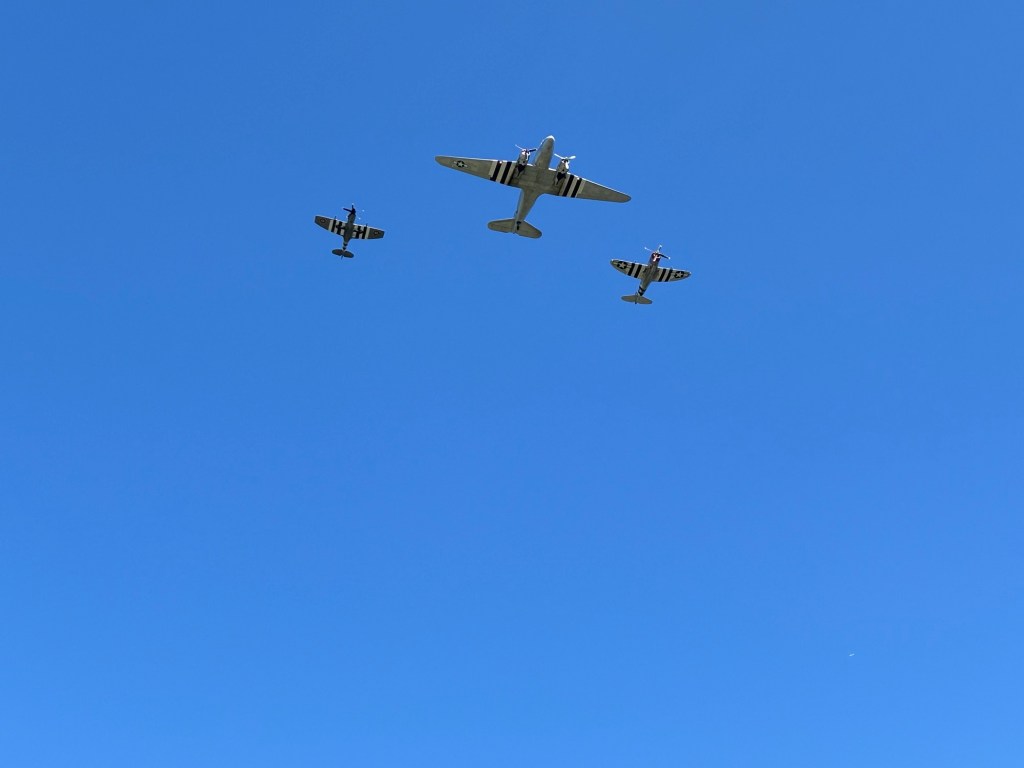
From 1st-14th June Normandy becomes the centre of both commemoration & celebration of D-Day and the Battle of Normandy. Apart from the main commemoration events attended by world leaders that you will see broadcast across the world, there are a 100 or more other ceremonies taking place in war cemeteries, roadside memorials, in villages, hamlets and towns across Normandy. Thousands of living history enthusiasts bring 1944 to life, there are military vehicles on the roads, appearing in parades and static exhibits. There are men and women dressed in the uniforms of the Allies & Third Reich and in period costume at every event, in every bar, restaurant, cafe and supermarket. In fields and on village greens military encampments are set up with displays and information where the public can ask questions about any aspect of military life in 1944. You also need to keep your eyes skyward as flypasts by various planes are frequent. I’ve heard ‘American’ and ‘British’ 1944 serviceman speaking French, Dutch, Italian & Spanish. We’ve even seen Churchill & Monty!

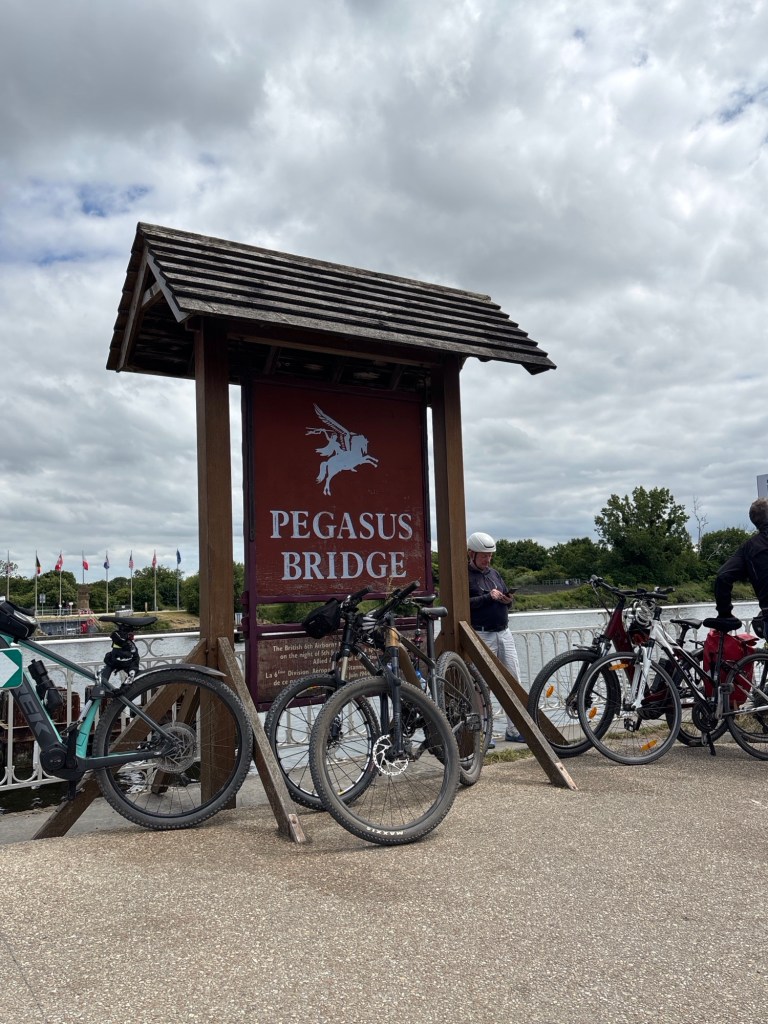
Our campsite is about 15 minutes moped ride from Pegasus Bridge, where the first British forces landed to begin the Allied Liberation of Europe. The bridge, then called Benouville Bridge and the Ranville Bridge over the Caen Canal and Orne River respectively were the strategic objectives of 2nd Airborne Battalion, Ox & Bucks Light Infantry, a glider borne force who were part of the 6th Airborne Division.
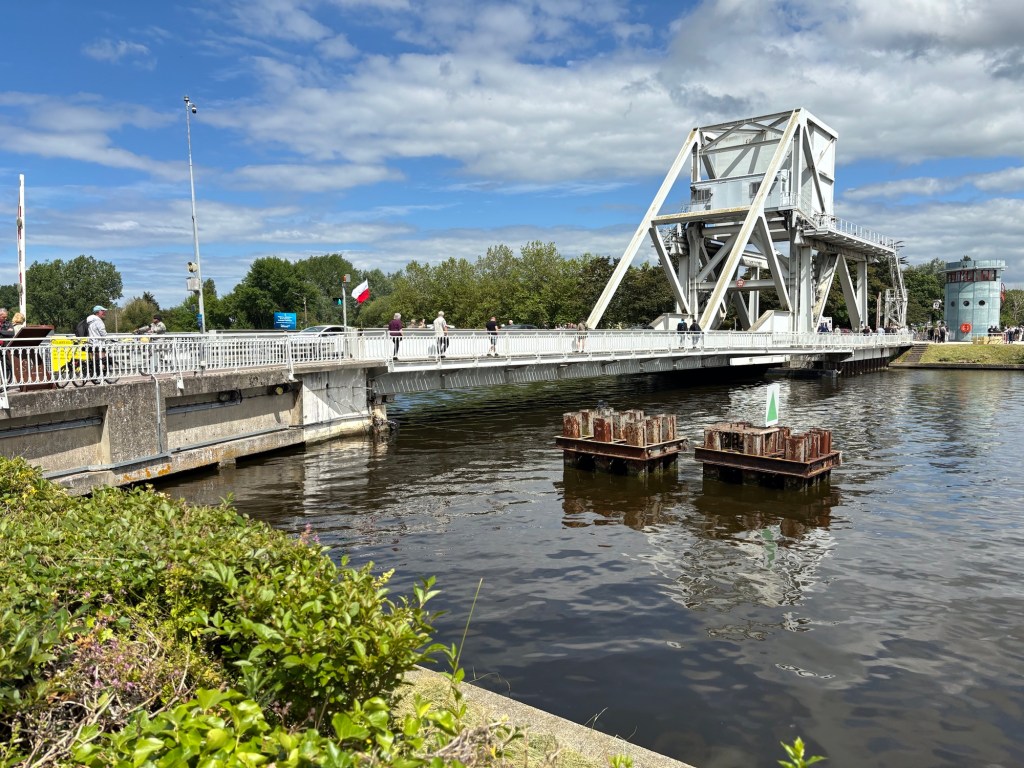
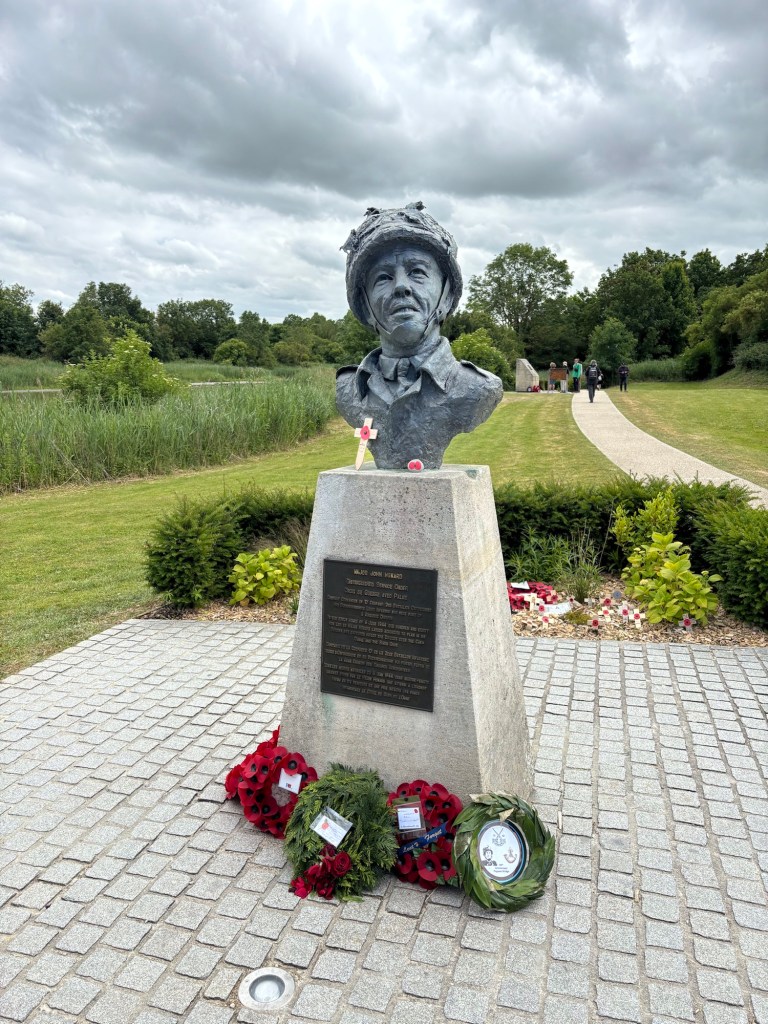
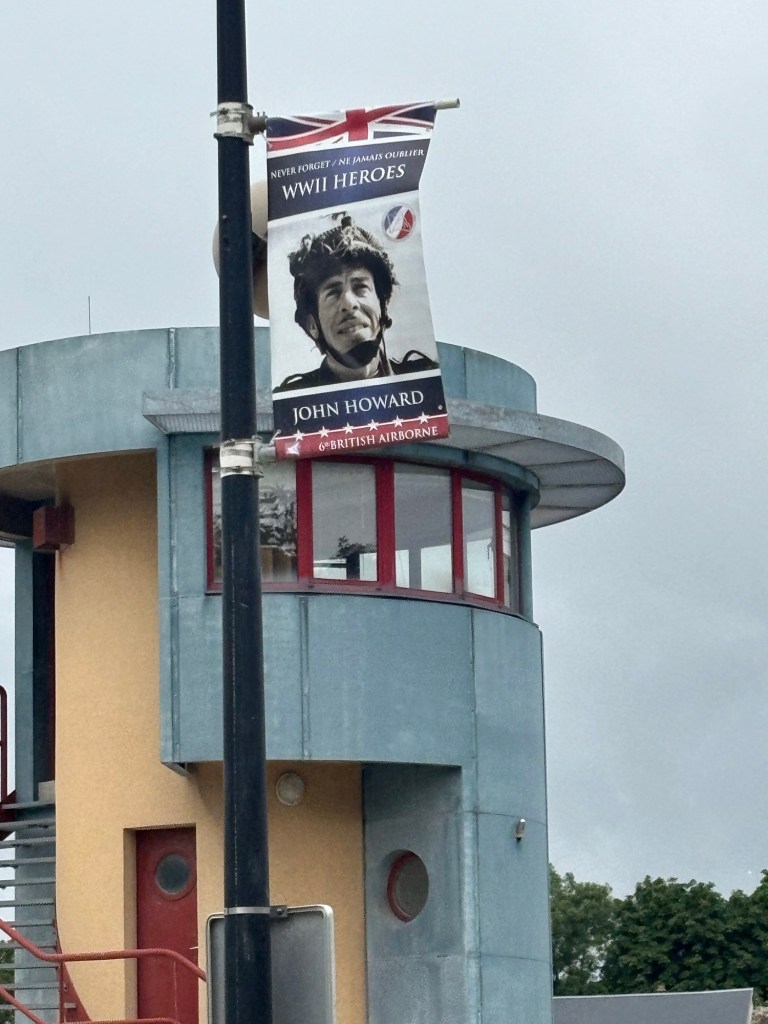
After more than 2 years of intensive training under the command of Major John Howard, six Horsa gliders with 181 men aboard, took off from Dorset to capture what is now known at Pegasus (Benouville) Bridge and Horsa (Ranville) Bridge and prevent German armoured divisions crossing the bridges and attacking the landings at Sword Beach.
Five of the gliders landed just metres from their objectives at 16 minutes past midnight on 6th June, surprising the Germans and both bridges were taken after a fierce fire fight within 10 minutes, losing only 2 men. One man, Lance Corporal Fred Greenhalgh was thrown from the glider during its ‘crash’ landing and drowned in the pond right next to their landing site and Lieutenant Dan Brotheridge was killed crossing the bridge in the first few minutes of the assault. He become the first member of the Allied Invasion force to die as a result of enemy fire on D-Day. At 3 am the Ox & Bucks were reinforced by the arrival of 600 men of the 7th Parachute Battalion, to hold off the German counter-attacks and then further relief was from 6 Commando, led by Lord Lovat who arrived with his piper, Private Bill Mullin playing his bagpipes. Among the first of the 7th Battalion reinforcements was Lieutenant Richard Todd, who nearly 20 years later, would play Major Howard in the film ‘The Longest Day’.
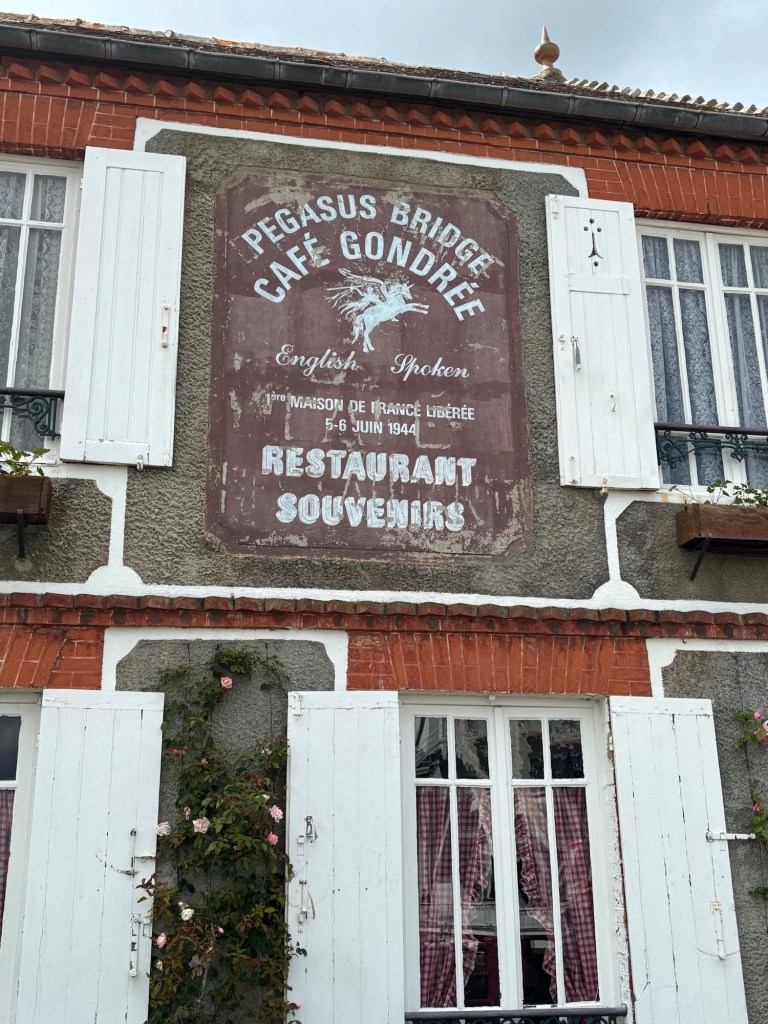
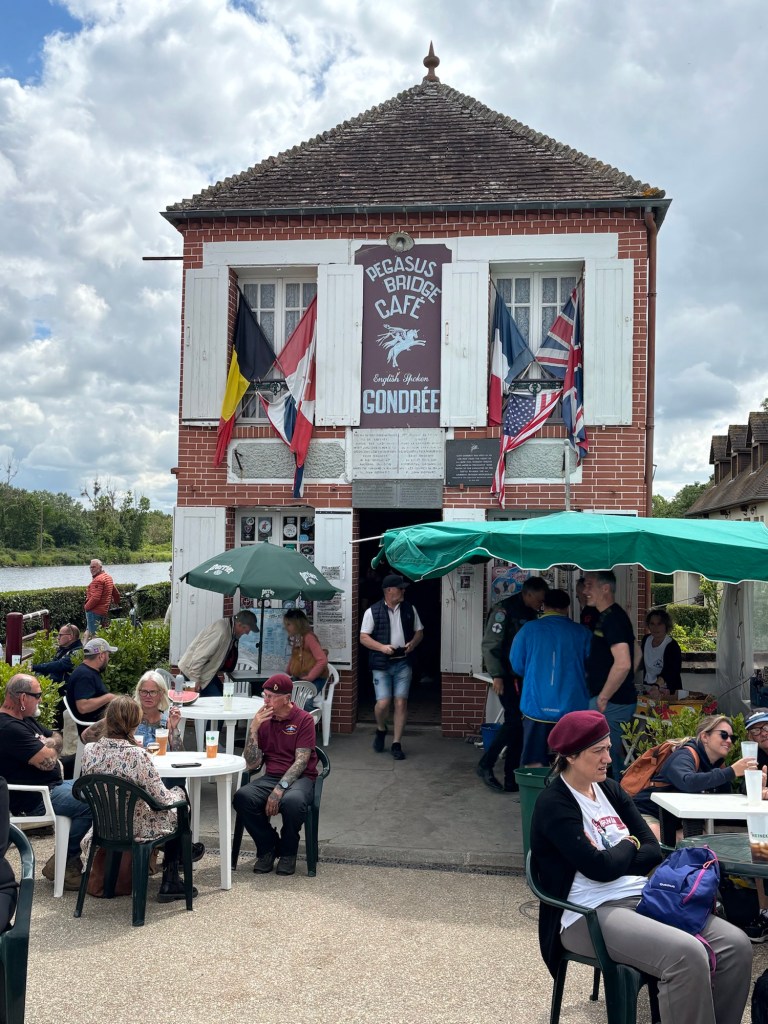
There is a museum at Pegasus Bridge, where the original bridge is now on display. The current swing bridge was replaced in 1994 to accommodate the widening of the canal. There are markers displaying where the gliders landed, so unbelievably close, it is almost beyond comprehension and, of course, there is Cafe Gondree, the first place to be liberated. The Cafe still belongs to the Gondree family, and Arlette Gondree, who was 5 at the time of their liberation, is still in charge and is known as ‘Madame’!
On our first visit during the week, we stopped for a cider and baguette and sat at the cafe tables right by the bridge to watch the world go by. We were to visit Pegasus twice more during our visit.
On Wednesday we made our way to Hill 112, the site of one of the bloodiest battles of the War and is now a site of memorial and remembrance and known as the Hill of Peace. Over 10,000 men lost their lives in 2 weeks of fierce fighting taking and holding Hill 112, which then allowed the Allied Forces to retake Caen. The memorial is the result of the tireless work of Sgt Albert Figg, a veteran of this bloody battle. We were meeting a friend, Jon, and his friend, Charlie, who were part of a group who were there with a number of military vehicles.
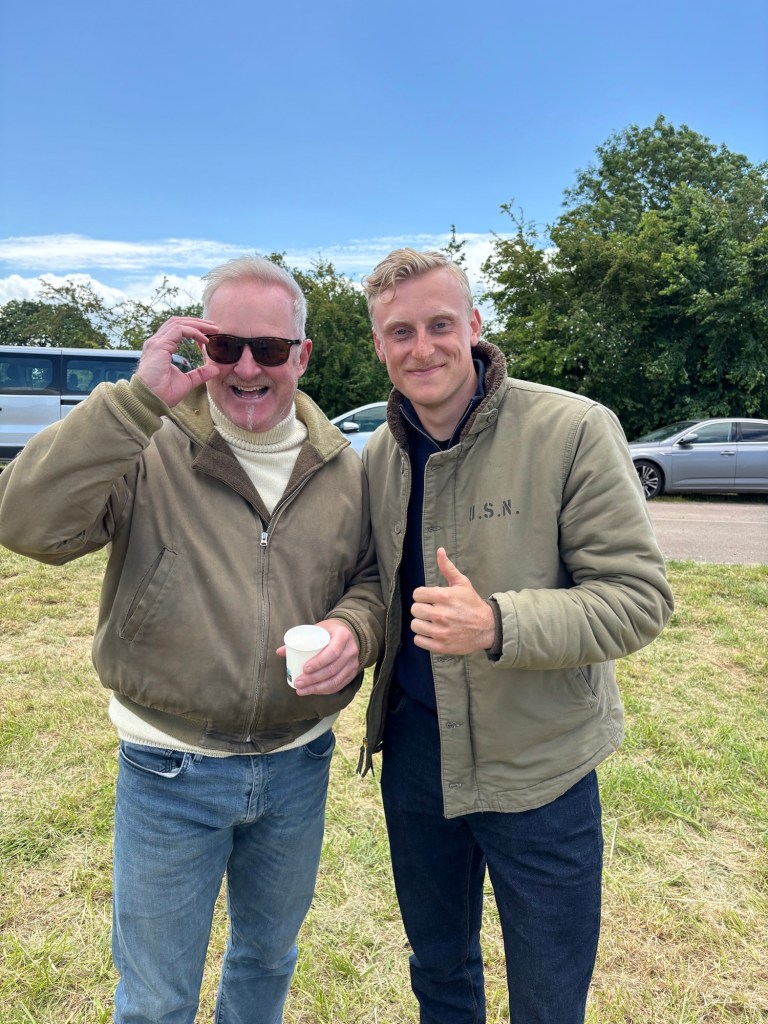
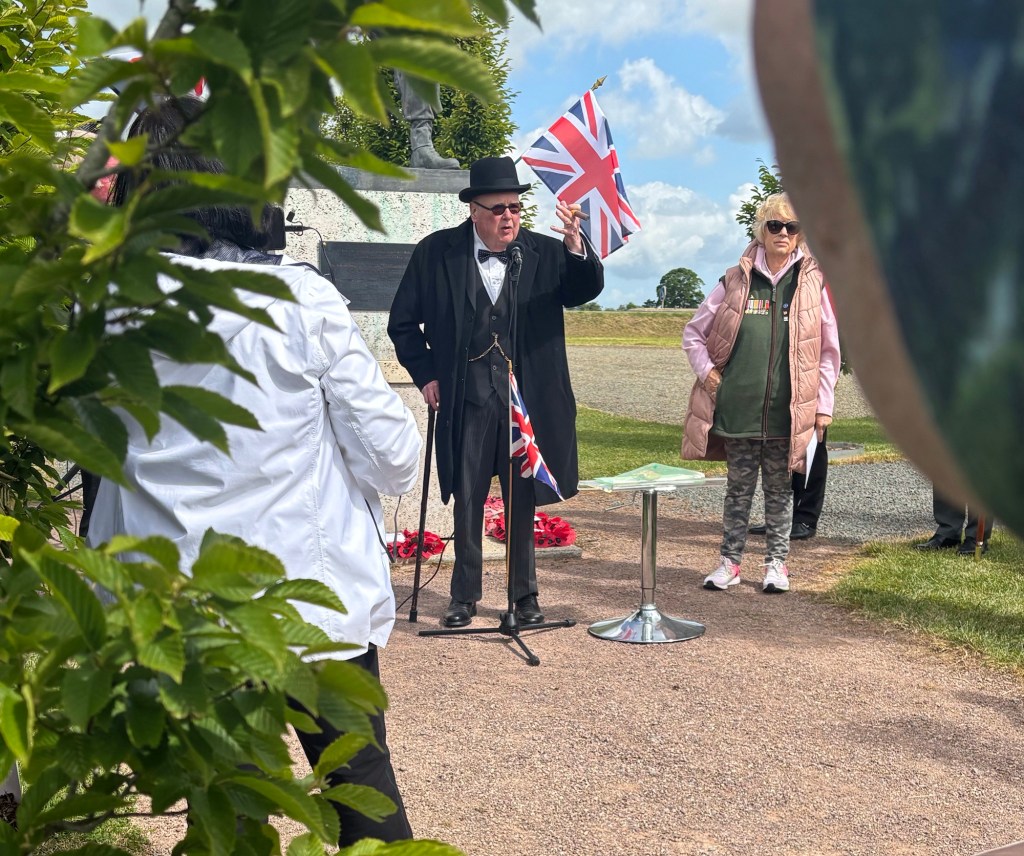
There was a short service where the men who lost their lives in the campaign were remembered and thanks was given to Sgt Figg’s unending efforts to ensure that they will never be forgotten. There was also speeches by ‘Churchill’ and ‘Monty’.
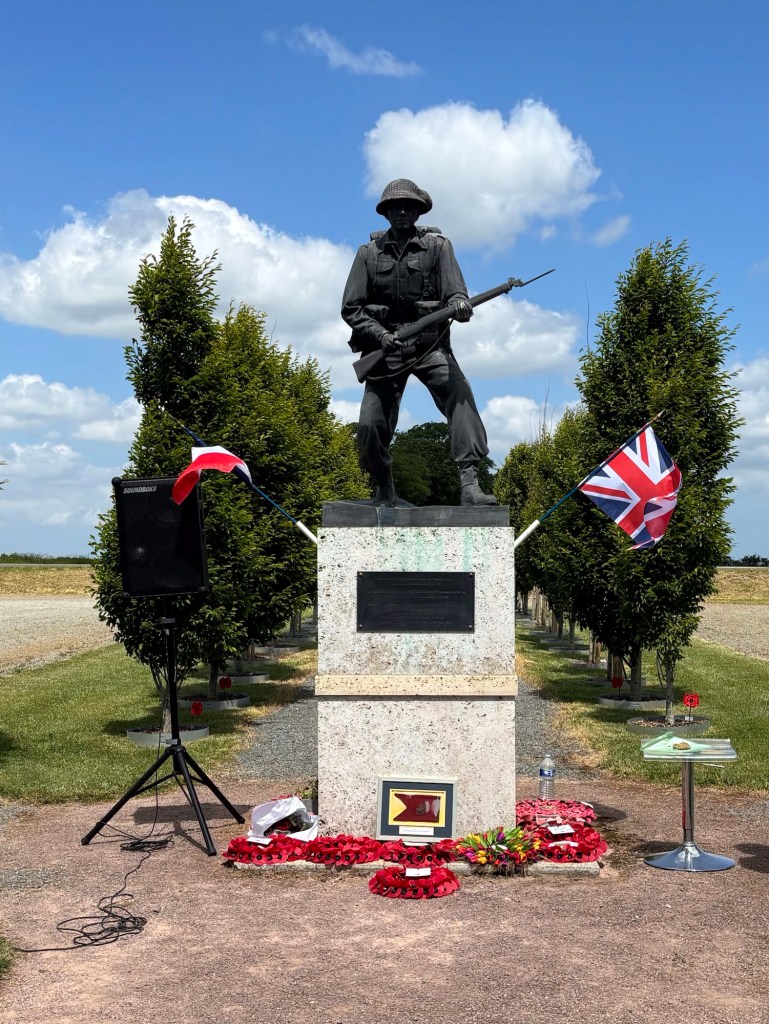
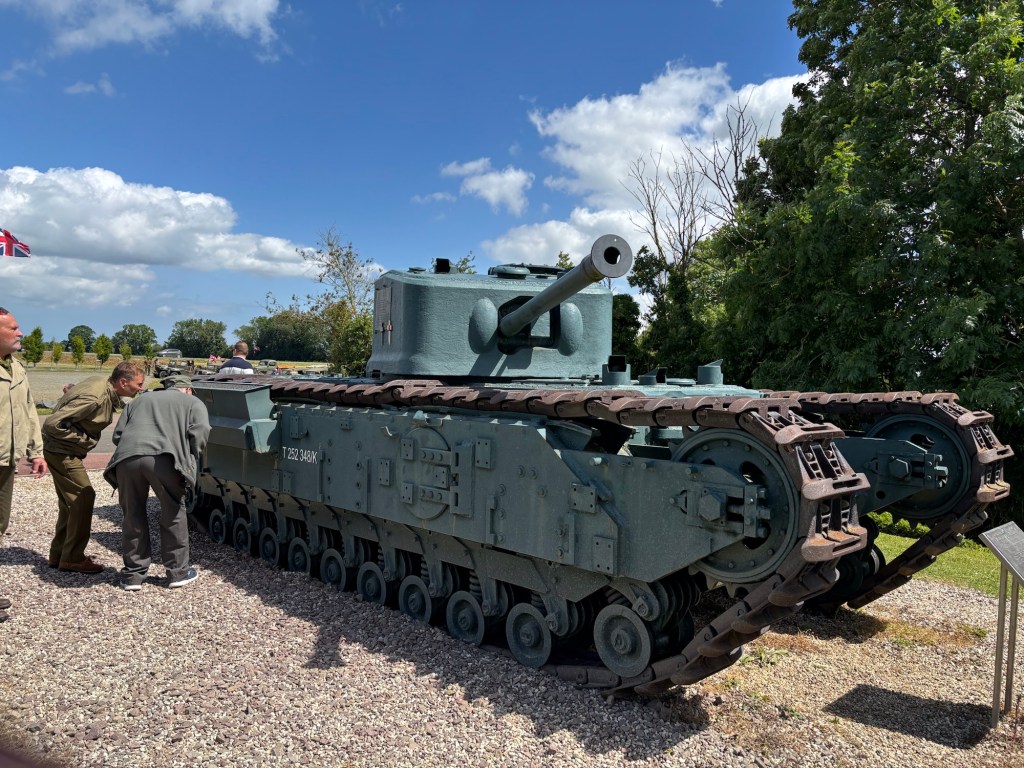
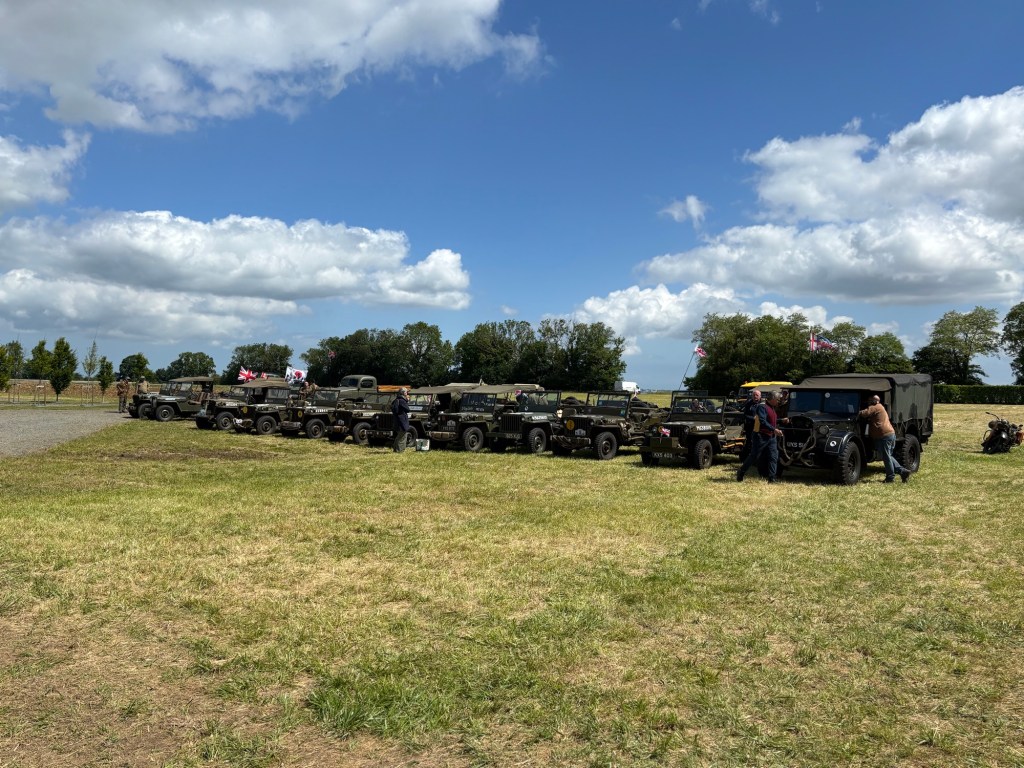
From there we made our way to the Merville Battery Museum. Merville Battery was part of the German Atlantic Wall defenses with 4 gun casements, heavily defended with multiple machine gun posts, anti-aircraft guns, mines, anti-tank ditches and thousands of feet of barbed wire. This battery was capable of firing rounds onto the Sword Beach only 8 miles away. A force of 600 men commanded by Lieutenant Colonel Otway was tasked with destroying the battery before the landings began, However, as the force parachuted in, in the early hours of 6 June, they were dispersed over a large area and Otway was left with a force of 75 men, no heavy weapons or the equipment that they had practiced the assault with. Otway proceeded with the attack and managed to disable 2 of the guns. After attack and counter-attack the Germans regained control of the battery but were unable to direct accurate fire at Sword. The battery was never fully retaken until 17 August when the German army started their withdrawal from France.
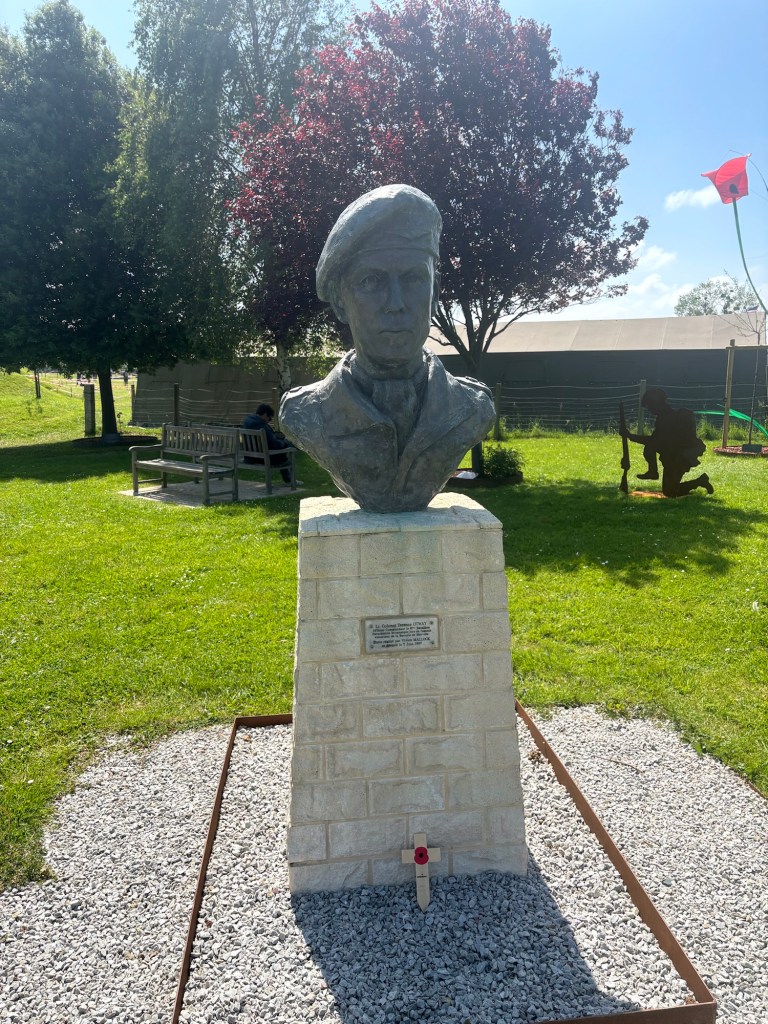

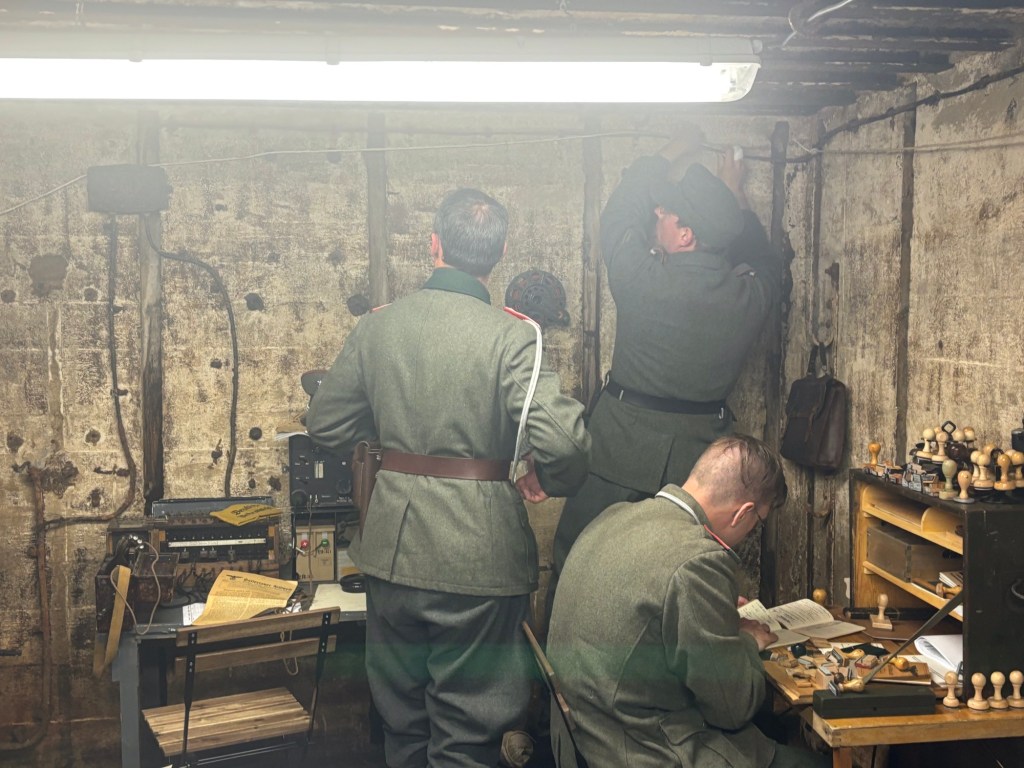

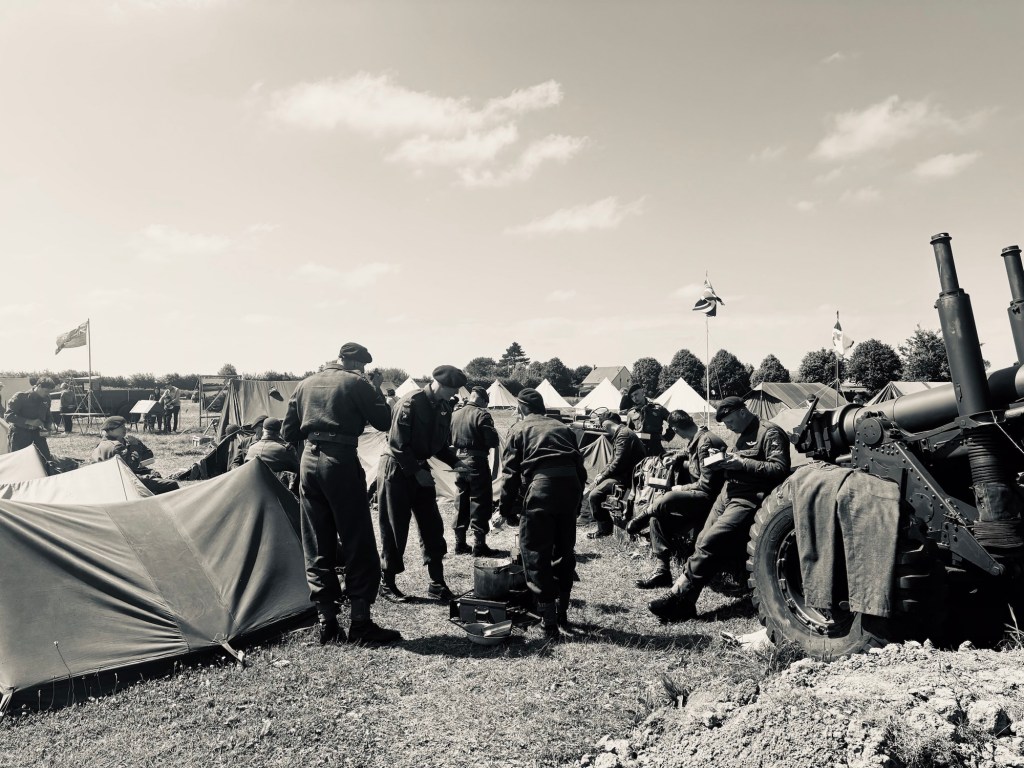
The museum is well worth a visit, but as we were there on 5th June it was extremely busy. I would recommend going outside of the D-Day window to get the full experience. In fact, I would recommend if you want to visit any of the museums or paid attractions to either pre-book or visit at quieter times of the year.
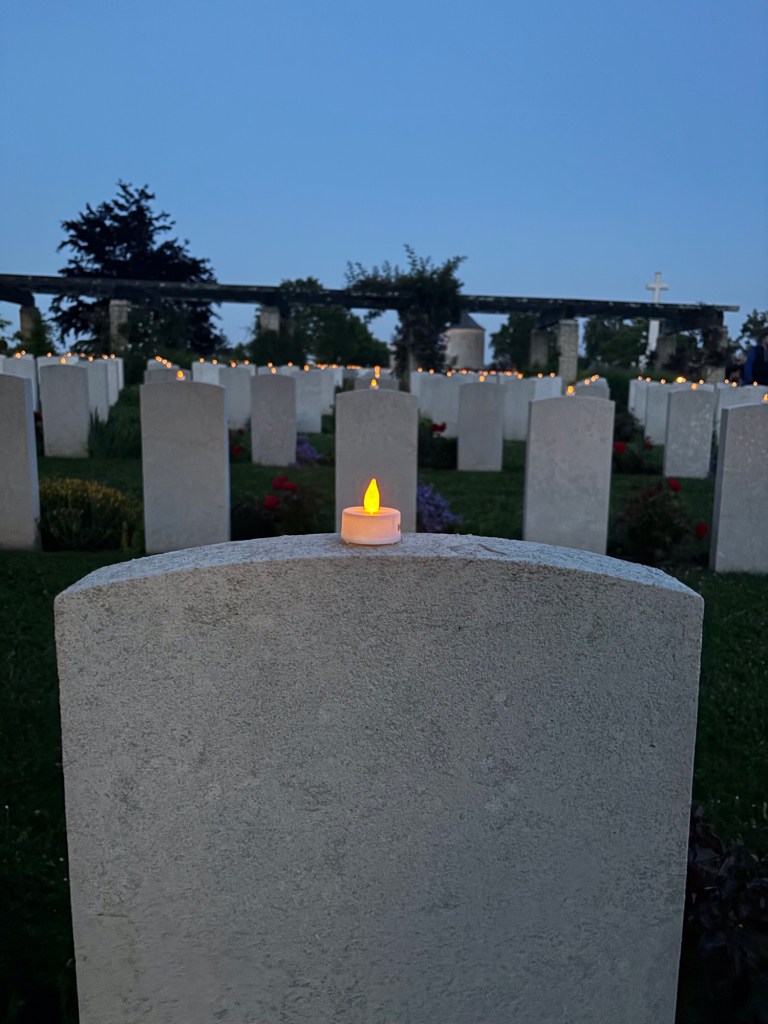
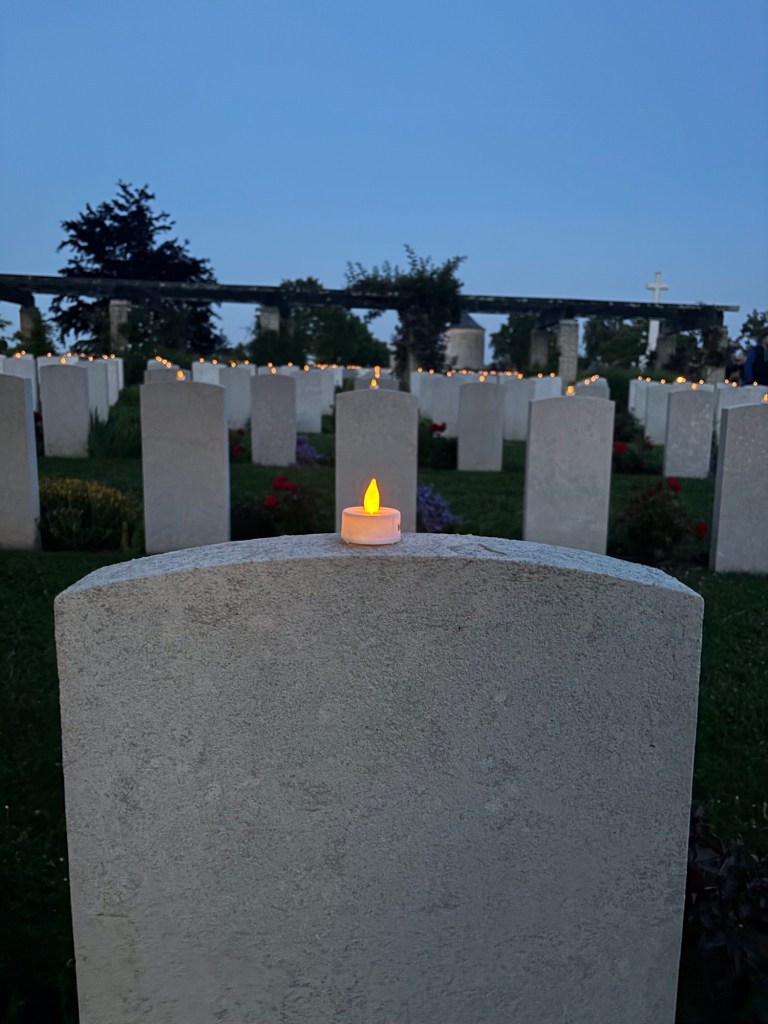
That evening we made our way to Ranville Military Cemetery for a service of remembrance and ‘The Great Vigil’, where every CWG grave in Normandy would be illuminated. In Ranville Cemetery people quietly gathered in the dusk, whilst the over 2,600 names of the fallen in the cemetery were read aloud by members of the public, accompanied by a military band and lone piper and lights were placed on every grave. Then a lighted torch was carried through the cemetery by a young girl, followed by local & visiting children carrying lights who made their way to the large memorial stone and lit a torch. Then there was short service with speeches in French & English remembering the lives of some of the fallen. Many of those buried here are from 6th Airborne who were killed in the early days of the Battle of Normandy including Lieutenant Dan Brotheridge, the first allied death of the invasion, killed at Pegasus Bridge.
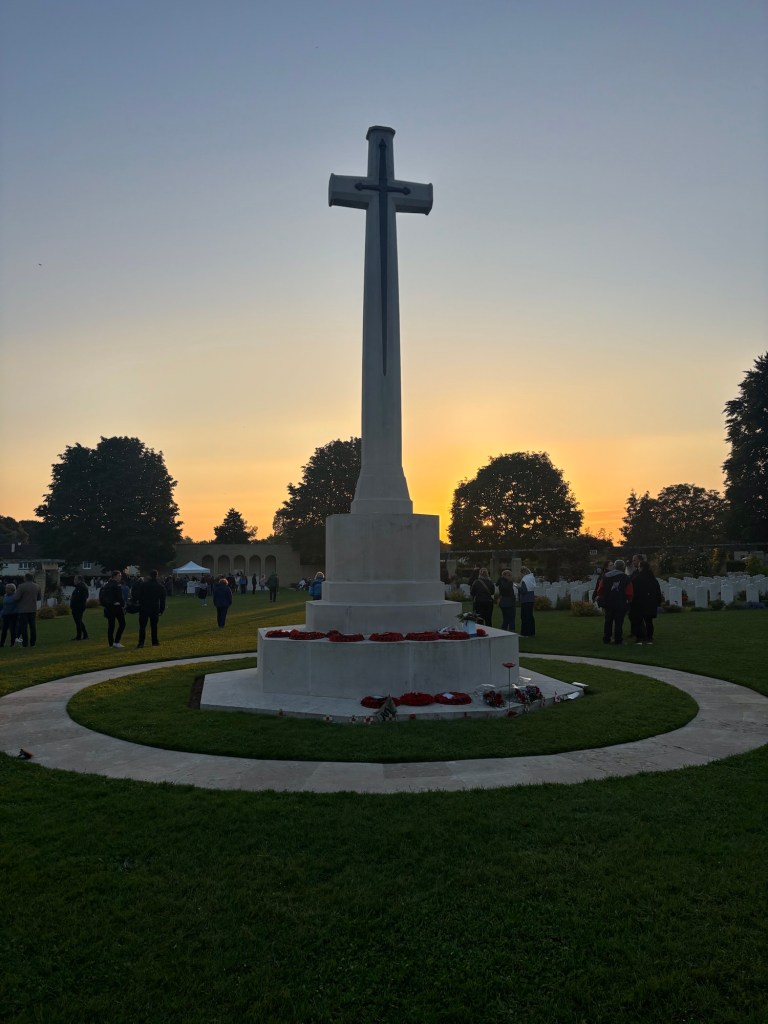
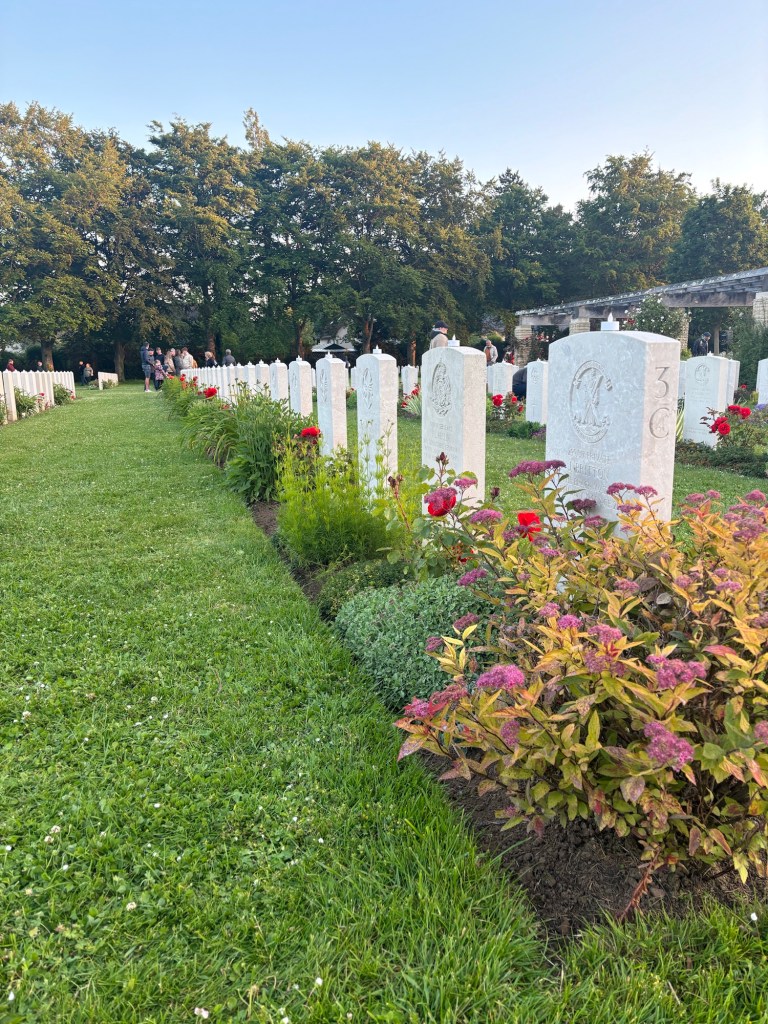
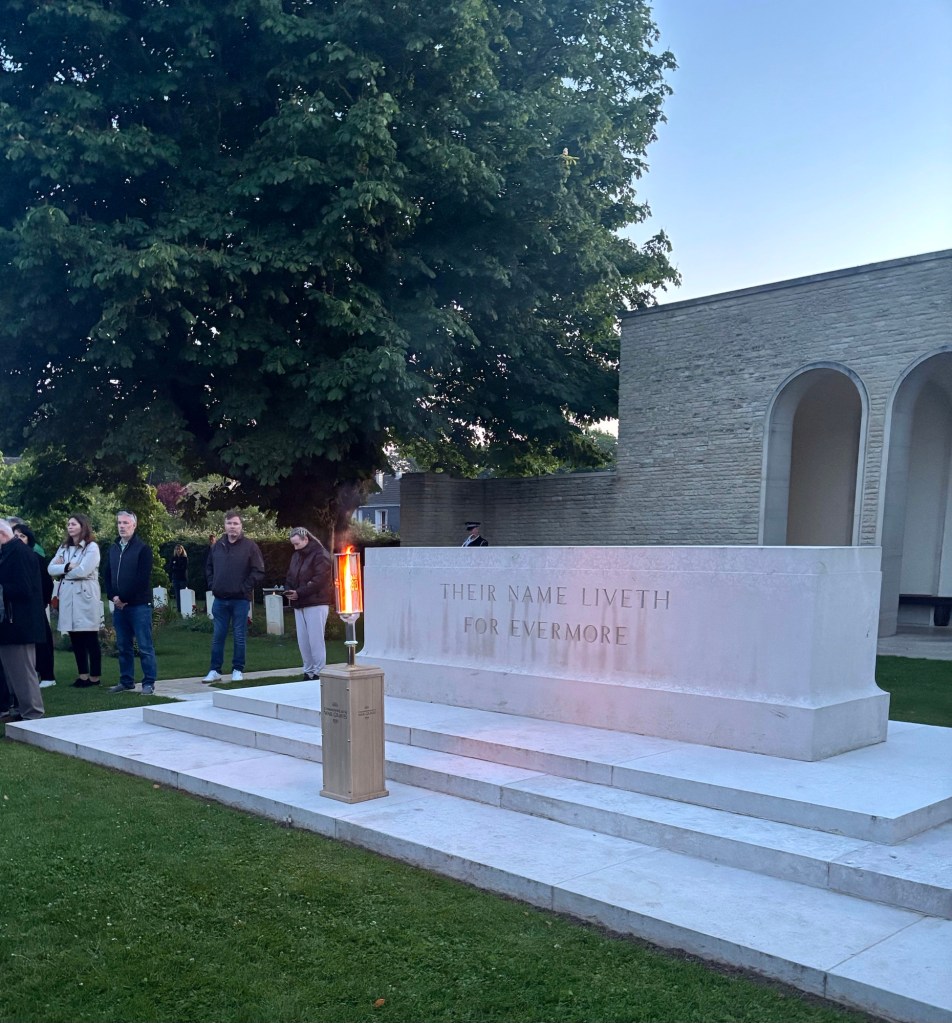
It was a haunting and moving moment, as we stood quietly in the dusk, bats swooping overhead, a piper playing and as darkness deepened, the lights stood out brighter reminding us that their sacrifice must never be forgotten.
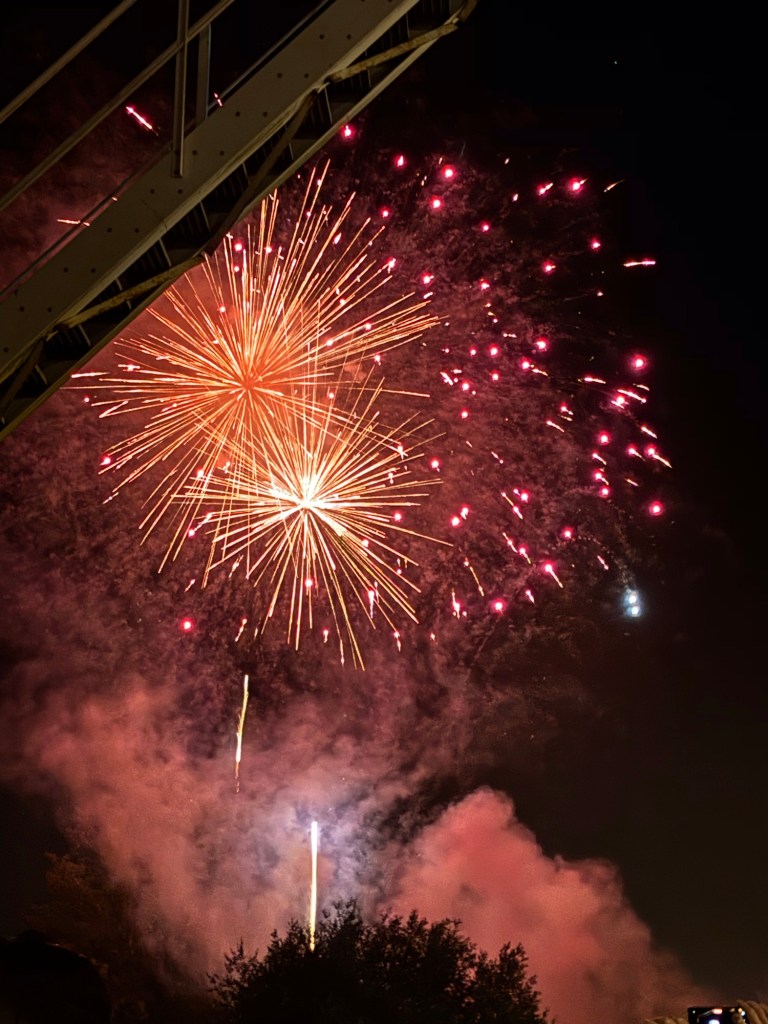
From Ranville Cemetery we made our way to Pegasus Bridge, where huge crowds had gathered for the ceremony and fireworks that celebrate the moment the gliders landed and Pegasus Bridge was taken. We were standing on the bridge with hundreds of others as troops from the Army Air Corp and The Rifles along with a military band and pipers made their way across the bridge where readings and wreaths were laid and a Champagne toast taken at Café Gondree. Then after midnight there was a spectacular firework display to mark the time that Pegasus was taken.
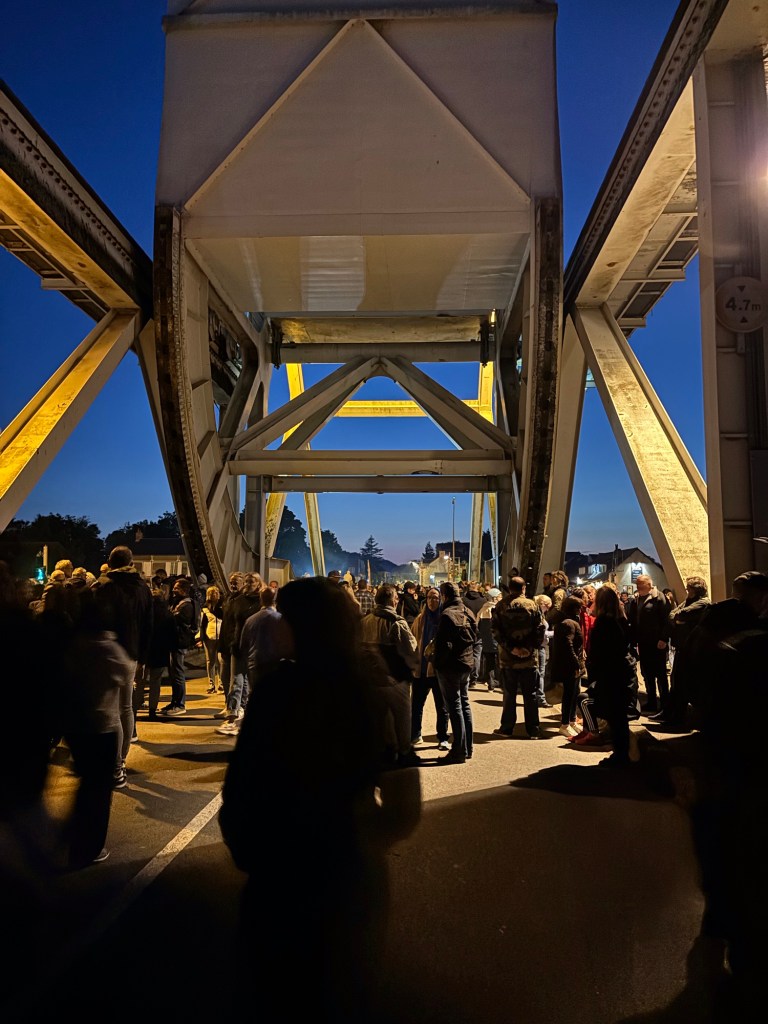
After the ceremony we decided to carry on across the bridge, grab a drink and meet up with others from our group. The area around Café Gondree and Les 3 Planeurs Bar was packed with people, servicemen and veterans celebrating and just before 1 am we decided to make our way home but as we moved through the crowds to cross the bridge, it opened, to allow shipping through. It took 45 minutes for the large vessel, a very beautiful sailing cruise ship called Sea Cloud Spirit to go through and for the bridge to come down so the hundreds of people could make their way home. We got back to the motorhome around 2 am, absolutely frozen, as it is really very cold at night.
Thursday 6th June – due to the number of high-profile dignitaries attending ceremonies, many roads were closed and access to many areas was restricted, so we embarked onto a little road trip to see where we could get to and generally drive around the Normandy side roads and just take in the beauty of the countryside.
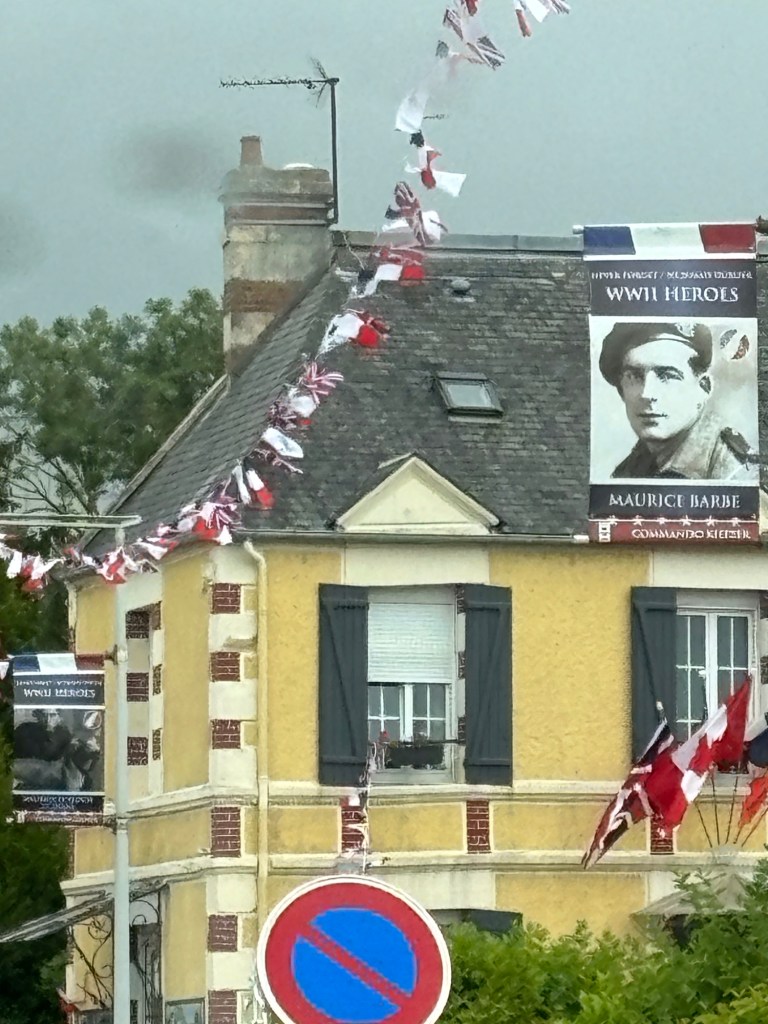
On lampposts in towns, villages and tiny hamlets are posters showing a photo of a hero, their name and their country’s flag.
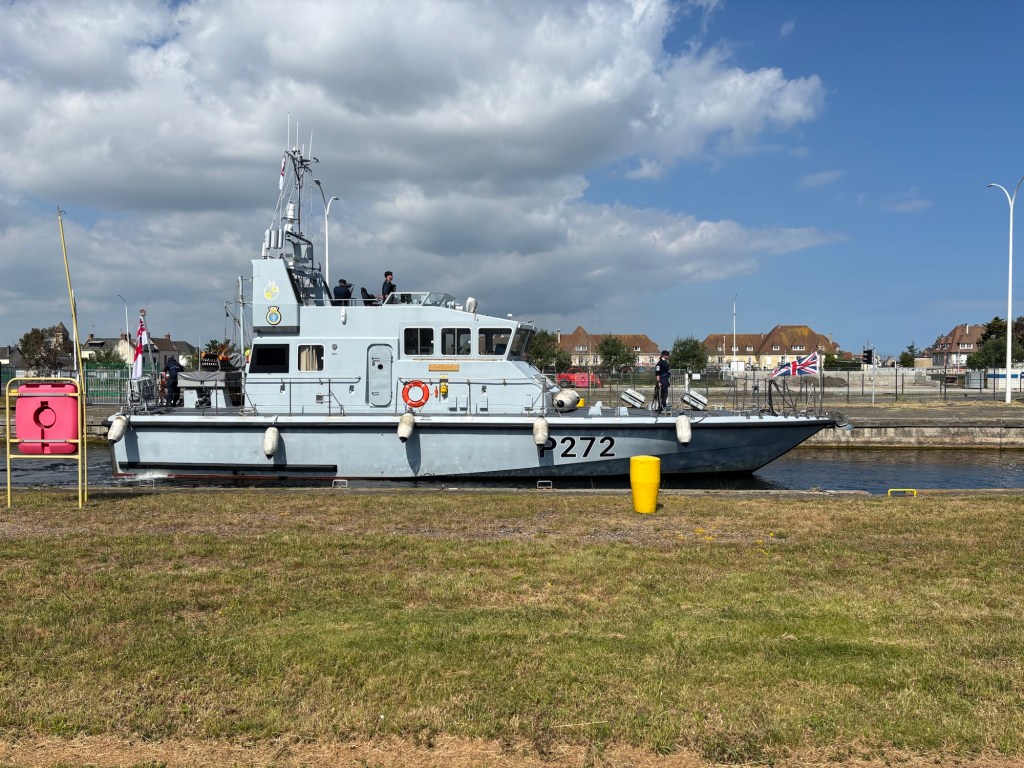
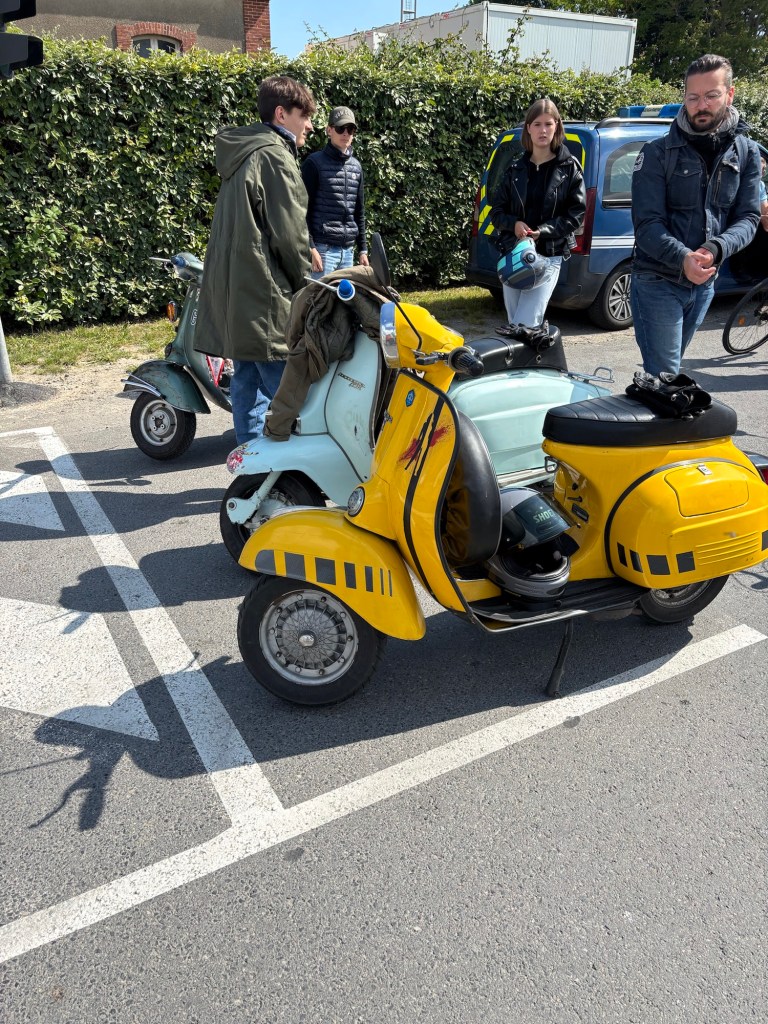
To cross the Caen Canal and Orne River, the quickest way from our campsite is usually across Pegasus Bridge but we knew there would be huge queues, so made our way down the side of the river to Ouistreham where you cross via 2 bridges. We arrived to find the first bridge up to let shipping into the lock and they were 3 P Class Royal Navy ships, HMS Blazer, HMS Exploit and HMS Smiter. So well worth the hold up, plus we met 3 vintage Lambrettas.
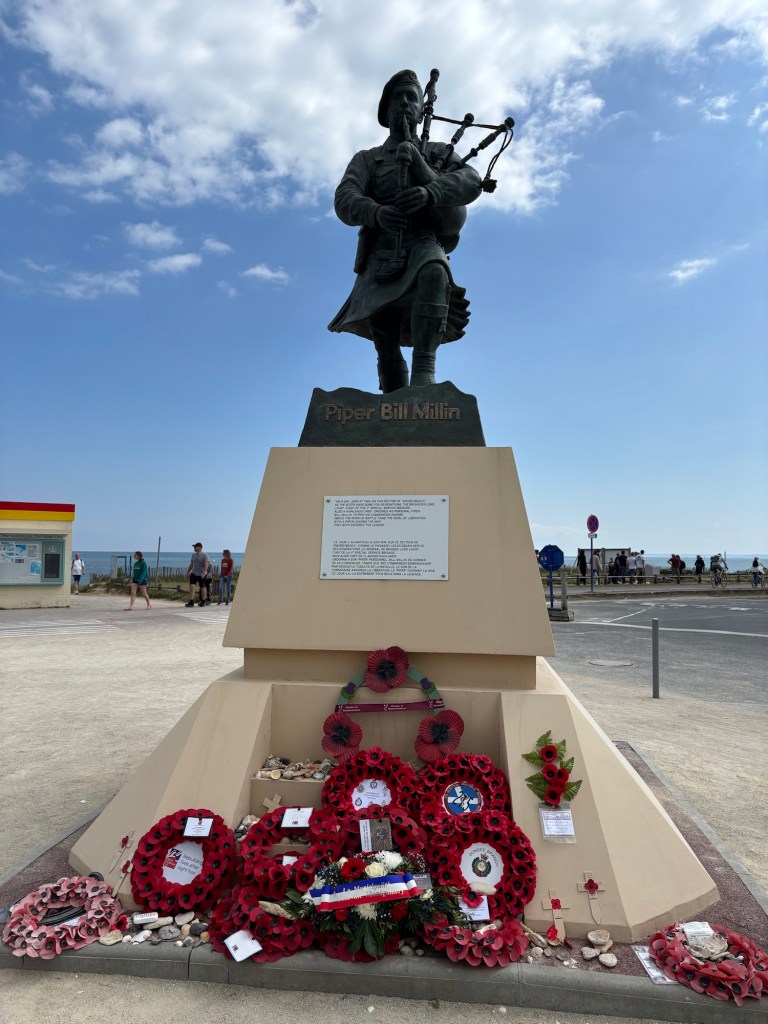
We made our way to Coleville-Montgomery where there is statue to Piper Bill Mullin, who landed on Sword Beach with Lord Lovett. During WW1 pipers piped troops into battle, however as so many were killed, the British Govt forbade the practice in WW2. However Lord Lovatt said when Private Mullins reminded him of this order, “Ah, but that’s the English War Office. You and I are both Scottish, and that doesn’t apply.” so Piper Mullins marched up and down the beach in his kilt piping ‘Highland Laddie’ and also piped Lord Lovett’s troop across Pegasus when they relieved Howard’s men. Piper Mullins wore the kilt his own father had worn at Flanders.
We managed to get to the outskirts of Arromanches before we were turned around by Gendarmes. I love the Normandy countryside and travelling quietly through the tiny back roads, away from the hustle and bustle of the popular sites seemed fitting on D-Day itself.
Arriving back at Merville, we spotted some of our friends having a drink at a bar, so we joined them and later that evening we all gathered for a BBQ to celebrate our friend, Robbie’s birthday.
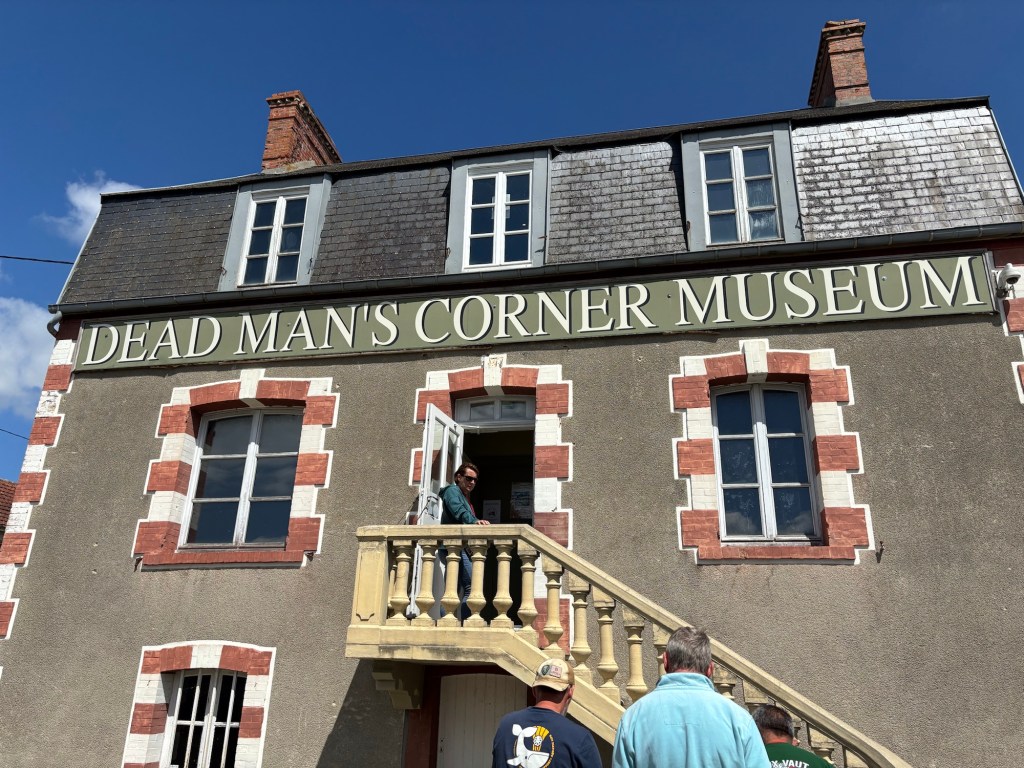
On Friday 7th June, we joined up with Jim, Jane and Toby to head over towards Carentan and St Mere d’Eglise in the American sector. Our first stop was the D-Day Museum at Dead Man’s Corner, just outside Carentan. Part of the Museum is based in a house that was used as the Headquarters of the German paratroopers before being taken over by American paratroopers. The area was the scene of fierce fighting and an American tank that was taken out by the Germans had its commnader’s dead body sat in the turret and was named Dead Man’s Corner by the troops who used the tank as an identifying marker. After over an hour’s wait, we got into the Museum, however the 3D experience and simulator were sold out. At that moment we decided not to attempt to visit any more paid attractions as the queues for both parking and entry were enormous.
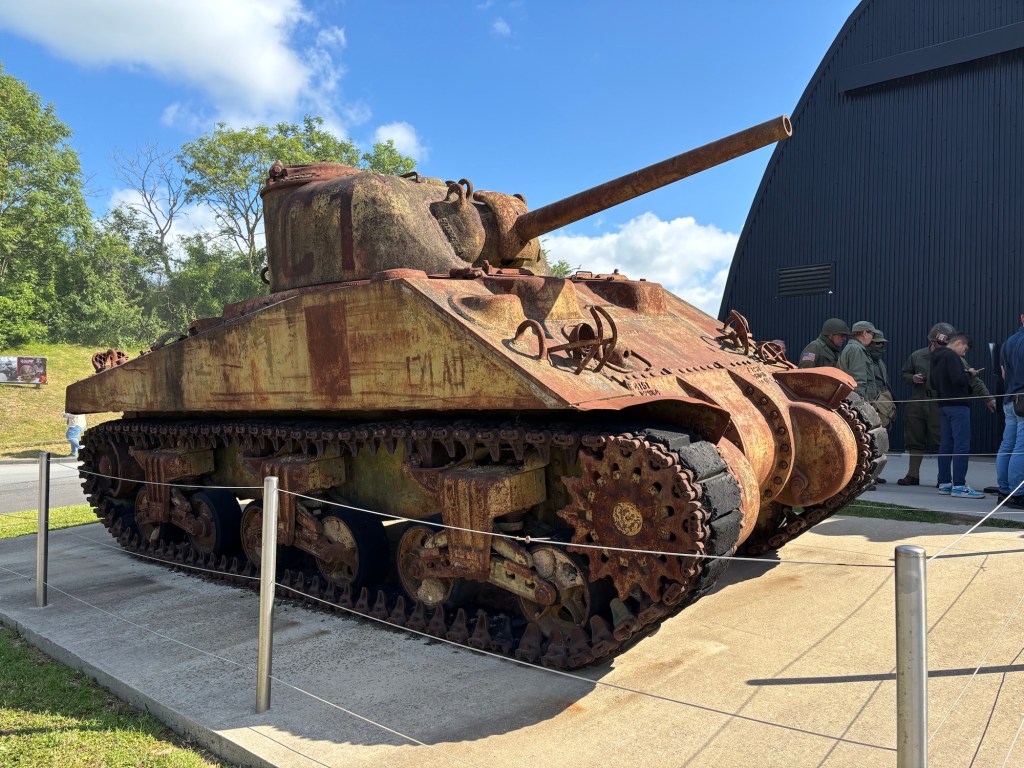
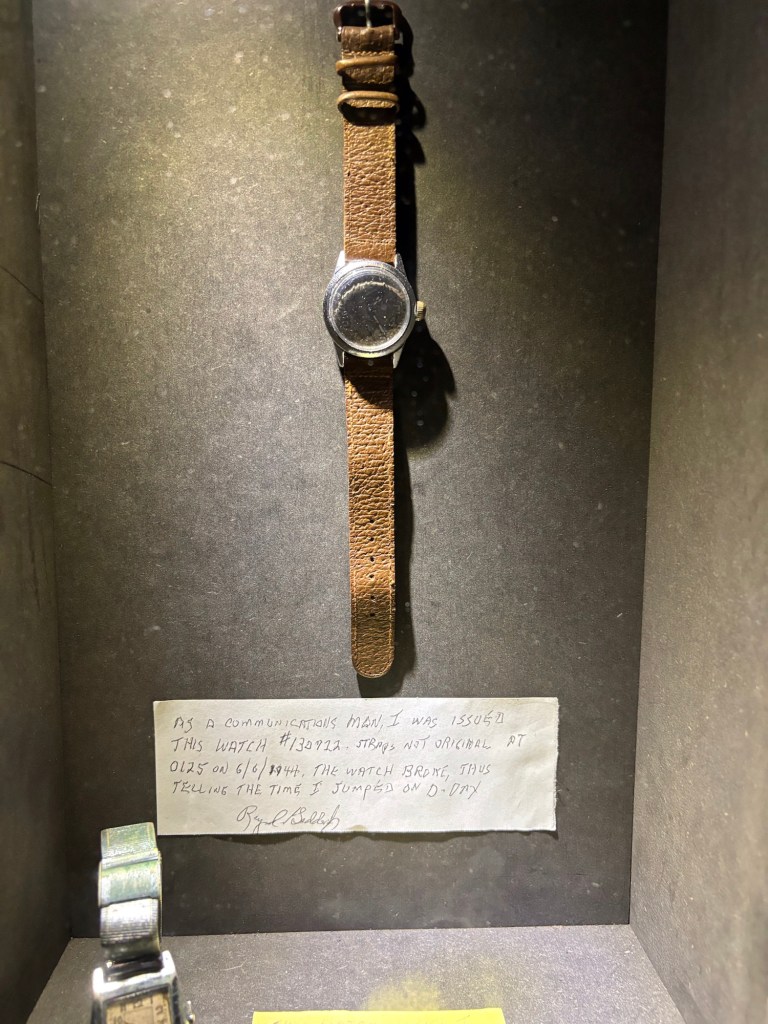
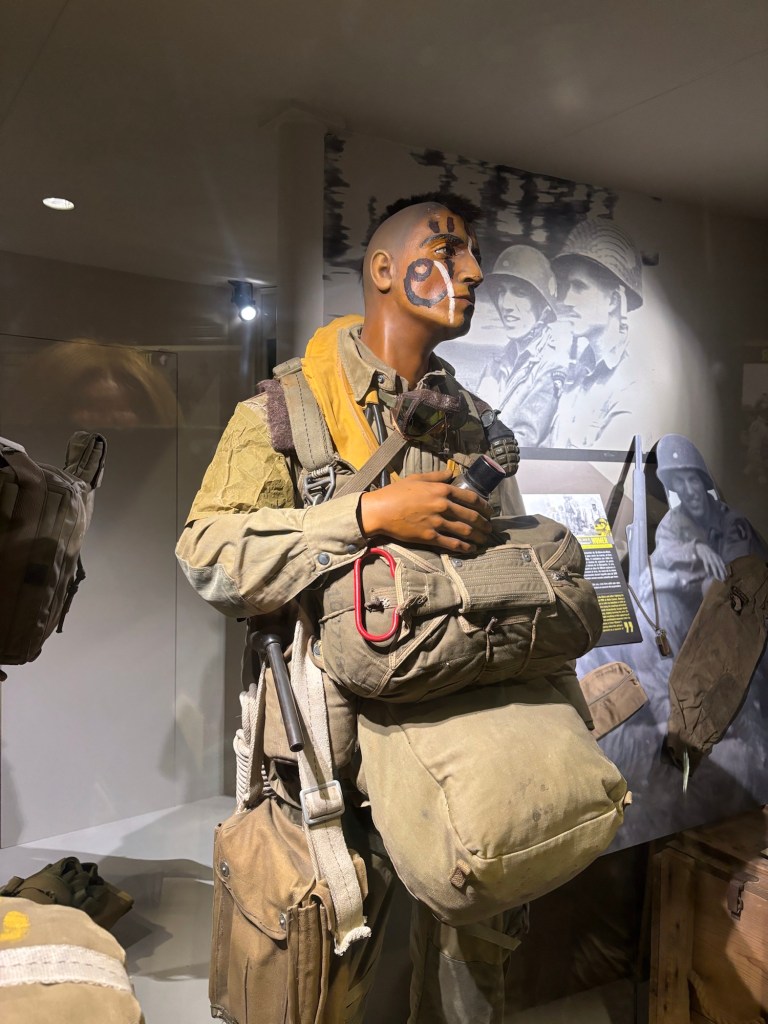
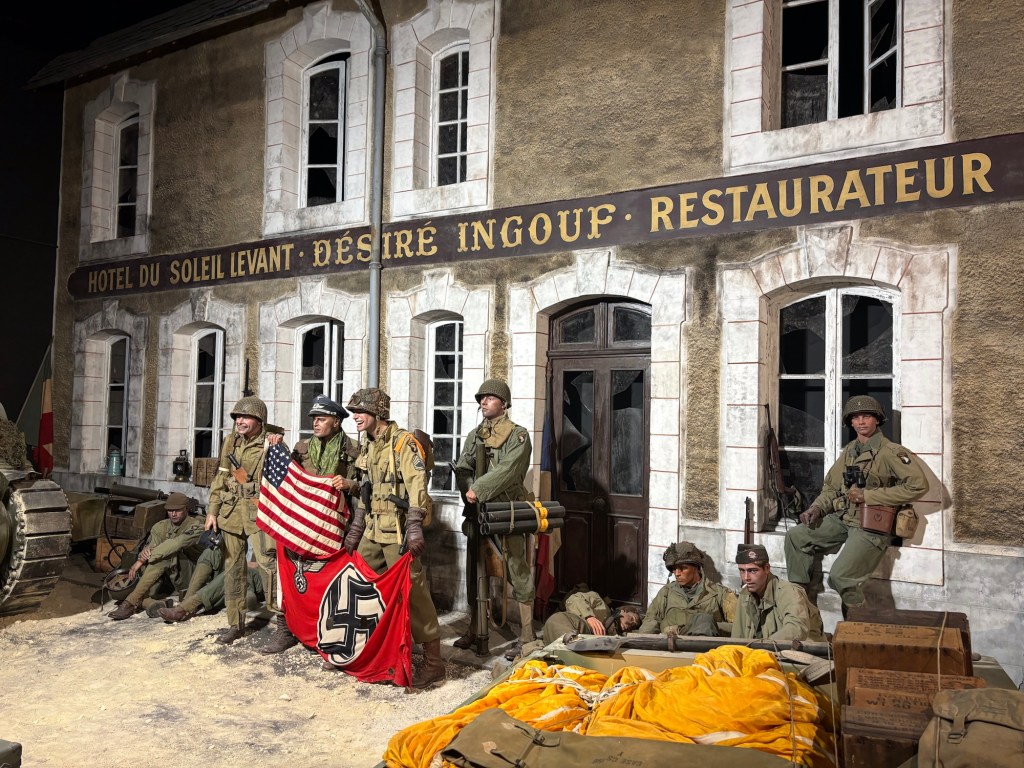
A few miles along the road is the Medics Church in Angoville-au-Plain. Charles and I had visited this Church last year. During the Battle of Normandy 2 US medics used the Church as an aide station, treating 80 injured American and German soldiers plus a local child. Today blood stains are still visible on the pews. Two of the stained glass commemorate the medics and the American paratroopers of the 101st Airborne Division. If you would like to know more about this and our visit to the American sector, then please scroll back on this blog to the appropriate post.
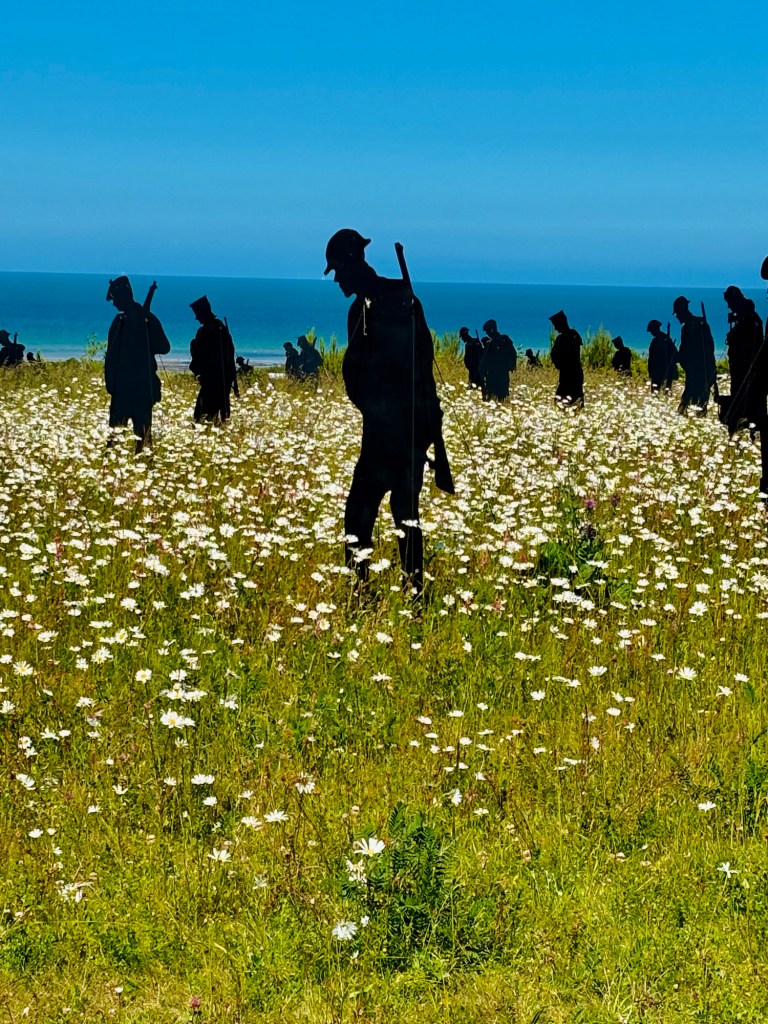
Whilst in the car we heard on French radio that the roads around St Mere d’Eglise were gridlocked so we abandoned plans to visit and made our way to Vers Sur Mer, where the British Normandy Memorial is. As it was now late in the day, we were lucky to park around 5 minutes walk away. Charlie and myself had visited the Memorial before so whilst Jim, Jane and Toby walked around, we made our way to the new installation ‘Standing with Giants’, where 1,476 silhouettes are installed across a wild meadow, just behind the Memorial. The silhouettes represent the 1,476 British servicemen who died on D-Day. It is truly stunning.
The day then went slightly to pot, as we made our way back to Merville, Jim’s car developed a puncture, which was not in a repairable place, so we limped back to their accommodation. They were due to leave early the next morning for a Channel Tunnel crossing, but it would have been touch and go if the tyre would have made it. Phone calls had ascertained that a replacement would not be available until Tuesday 11 June at the earliest. So with the help of the AA they got onto the Caen to Portsmouth Ferry, stayed the night in a Travelodge, whilst Lorcan, a friend drove down to Portsmouth with a second hand tyre, that was fitted on Sunday morning at a local garage. So Jim, Jane and Toby’s holiday ended a little stressfully.
The rest of our party returned to the UK on Saturday 8th June but we were not leaving the Normandy area until Monday 10th June.
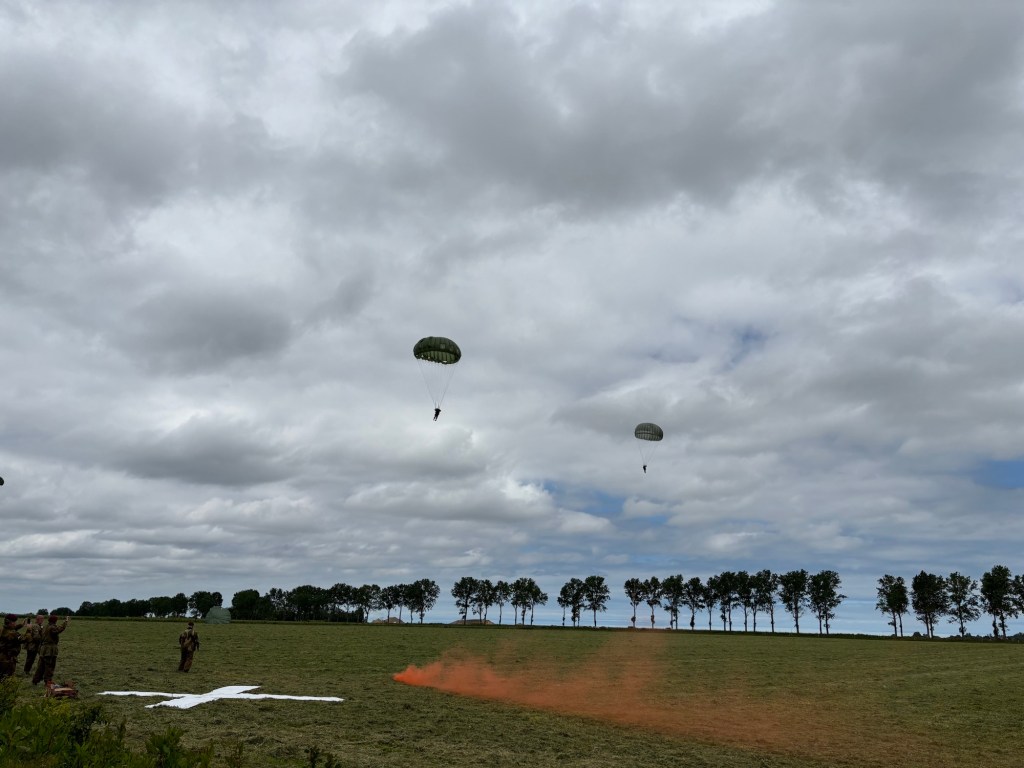
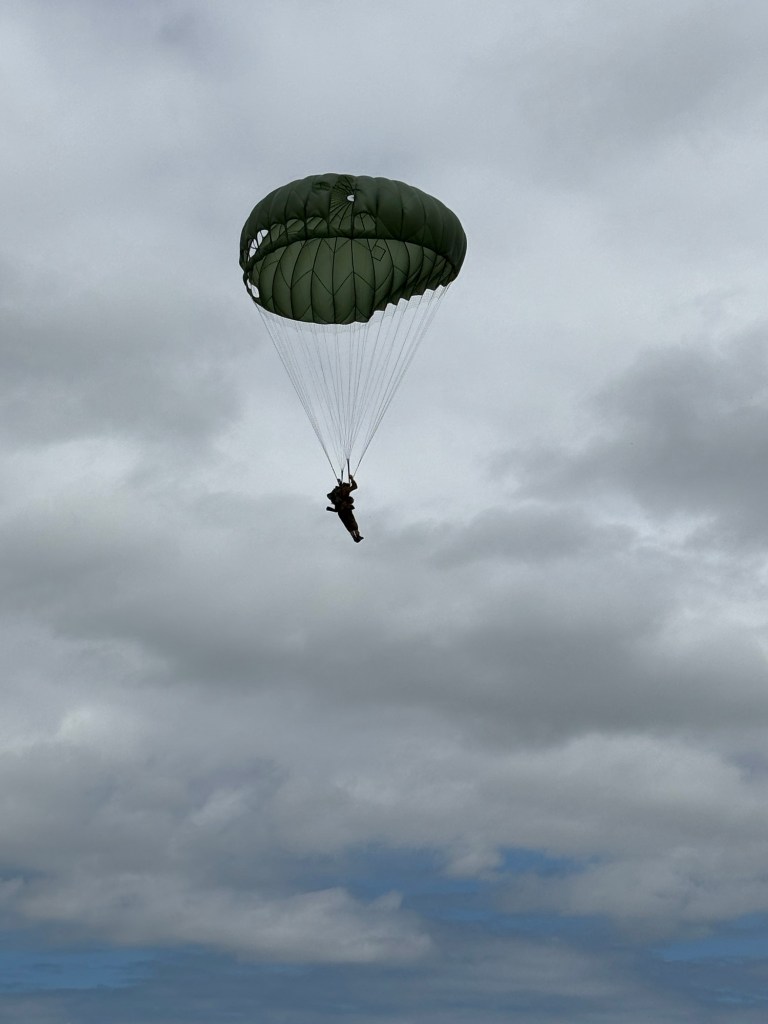
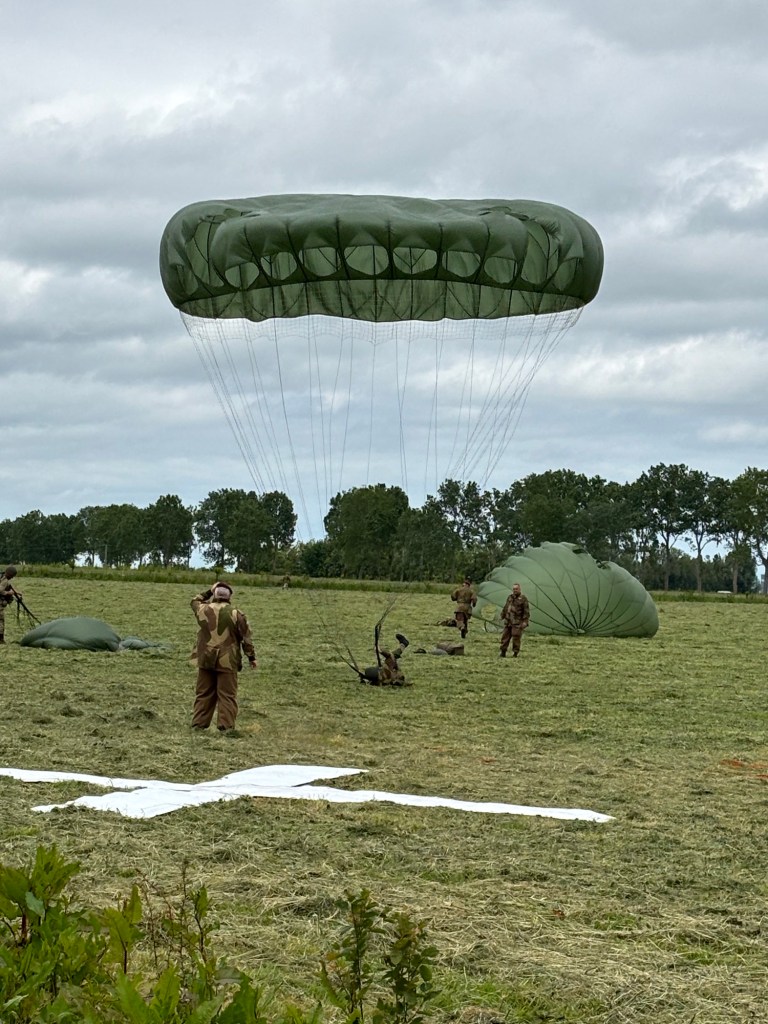
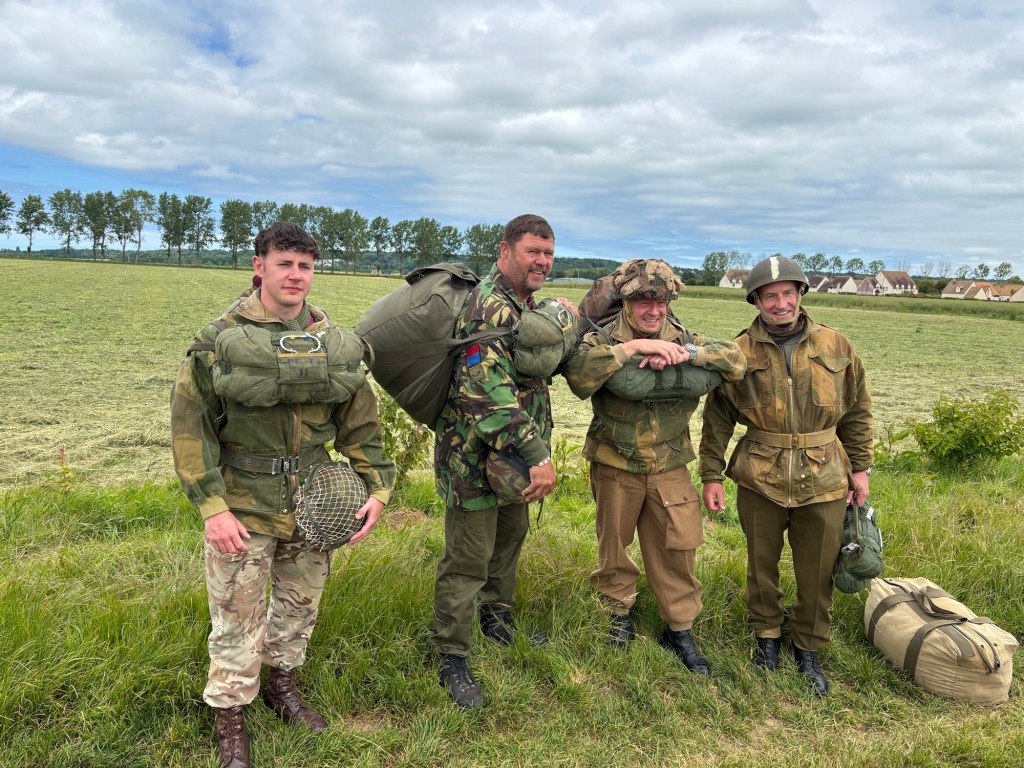
After a conversation with an ex-para during the week, we learned that there was to be a number of parachute drops at Sannerville, about a 40 minute drive from our campsite. So on Saturday 8th June we made our way to the field just outside of the village, 10 minutes before the first two drops. The guys doing the jump were from many countries, some were ex-serviceman, others enthusiasts. The jumps were done with round parachutes which replicated the chutes used during WWII and can no longer be used in the UK. We had heard that there had been a couple of injuries in the previous drops early in the week but the two drops we witnessed had no injuries but a couple of heavy landings. It was a magnificent experience to watch.
We then made our way back to Pegasus Bridge, popping into Ouistreham where again we saw the Sea Cloud Spirit going through the lock, out into open sea. We stopped at Café Gondree for a quick drink before walking over the bridge once again to look properly at the site of the glider landings as the crowds had now lessened and you could really get a sense of how close to the bridge they landed.
Sunday 9th June – our last day in Normandy. Today we drove down to Bayeux on the scooter, via the small roads to watch the largest parade of military vehicles, where we hoped to see our friend, Jon, who was driving one of them. We managed to park the scooter and positioned ourselves at a roundabout where we would have good view of the vehicles as they entered and exited. However, the gendarmes let the traffic block half the roundabout so that all the people on our side of the roundabout now had their view totally blocked. There was booing and the gendarmes then let us stand in the middle of the large, grassy roundabout where we just had time to hear a shout as Jon spotted us from Daisy the Dodge!
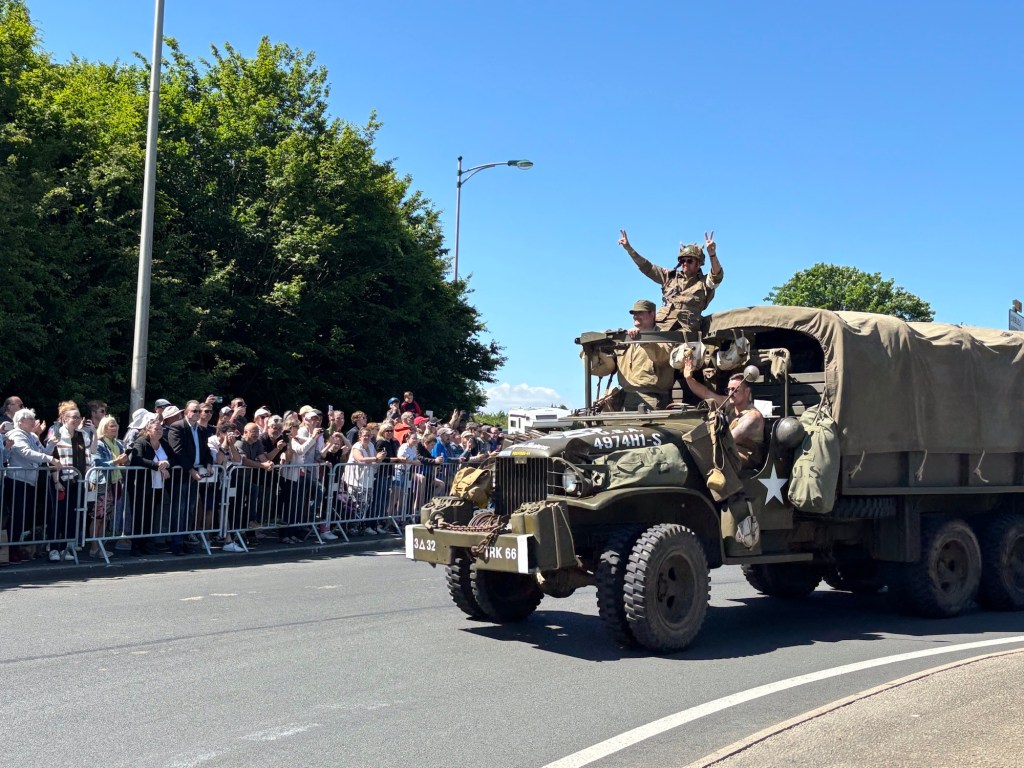
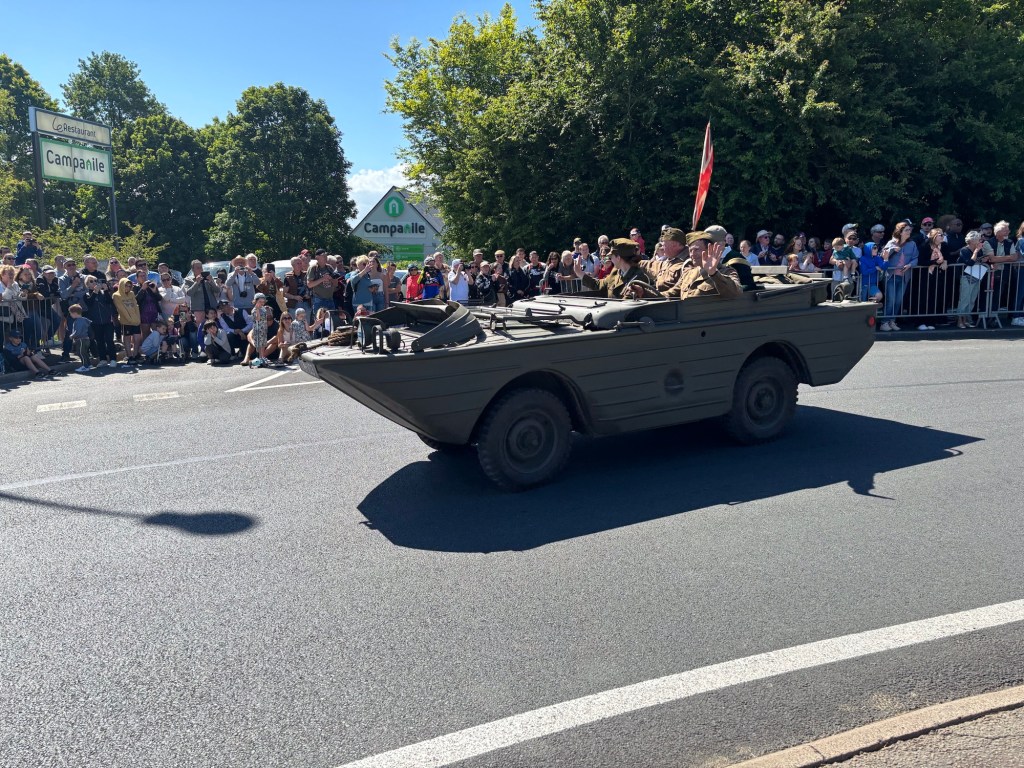
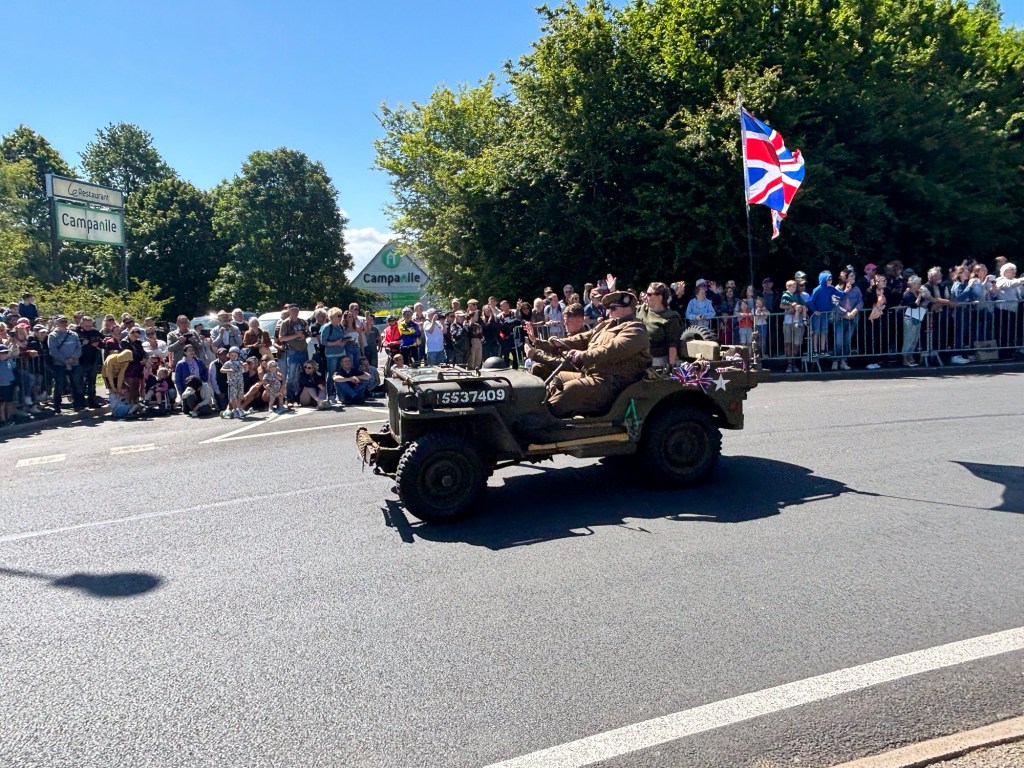
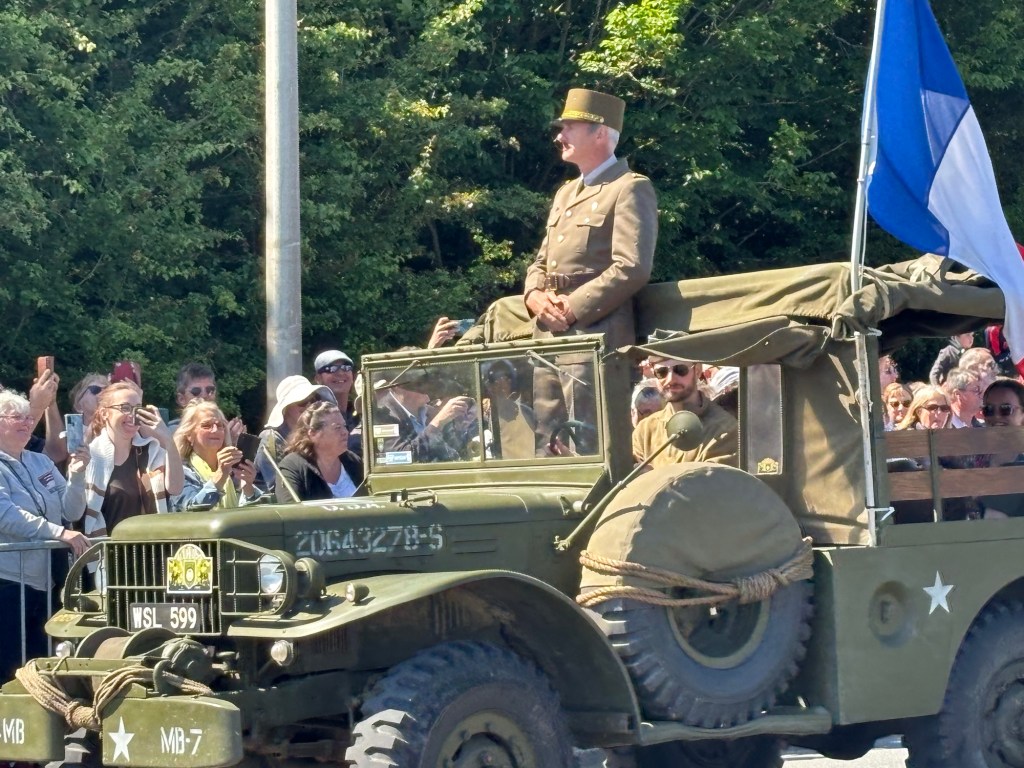
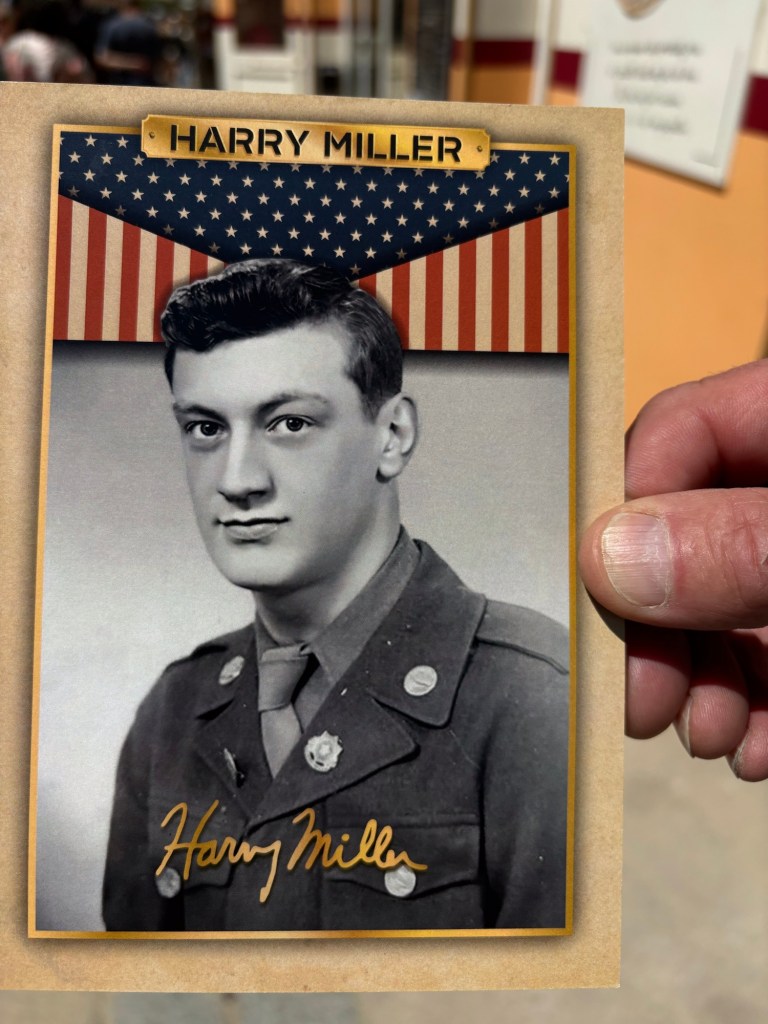
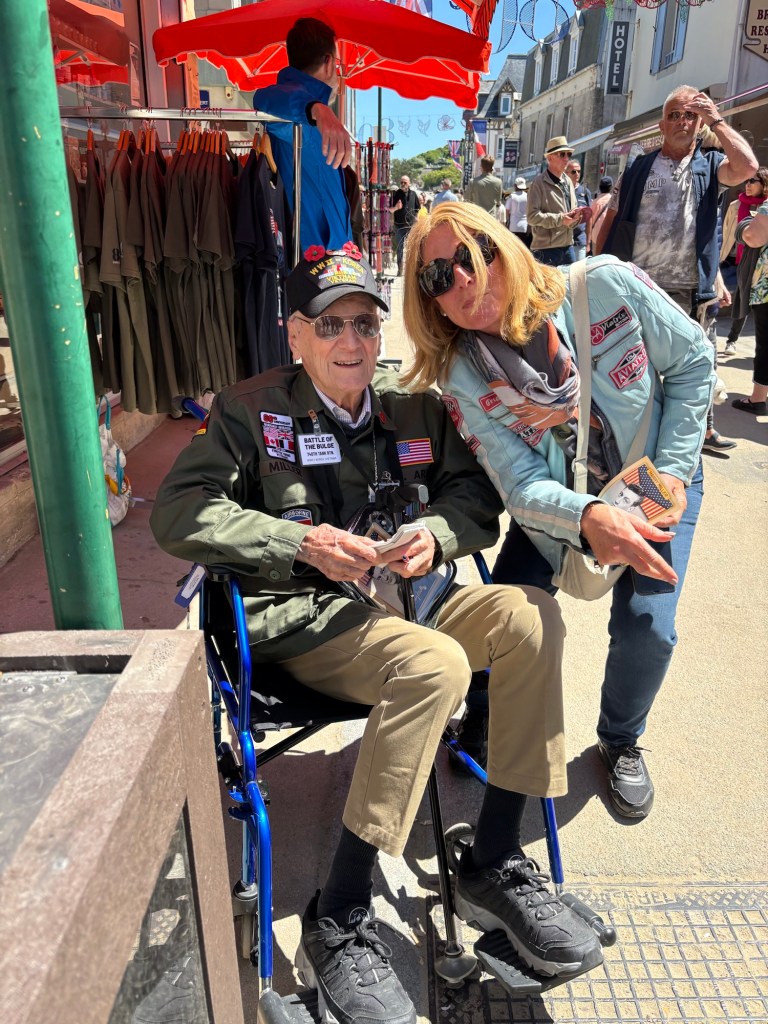
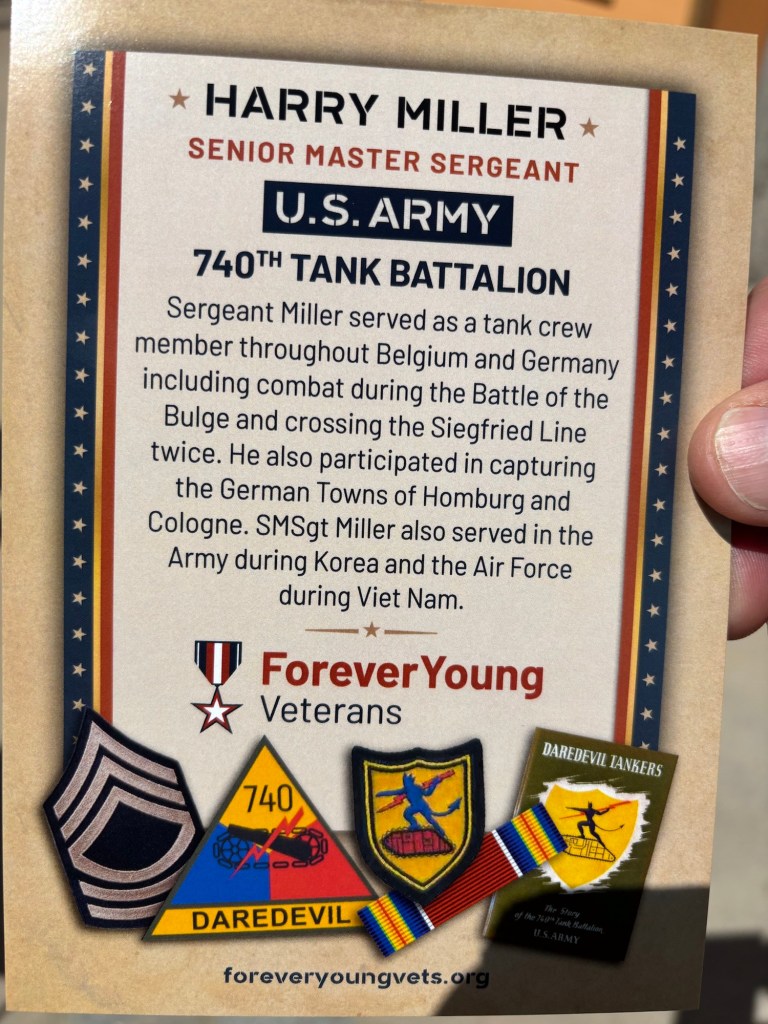
We had planned to have lunch in Bayeux, but with so many vehicles and people, we decided to go to Arromanche. I am so glad we did, as we were finishing our lunch sat in the sun, a US Veteran Association party came down the street. The men, all in the late 90’s and into their 100’s, were accompanied by volunteers. We chatted to 96 year Harry Miller, Senior Master Sergeant, who saw combat at the Battle of the Bulge, and then moving into Germany. Harry also served in Korea and Vietnam. We also had a bit of banter with another veteran, whose volunteer helper’s father was from Manchester, where our daughter lives.
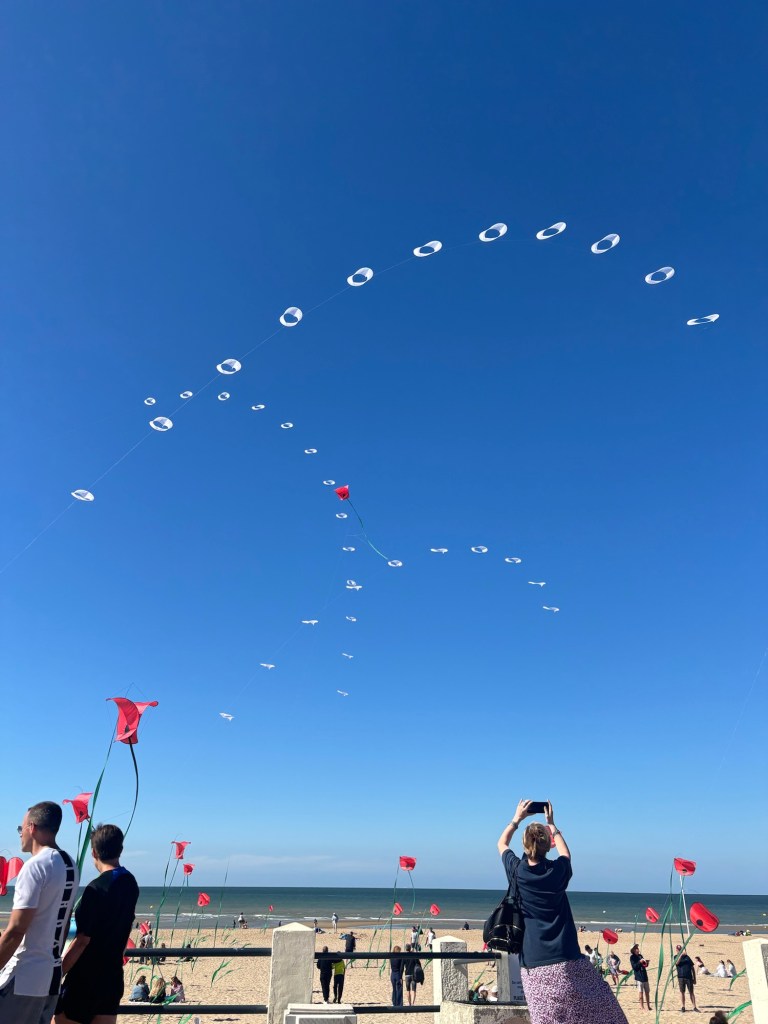
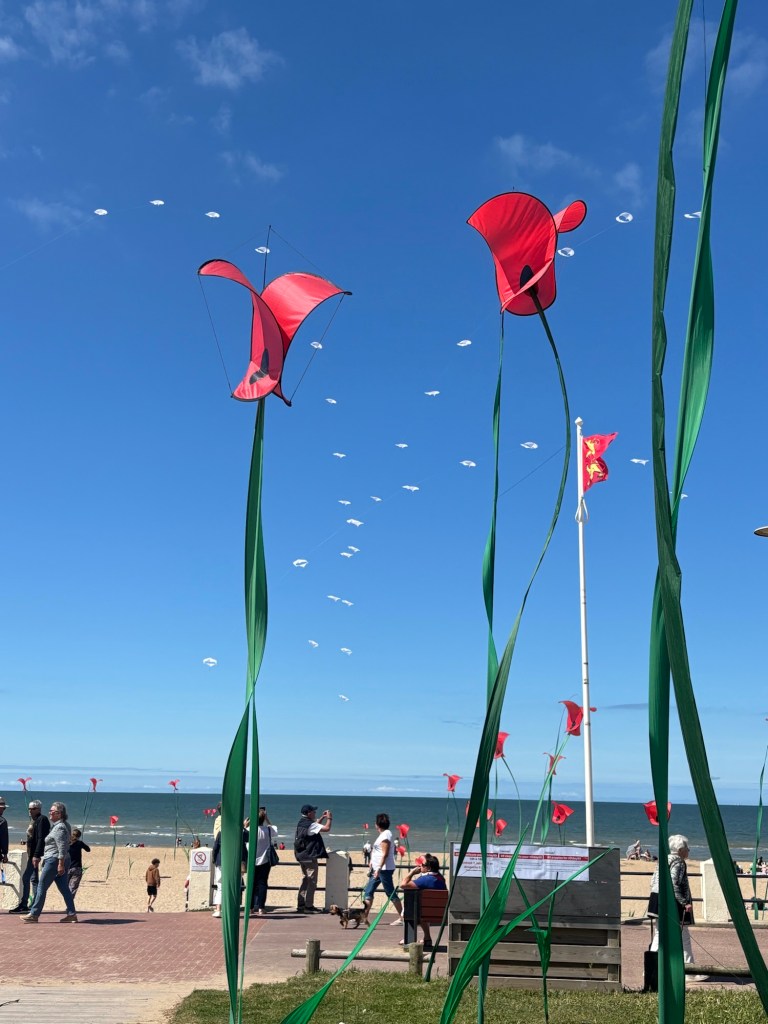
We finished the day having an early evening drink in Merville, looking at the poppy installation and a walk on the beach.
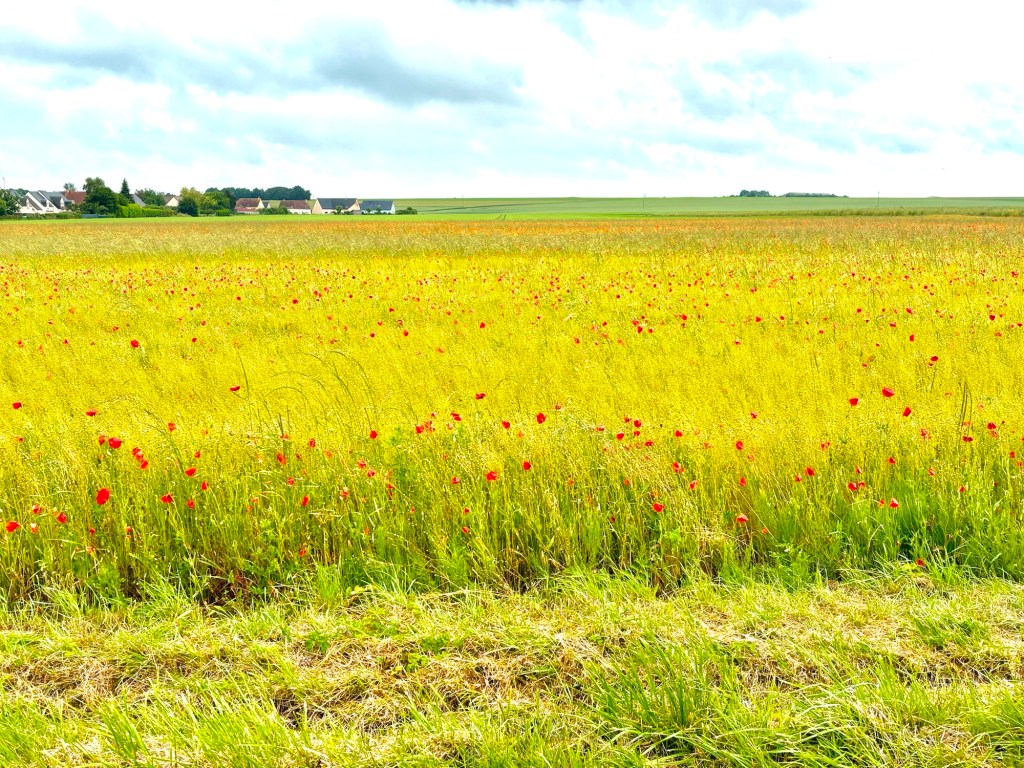
So our time in Normandy is over, it has been an enjoyable and informative week, but most of all, it has been moving and at times emotional. At the next big Anniversary, 85th, it is unlikely that any veterans will be alive and D-Day truly moves into history, so I would ask, that you take your children and grandchildren to the beaches of Normandy and fields of Flanders so light is shone on the courage and sacrifice made by thousands of young men across 2 World Wars and they are not forgotten.
 RoundandAbout