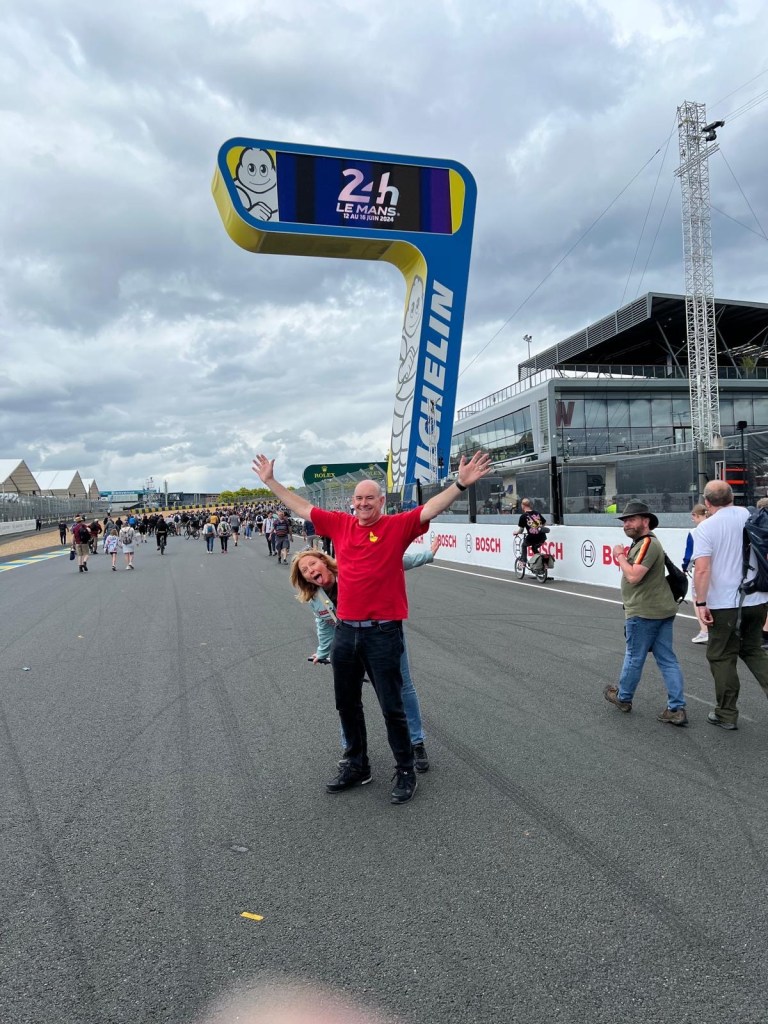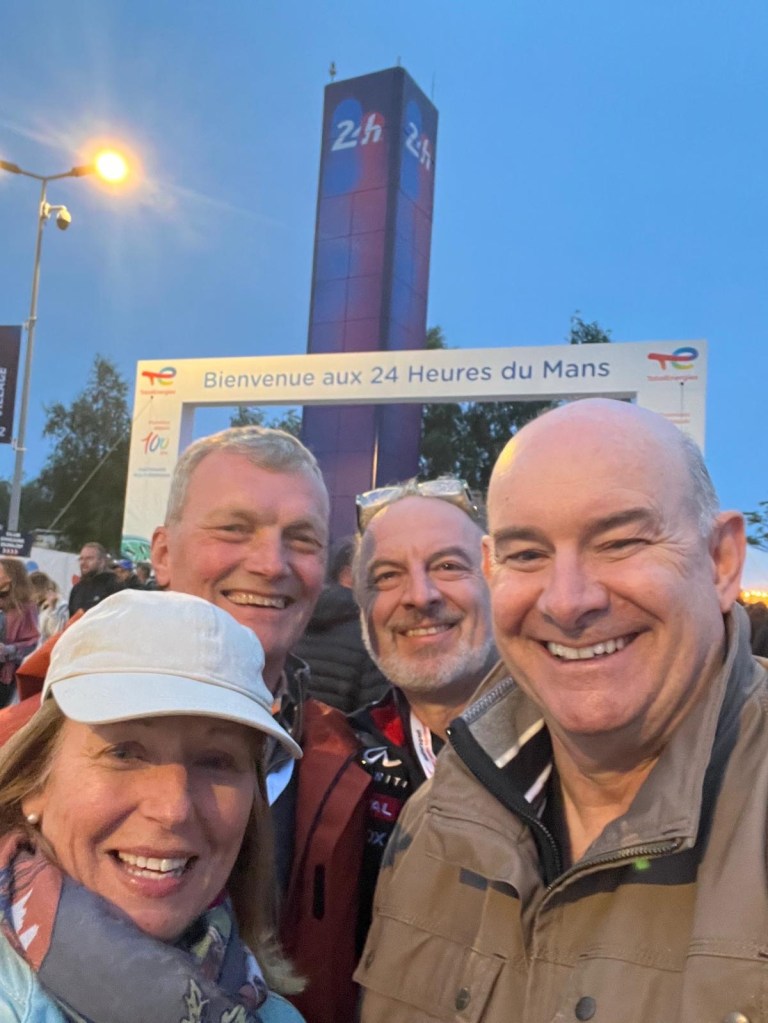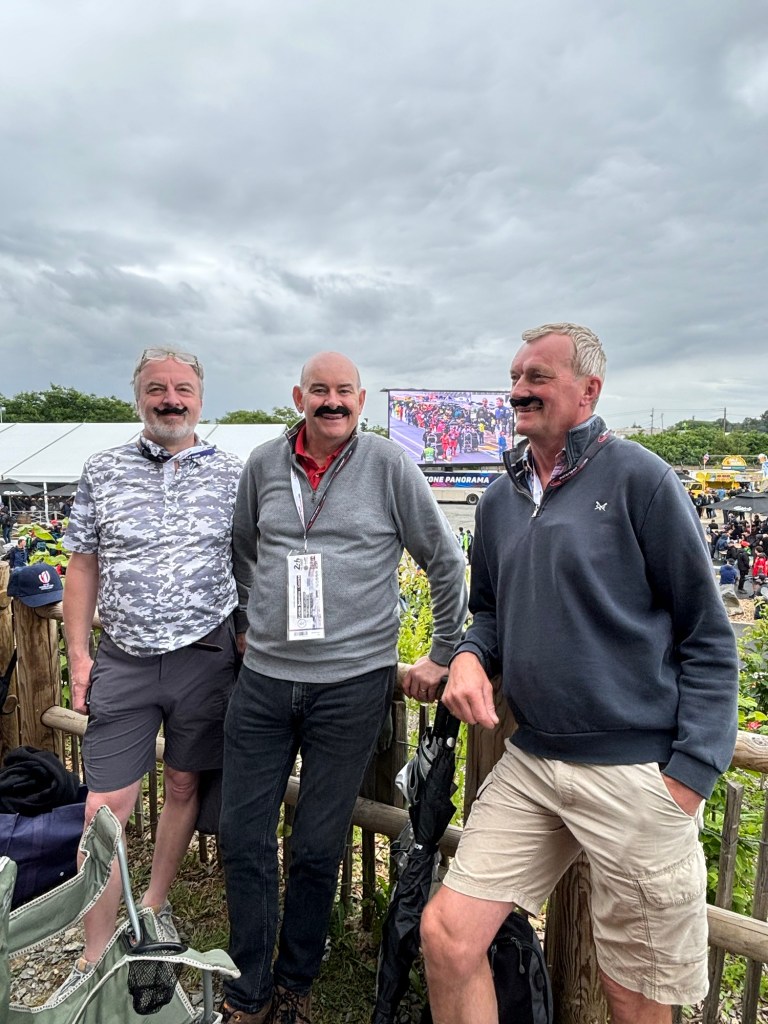
Speed, History & Spectacle – The Grand Tour – Part 9

The Madness of the 24 Hour of Le Mans

For those of you who are not motorsport fans, then a quick lesson on Le Mans 24 Hour. The Le Mans 24 Hour is one of the most prestigious races in motorsport and is an endurance race for sports cars and along with the Monaco F1 Grand Prix and Indianapolis 500 form The Triple Crown of Motorsport. 2024 is the 92nd running of the race.

In the 2024 Le Mans race there are 3 classes, Hypercar – the fastest class, is made up of sport prototypes with entries from manufacturers such as Ferrari, Toyota, Porsche, Cadillac, BMW, Lamborghini, Alpine and Peugeot and entries from private teams such Hertz Team Jota & Proton Competition in a Porsches. Next there is LMP2 – which are again prototype sports cars, made from a selection of bespoke race car manufacturers, these are entered only by privateer teams rather than manufacturers and they all have the same V8 engine manufactured by British firm Gibson Technology. Finally the LMGT3 cars, which are based on production road car models, such as the Aston Martin Vantage, BMW M4, Ford Mustang, Ferrari 296, McLaren 720S, Lamborghini Huracan, Lexus RC F and Chevrolet Corvette Z06.

Before the race, there is lot of build up both on and off the track with driver parades, practice sessions and qualifying sessions. The race starts at 4pm on the Saturday and finishes at 4 pm on the Sunday. Each car has 3 drivers plus a team of pit crew, mechanics, engineers and support staff. Very little sleep is had by anyone working at Le Mans. For them it is not just 24 hours, it is more like 40 hours!

We arrived on Wednesday afternoon and set up our pitch, making sure we had left room for our two friends, Nik & Paul who would be joining us on Thursday afternoon.

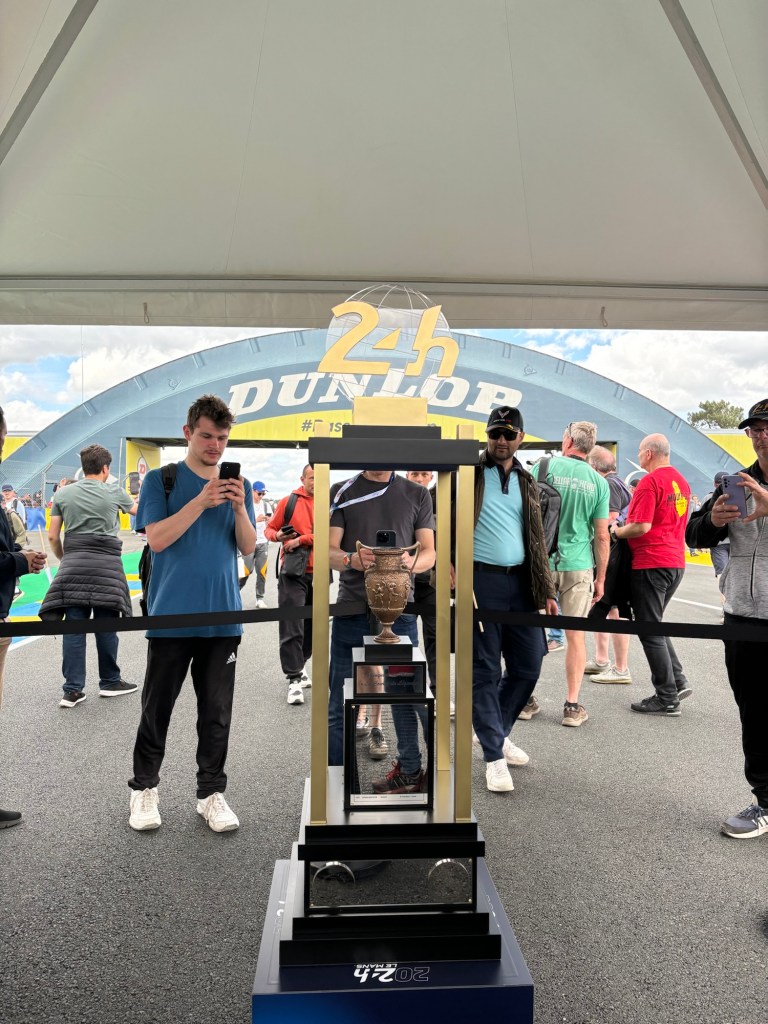
The race circuit is 8 miles long and consists of race track and road sections. The area around the start/finish and famed Dunlop Bridge has huge viewing areas and grandstands, along with bars, restaurants, food stands, exhibits and shops by all the major manufacturers. There is a gaming zone, kids zone, and a concert arena where on Thursday, Friday and Saturday nights there is music from about 8 pm to midnight. Simple Minds are the top act on Saturday night followed by a firework display.

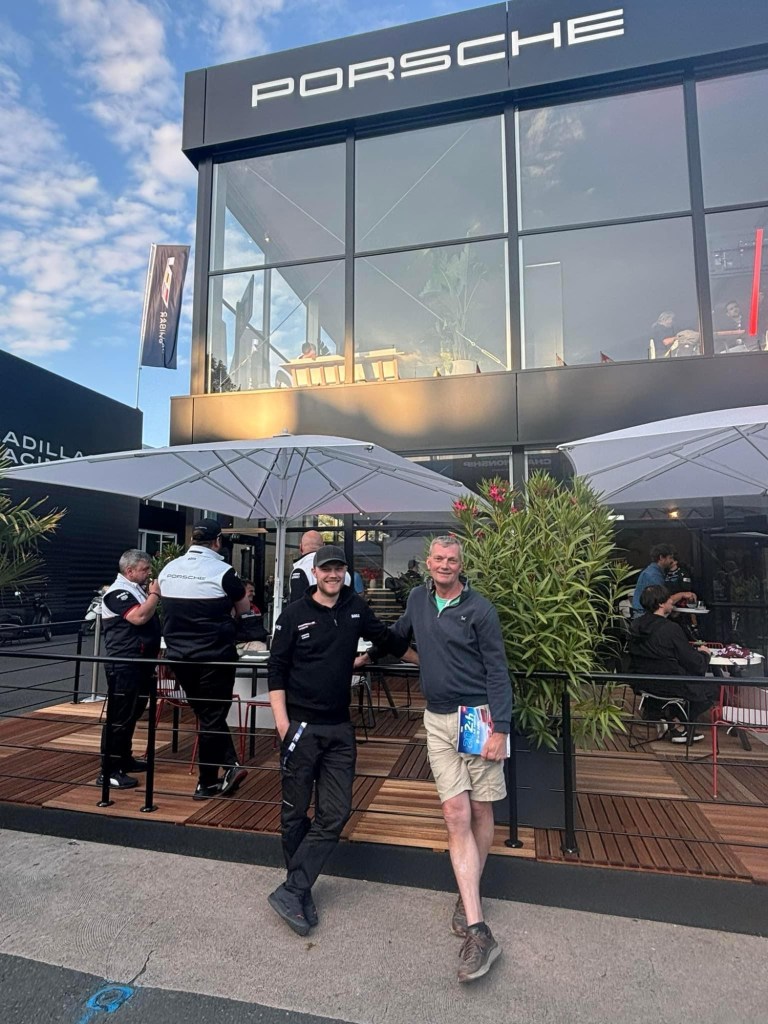
After we set up we took the opportunity to quickly meet up with Olly, our son, a Systems Engineer, who works for Multimatic who provide support to the private teams that run Porsches and Mustangs. At this race he was supporting Hertz Team Jota’s 2 Porsches and Proton Competition’s Porsche. We had a ten minute catch up before that afternoon’s practice sessions got underway. which we watched from the Grandstand above the pits.
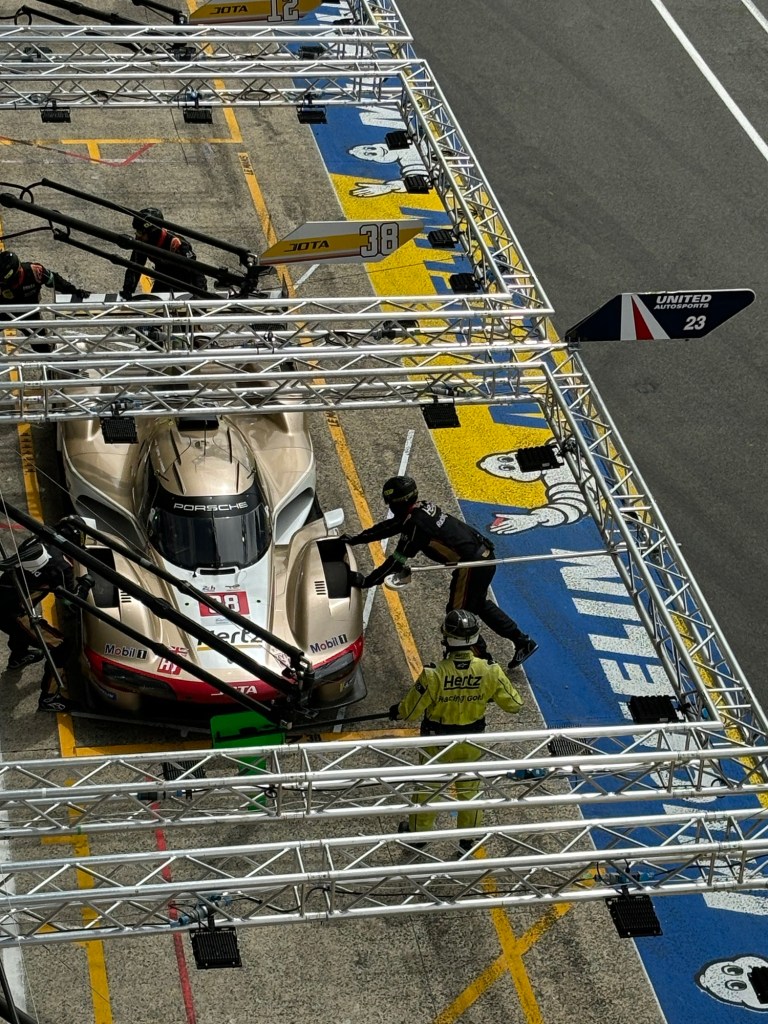
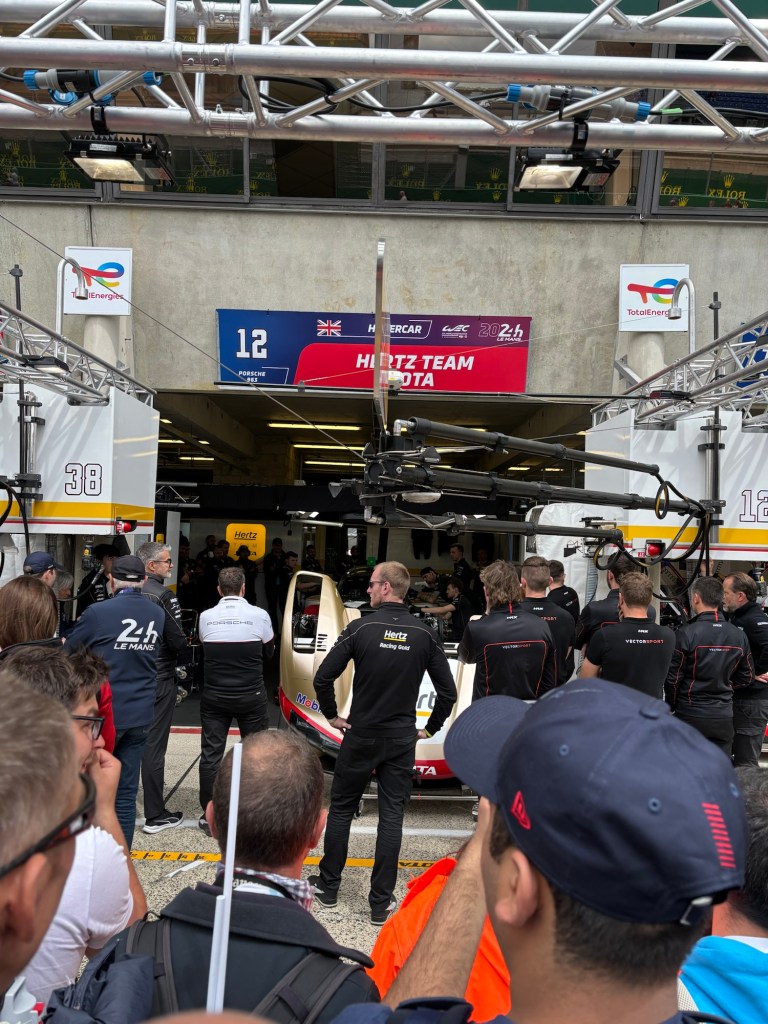
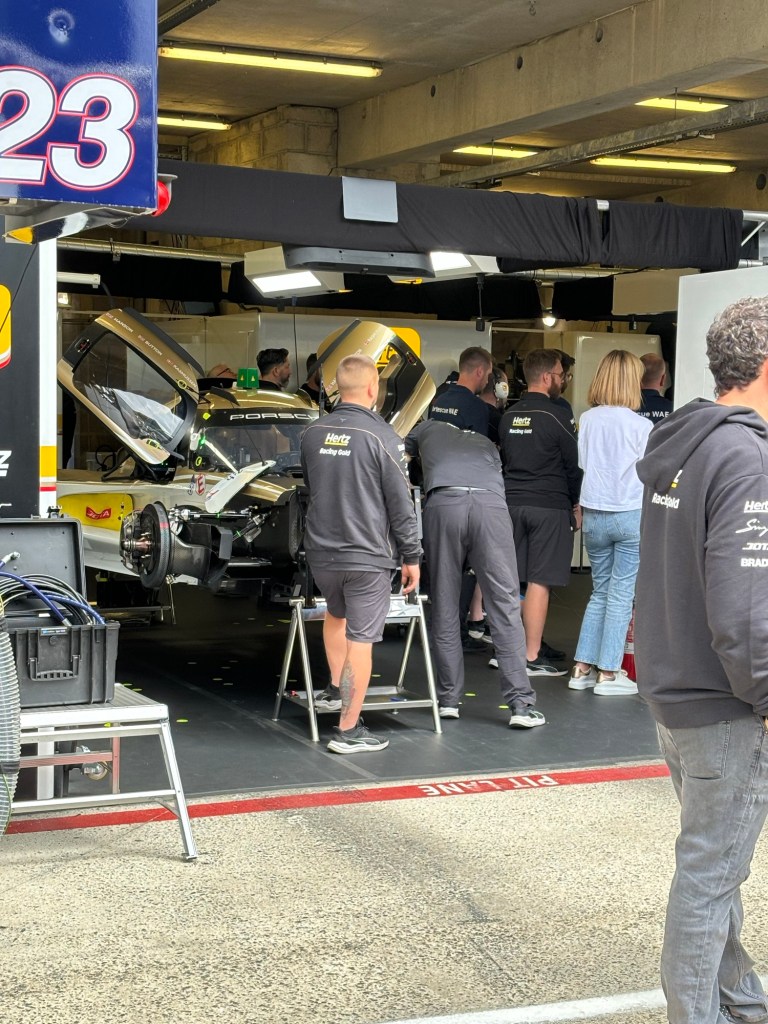
Unfortunately the no 12 Hertz Team Jota Porsche had a major accident during the night practice on Wednesday and the car needed a new chassis. It usually takes 3 weeks to build a car from the chassis up and Jota’s team had to have it rebuilt and ready by 4 pm on Saturday afternoon to take part in the race.

On Thursday we spent time at the circuit watching more of the practice and qualifying runs and then went back to meet Nik & Paul who arrived in the early evening. After a couple of beers and some food, we made our way back to the circuit to watch the night practice from the Grandstand above the pits.
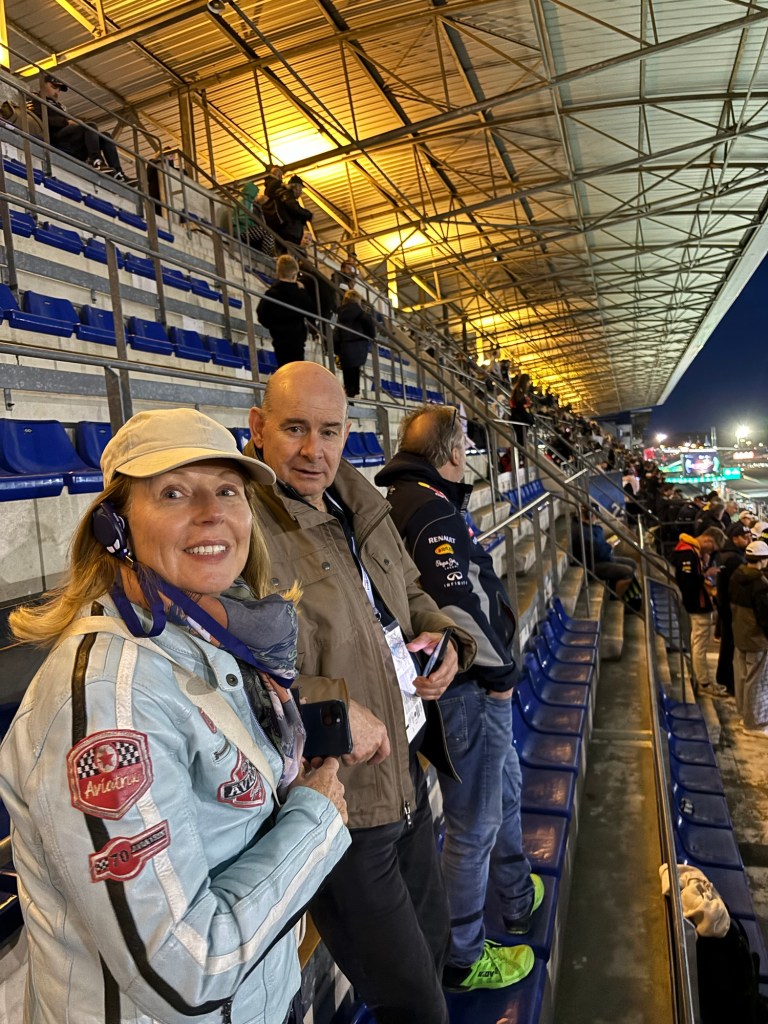
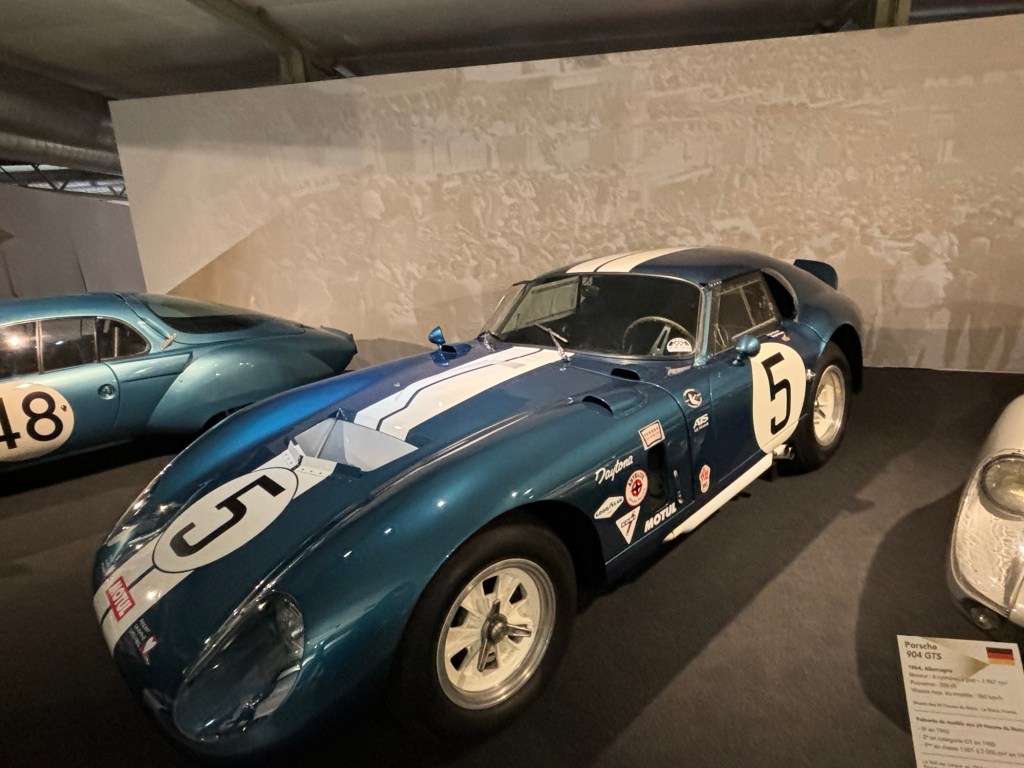
Friday is quiet day on track as the drivers attend a huge parade in old cars in the Le Mans town centre, so we took the opportunity to visit the Le Mans Museum and meet up with Olly for an hour to catch up on all the news from the inside! There was also the opportunity to get out onto the track and into pit lane, which was open to the public. It was just as we were making our way to the pits, that we got a message from Olly to say that Jota had, by the miracle of hard work and determination, had got to the car ready enough to fire up the engine. We quick marched it through the crowds to get there just as the engine roared into life. Huge cheers all round from the crowd and the Jota team. Jota had permission to take the car that night to the neighbouring airfield to give the car a ‘shakedown’, just to make sure everything was working.
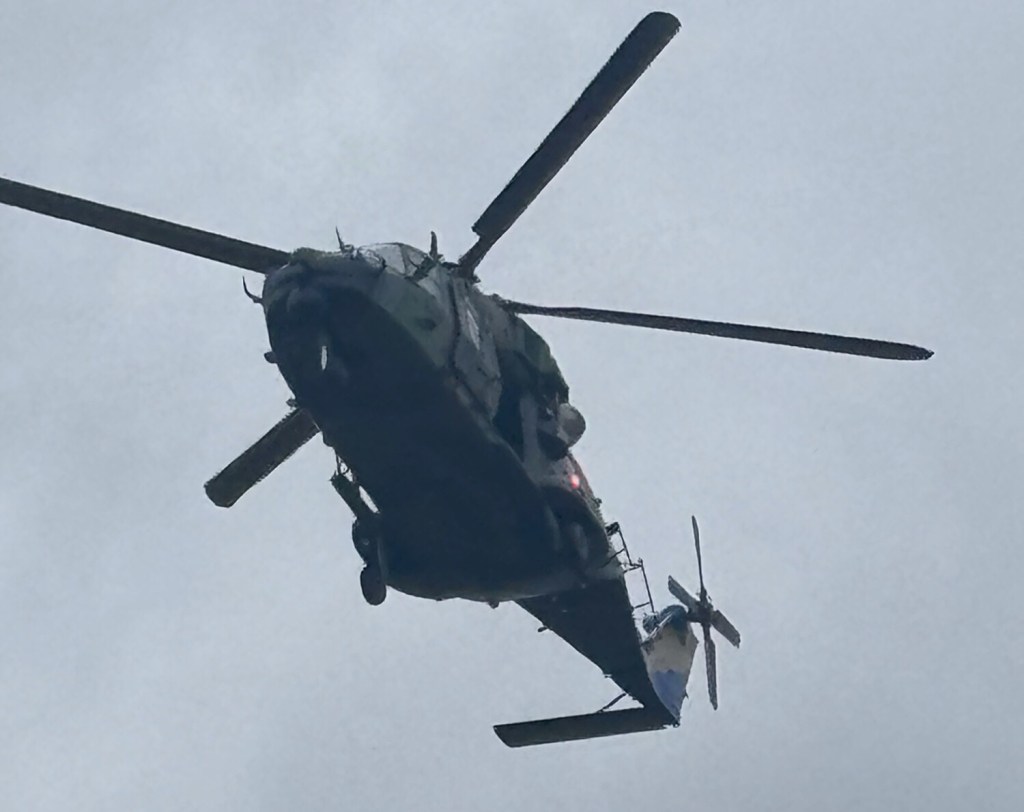
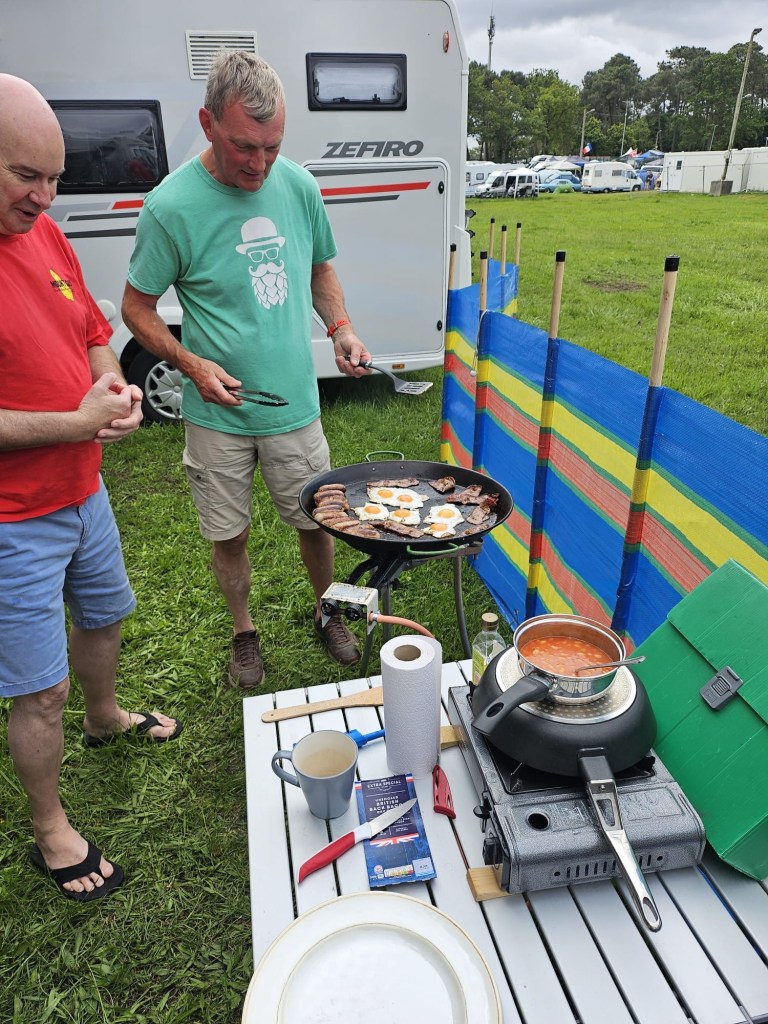
That night we went back into the circuit for a few drinks and then headed back to our camp, for a couple more drinks and late night snack whilst listening to the music coming from the concert area. Trust me, we were close enough to hear and didn’t miss out on anything apart from getting wet, as we sat in our comfy chairs, under the awning out of the rain. We knew Saturday was going to be a long day, so we went to bed sometime after midnight, as the concert was ending, however the campsite had other ideas. The campsite had a couple of competing DJ’s who tried to outdo each other with the bass and volume, plus fireworks, and engines revving. One set of fireworks were set off 3ft from my motorhome windows, they were not bright, sparkly fireworks, they were more like heavy artillery, the ground shook, bits of firework/earth fell on the roof. Paul was watching out of his window and some poor guy in a campervan, shot out of his van looking stunned and dazed as we reckon he was about 1 foot away from the launch zone. Quiet fell over the campsite around 4 am which didn’t last long as the first helicopter hovered overhead around 6 am on its way to the airport. The helicopter was the first of what seemed like a thousand.

It was an easy start on Saturday, a large cooked breakfast for the boys and then it was time to load up with camping chairs, smuggled beer and snacks to find our place to watch the first few hours of the race. The weather was changeable, dark clouds, blue skies and sunshine… the rain held off for most of the day.
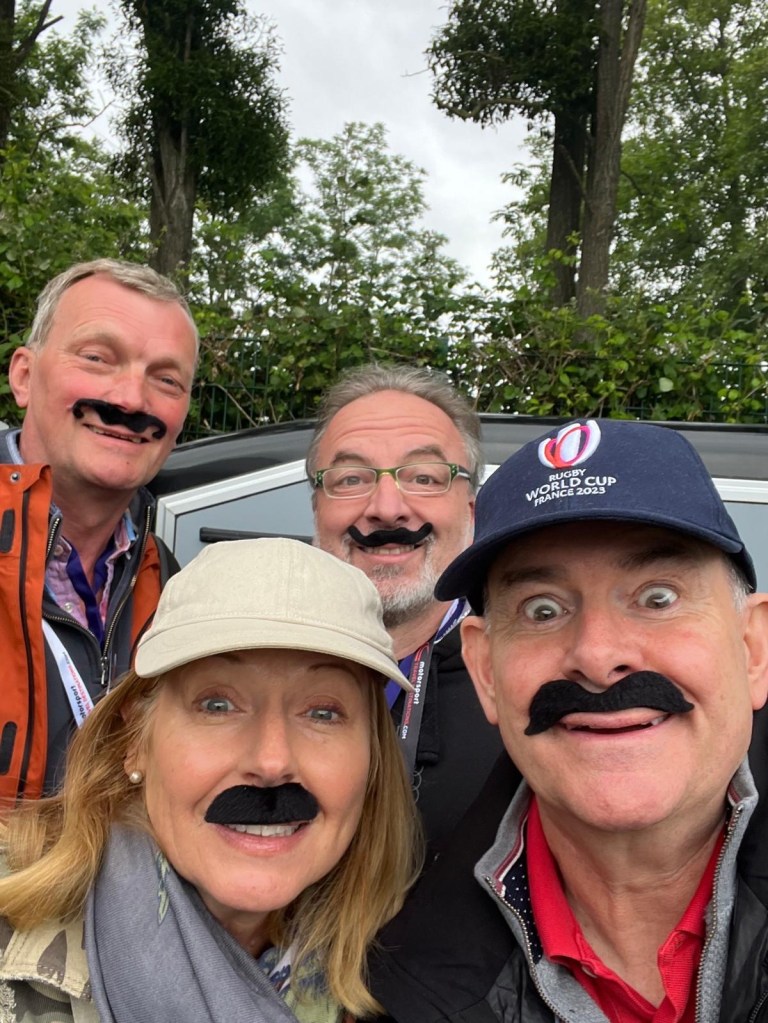
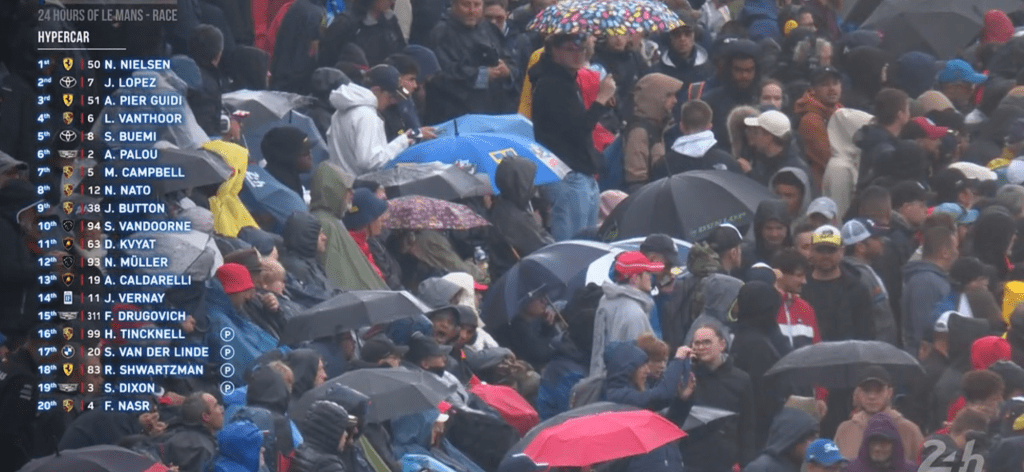
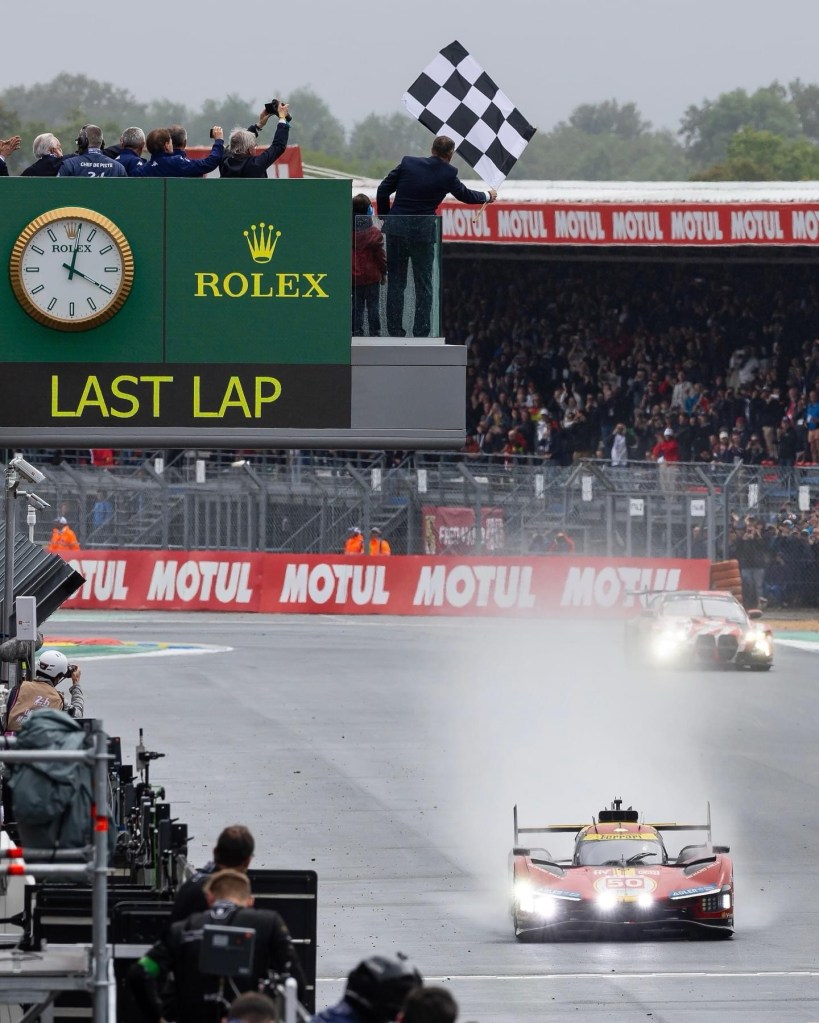
Zinedine Zidane was the man chosen to wave the start flag, after it had been delivered by an abseiling French soldier from a helicopter and after the PAF (French Red Arrows) had screamed overhead trailing blue, white and red smoke. Then the 62 car grid started its formation lap to arrive for a rolling start at 4 pm! As Zidane waved the flag, 62 cars screamed over the start line and the race was on….

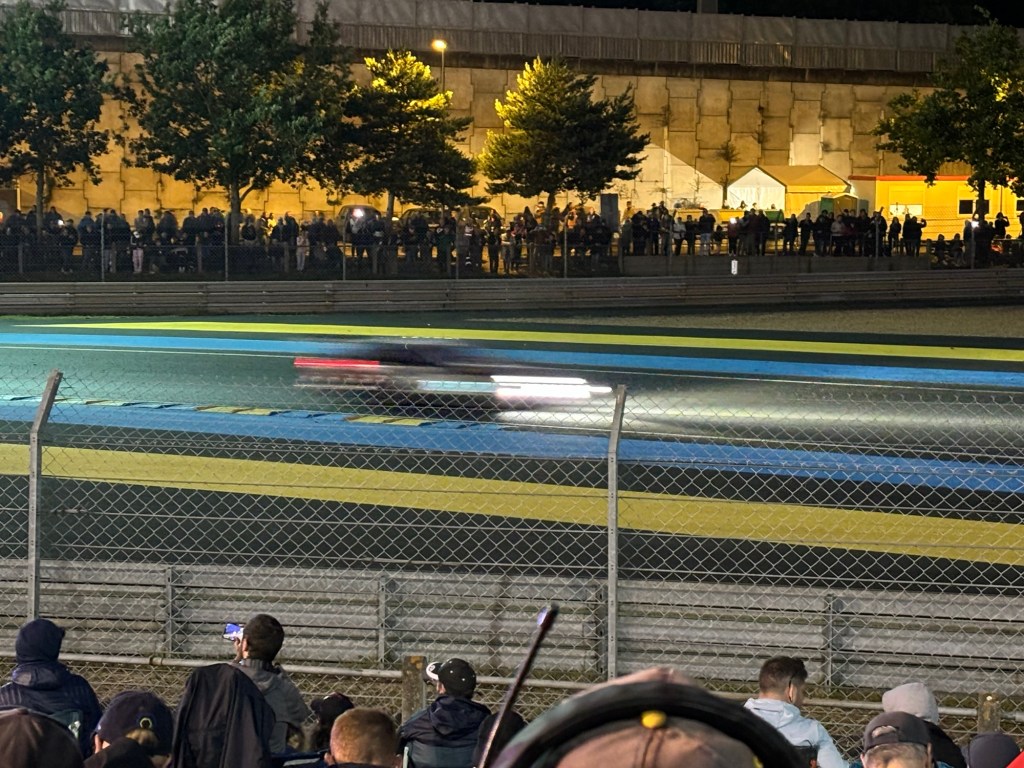
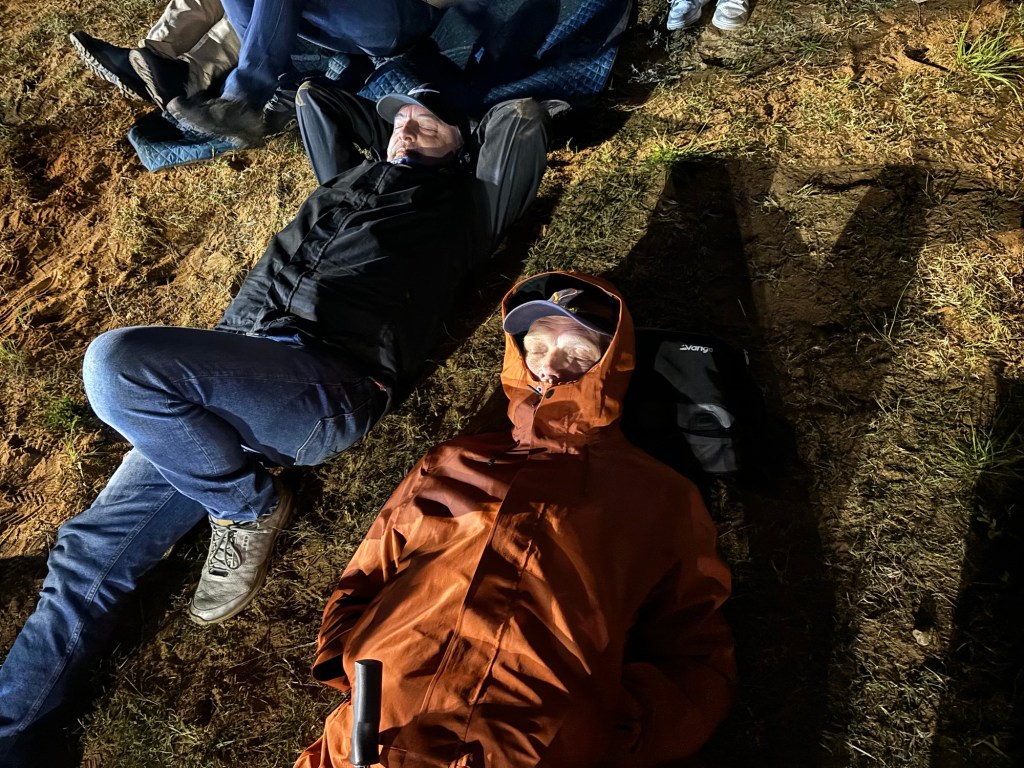
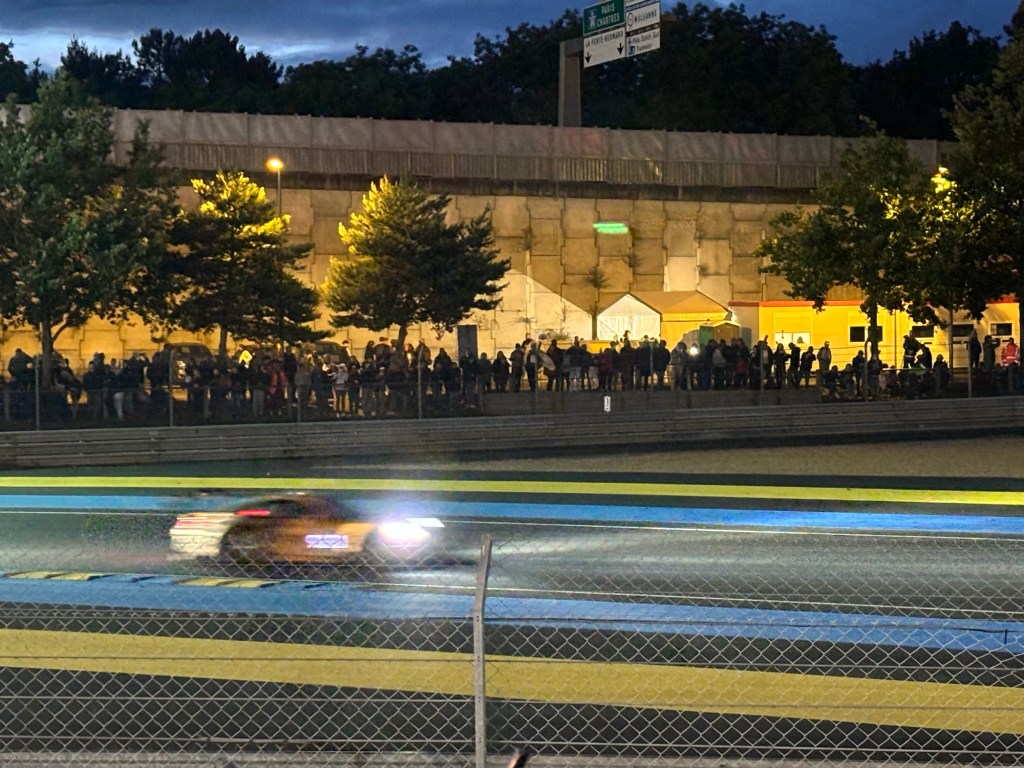
The race had thrills and spills, it had boring bits, where there were long periods of safety car. We watched for a few hours and then went back to the camp for some food, then as darkness fell along with some light rain, we walked out to Tertres Rouge and to the Essess to watch. There was racing, then an accident which required the arnco to be repaired so a long safety car stint, exacerbated by a loose dog on the track. The rain got heavier and it got colder. The race started again but then more drama, another slow zone and the rain got heavier. Sometime in the early hours we headed back to the campsite and to a lovely night’s sleep. The campsite was quiet, the rain which was now really heavy had dampened the party spirits. During the night due to the extreme weather, there was a 4-hour safety car session, so we were glad we went to bed.
The next morning was Charlie’s birthday so we had a slow morning, whilst Nik & Paul went out to watch more racing. We caught up with them around 11.30 am, after having booked a table at a circuit restaurant to celebrate Charlie’s birthday. As the morning progressed into afternoon, the clouds gathered and the rain started again.
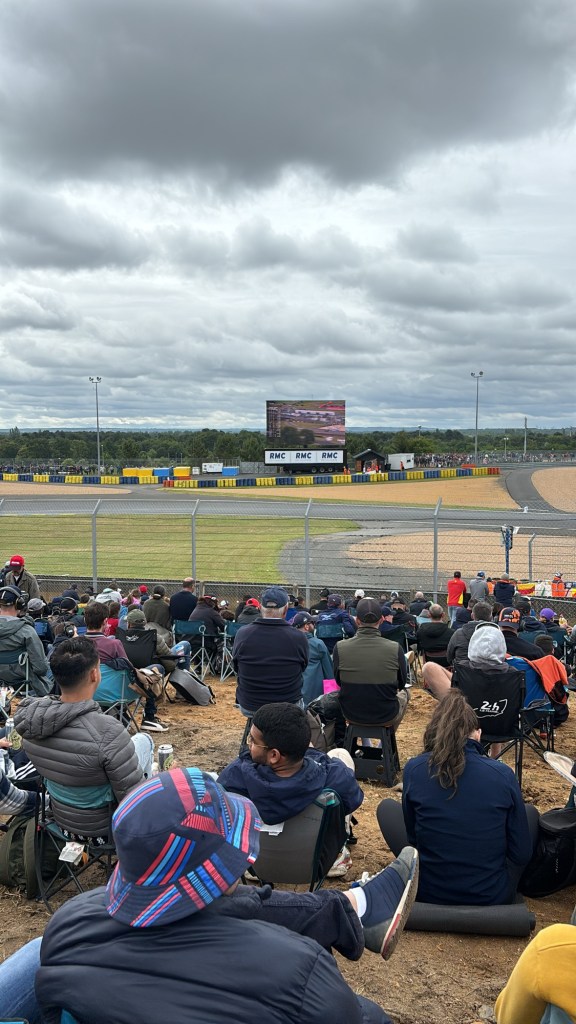
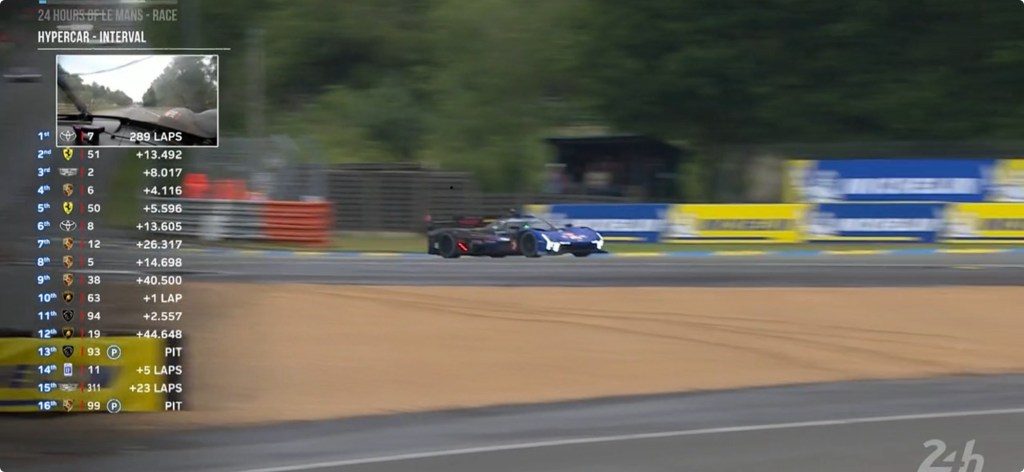
We had lunch booked for 2 pm and as we arrived to sit down at our table, the heavens opened. Due to a couple of bottles of wine and the ability to get the race coverage live on my phone, we watched the last 2 hours from the comfort of the restaurant, where we could hear the action but were in the dry with wine!

Congratulations to Ferrari for winning for the 2nd year running and huge congrats to Hertz Team Jota who came 8th and 9th, not the result they wanted but an amazing result for the no 12, as it had been put back together in record time and completed the most grueling road race in the world.
Following the race the circuit began to shut down, bars were shut, stalls were being dismantled, teams started packing up their garages and the weary but happy fans made their way back to their campsites, some having packed up in the morning to start the long drive home, others to collapse in a bed for good night’s sleep before travelling the next day.

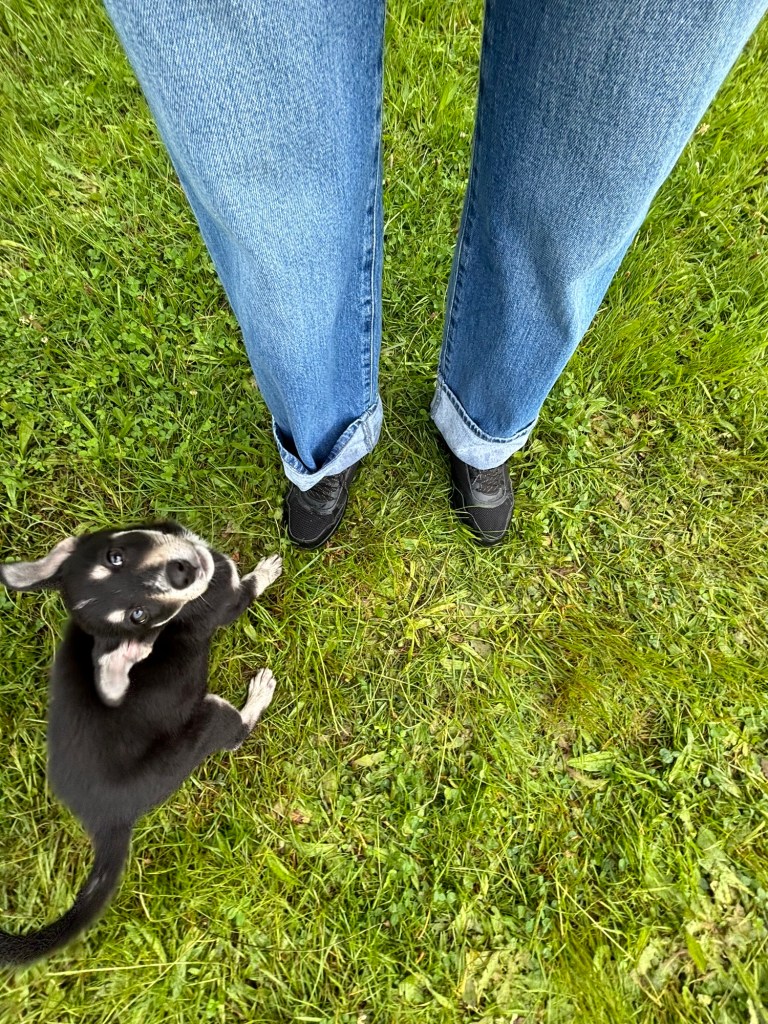
On Monday morning we said goodbye to Nik & Paul as they headed for the Channel Tunnel, whilst we had a leisurely morning, feeding some stray puppies that appeared out of nearby woods and then drove into Le Mans town centre to pick up Olly from his hotel. We were heading home on Wednesday but on the Monday afternoon and Tuesday were returning to Normandy with Olly to visit some of the D-Day sites. Olly had a couple of days off with us, then we were dropping him at Ashford to collect his car to drive home so he could do a quick turnaround before heading out to Spa in Belgium on Monday 24 June for another 24 hour race.

So that is the end of our motorhome adventure and by a miracle, both of us have come back, speaking to each other.

All that’s left to say is a bientôt.

Speed, History & Spectacle – The Grand Tour – Part 7

Following in the Footsteps of Heroes – 80th Anniversary of D-Day

We have arrived in Normandy to commemorate the 80th Anniversary of D-Day. We are at a campsite in Merville-sur-Plage for the next 7 days, we are meeting up with our friends, 10 members of the Redhead/Weeks family and Charlie’s brother Jim, wife Jane and our nephew Toby.

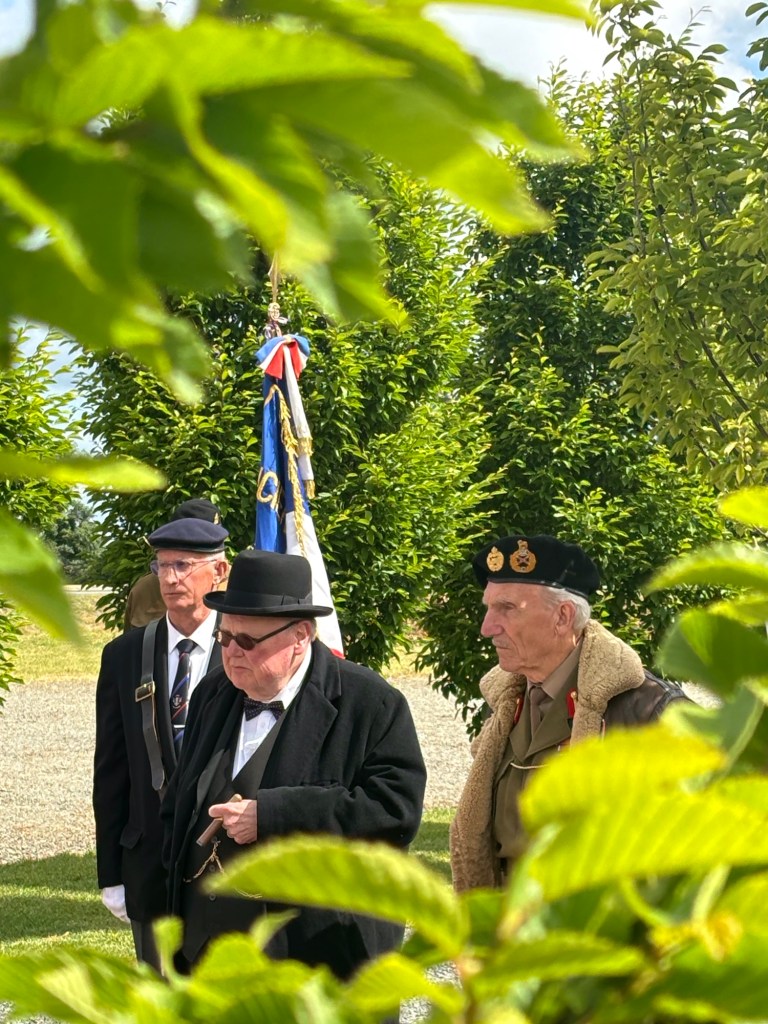
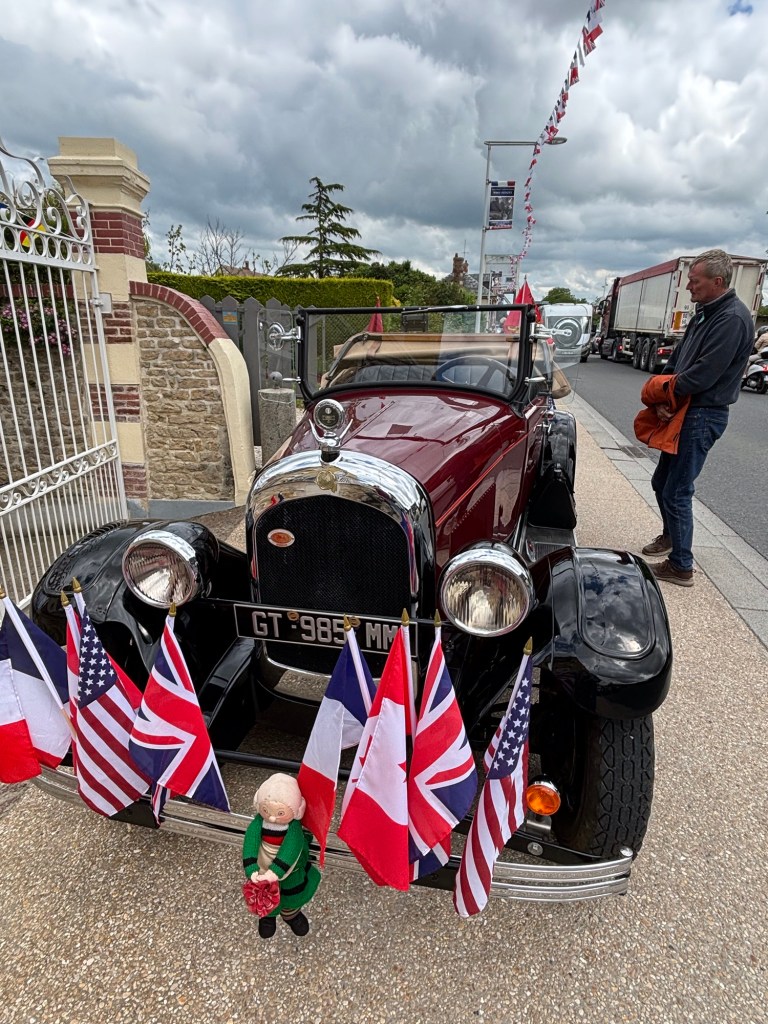
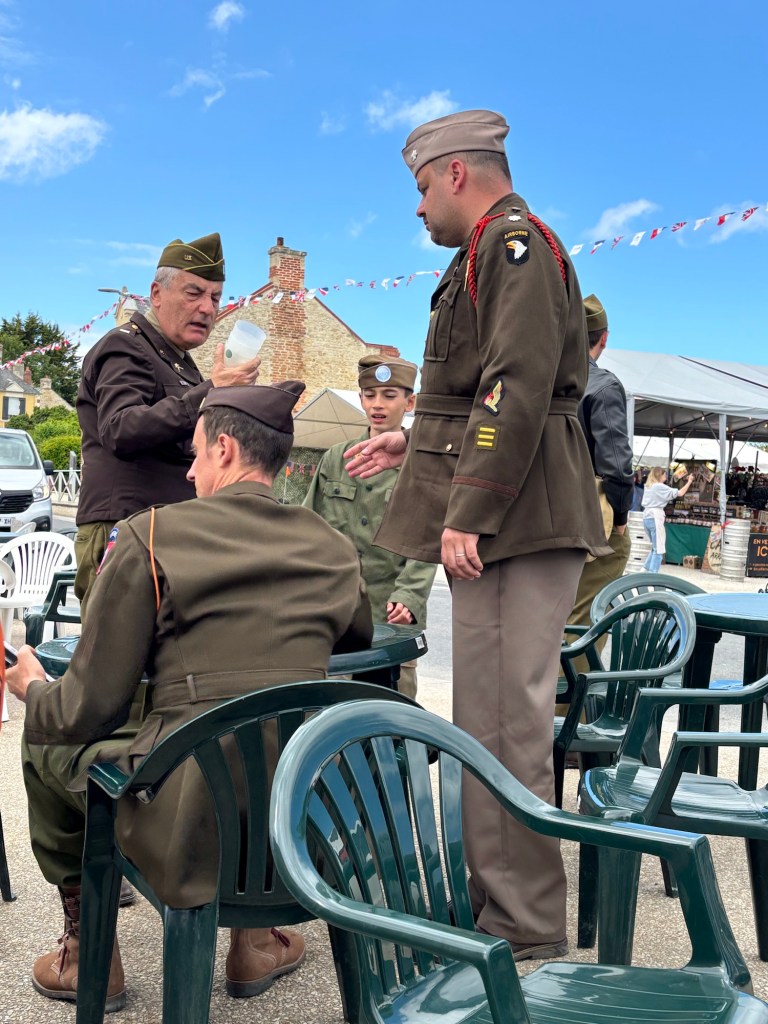
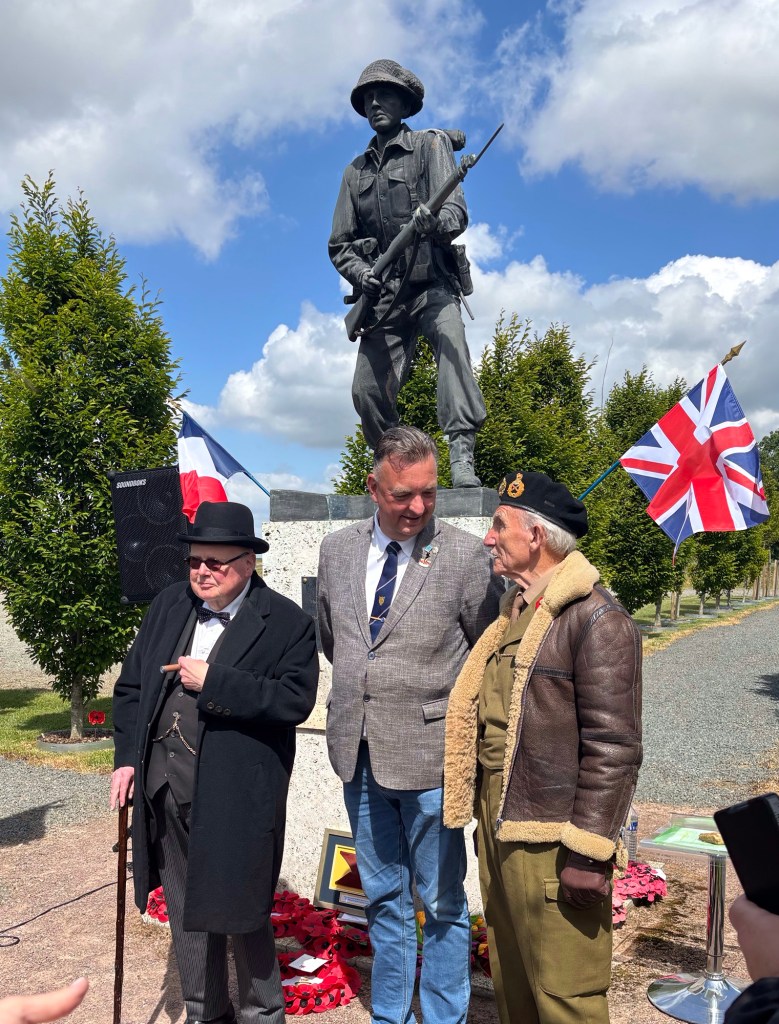
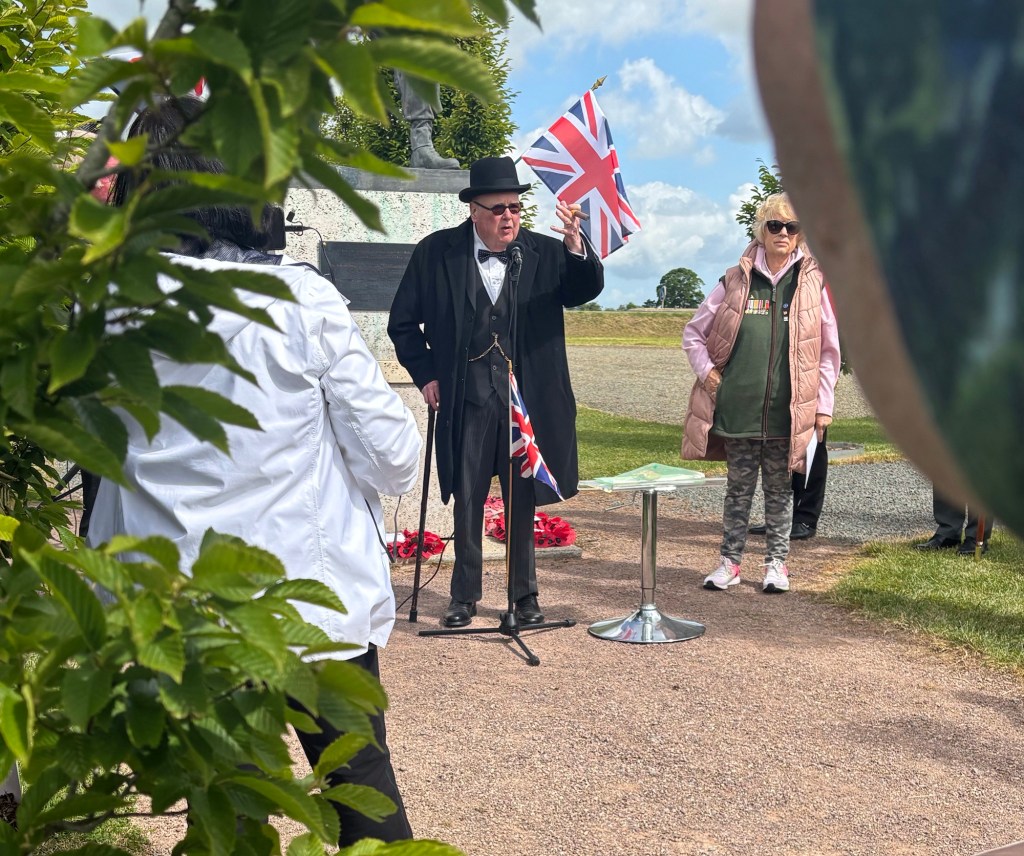
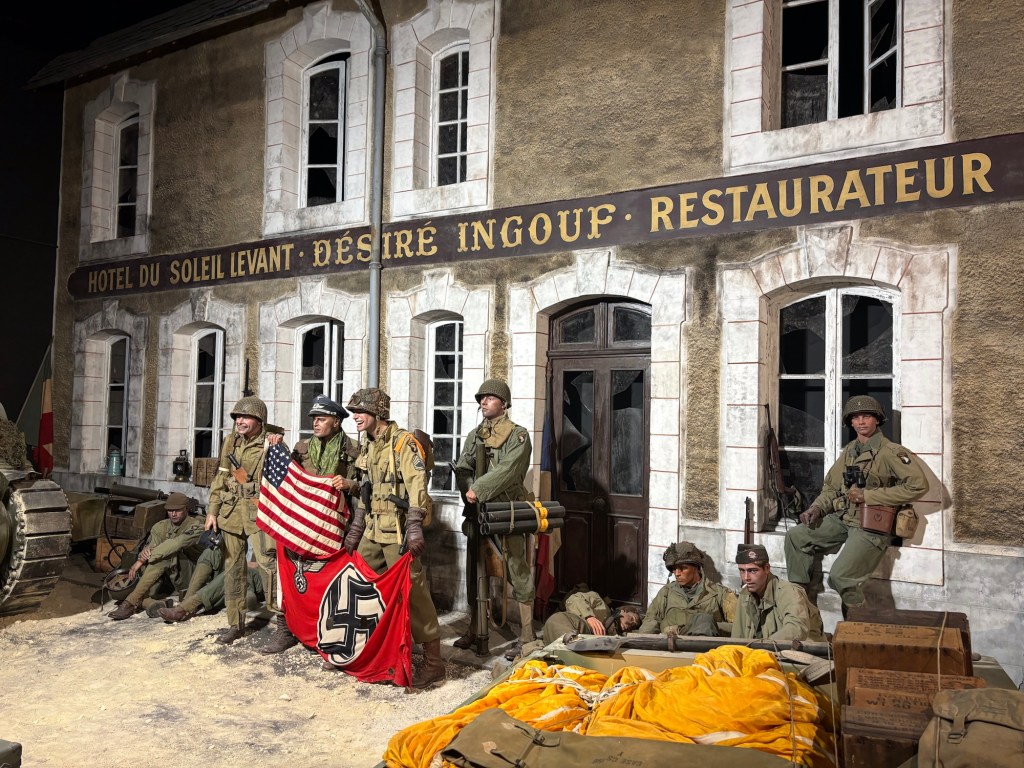
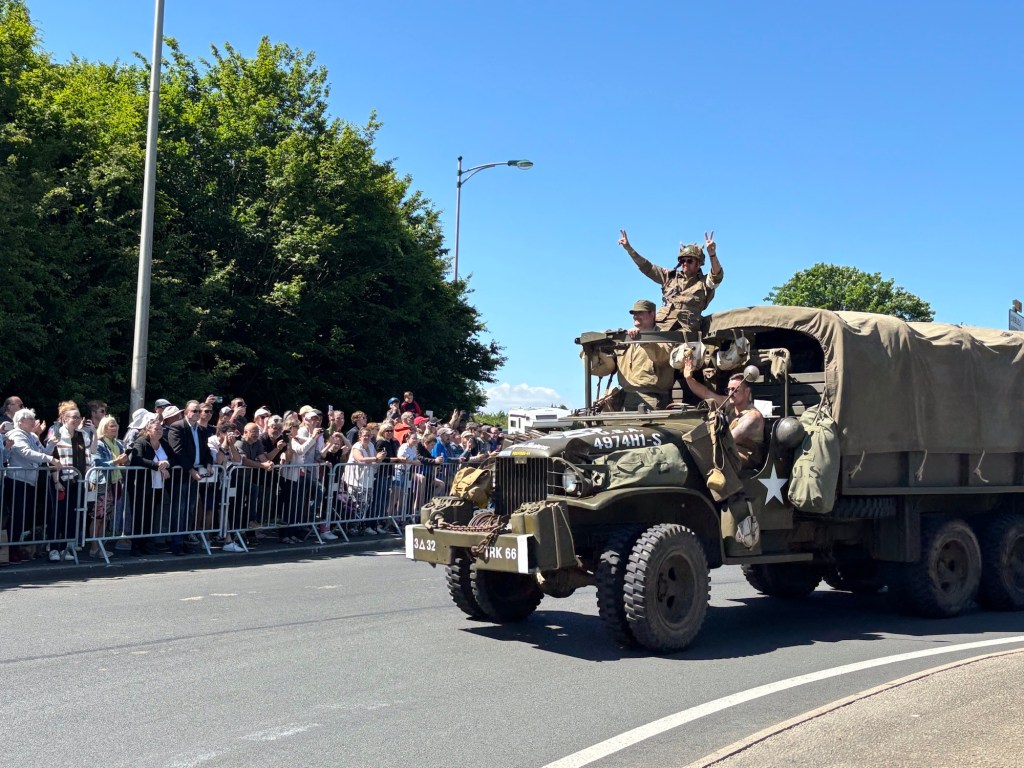
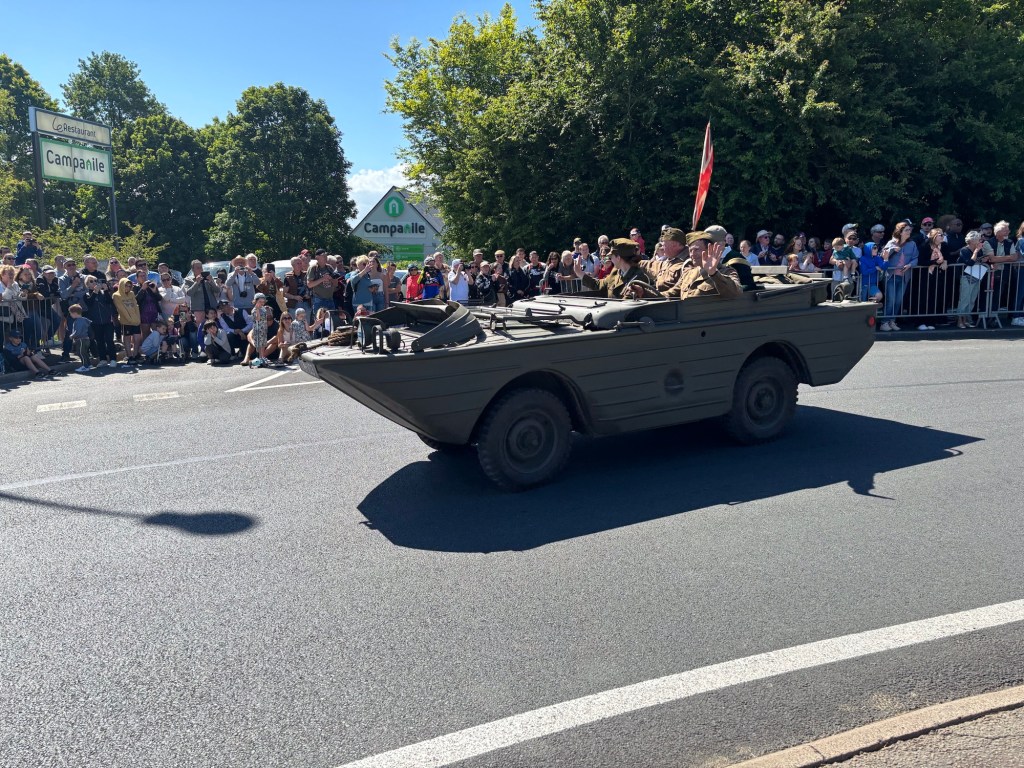
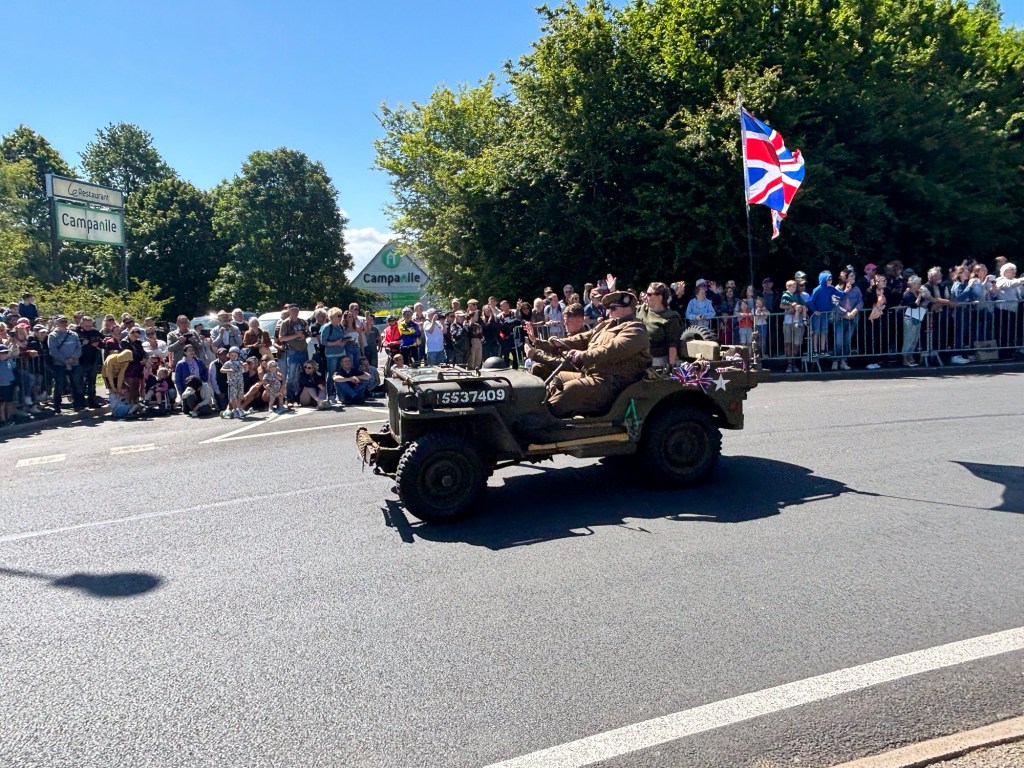
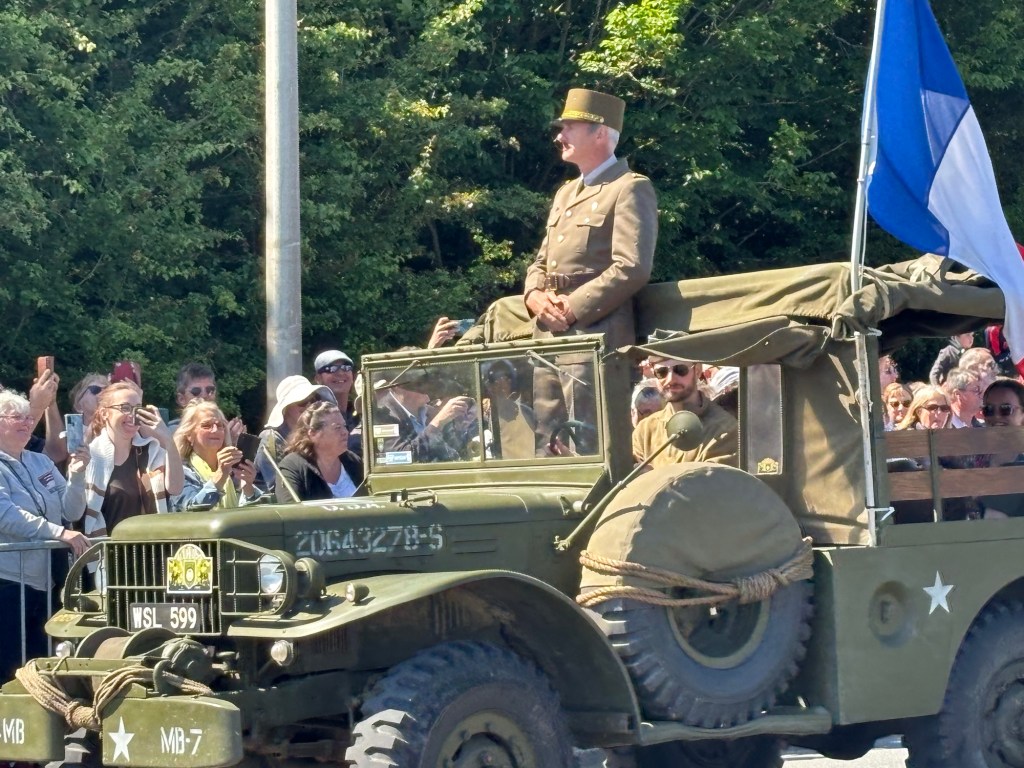
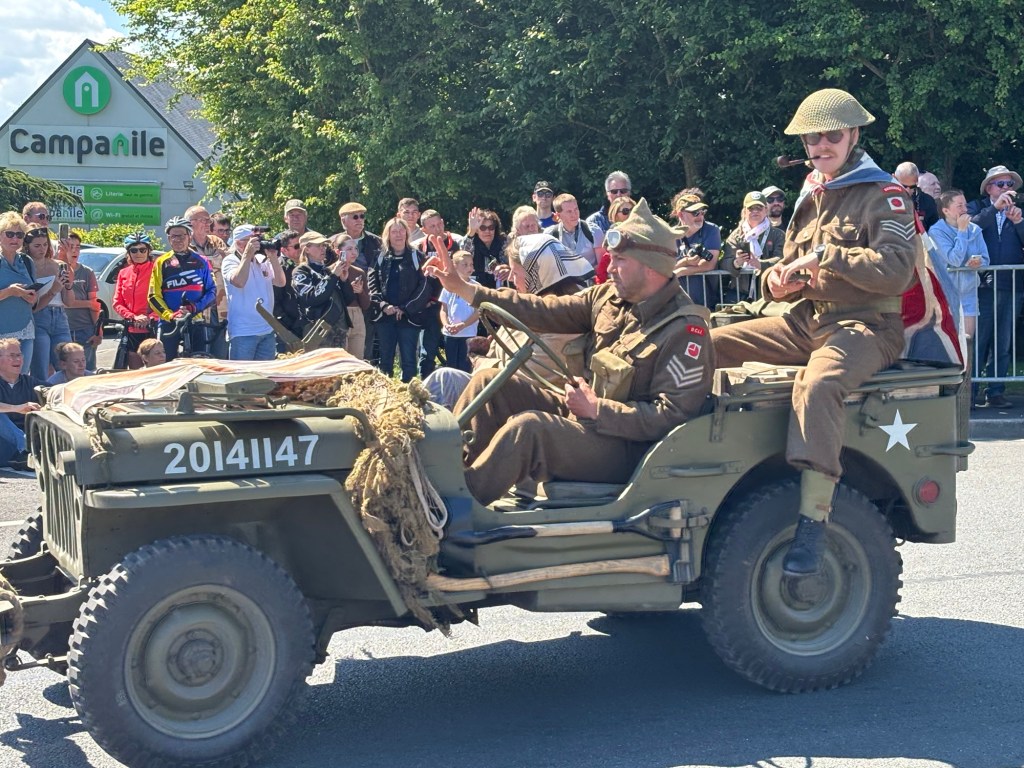
From 1st-14th June Normandy becomes the centre of both commemoration & celebration of D-Day and the Battle of Normandy. Apart from the main commemoration events attended by world leaders that you will see broadcast across the world, there are a 100 or more other ceremonies taking place in war cemeteries, roadside memorials, in villages, hamlets and towns across Normandy. Thousands of living history enthusiasts bring 1944 to life, there are military vehicles on the roads, appearing in parades and static exhibits. There are men and women dressed in the uniforms of the Allies & Third Reich and in period costume at every event, in every bar, restaurant, cafe and supermarket. In fields and on village greens military encampments are set up with displays and information where the public can ask questions about any aspect of military life in 1944. You also need to keep your eyes skyward as flypasts by various planes are frequent. I’ve heard ‘American’ and ‘British’ 1944 serviceman speaking French, Dutch, Italian & Spanish. We’ve even seen Churchill & Monty!
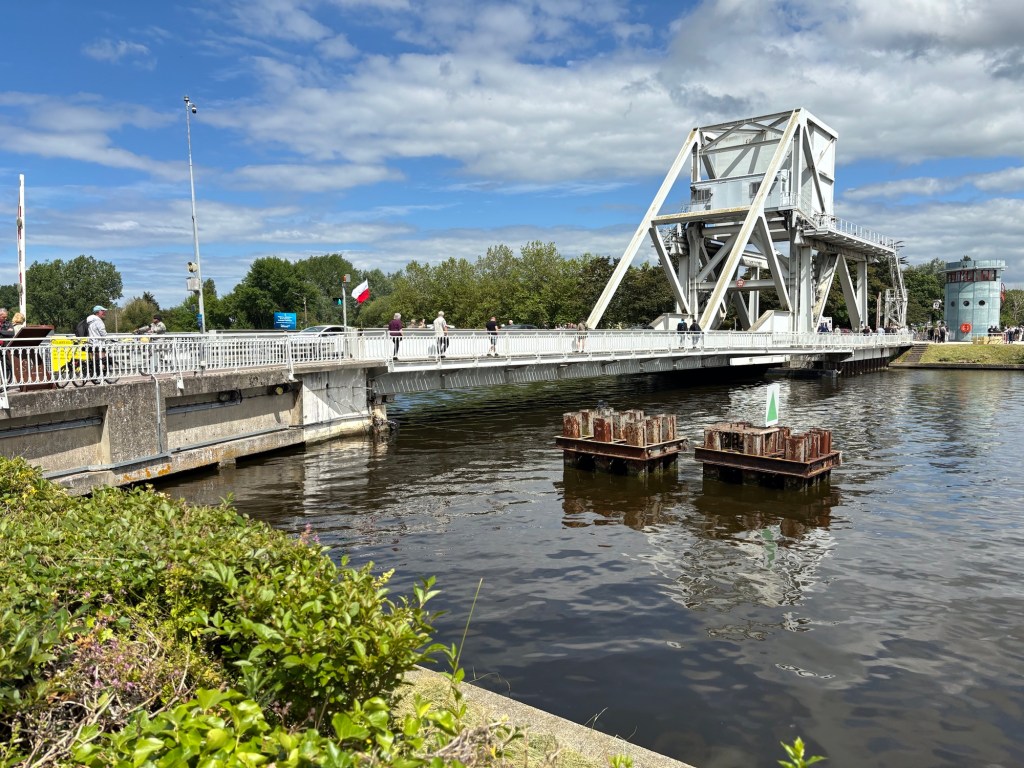
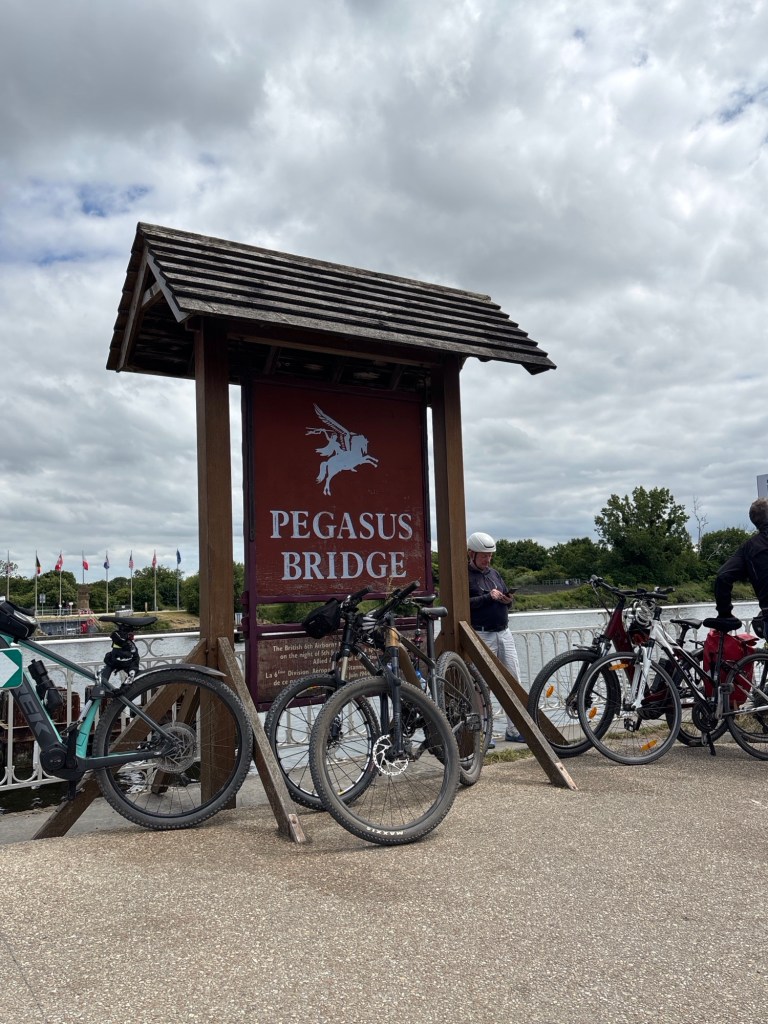
Our campsite is about 15 minutes moped ride from Pegasus Bridge, where the first British forces landed to begin the Allied Liberation of Europe. The bridge, then called Benouville Bridge and the Ranville Bridge over the Caen Canal and Orne River respectively were the strategic objectives of 2nd Airborne Battalion, Ox & Bucks Light Infantry, a glider borne force who were part of the 6th Airborne Division.

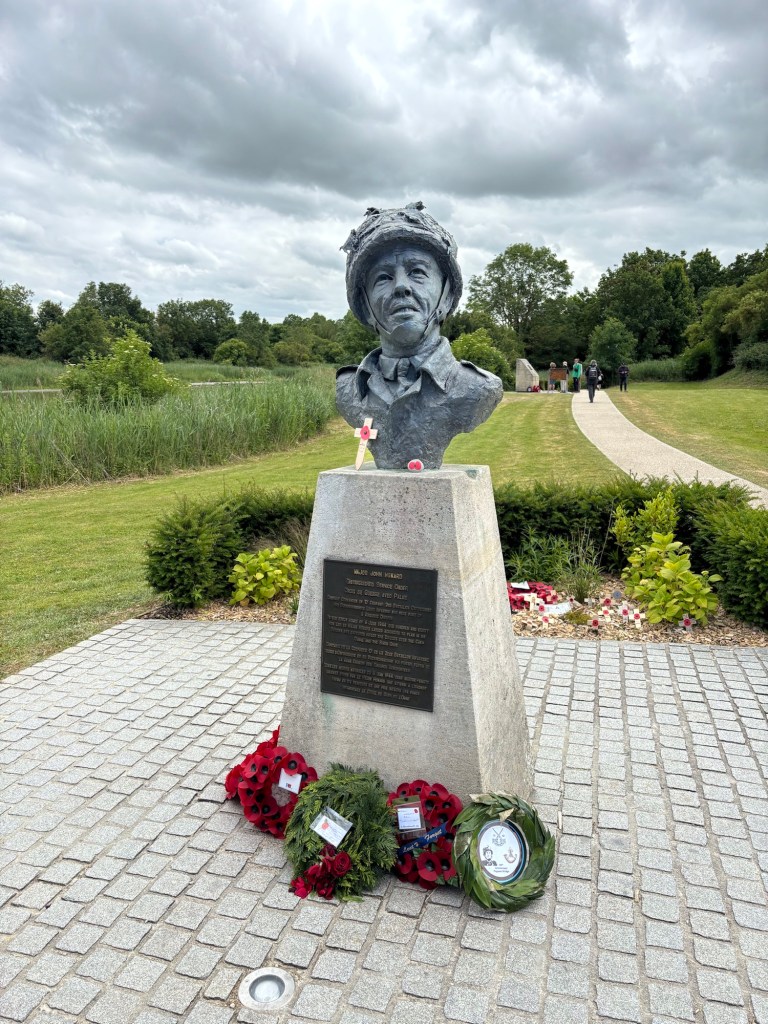
After more than 2 years of intensive training under the command of Major John Howard, six Horsa gliders with 181 men aboard, took off from Dorset to capture what is now known at Pegasus (Benouville) Bridge and Horsa (Ranville) Bridge and prevent German armoured divisions crossing the bridges and attacking the landings at Sword Beach.

Five of the gliders landed just metres from their objectives at 16 minutes past midnight on 6th June, surprising the Germans and both bridges were taken after a fierce fire fight within 10 minutes, losing only 2 men. One man, Lance Corporal Fred Greenhalgh was thrown from the glider during its ‘crash’ landing and drowned in the pond right next to their landing site and Lieutenant Dan Brotheridge was killed crossing the bridge in the first few minutes of the assault. He become the first member of the Allied Invasion force to die as a result of enemy fire on D-Day. At 3 am the Ox & Bucks were reinforced by the arrival of 600 men of the 7th Parachute Battalion, to hold off the German counter-attacks and then further relief was from 6 Commando, led by Lord Lovat who arrived with his piper, Private Bill Mullin playing his bagpipes. Among the first of the 7th Battalion reinforcements was Lieutenant Richard Todd, who nearly 20 years later, would play Major Howard in the film ‘The Longest Day’.

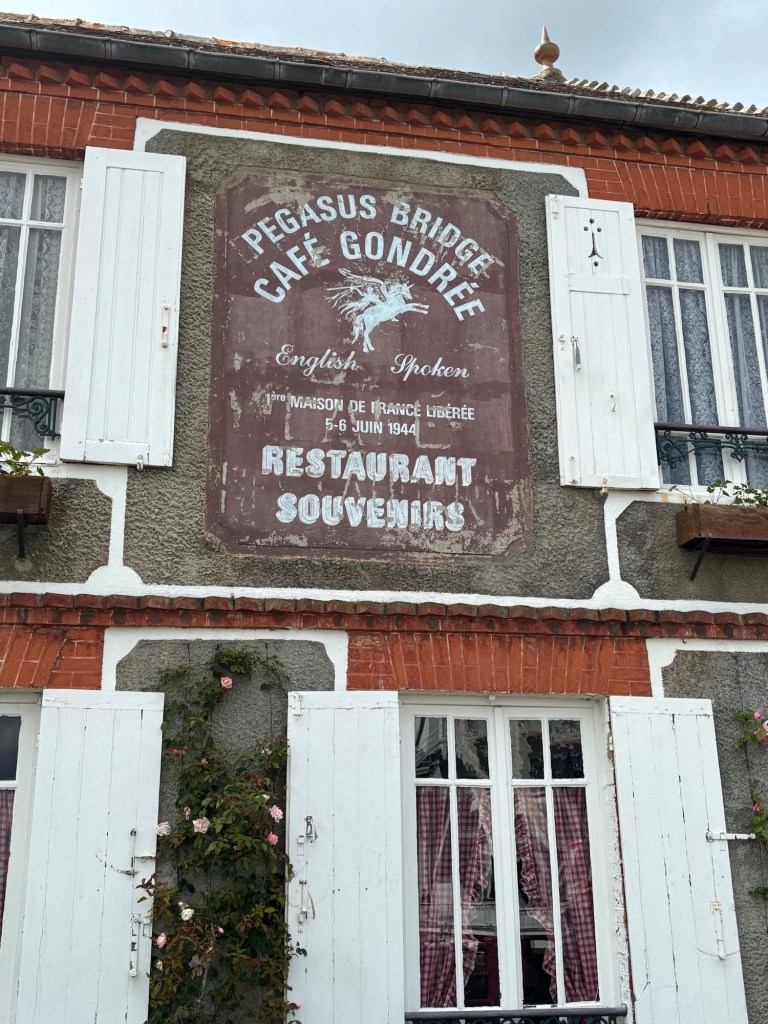
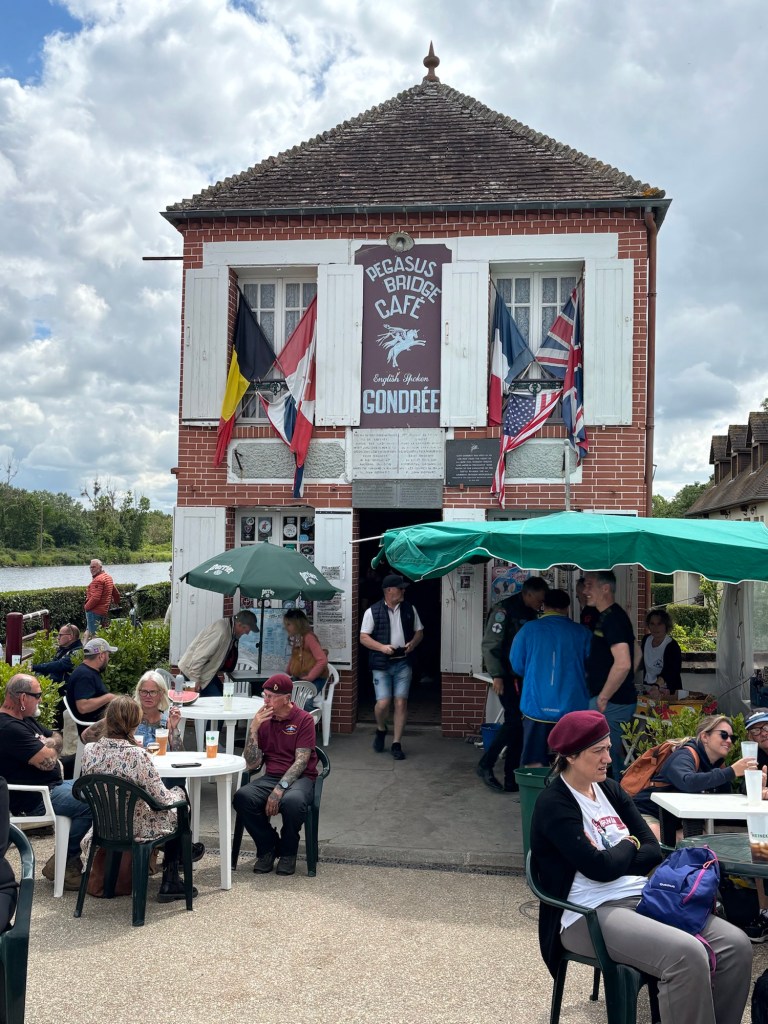
There is a museum at Pegasus Bridge, where the original bridge is now on display. The current swing bridge was replaced in 1994 to accommodate the widening of the canal. There are markers displaying where the gliders landed, so unbelievably close, it is almost beyond comprehension and, of course, there is Cafe Gondree, the first place to be liberated. The Cafe still belongs to the Gondree family, and Arlette Gondree, who was 5 at the time of their liberation, is still in charge and is known as ‘Madame’!

On our first visit during the week, we stopped for a cider and baguette and sat at the cafe tables right by the bridge to watch the world go by. We were to visit Pegasus twice more during our visit.

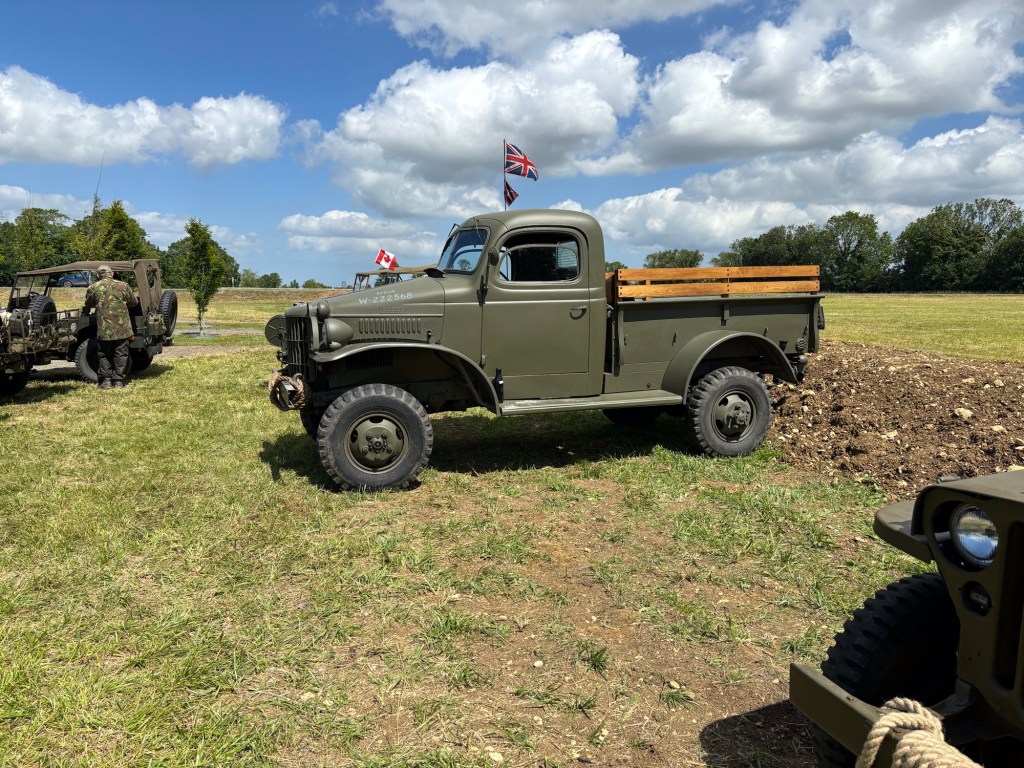
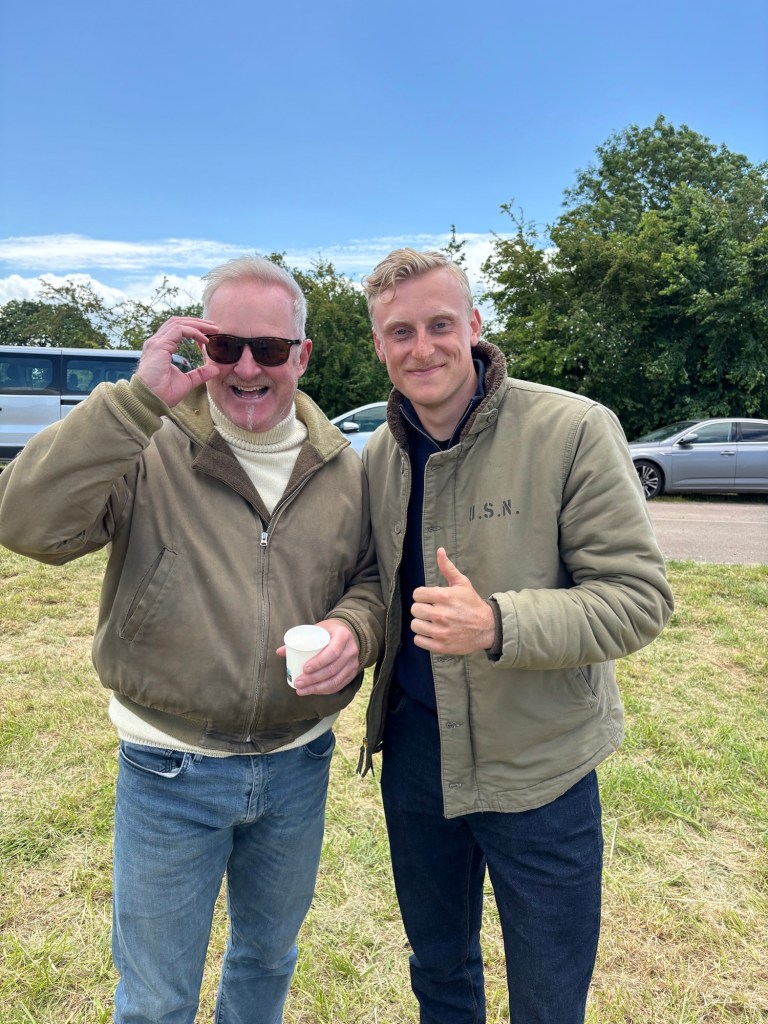
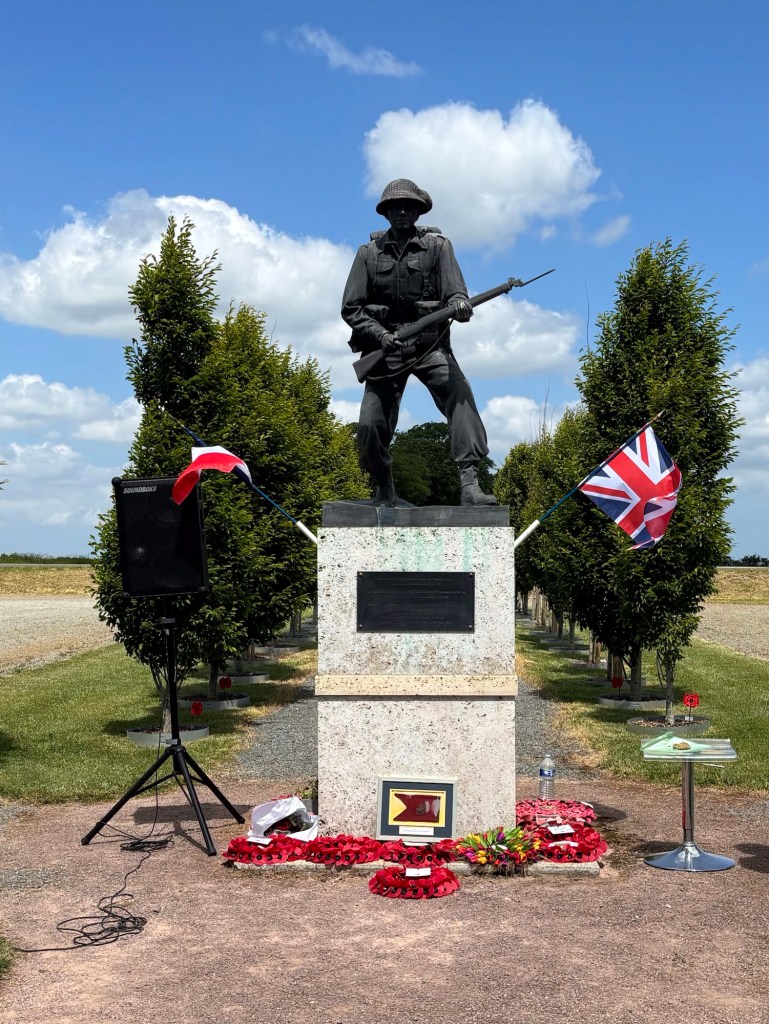
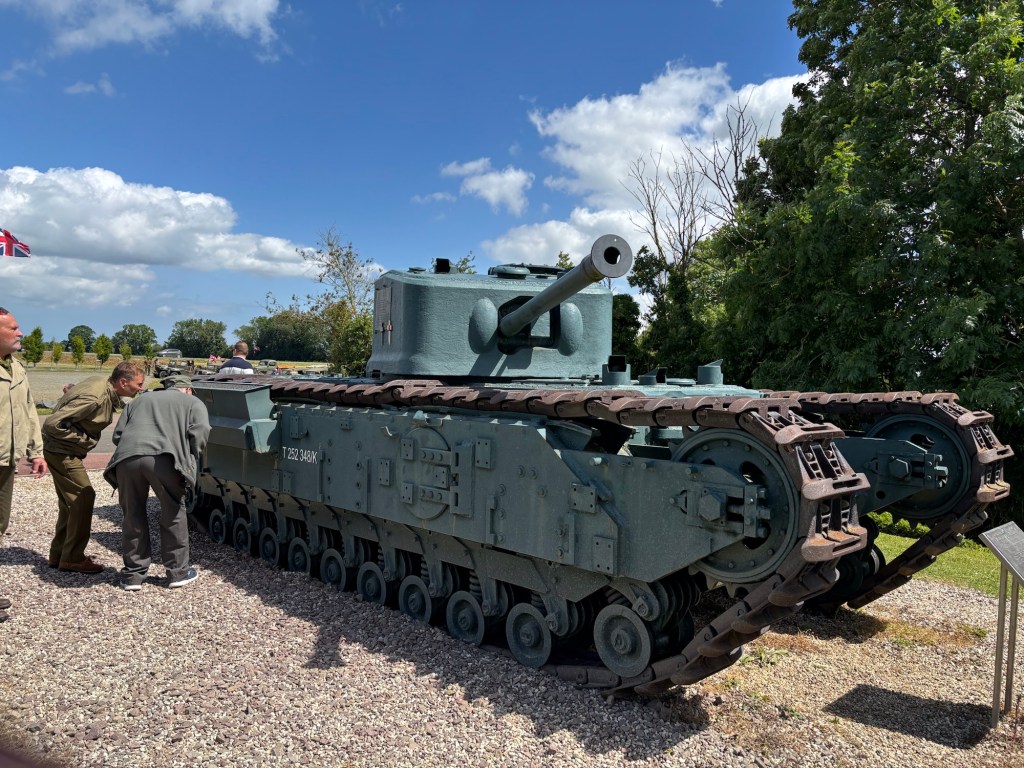
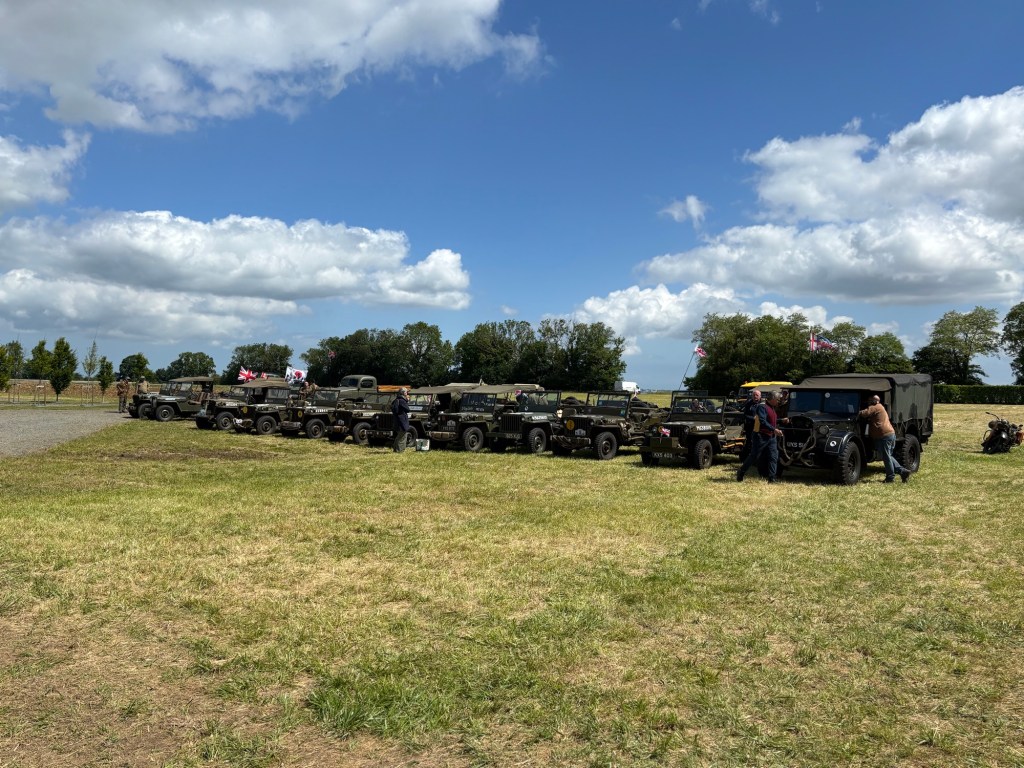
On Wednesday we made our way to Hill 112, the site of one of the bloodiest battles of the War and is now a site of memorial and remembrance and known as the Hill of Peace. Over 10,000 men lost their lives in 2 weeks of fierce fighting taking and holding Hill 112, which then allowed the Allied Forces to retake Caen. The memorial is the result of the tireless work of Sgt Albert Figg, a veteran of this bloody battle. We were meeting a friend, Jon, and his friend, Charlie, who were part of a group who were there with a number of military vehicles.

Jon & Charlie

There was a short service where the men who lost their lives in the campaign were remembered and thanks was given to Sgt Figg’s unending efforts to ensure that they will never be forgotten. There was also speeches by ‘Churchill’ and ‘Monty’.

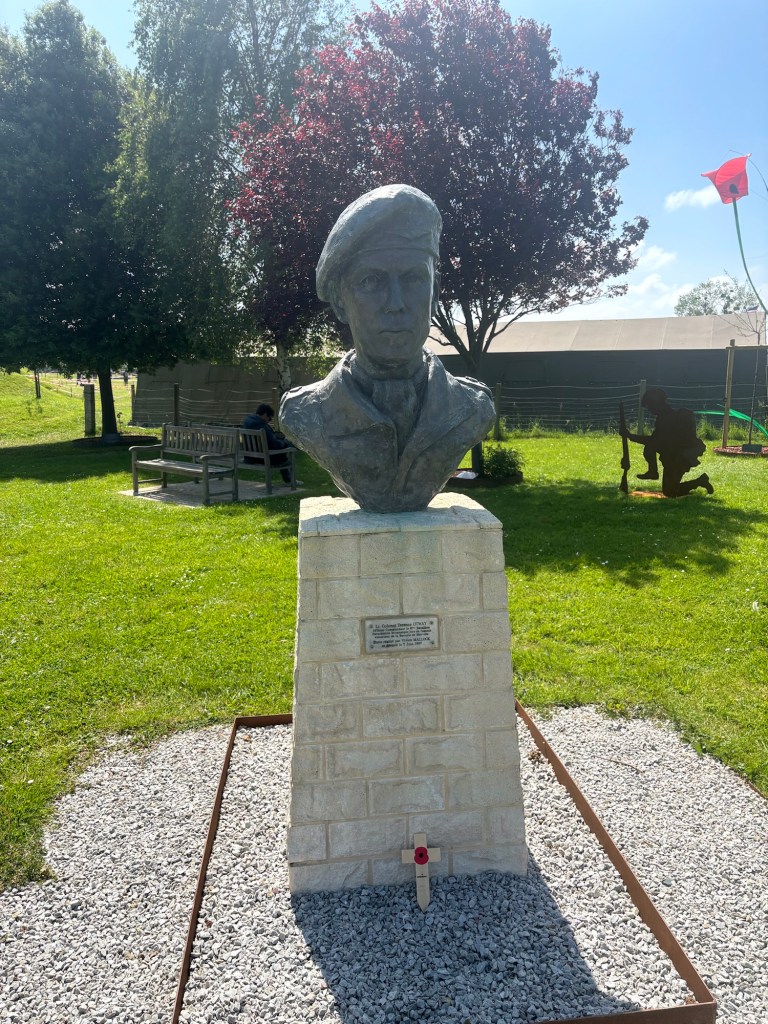
From there we made our way to the Merville Battery Museum. Merville Battery was part of the German Atlantic Wall defenses with 4 gun casements, heavily defended with multiple machine gun posts, anti-aircraft guns, mines, anti-tank ditches and thousands of feet of barbed wire. This battery was capable of firing rounds onto the Sword Beach only 8 miles away. A force of 600 men commanded by Lieutenant Colonel Otway was tasked with destroying the battery before the landings began, However, as the force parachuted in, in the early hours of 6 June, they were dispersed over a large area and Otway was left with a force of 75 men, no heavy weapons or the equipment that they had practiced the assault with. Otway proceeded with the attack and managed to disable 2 of the guns. After attack and counter-attack the Germans regained control of the battery but were unable to direct accurate fire at Sword. The battery was never fully retaken until 17 August when the German army started their withdrawal from France.

The museum is well worth a visit, but as we were there on 5th June it was extremely busy. I would recommend going outside of the D-Day window to get the full experience. In fact, I would recommend if you want to visit any of the museums or paid attractions to either pre-book or visit at quieter times of the year.

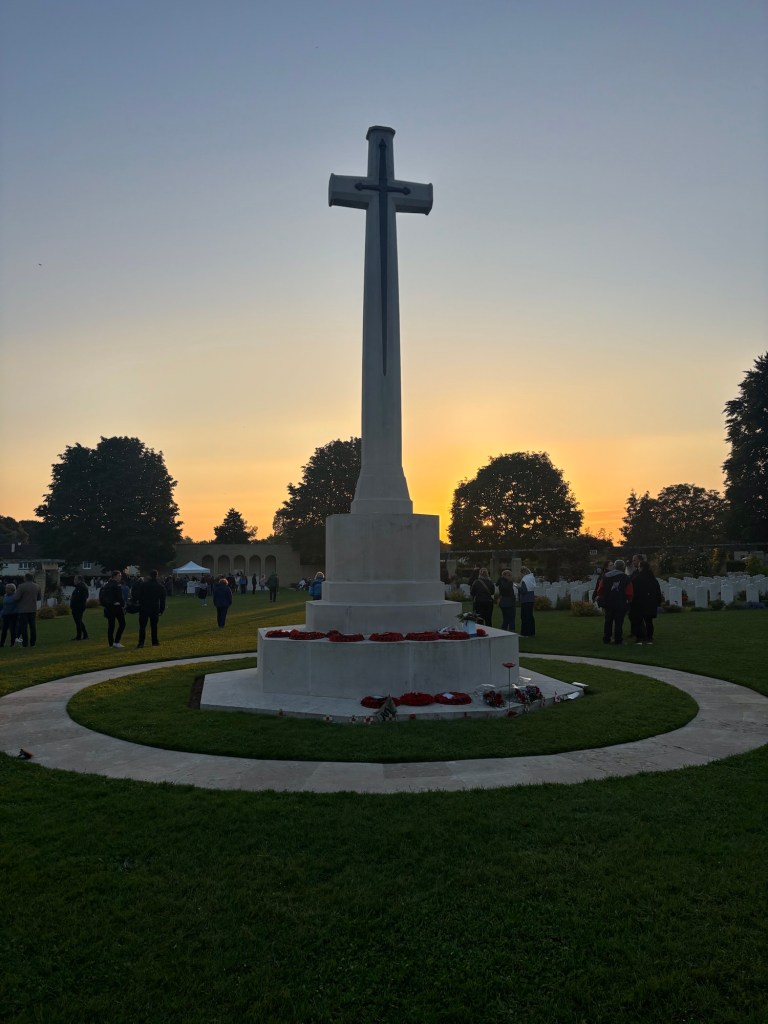
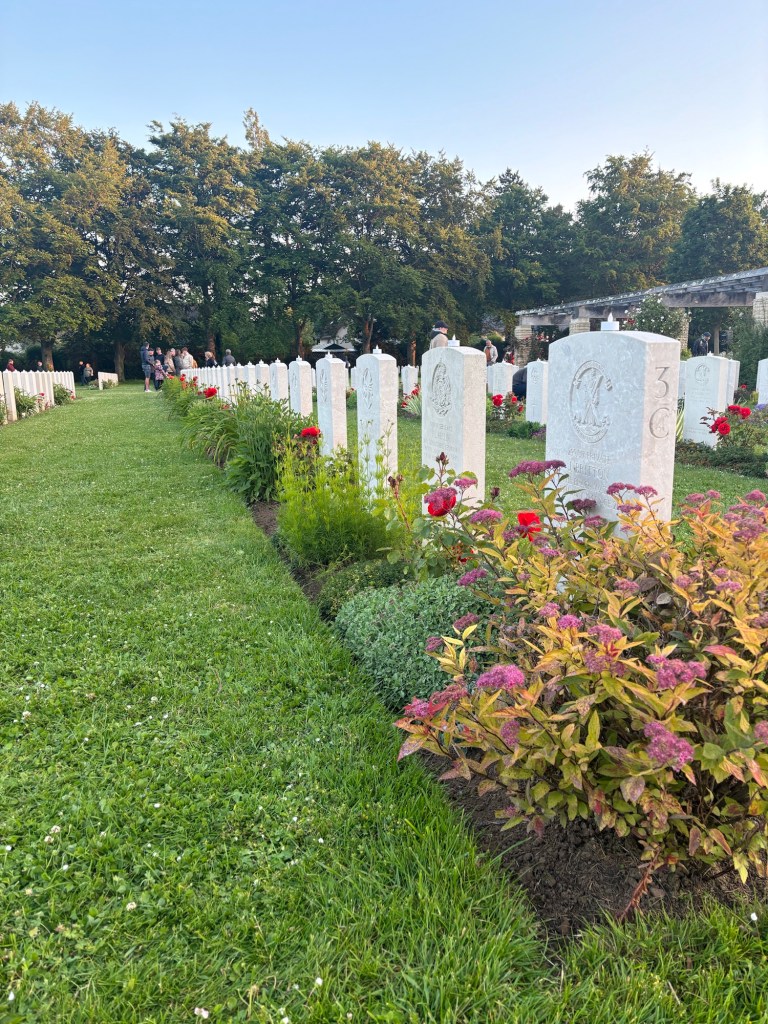
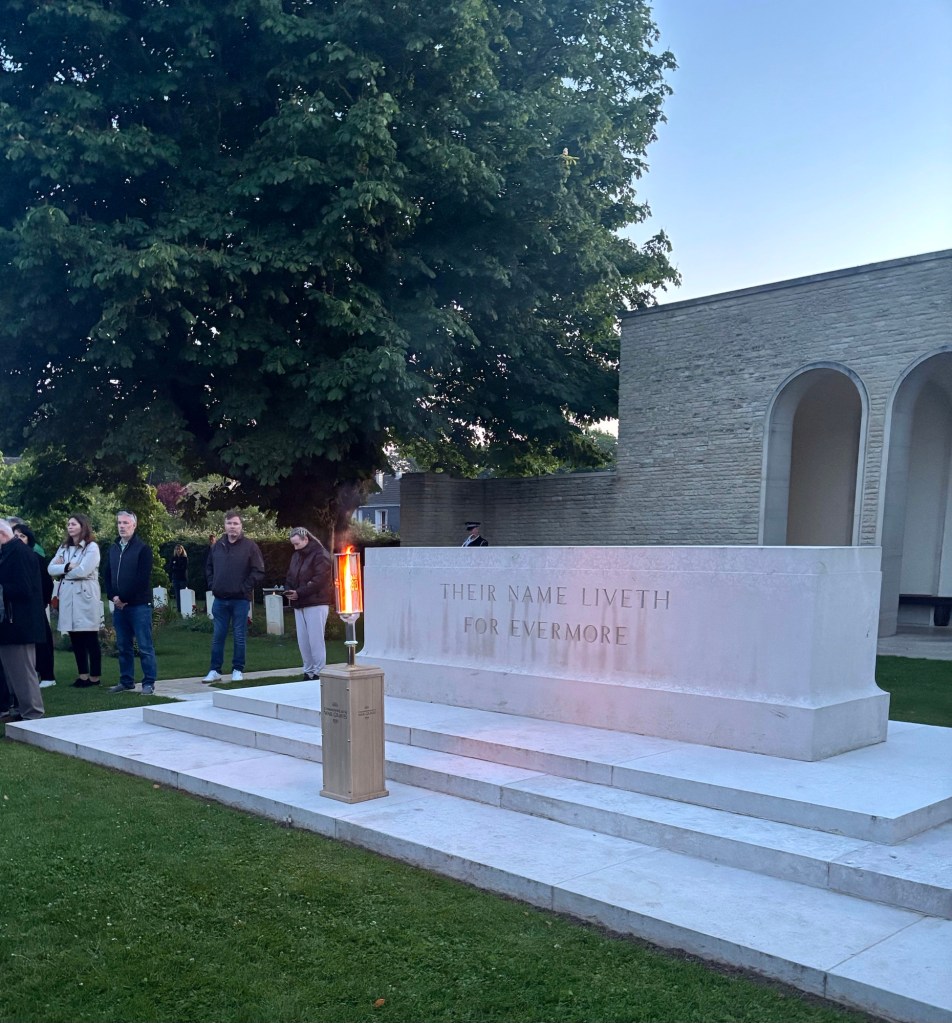
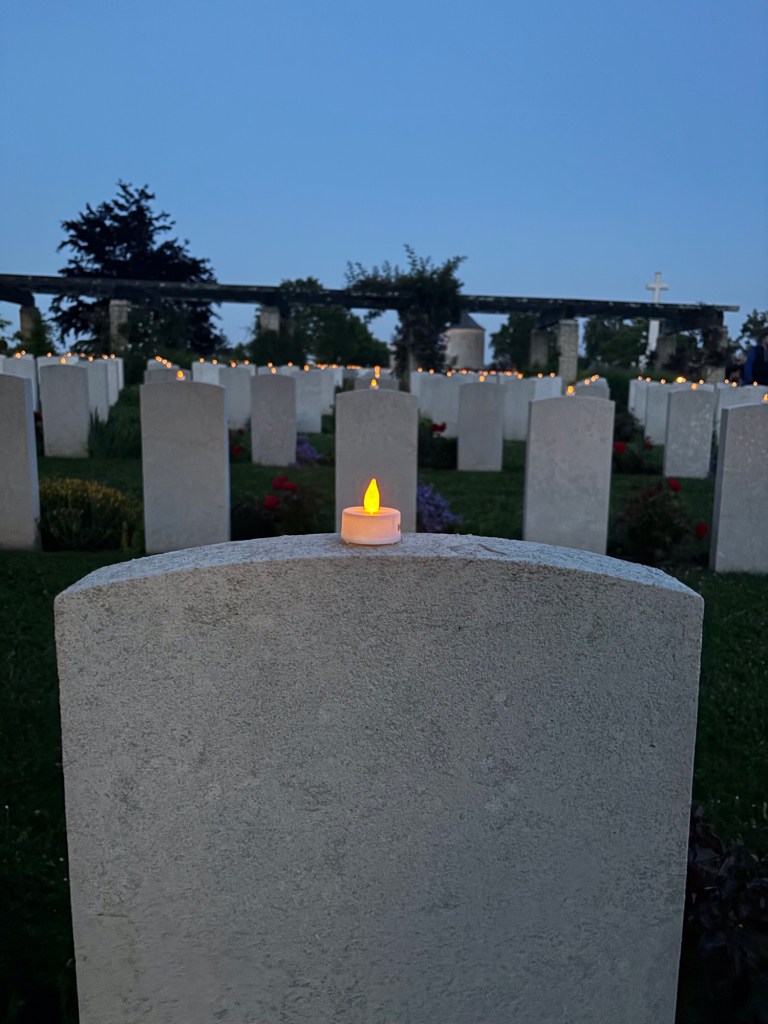
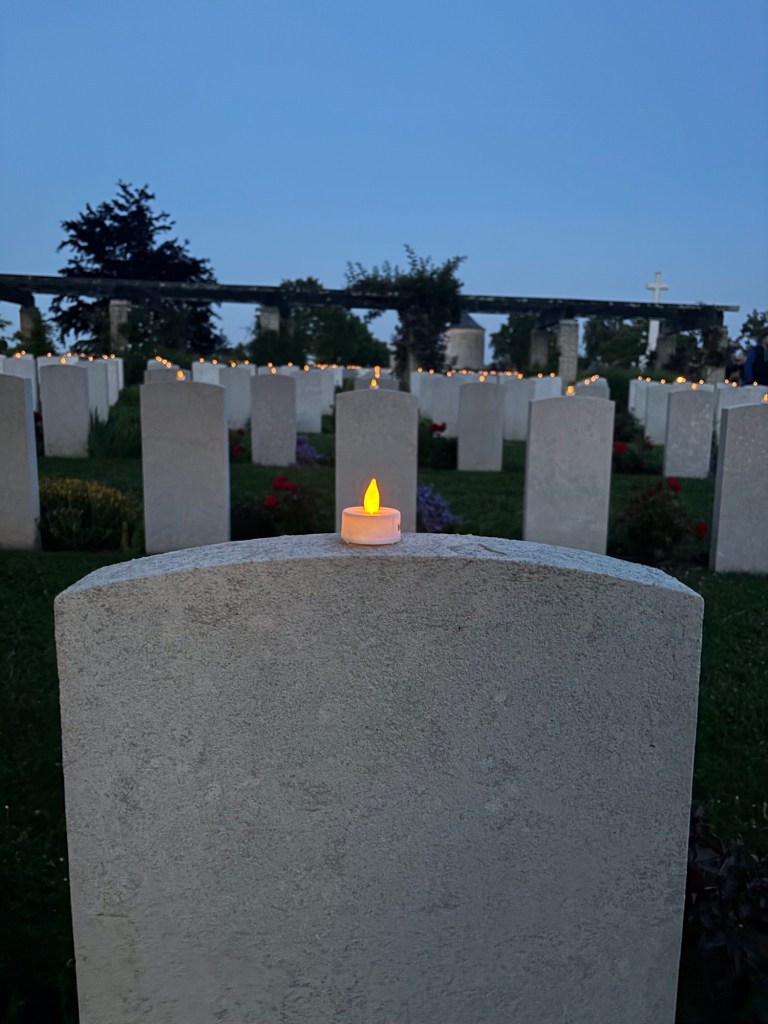
That evening we made our way to Ranville Military Cemetery for a service of remembrance and ‘The Great Vigil’, where every CWG grave in Normandy would be illuminated. In Ranville Cemetery people quietly gathered in the dusk, whilst the over 2,600 names of the fallen in the cemetery were read aloud by members of the public, accompanied by a military band and lone piper and lights were placed on every grave. Then a lighted torch was carried through the cemetery by a young girl, followed by local & visiting children carrying lights who made their way to the large memorial stone and lit a torch. Then there was short service with speeches in French & English remembering the lives of some of the fallen. Many of those buried here are from 6th Airborne who were killed in the early days of the Battle of Normandy including Lieutenant Dan Brotheridge, the first allied death of the invasion, killed at Pegasus Bridge.

It was a haunting and moving moment, as we stood quietly in the dusk, bats swooping overhead, a piper playing and as darkness deepened, the lights stood out brighter reminding us that their sacrifice must never be forgotten.

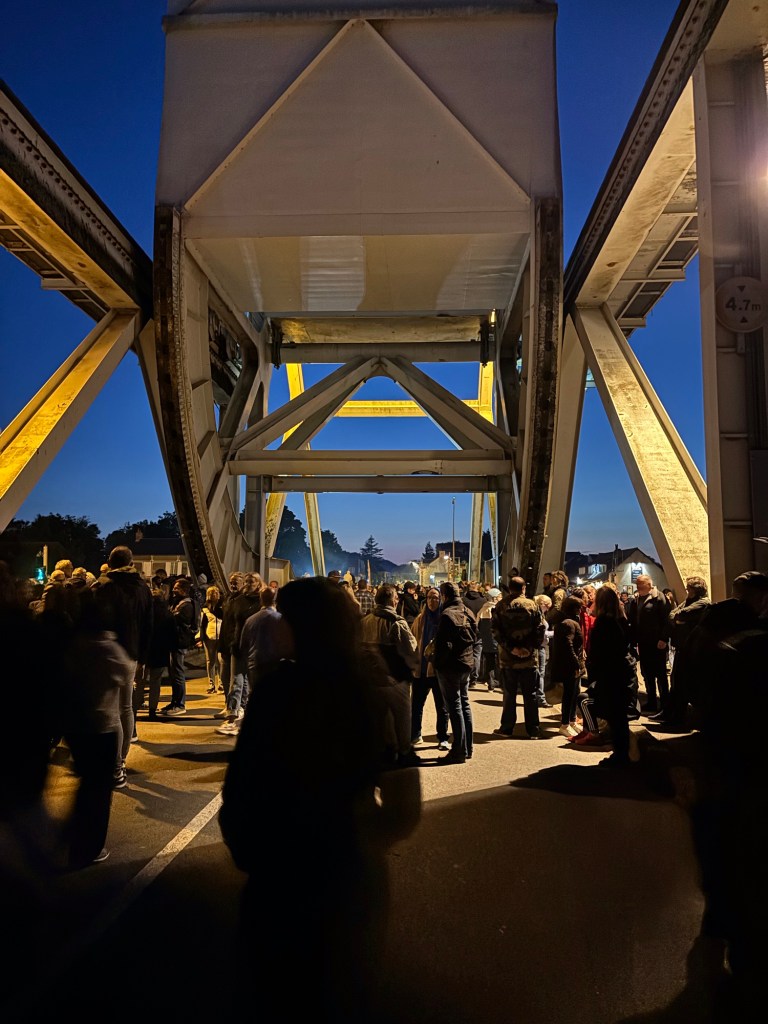
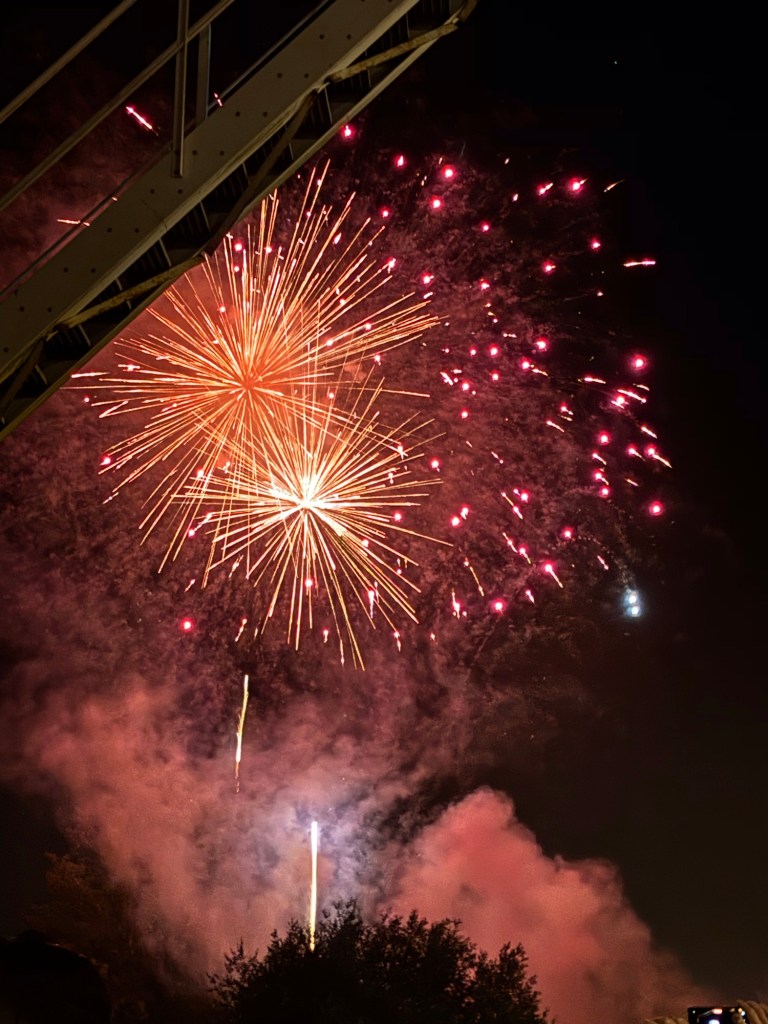
From Ranville Cemetery we made our way to Pegasus Bridge, where huge crowds had gathered for the ceremony and fireworks that celebrate the moment the gliders landed and Pegasus Bridge was taken.  We were standing on the bridge with hundreds of others as troops from the Army Air Corp and The Rifles along with a military band and pipers made their way across the bridge where readings and wreaths were laid and a Champagne toast taken at Café Gondree.   Then after midnight there was a spectacular firework display to mark the time that Pegasus was taken. 

After the ceremony we decided to carry on across the bridge, grab a drink and meet up with others from our group. The area around Café Gondree and Les 3 Planeurs Bar was packed with people, servicemen and veterans celebrating and just before 1 am we decided to make our way home but as we moved through the crowds to cross the bridge, it opened, to allow shipping through.  It took 45 minutes for the large vessel, a very beautiful sailing cruise ship called Sea Cloud Spirit to go through and for the bridge to come down so the hundreds of people could make their way home.  We got back to the motorhome around 2 am, absolutely frozen, as it is really very cold at night.

Thursday 6th June – due to the number of high-profile dignitaries attending ceremonies, many roads were closed and access to many areas was restricted, so we embarked onto a little road trip to see where we could get to and generally drive around the Normandy side roads and just take in the beauty of the countryside.

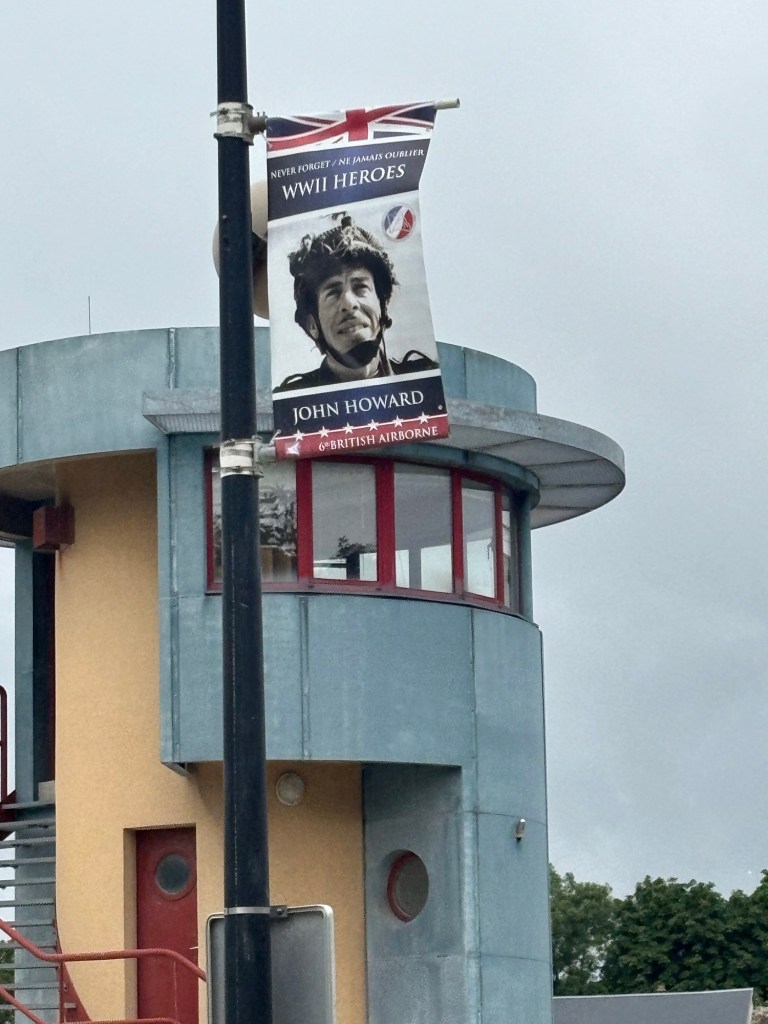
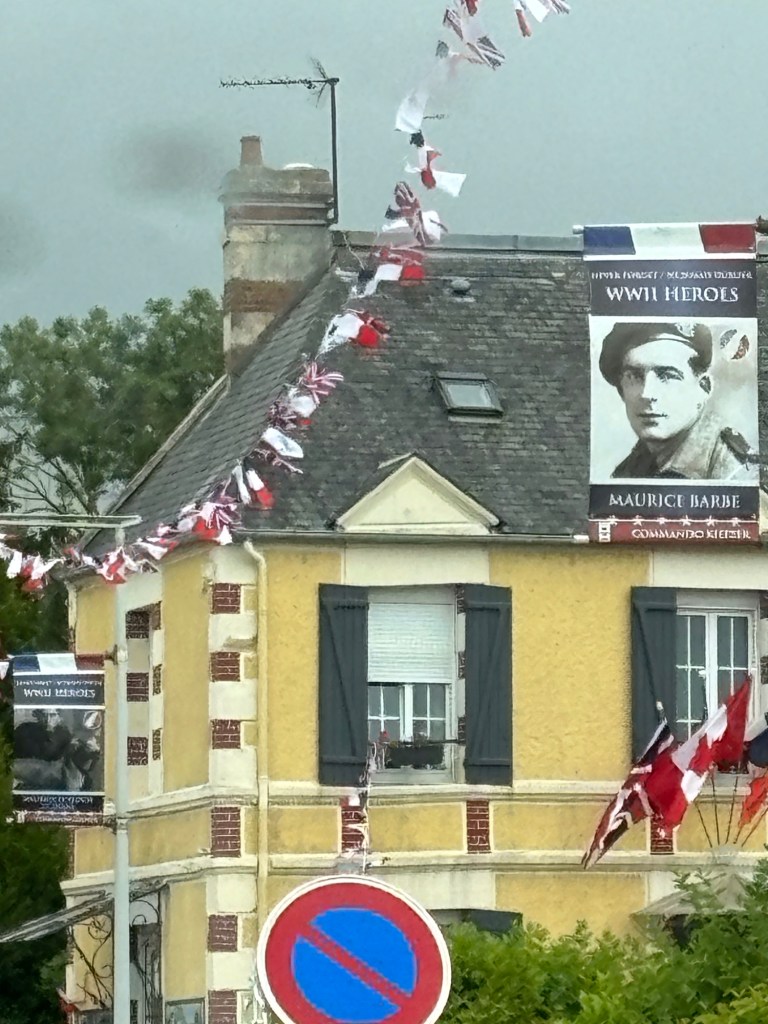
On lampposts in towns, villages and tiny hamlets are posters showing a photo of a hero, their name and their country’s flag.

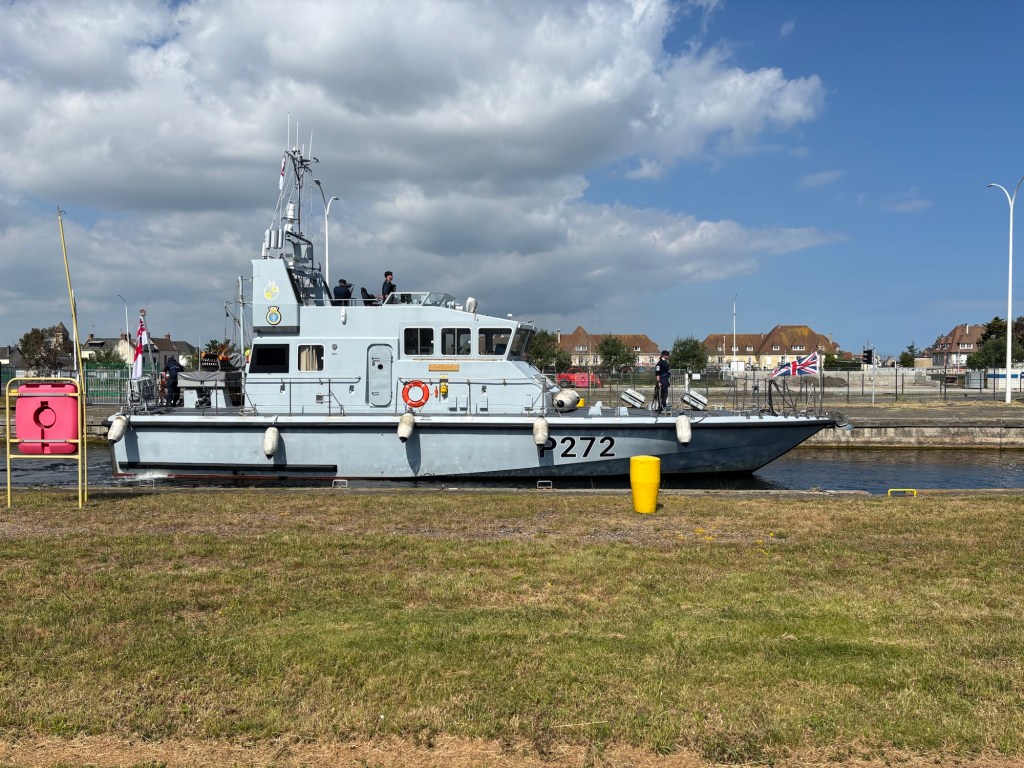
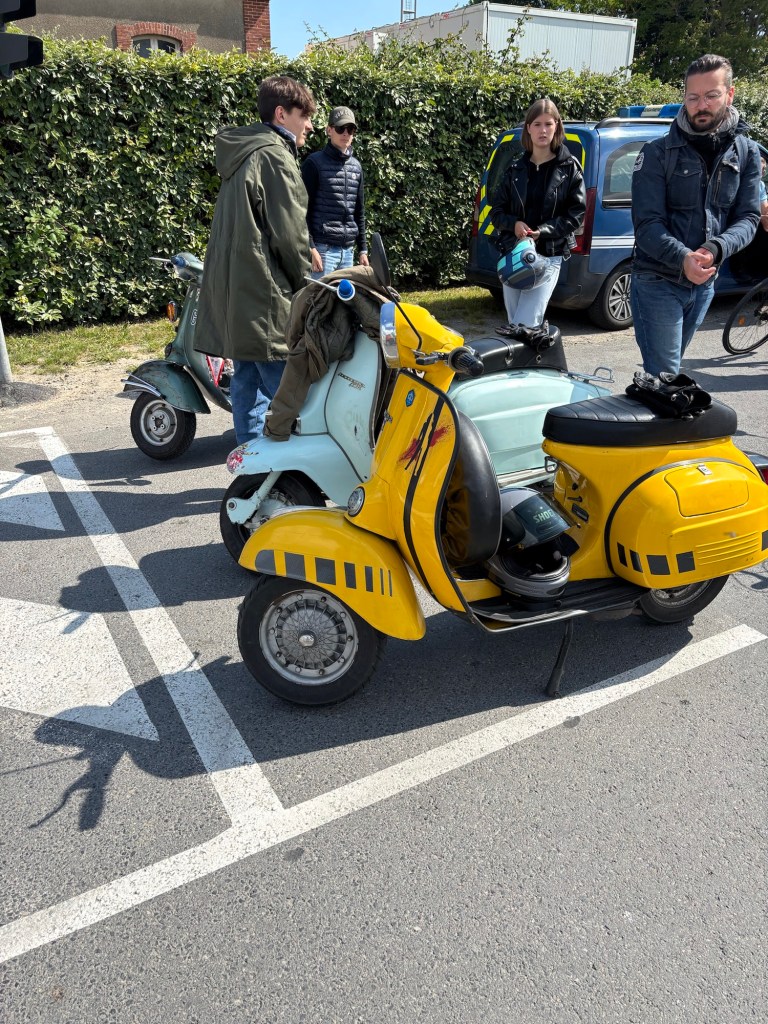
To cross the Caen Canal and Orne River, the quickest way from our campsite is usually across Pegasus Bridge but we knew there would be huge queues, so made our way down the side of the river to Ouistreham where you cross via 2 bridges.  We arrived to find the first bridge up to let shipping into the lock and they were 3 P Class Royal Navy ships, HMS Blazer, HMS Exploit and HMS Smiter.  So well worth the hold up, plus we met 3 vintage Lambrettas. 

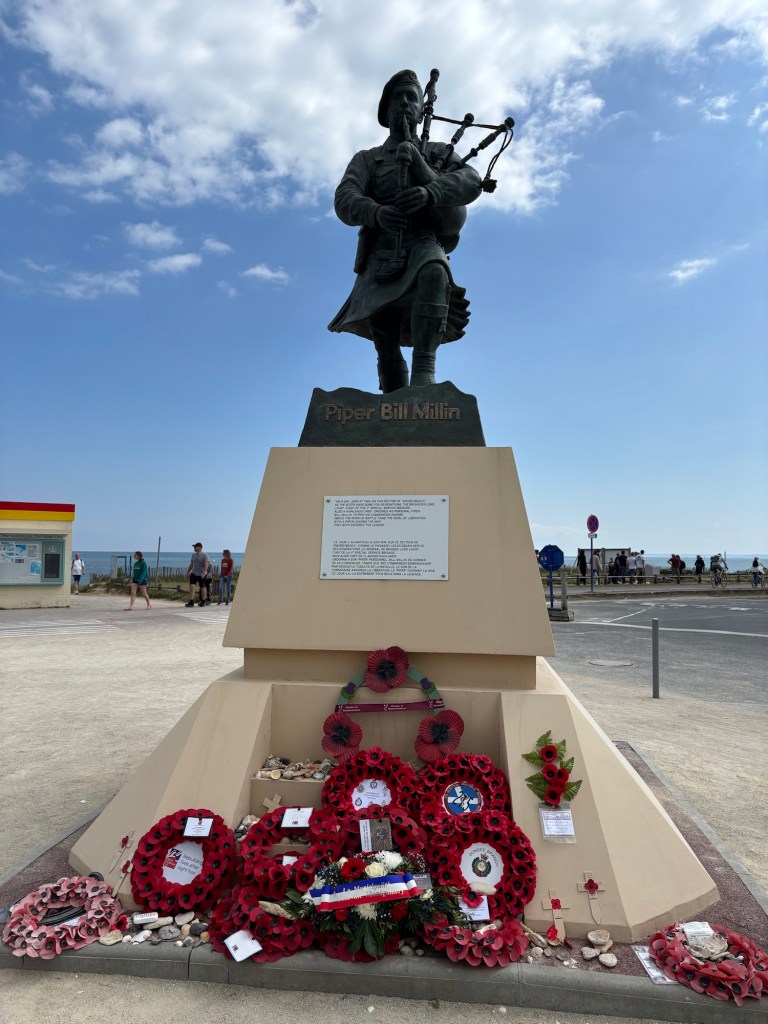
We made our way to Coleville-Montgomery where there is statue to Piper Bill Mullin, who landed on Sword Beach with Lord Lovett.  During WW1 pipers piped troops into battle, however as so many were killed, the British Govt forbade the practice in WW2.  However Lord Lovatt said when Private Mullins reminded him of this order, “Ah, but that’s the English War Office. You and I are both Scottish, and that doesn’t apply.” so Piper Mullins marched up and down the beach in his kilt piping ‘Highland Laddie’ and also piped Lord Lovett’s troop across Pegasus when they relieved Howard’s men. Piper Mullins wore the kilt his own father had worn at Flanders.

We managed to get to the outskirts of Arromanches before we were turned around by Gendarmes.  I love the Normandy countryside and travelling quietly through the tiny back roads, away from the hustle and bustle of the popular sites seemed fitting on D-Day itself.

Arriving back at Merville, we spotted some of our friends having a drink at a bar, so we joined them and later that evening we all gathered for a BBQ to celebrate our friend, Robbie’s birthday.

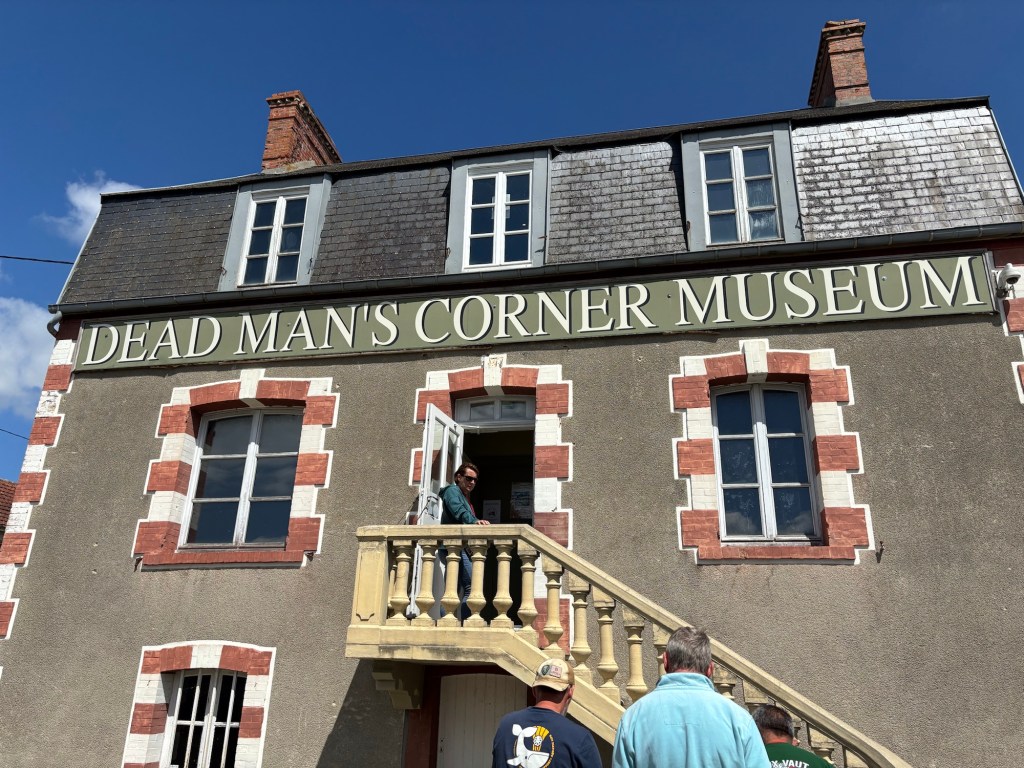
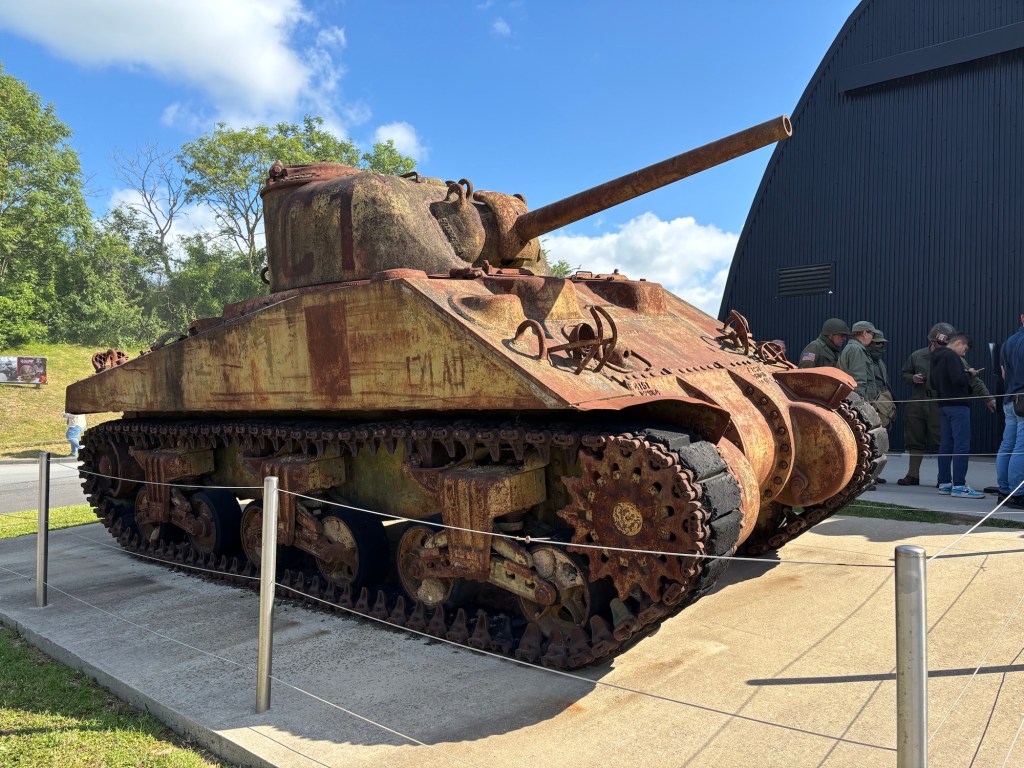
On Friday 7th June, we joined up with Jim, Jane and Toby to head over towards Carentan and St Mere d’Eglise in the American sector.  Our first stop was the D-Day Museum at Dead Man’s Corner, just outside Carentan.  Part of the Museum is based in a house that was used as the Headquarters of the German paratroopers before being taken over by American paratroopers.  The area was the scene of fierce fighting and an American tank that was taken out by the Germans had its commnader’s dead body sat in the turret and was named Dead Man’s Corner by the troops who used the tank as an identifying marker. After over an hour’s wait, we got into the Museum, however the 3D experience and simulator were sold out.   At that moment we decided not to attempt to visit any more paid attractions as the queues for both parking and entry were enormous.

A few miles along the road is the Medics Church in Angoville-au-Plain.  Charles and I had visited this Church last year.  During the Battle of Normandy 2 US medics used the Church as an aide station, treating 80 injured American and German soldiers plus a local child.  Today blood stains are still visible on the pews.  Two of the stained glass commemorate the medics and the American paratroopers of the 101st Airborne Division.  If you would like to know more about this and our visit to the American sector, then please scroll back on this blog to the appropriate post.

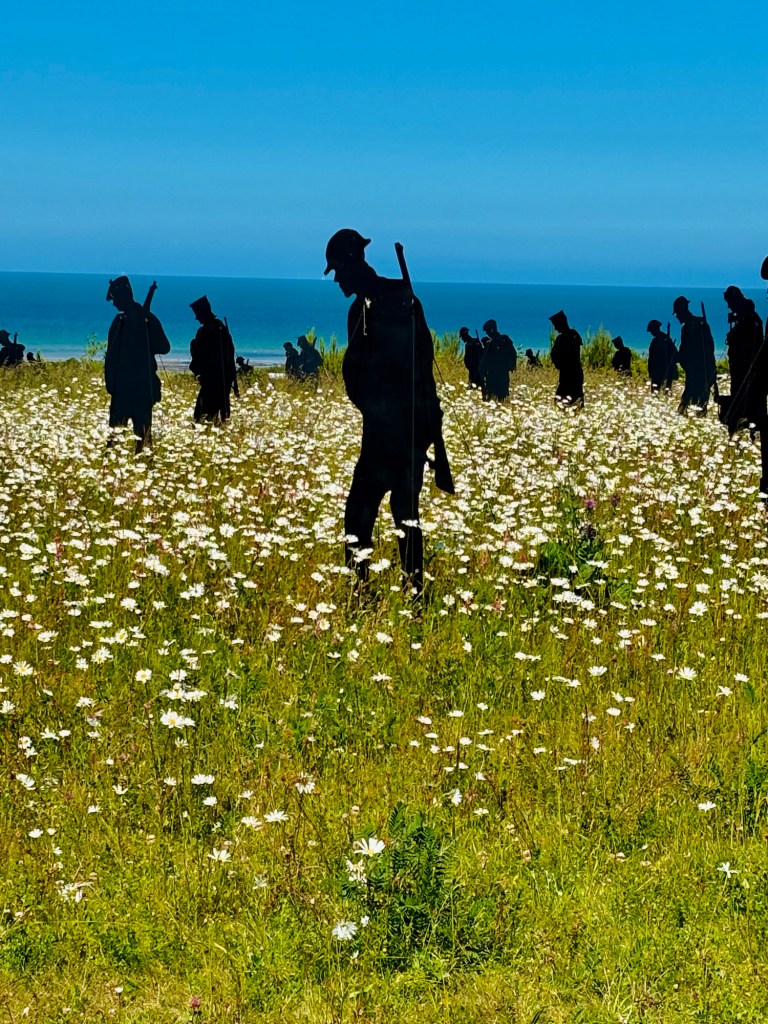
Whilst in the car we heard on French radio that the roads around St Mere d’Eglise were gridlocked so we abandoned plans to visit and made our way to Vers Sur Mer, where the British Normandy Memorial is.   As it was now late in the day, we were lucky to park around 5 minutes walk away.  Charlie and myself had visited the Memorial before so whilst Jim, Jane and Toby walked around, we made our way to the new installation ‘Standing with Giants’, where 1,476 silhouettes are installed across a wild meadow, just behind the Memorial.  The silhouettes represent the 1,476 British servicemen who died on D-Day.   It is truly stunning.

The day then went slightly to pot, as we made our way back to Merville, Jim’s car developed a puncture, which was not in a repairable place, so we limped back to their accommodation.  They were due to leave early the next morning for a Channel Tunnel crossing, but it would have been touch and go if the tyre would have made it.  Phone calls had ascertained that a replacement would not be available until Tuesday 11 June at the earliest.  So with the help of the AA they got onto the Caen to Portsmouth Ferry, stayed the night in a Travelodge, whilst Lorcan, a friend drove down to Portsmouth with a second hand tyre, that was fitted on Sunday morning at a local garage.  So Jim, Jane and Toby’s holiday ended a little stressfully.

The rest of our party returned to the UK on Saturday 8th June but we were not leaving the Normandy area until Monday 10th June.

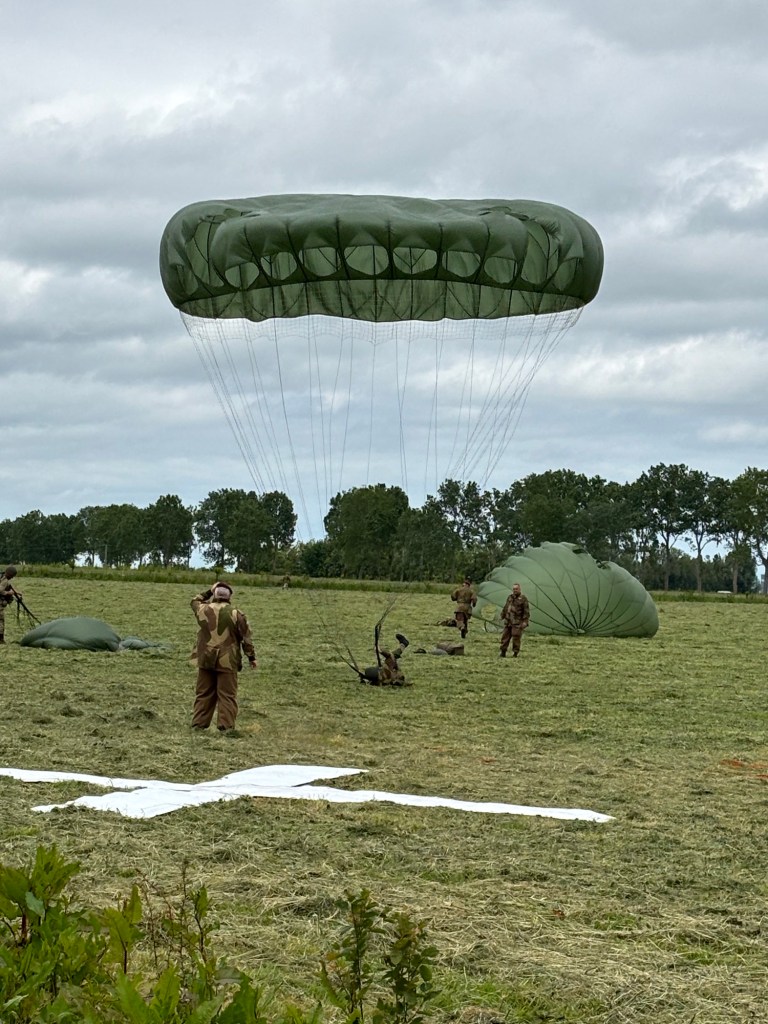
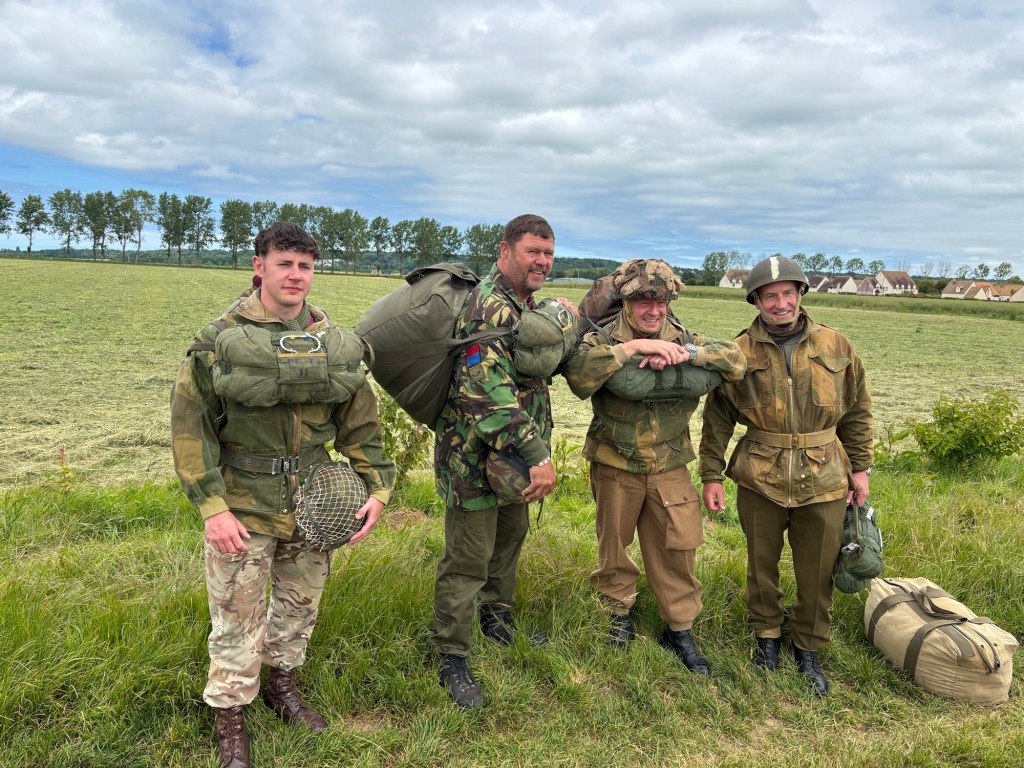
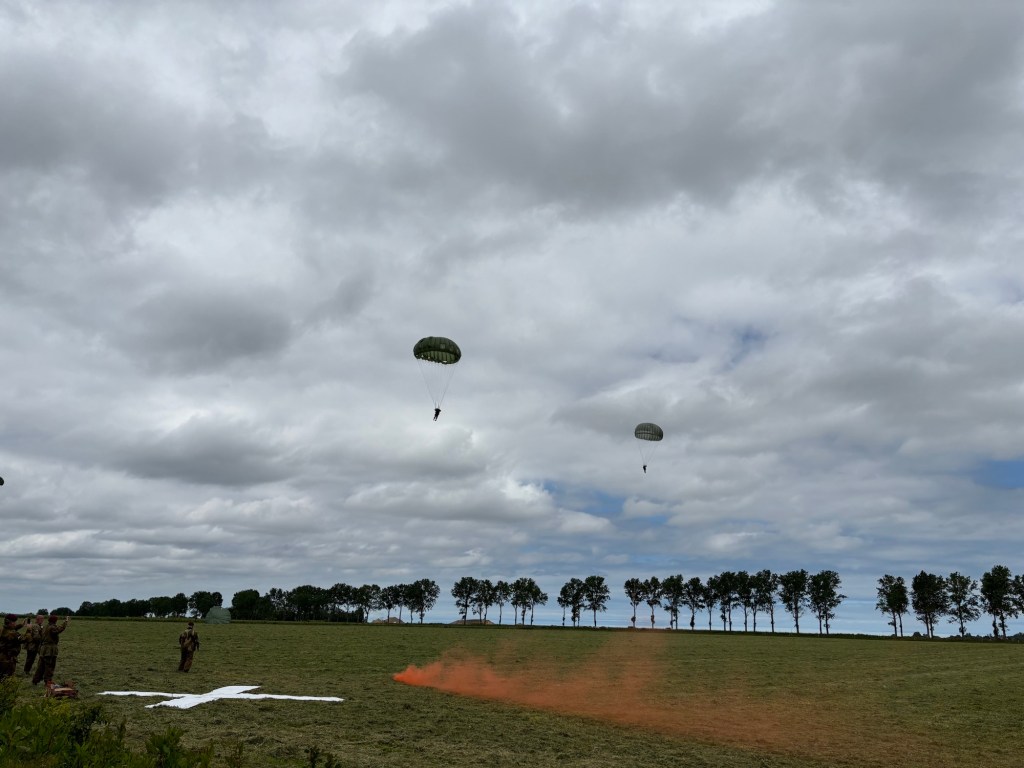
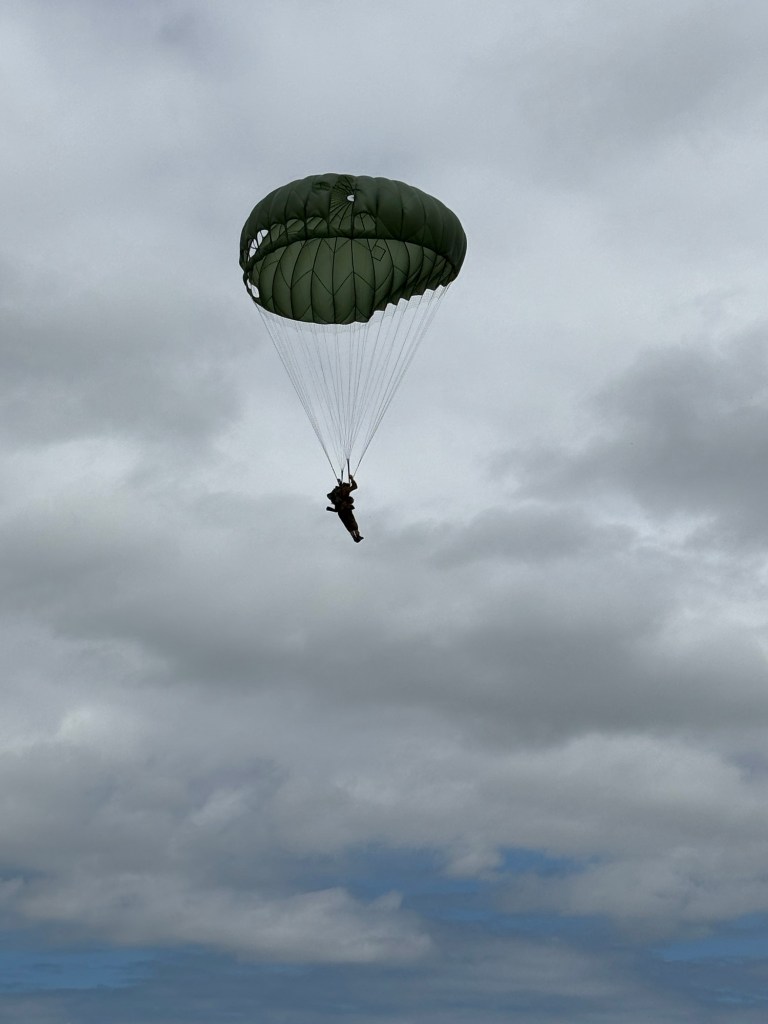
After a conversation with an ex-para during the week, we learned that there was to be a number of parachute drops at Sannerville, about a 40 minute drive from our campsite.  So on Saturday 8th June we made our way to the field just outside of the village, 10 minutes before the first two drops.  The guys doing the jump were from many countries, some were ex-serviceman, others enthusiasts.  The jumps were done with round parachutes which replicated the chutes used during WWII and can no longer be used in the UK.  We had heard that there had been a couple of injuries in the previous drops early in the week but the two drops we witnessed had no injuries but a couple of heavy landings.  It was a magnificent experience to watch.

We then made our way back to Pegasus Bridge, popping into Ouistreham where again we saw the Sea Cloud Spirit going through the lock, out into open sea.  We stopped at Café Gondree for a quick drink before walking over the bridge once again to look properly at the site of the glider landings as the crowds had now lessened and you could really get a sense of how close to the bridge they landed.

Sunday 9th June – our last day in Normandy.  Today we drove down to Bayeux on the scooter, via the small roads to watch the largest parade of military vehicles, where we hoped to see our friend, Jon, who was driving one of them.  We managed to park the scooter and positioned ourselves at a roundabout where we would have good view of the vehicles as they entered and exited.  However, the gendarmes let the traffic block half the roundabout so that all the people on our side of the roundabout now had their view totally blocked.  There was booing and the gendarmes then let us stand  in the middle of the large, grassy roundabout where we just had time to hear a shout as Jon spotted us from Daisy the Dodge!

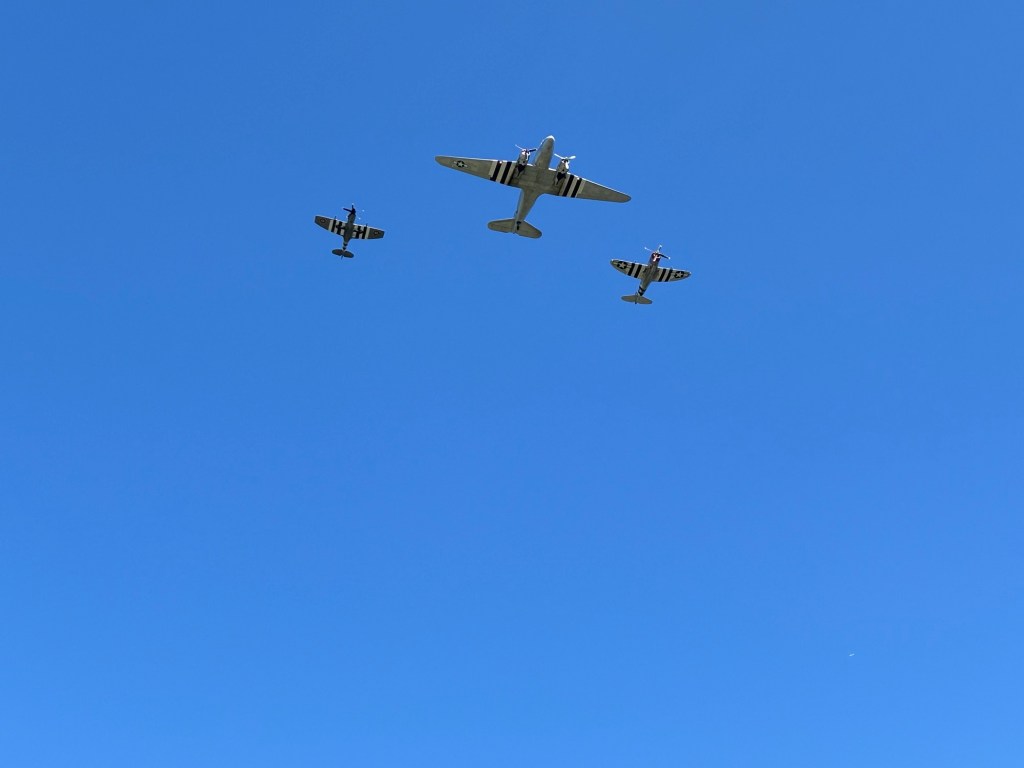
Fly past over Bayeux

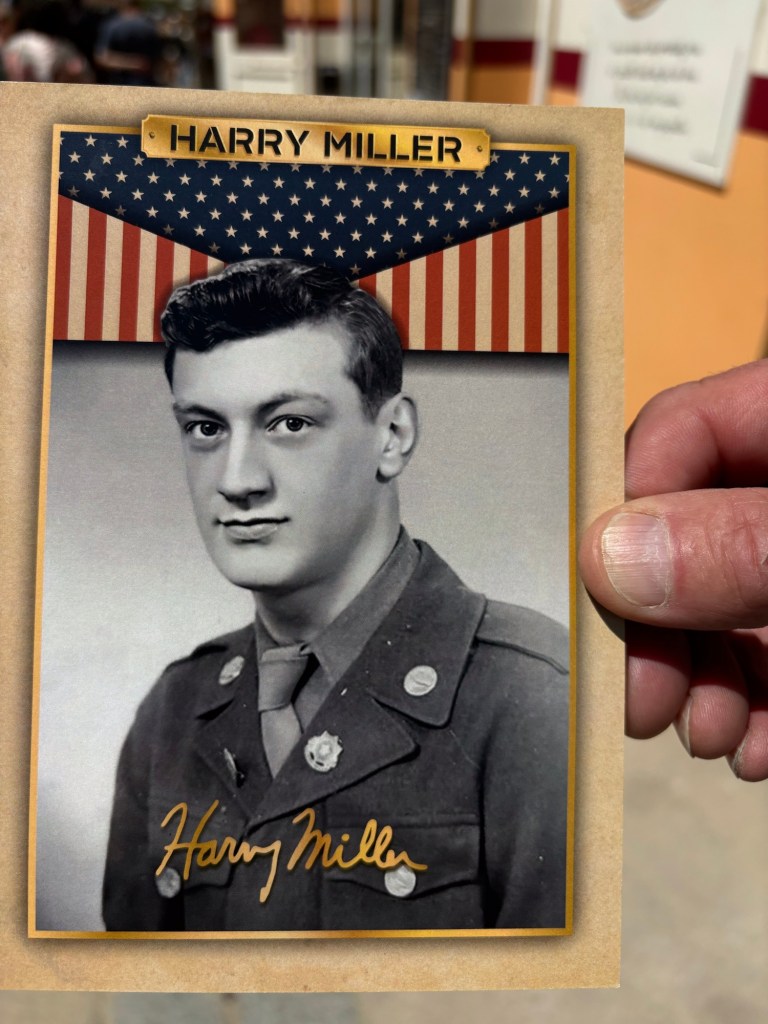
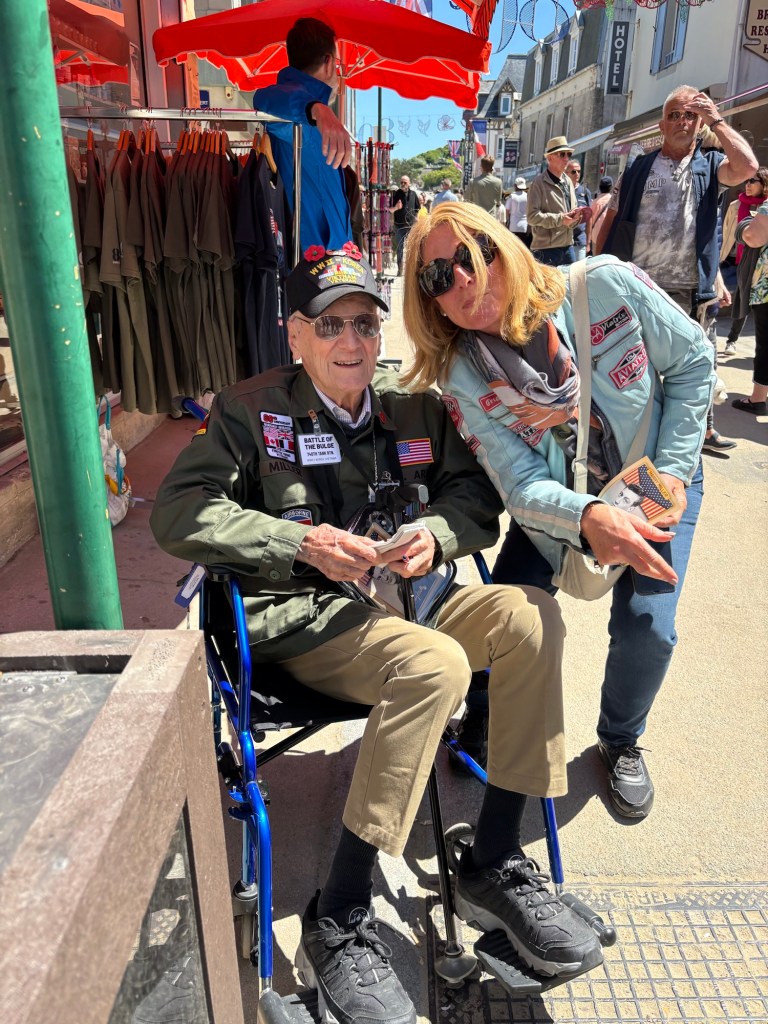
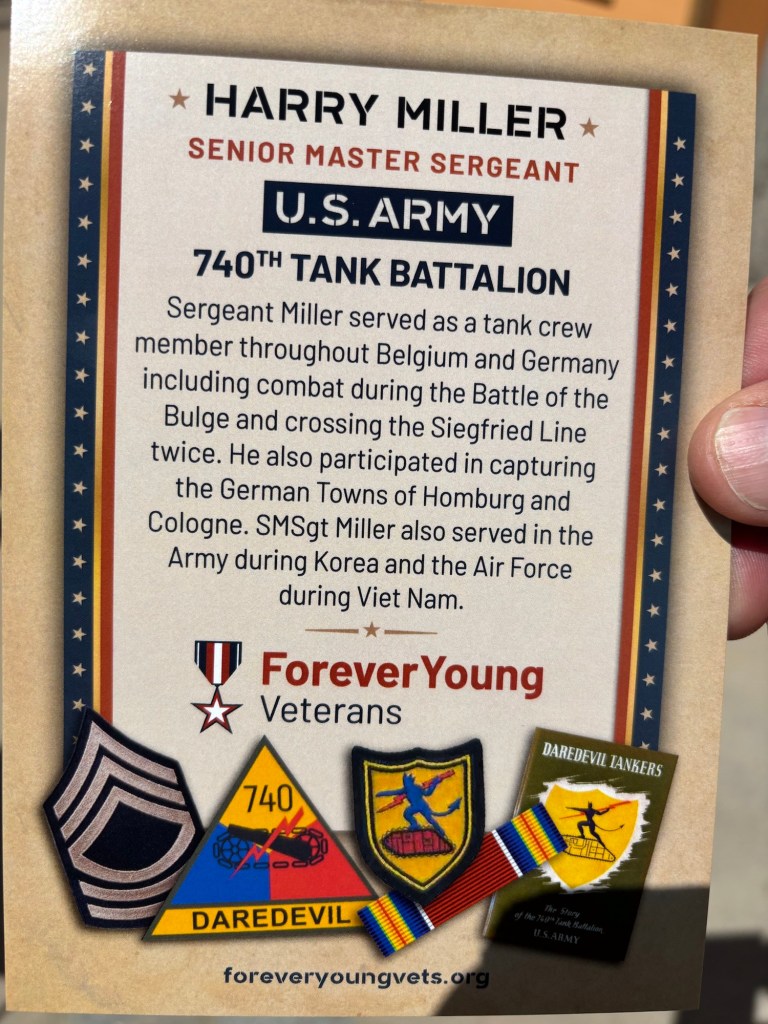
We had planned to have lunch in Bayeux, but with so many vehicles and people, we decided to go to Arromanche. I am so glad we did, as we were finishing our lunch sat in the sun, a US Veteran Association party came down the street. The men, all in the late 90’s and into their 100’s, were accompanied by volunteers. We chatted to 96 year Harry Miller, Senior Master Sergeant, who saw combat at the Battle of the Bulge, and then moving into Germany. Harry also served in Korea and Vietnam. We also had a bit of banter with another veteran, whose volunteer helper’s father was from Manchester, where our daughter lives.

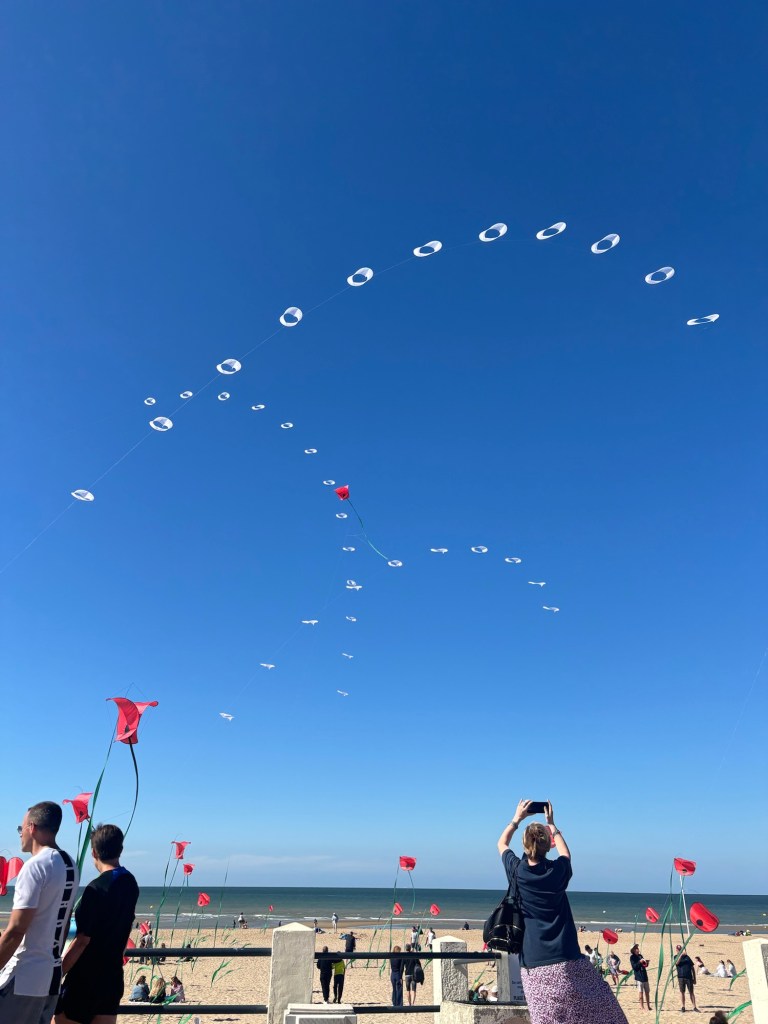
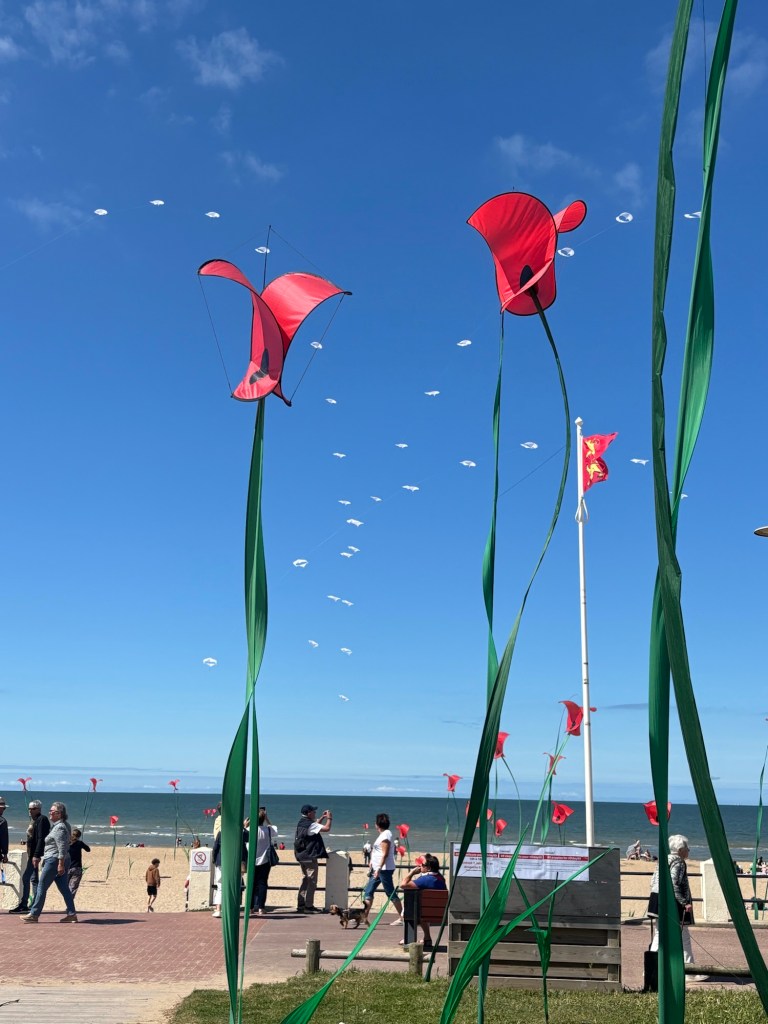
We finished the day having an early evening drink in Merville, looking at the poppy installation and a walk on the beach.

So our time in Normandy is over, it has been an enjoyable and informative week, but most of all, it has been moving and at times emotional. At the next big Anniversary, 85th, it is unlikely that any veterans will be alive and D-Day truly moves into history, so I would ask, that you take your children and grandchildren to the beaches of Normandy and fields of Flanders so light is shone on the courage and sacrifice made by thousands of young men across 2 World Wars and they are not forgotten.

Speed, History & Spectacle – A Grand Tour – Part 6

The Majestic Loire Valley and its Enchanting Chateaux

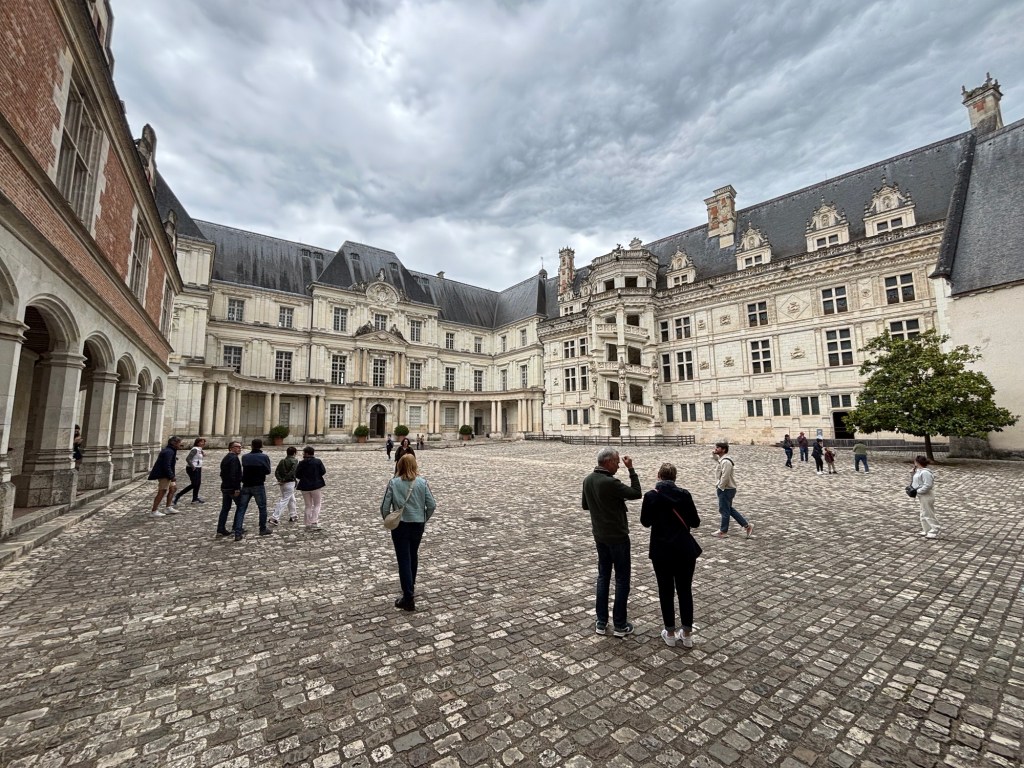
We have arrived in the Loire Valley for just 3 nights, our first stop is at Blois, situated right on the banks of the Loire, the medieval streets dominated by the Cathedral and its famous Chateau.

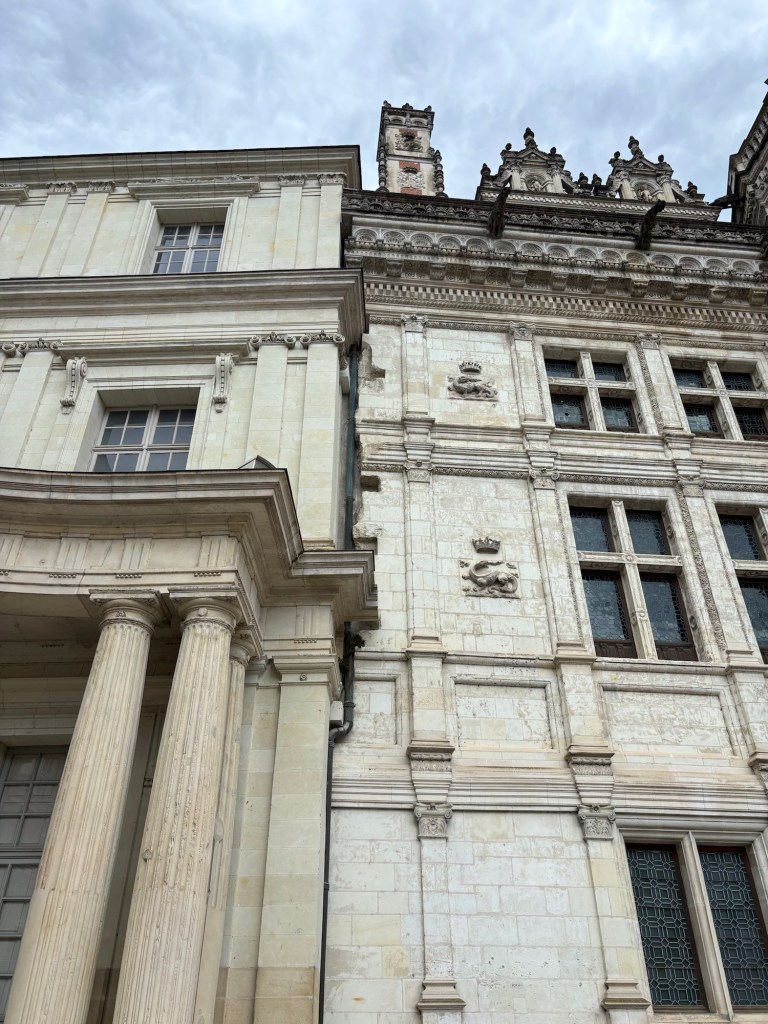
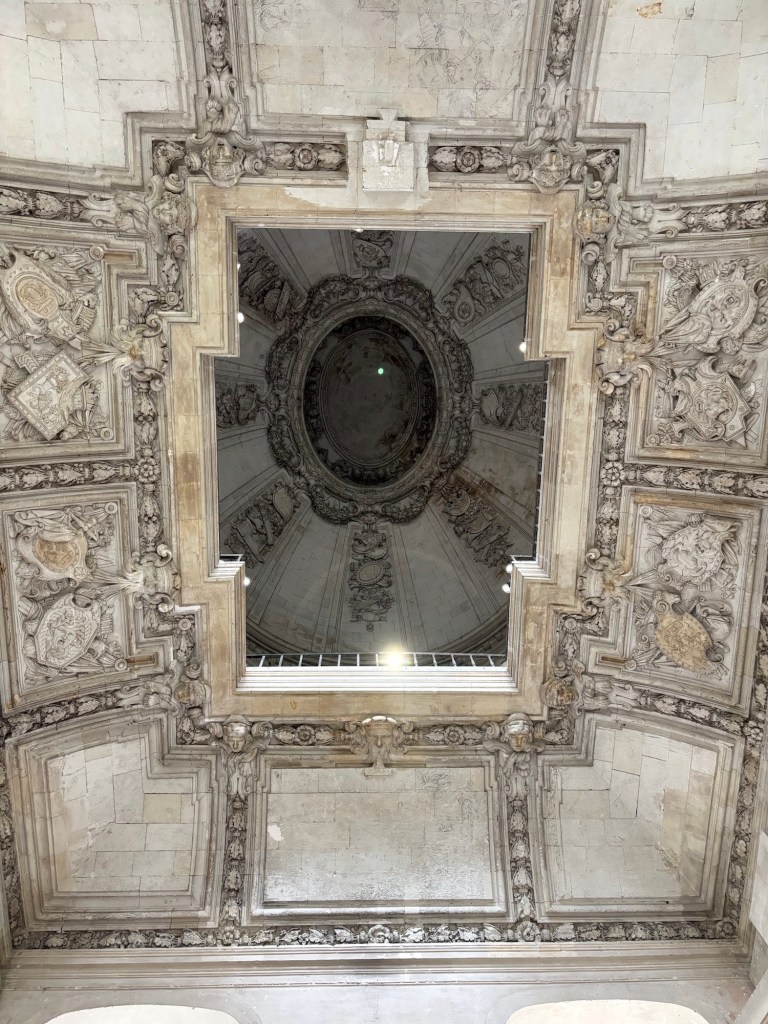
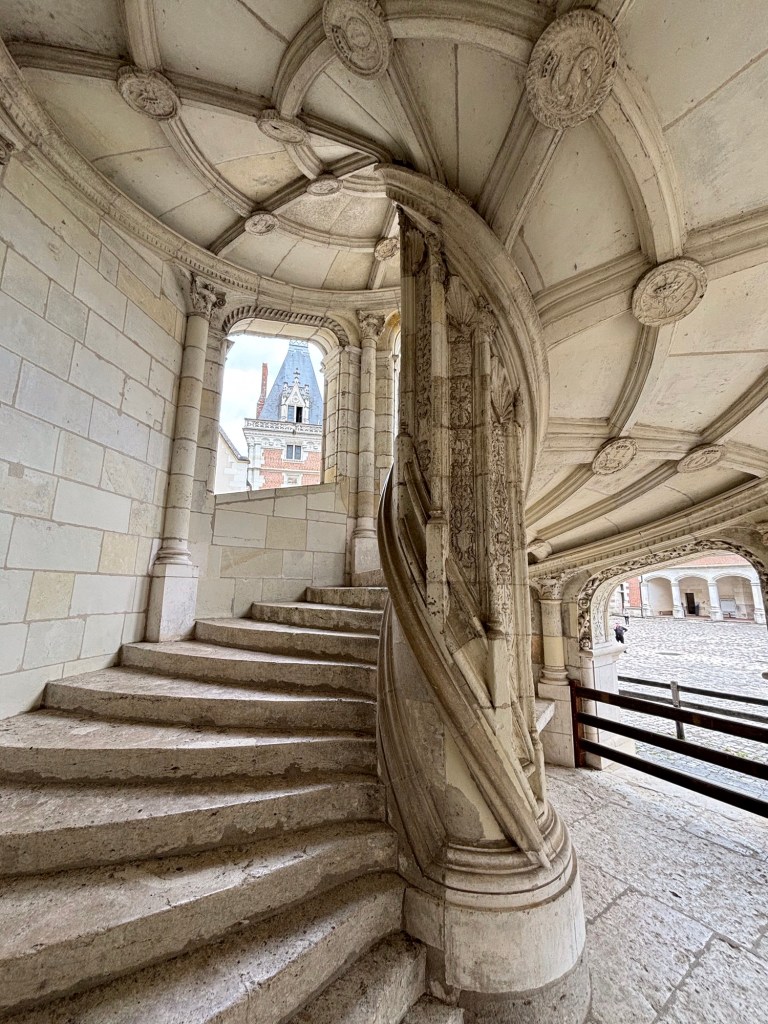
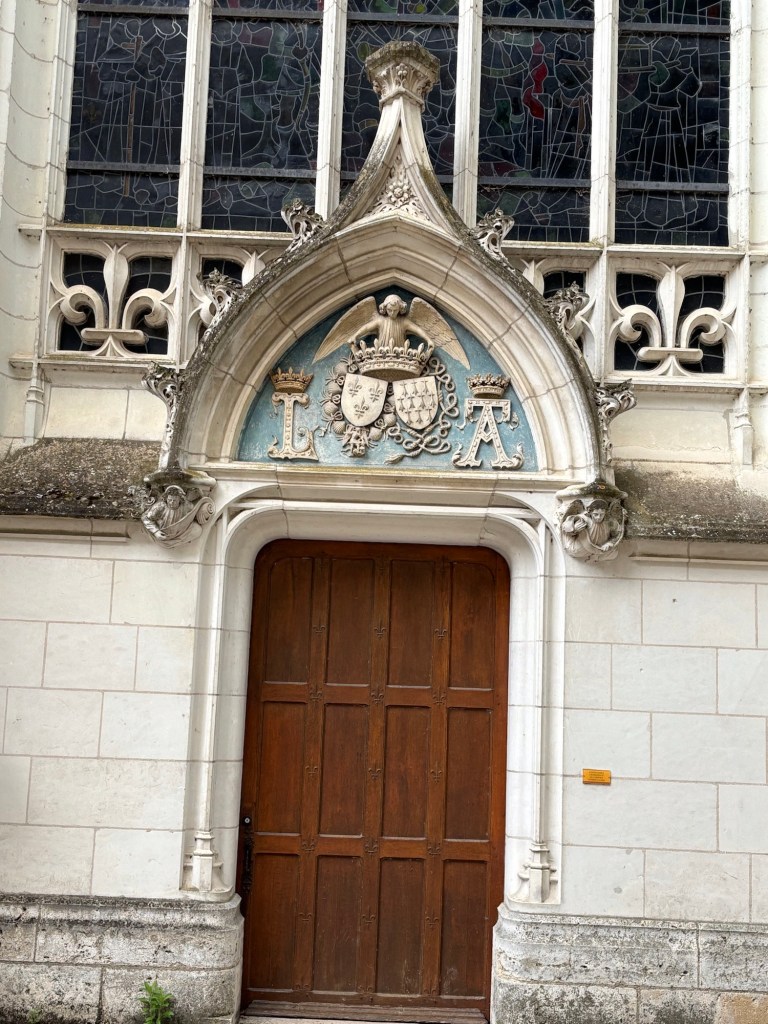
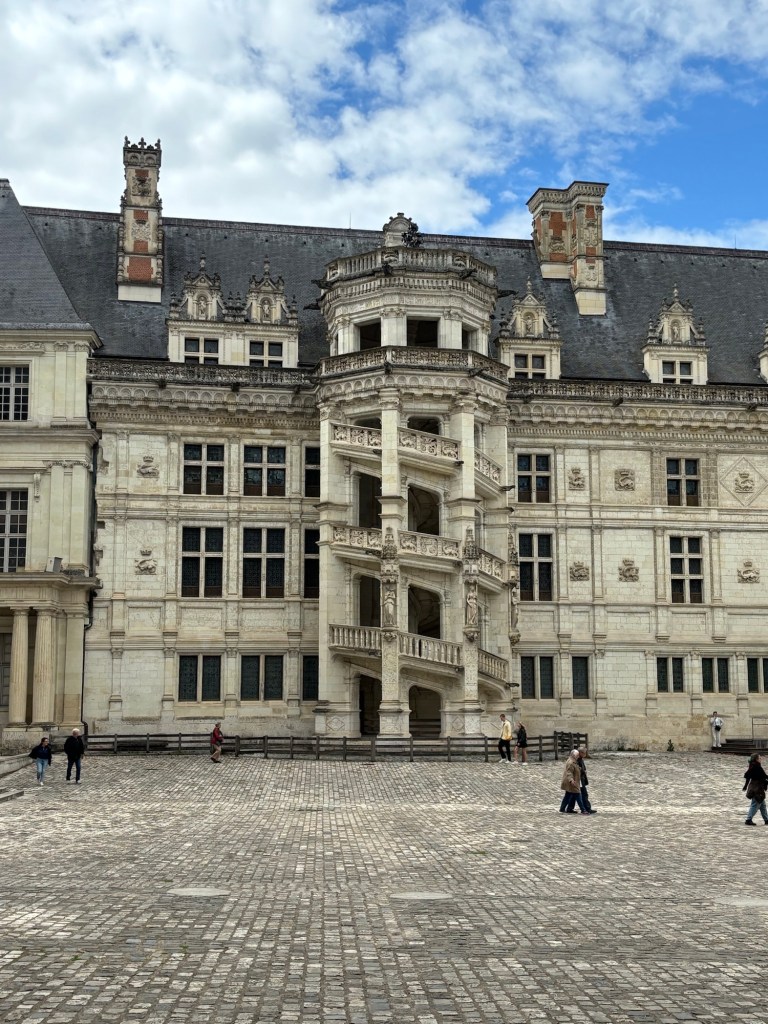
The Chateau was a stronghold of the Kings of France for a century but the most interesting feature of the Chateau is its architecturally development from the Middle Ages to the 17th Century. The Chateau now is a mixture of medieval, Classical and Renaissance architecture, according to the whims and fashions of the times and the owner. Some of the change in architectural style from one to another looks like ‘Bodge it & Scarper’ had the main contract. The Renaissance outer spiral staircase is a thing of beauty.

Whole wings of the Chateau and gardens have been demolished, built over and demolished again throughout its history. In 1843 Felix Duban being a project of restoration and was the first historical monument outside of Paris to undergo restoration by the French state. During the 20th Century the Chateau has been subject to numerous restoration programmes.

Aside from the Chateau there are quaint medieval streets to wander through and the gardens at the Bishop’s Palace. Across the square from the Chateau is the ‘Maison de Magie’ or ‘House of Magic’, we didn’t visit this but if you have children, it could be a hit! By accident, we arrived in the square on the hour and the Maison de Magie, puts on an animatronics performance, huge robotic golden salamanders appear out of the windows of the house. Salamanders were the personal emblem of King Francis I. Strange little show, but an entertaining five minutes for children.

Strange but a little mesmerising…

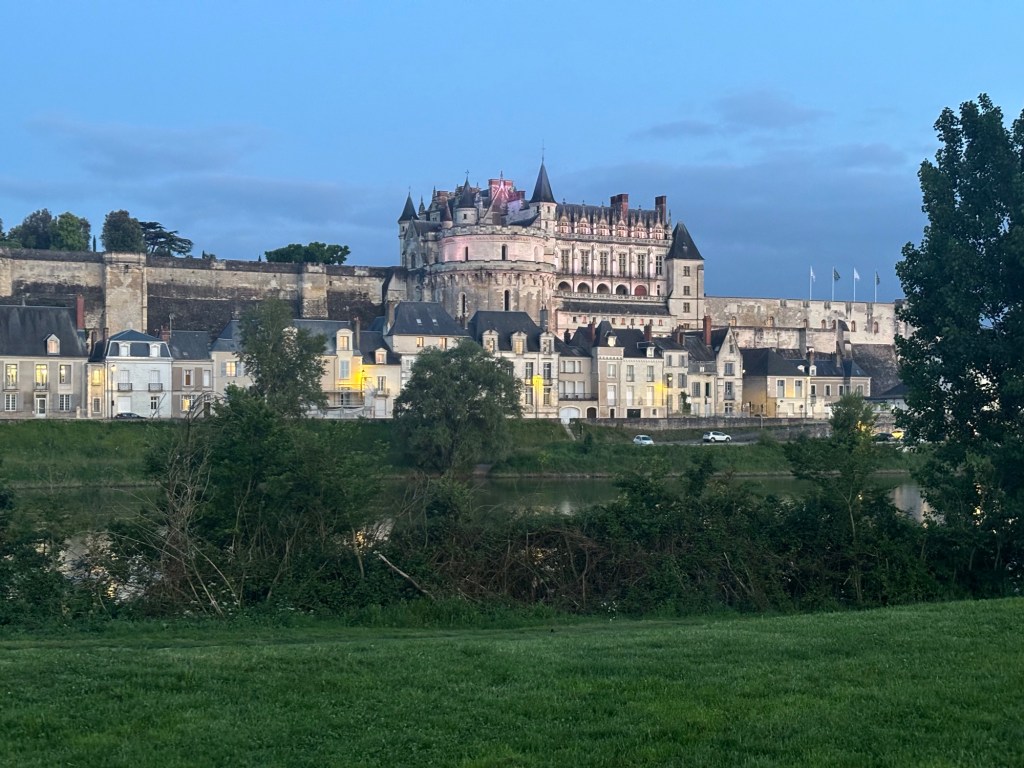
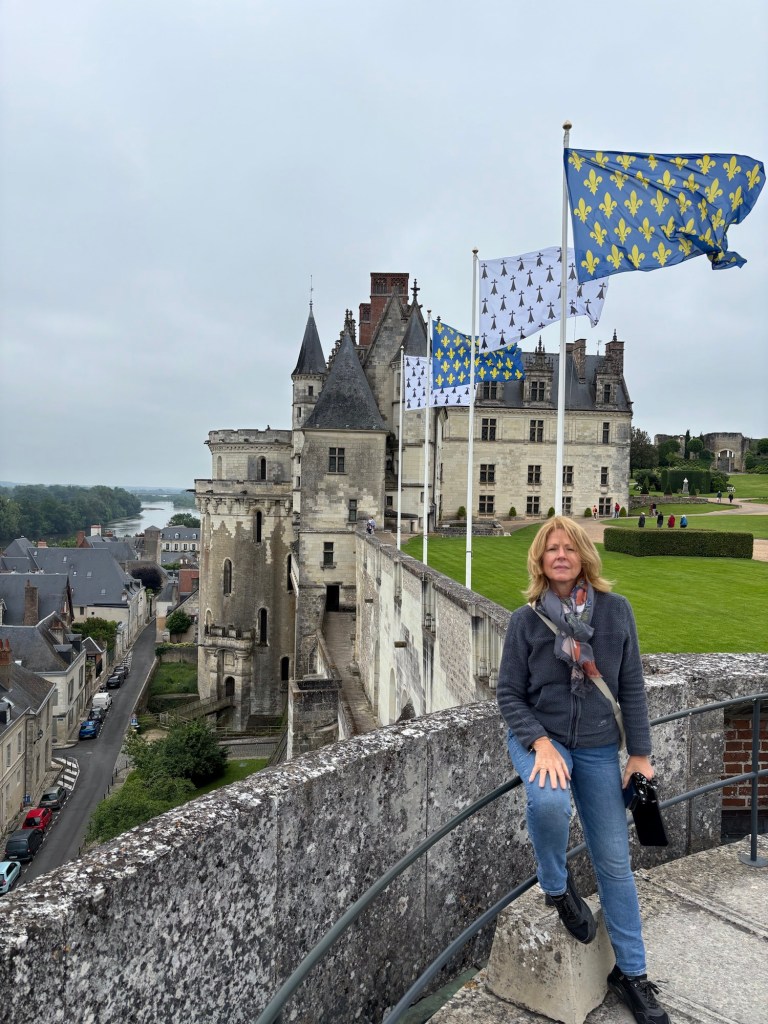
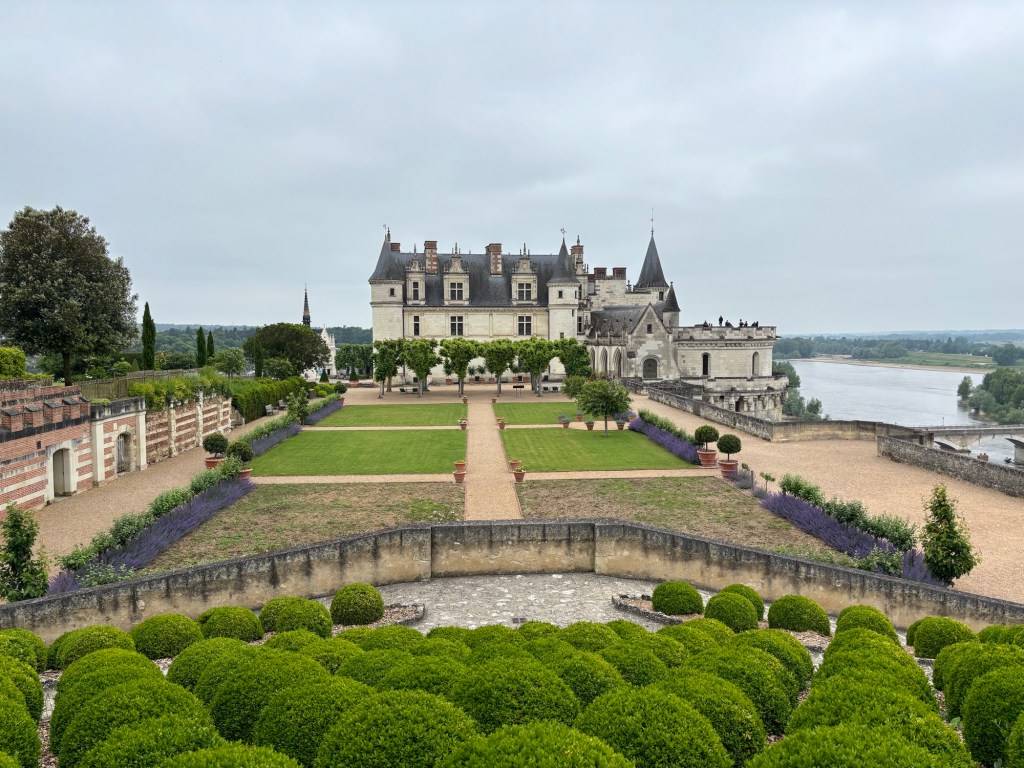
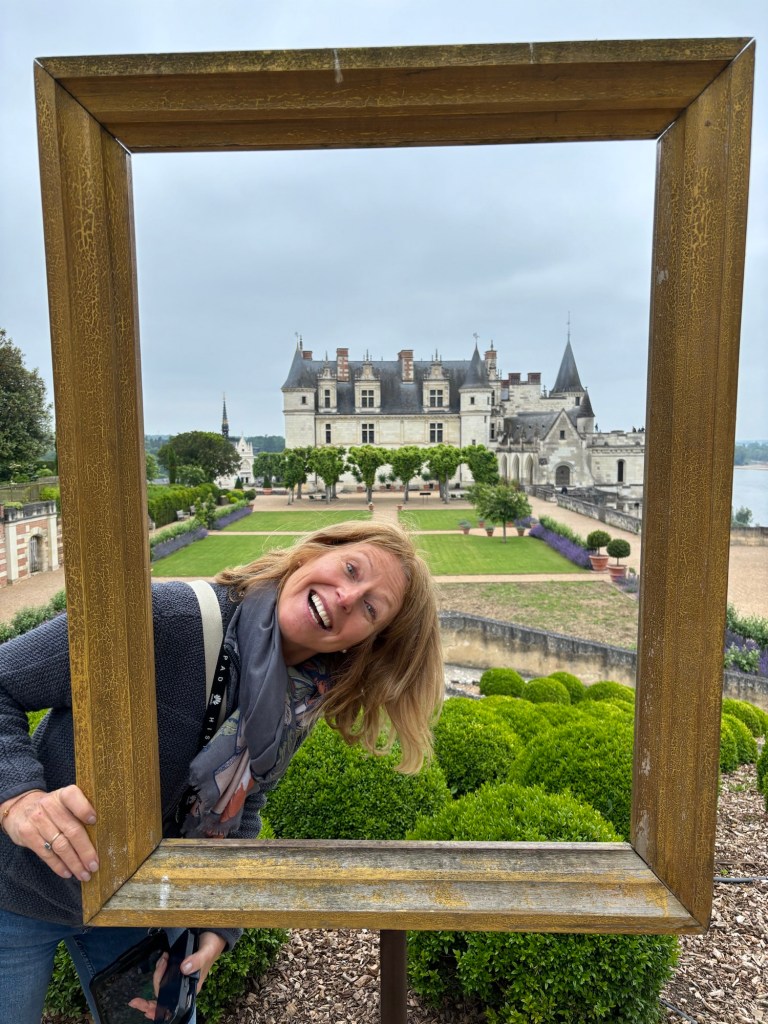
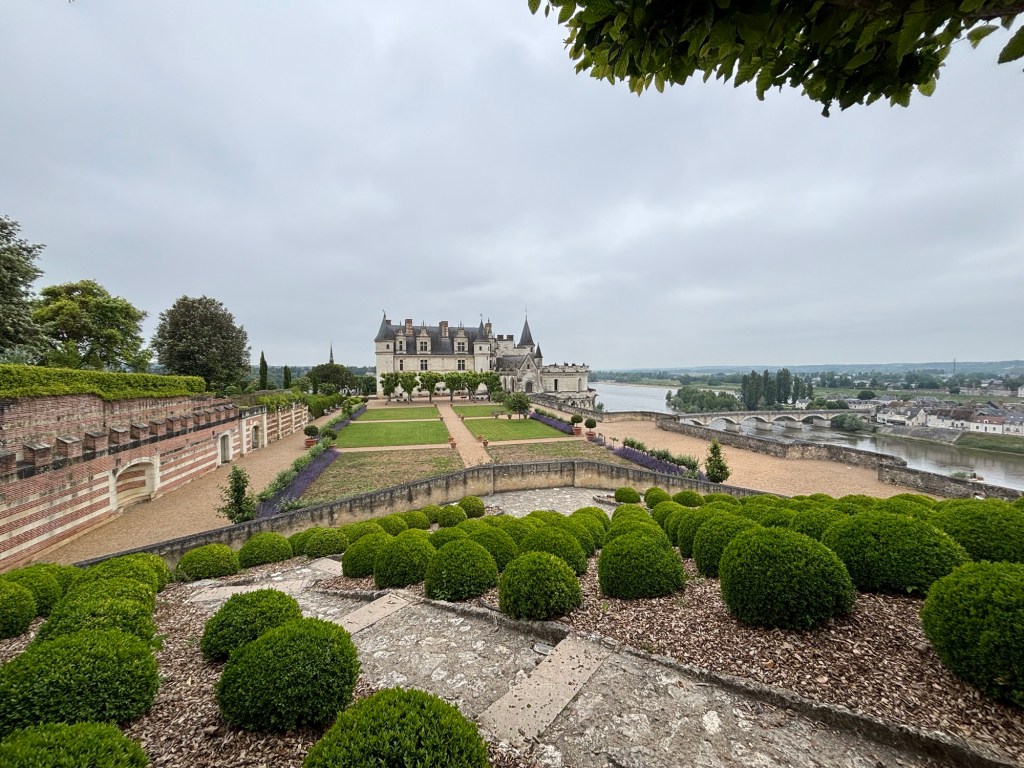
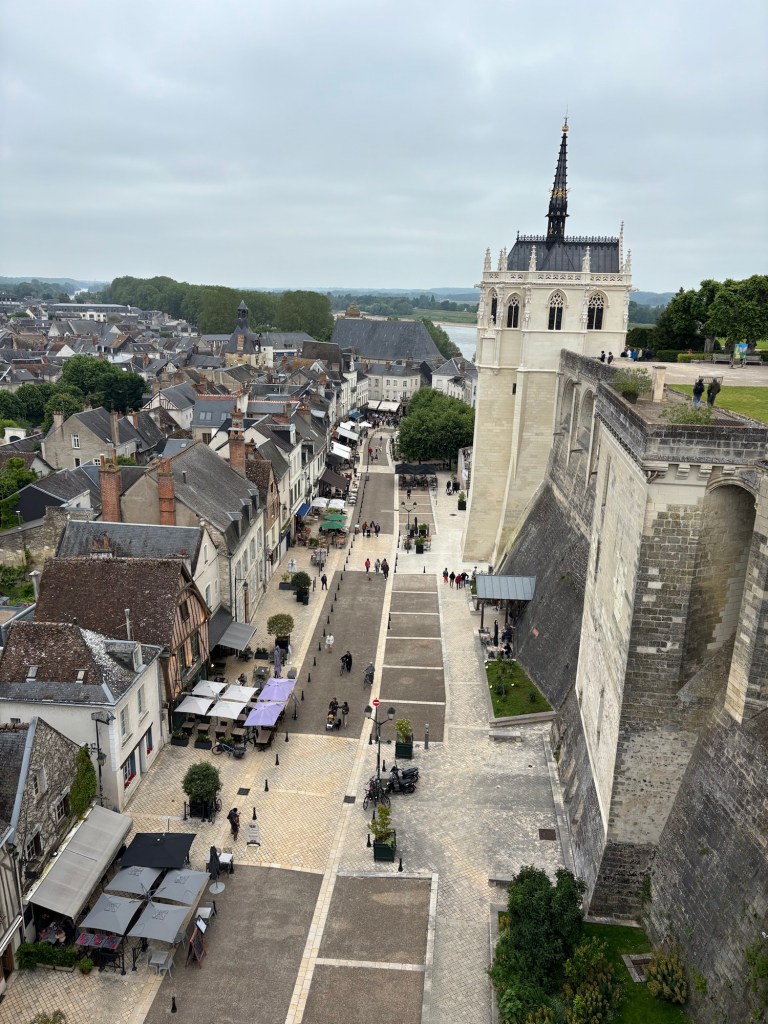
Our next stop is Amboise, where we are meeting our friends, Iain & Kerry, who are on the way to a wedding. Our campsite is on the island in the middle of the Loire and looks towards the Chateau d’Amboise. The Chateau has been a royal residence since around 1434 when Charles VII seized it from the owner who was suspected of plotting against the monarchy. Charles VIII died there after hitting his head on a door lintel, Francis 1 was raised there and Henry II and Catherine de’ Medici raised their children there, along with Mary Stuart, who had been promised in marriage to Francis II.

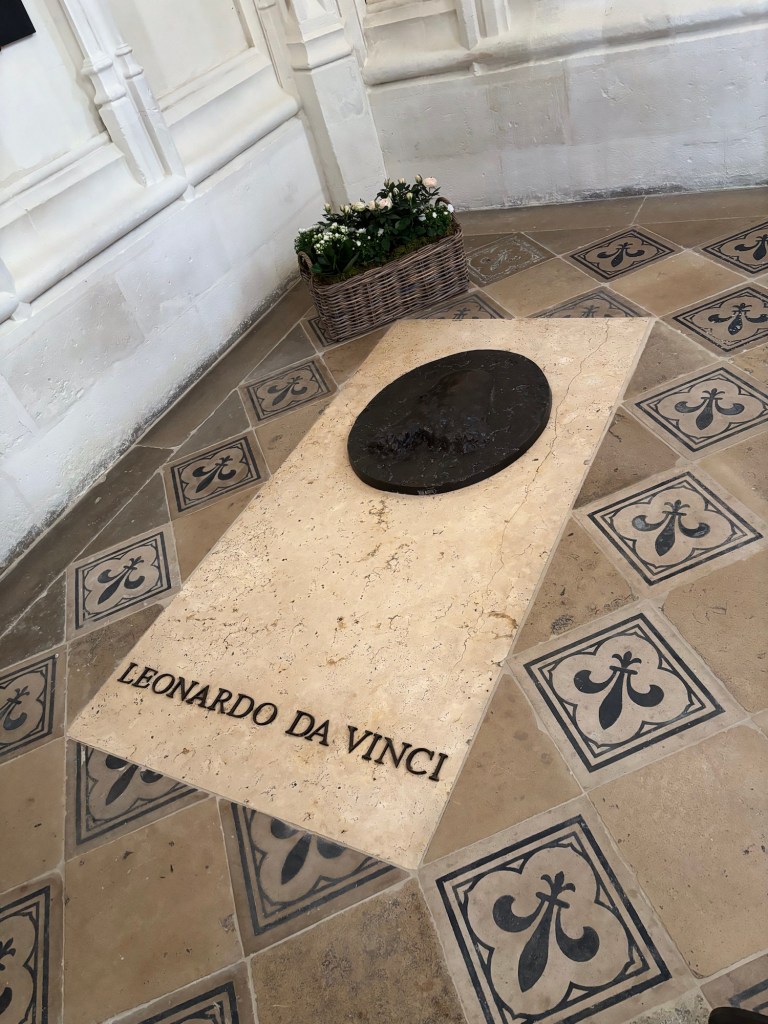
Leonardo da Vinci came in 1515, lived and worked there until his death in 1519 and is buried at the Chateau. In fact, he’s been buried twice there, once in the Chapel of St Florentin which fell into disrepair over the centuries and sometime in the late 1700’s, some bones that were found whole with extraordinary large skull and fragments of stonework containing some letters of his name were re-interred in the Chapel of St Hubert. You can see the grave in the chapel but it is distinctly underwhelming, although the stonework in the Chapel is exquisite.

We toured the Chateau and the most impressive part of the Chateau was the tower that allowed horse and carriages to make their way from town level up to the heights of the Chateau. The huge towers enclose a circular ramp, wide enough for horse, carriages and carts to ascend the ramparts.

On the Sunday morning, there is a large market held along the banks of the Loire, which we spent an hour wandering through, mostly produce stalls, selling local fruit, veg, wine, cheese, sausage, bread etc. There is the usual amount of clothing and tat, but a nice way to spend a Sunday morning. Some very reasonable plant stalls but I don’t think we have room for the fruit, fig and olive trees that I had my eye on.

Boar anyone?

We had a lovely evening catching up with Iain and Kerry, despite the cold. The sun hasn’t made an appearance for several days and everyone is wrapped up like it is November. The wind has a real northerly chill about it.

On Monday 3 June, finally there was blue sky and time for us to move further north.

Our next stop is at Merville sur Plage in Normandy for the 80th Anniversary of D-Day. This will be our base until Monday 10th June. We are meeting up with 13 friends, the Redheads/Weeks family, who are 10 in number and my brother-in-law Jim, Jane and Toby.

Speed, History & Spectacle – A Grand Tour – Part 5

A Journey through France’s Volcanic Landscapes

So we have now ventured into the Land of Volcanoes, the Auvergne in the Massif Central, an area dominated by 450 volcanoes, all of which are either dormant (no-one really knows if they could become active) or extinct.

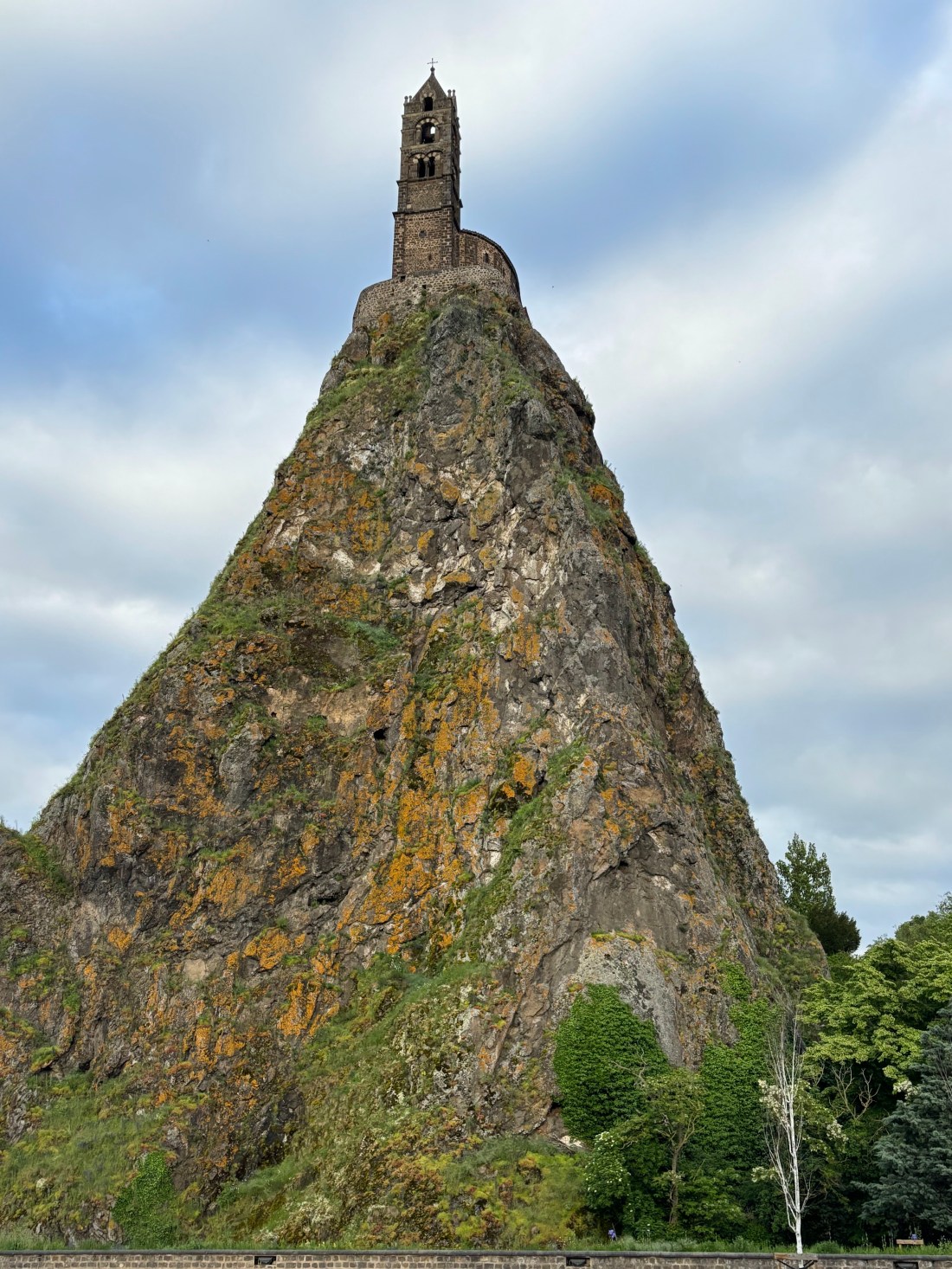
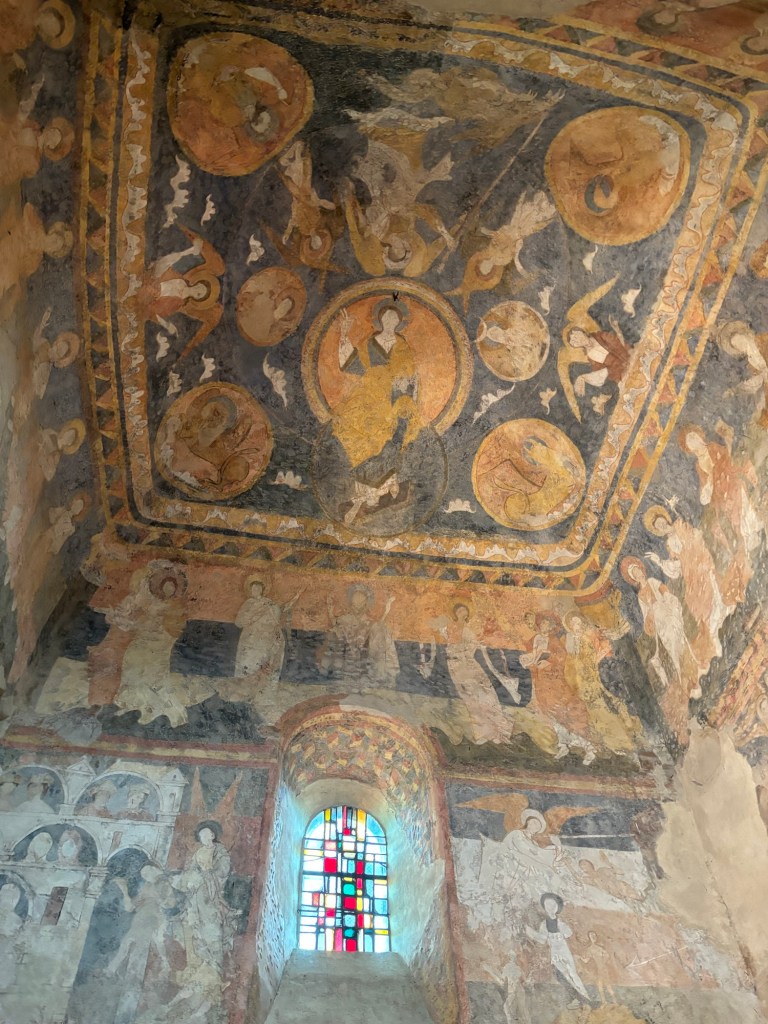
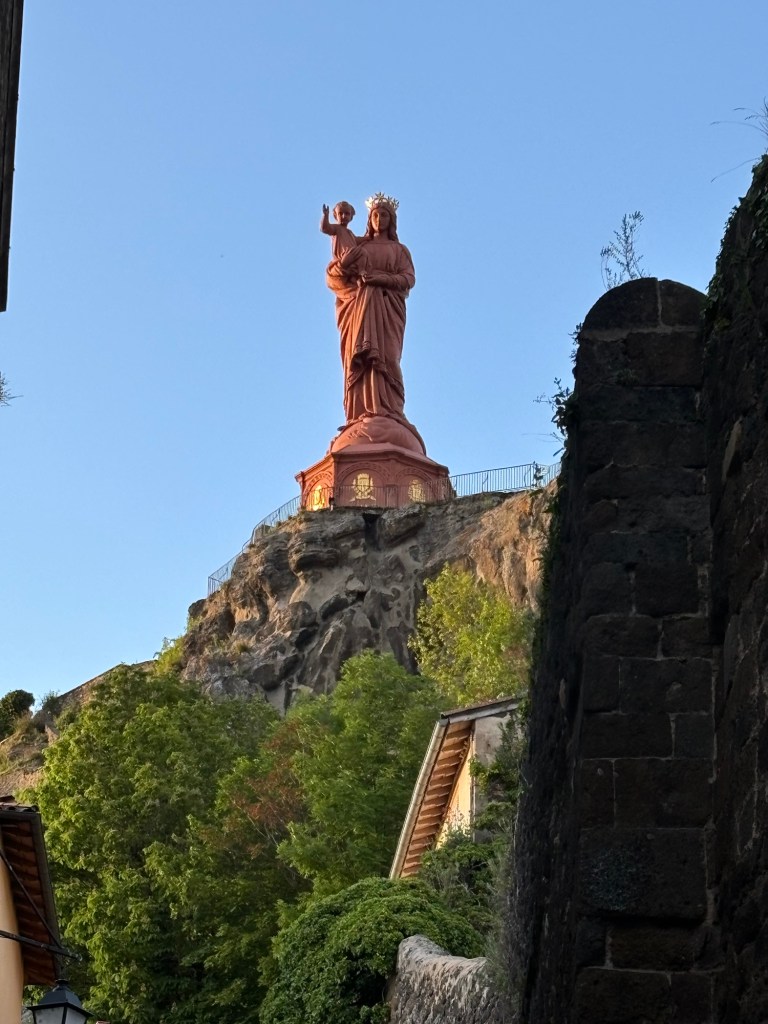
Le Puy, home of the lentil is an ancient medieval city surrounded by high hills and is nestled in the caldera of an ancient volcano. It is the site of religious significance, it is the start of one of the main pilgrimage paths in France that lead to Santiago de Compostella, there are 3 significant religious buildings, The Chapel of St Michel, The Cathedral and a statue of Mary & baby Jesus. Le Puy ranges between 2,000 and 3,000 ft above sea level!

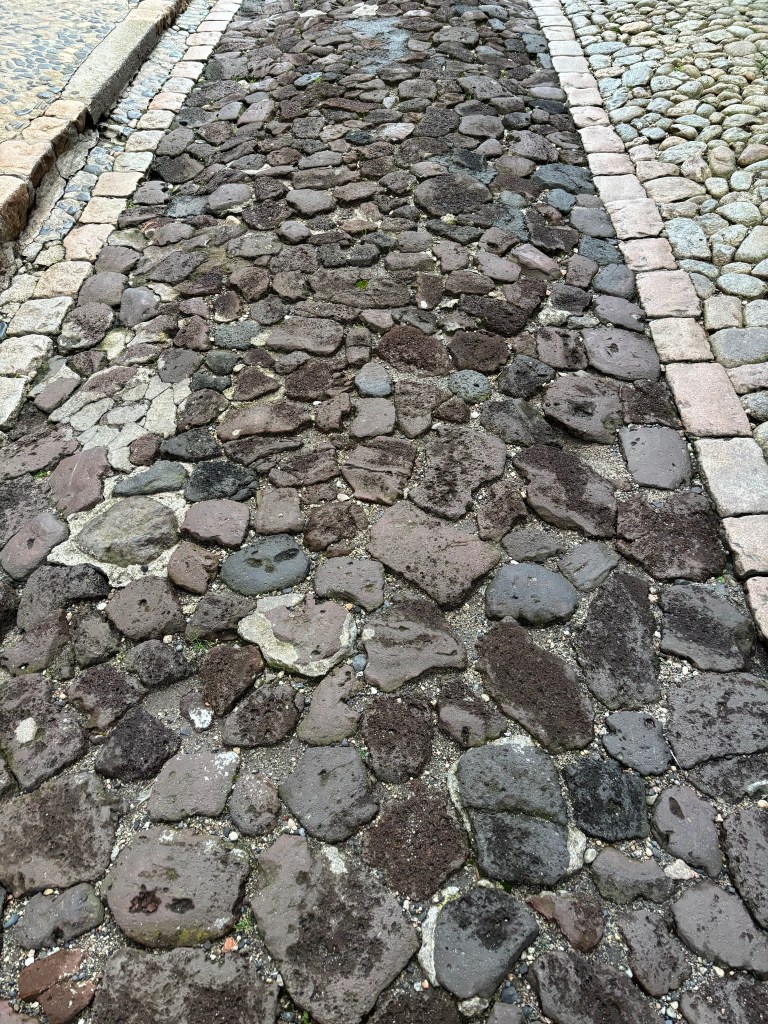
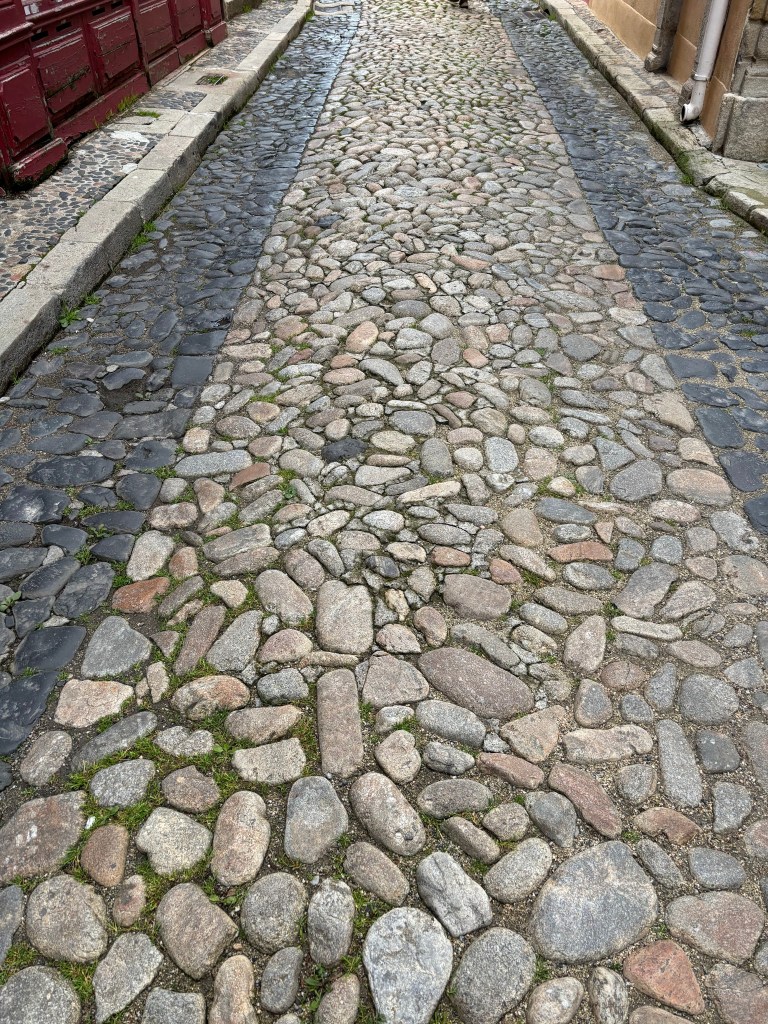
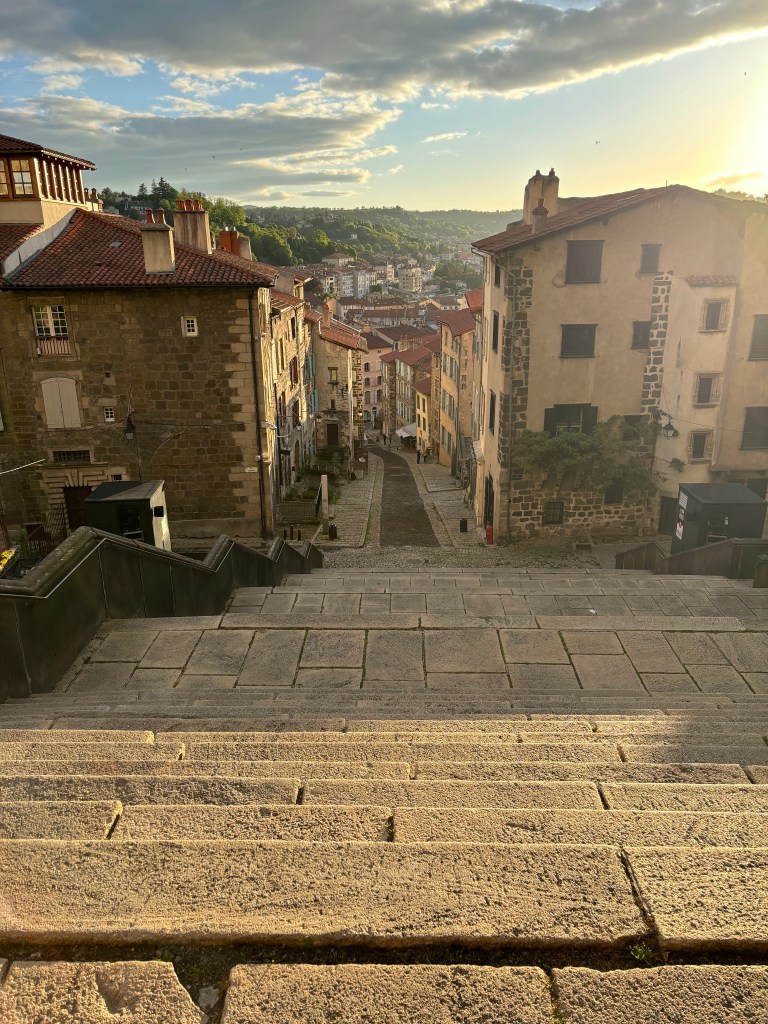
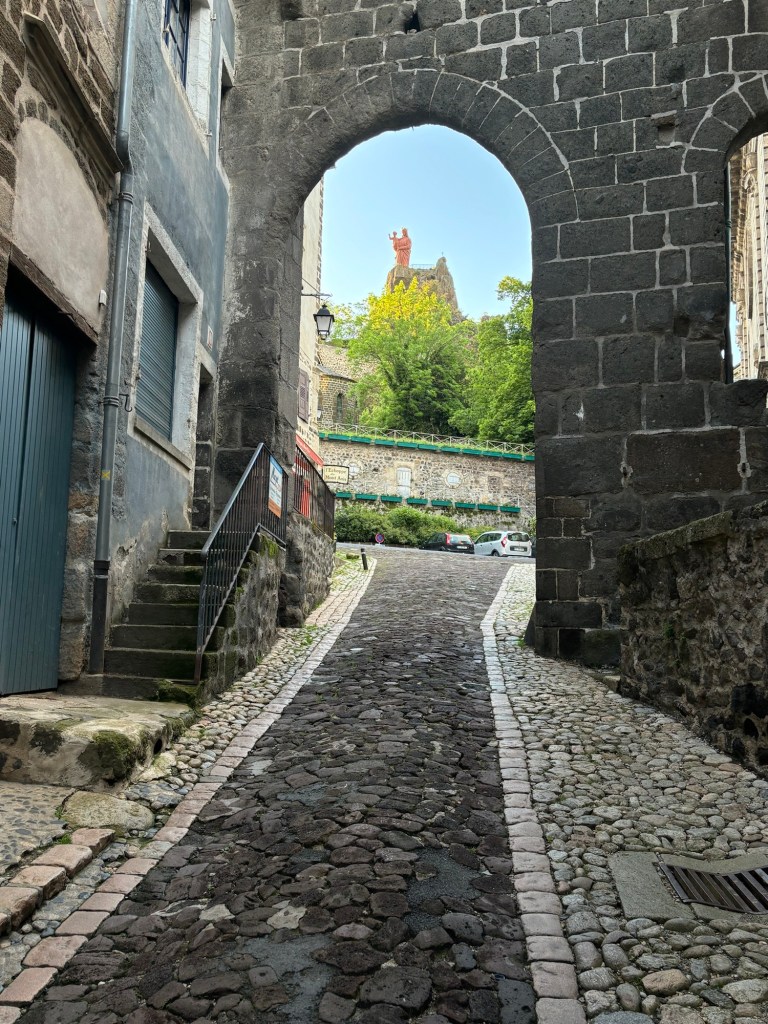
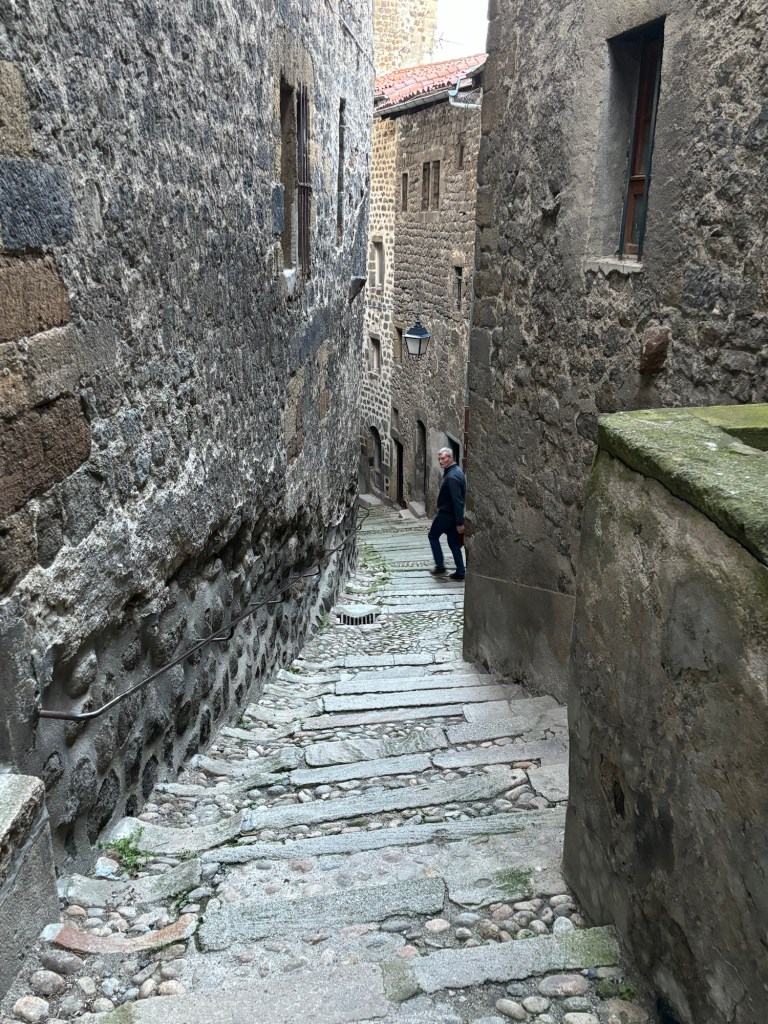
As the city was built in a volcanic region, everything is uphill! The old town is built on a steep hill, the streets paved with cobbles, many made of volcanic rock. These cobbles are no ordinary cobbles, they are not even M&S cobbles, they are big and round and if you are visiting, wear your most sturdy shoes or boots whatever the weather. Flip flops will not cut it, forget it if you have a buggy, you will break it or the baby, forget wheelchairs unless you want to kill Granny! If you hate stairs or steep slopes, don’t venture into the old town, the only way is UP.

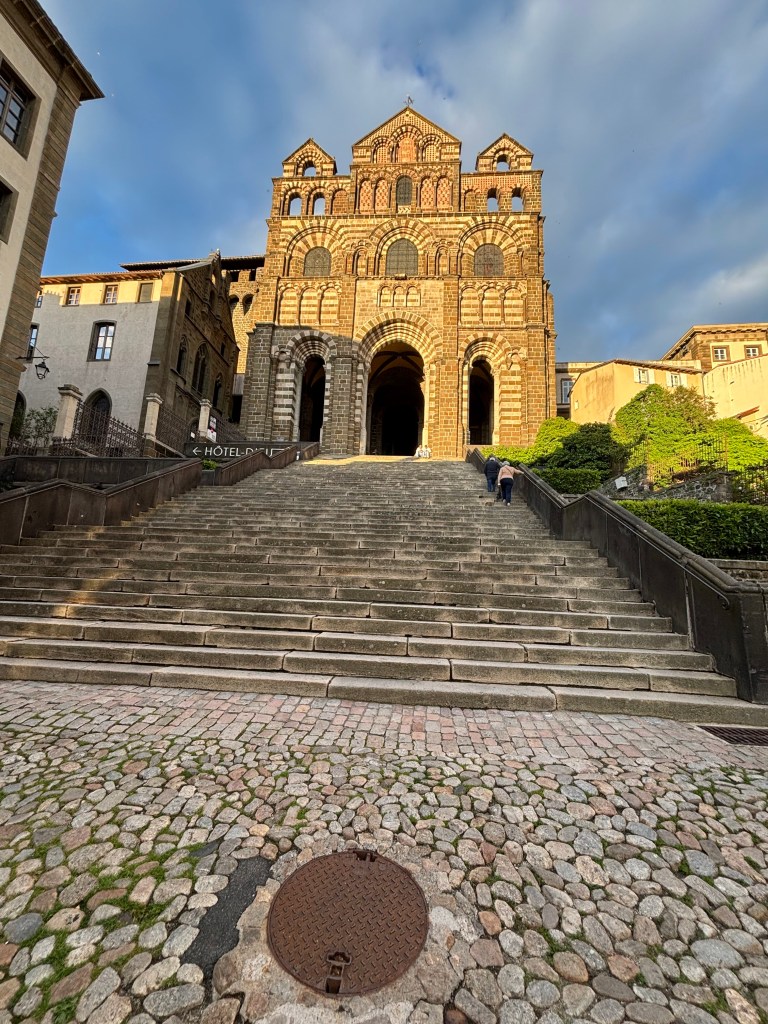
On our first night we strolled into town and walked up to the Cathedral entrance, I think it is one of the steepest streets I’ve ever encountered and there are about 60 steps to get the entrance. Once you get through the gate there are more but the Cathedral was closed for the night.

After working all morning and waiting for the rain to pass, our mission was to visit all 3 of the major religious sites in the couple of hours before they closed.

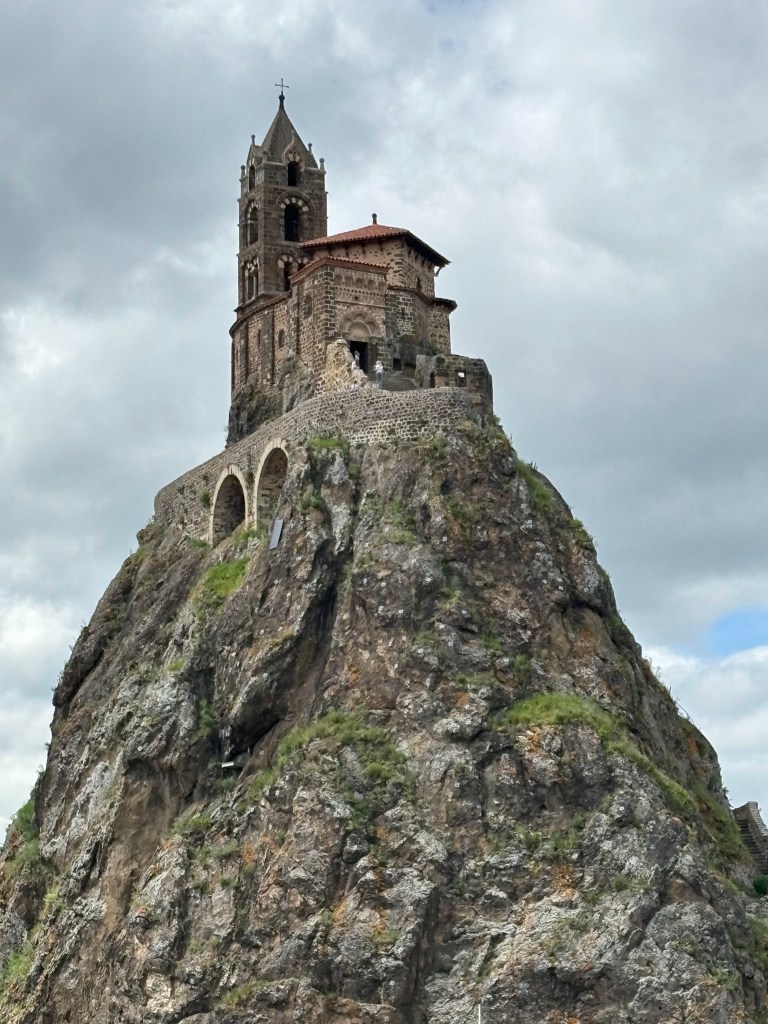
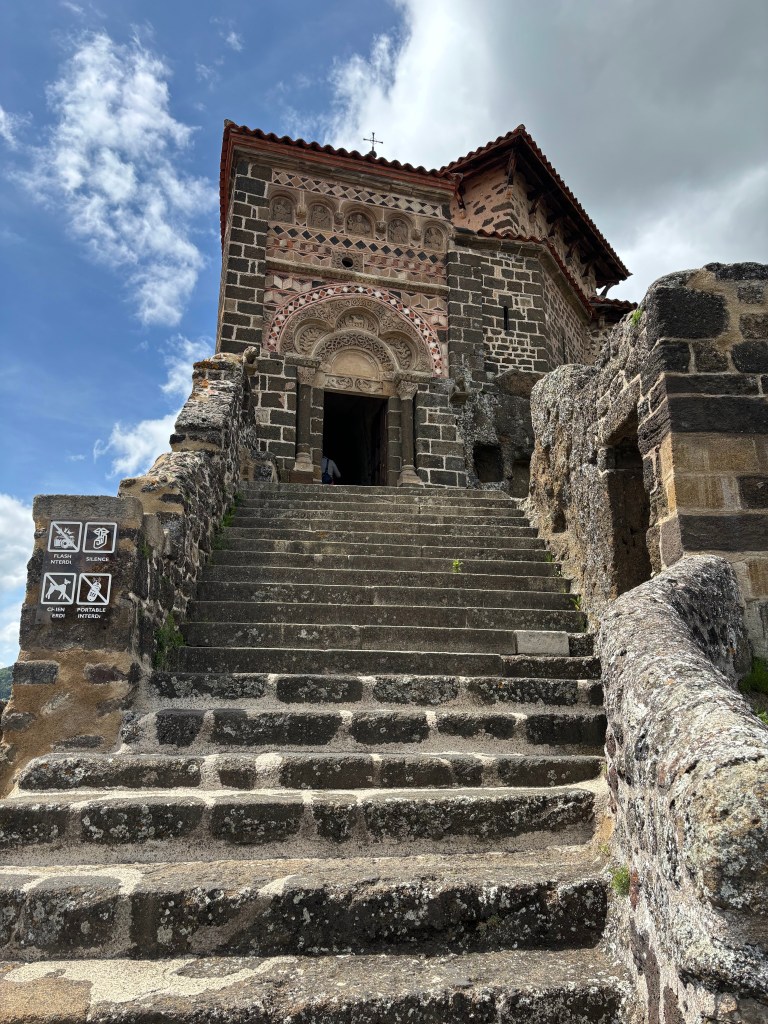
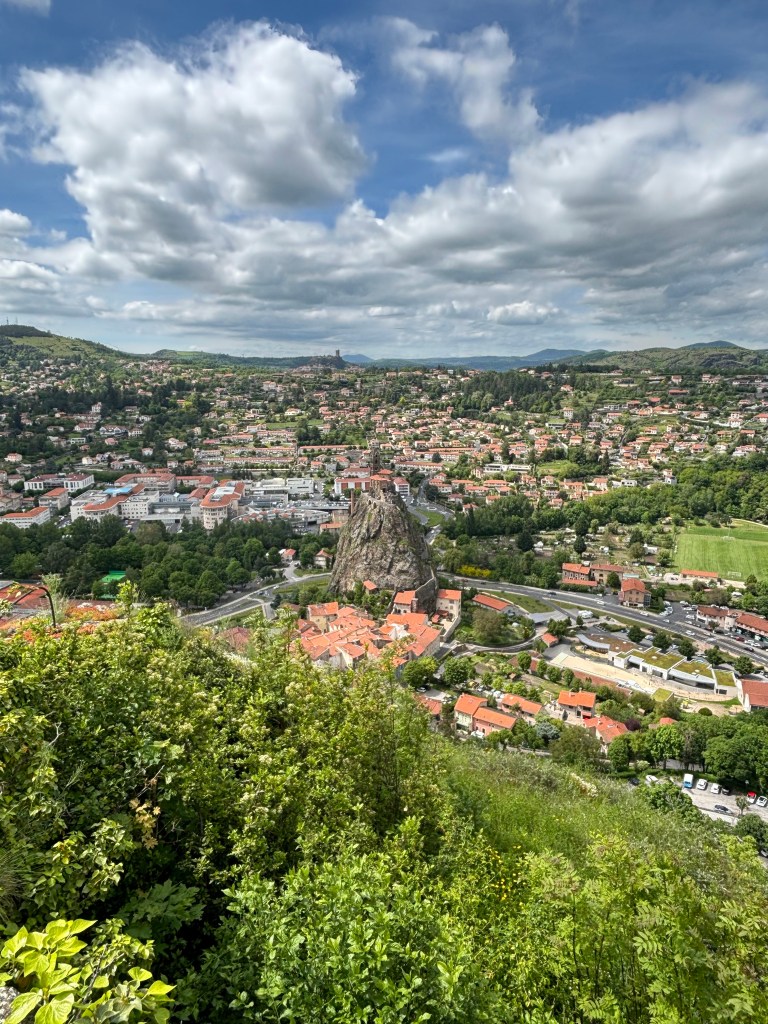
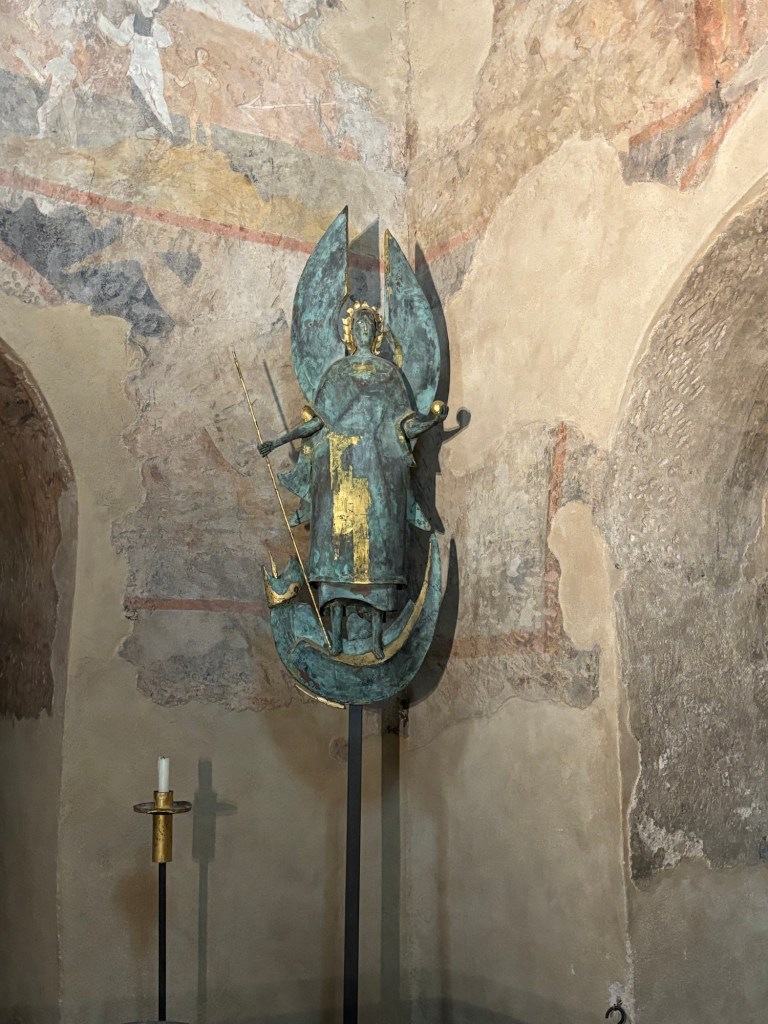
First stop The Chapel Saint-Michel d’Aiguilhe – perched on a rocky pinnacle, built in the 10th Century with later bits added. It is a quite a climb and the views are impressive!

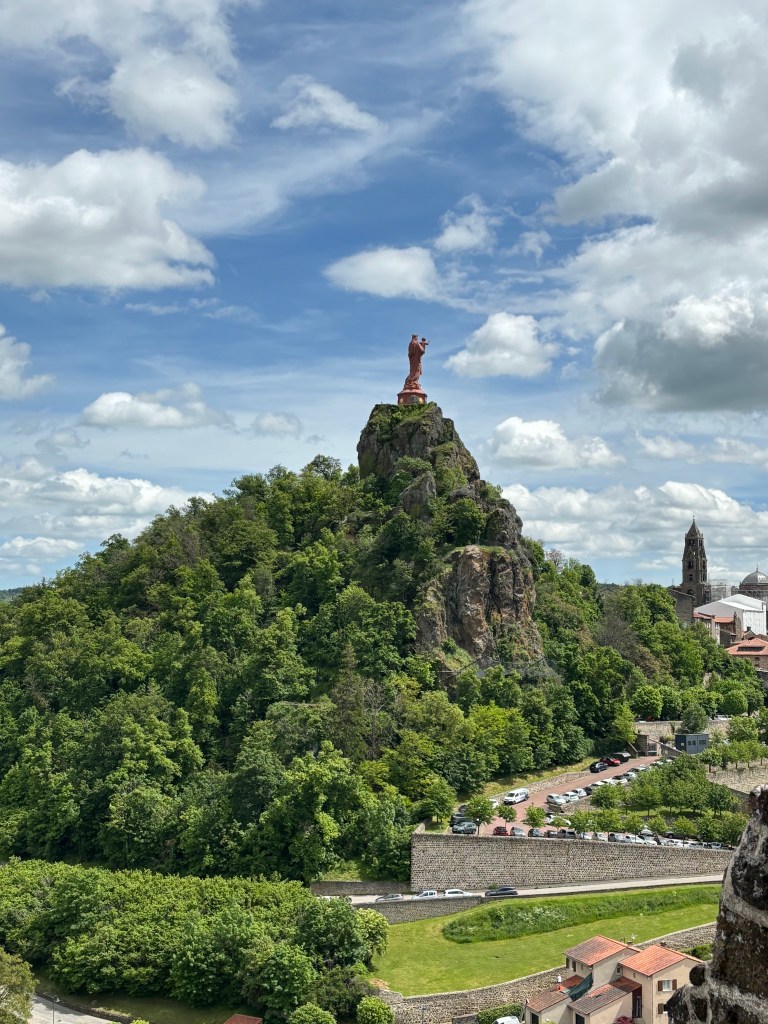
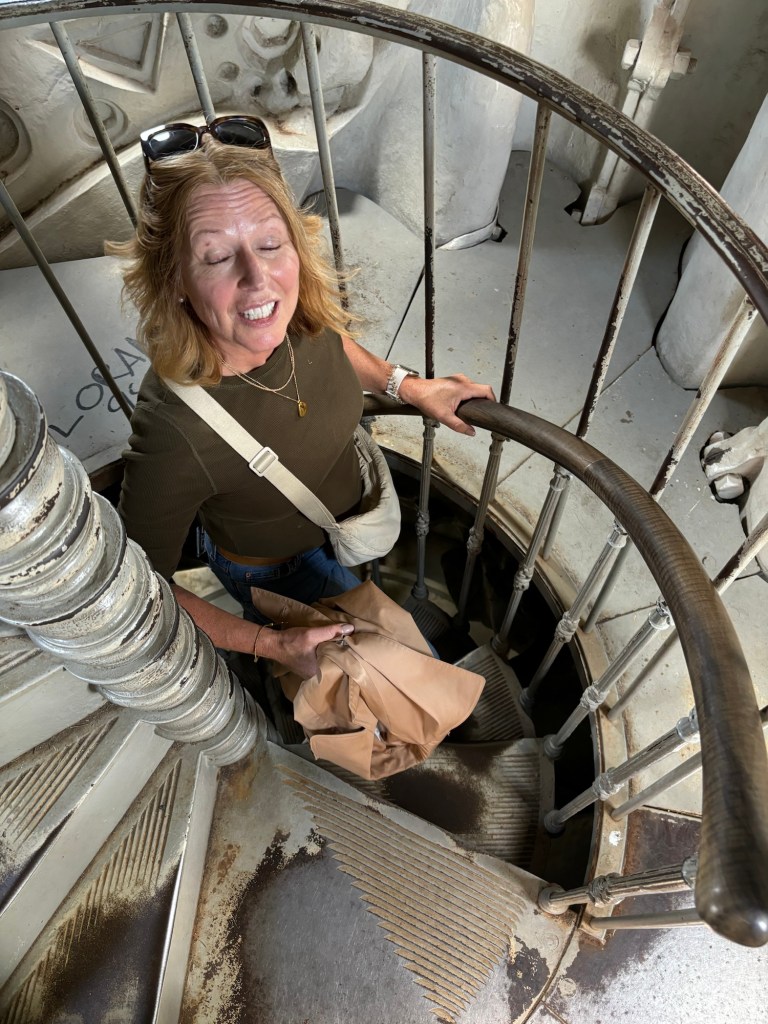
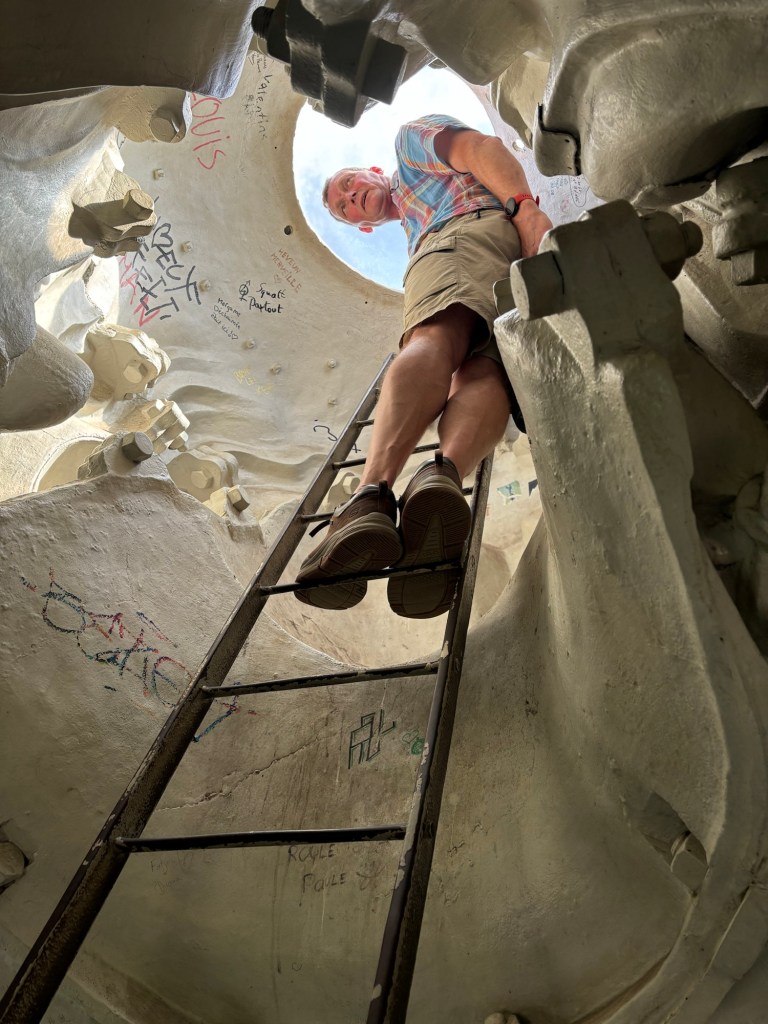
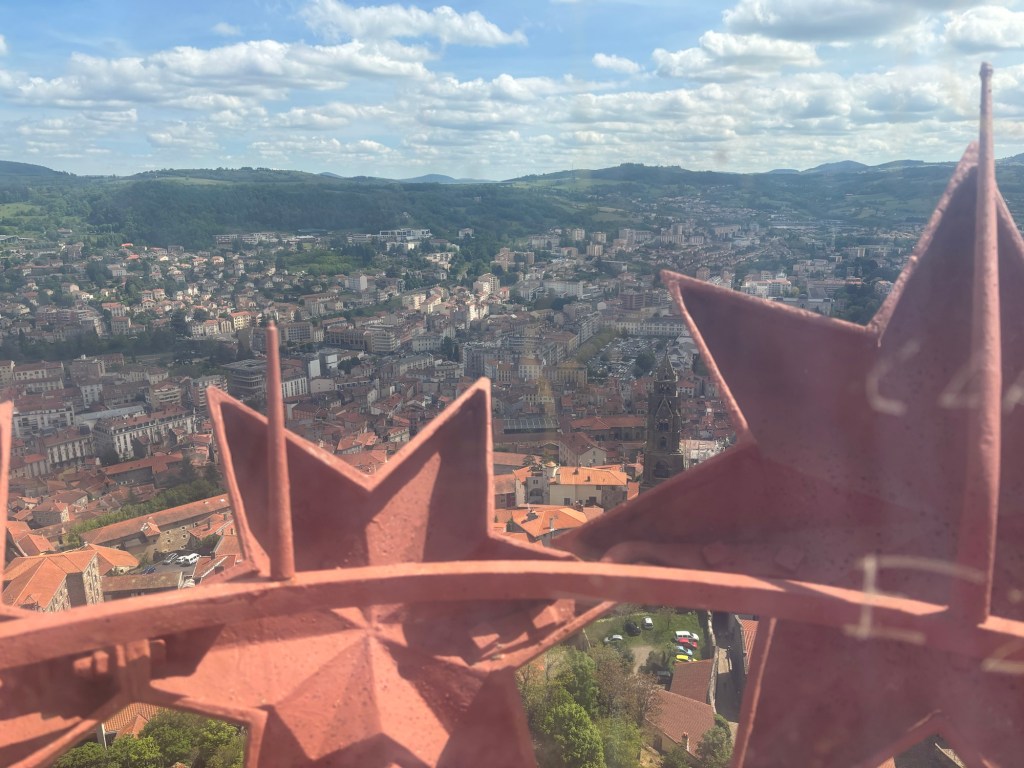
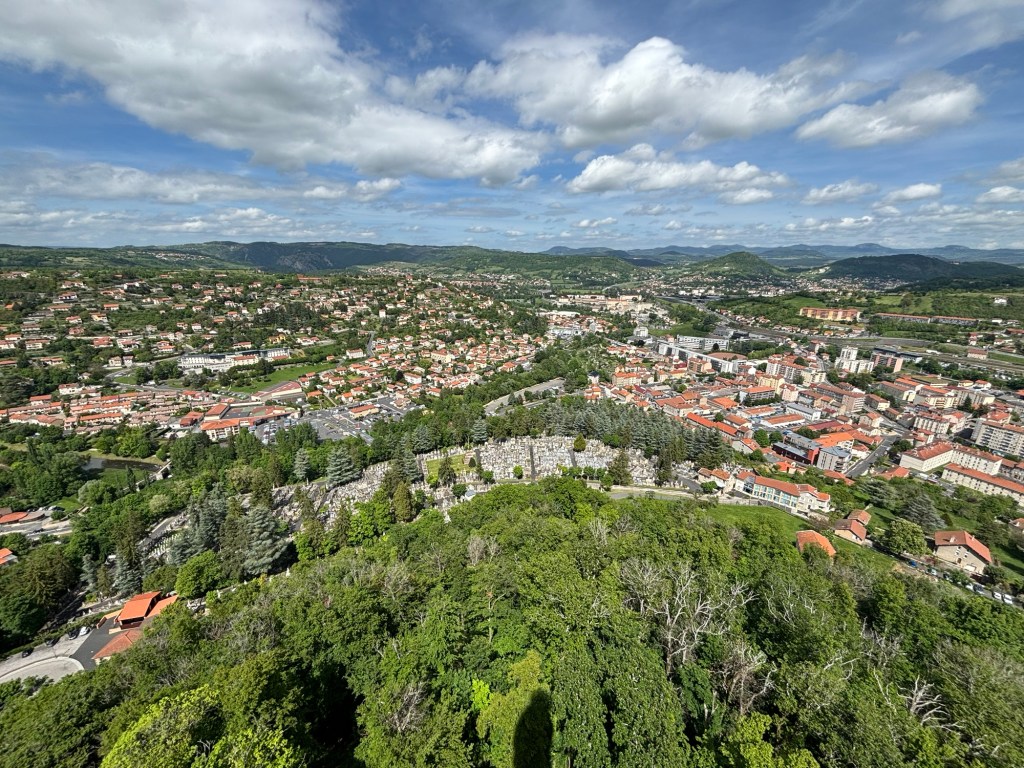
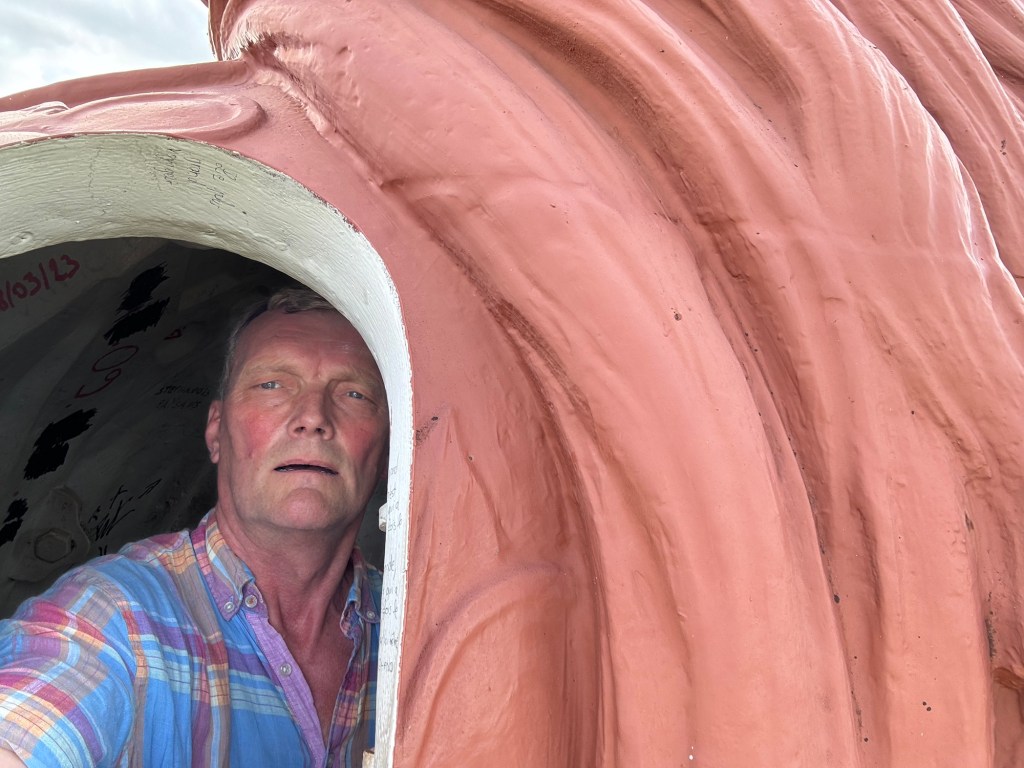
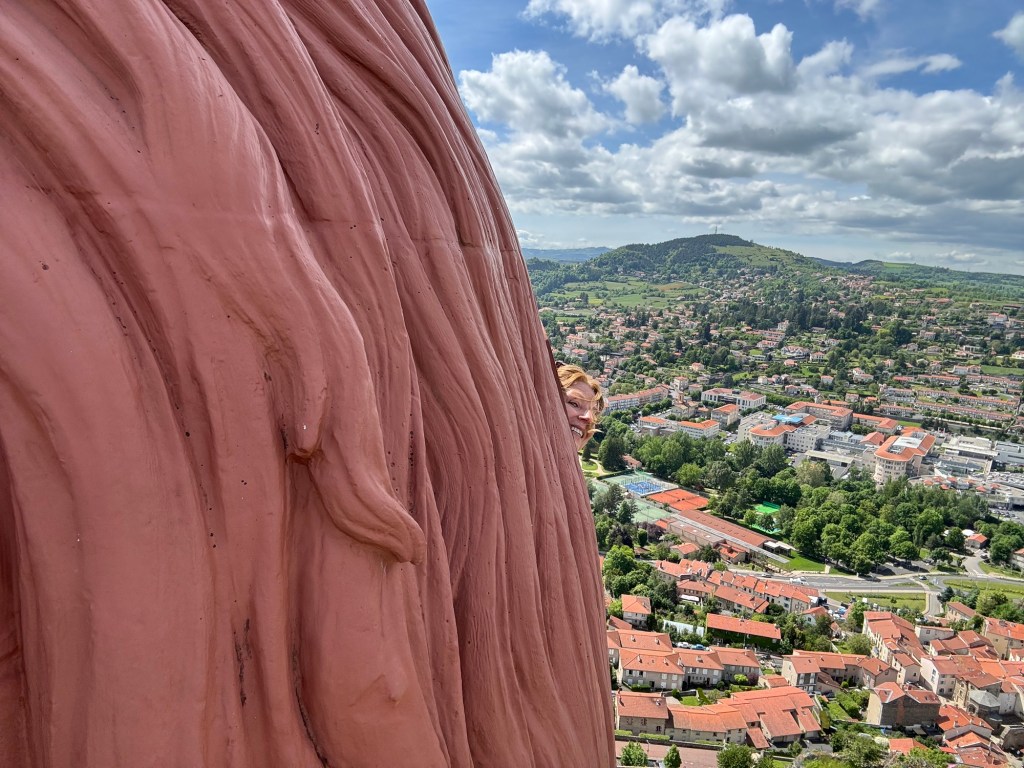
From the Chapel Saint Michel, the statue of Mary & Jesus towers above it height wise. So across town, up through the narrow, cobbled streets and we began the second climb of the day. The unique feature of the statue is that it is built out of cannons seized during the Crimean War and given to the town by Napoleon III. Once you have reached the base of the statue, you can climb right to the top, into the head of Mary, above her crown. You start by climbing up stone steps, then a steep spiral staircase until you are in the head, then you can climb a ladder so that your head pops out of the top of Mary’s, above her crown. There is a perspex viewing bubble to stop the more adventurous, paragliding, abseiling or just throwing themselves off. It is not for the faint-hearted, in both senses of being not very good with heights or you have a heart condition. You are now at about 3,000 ft above sea level.

We stopped for a well-deserved ice cream before making our way to the Cathédrale Notre-Dame du Puy. The previous evening we had walked up to the front door of the Cathedral, but it was late and the gates were closed, so we entered by the back door, as the Cathedral is just below the statue.

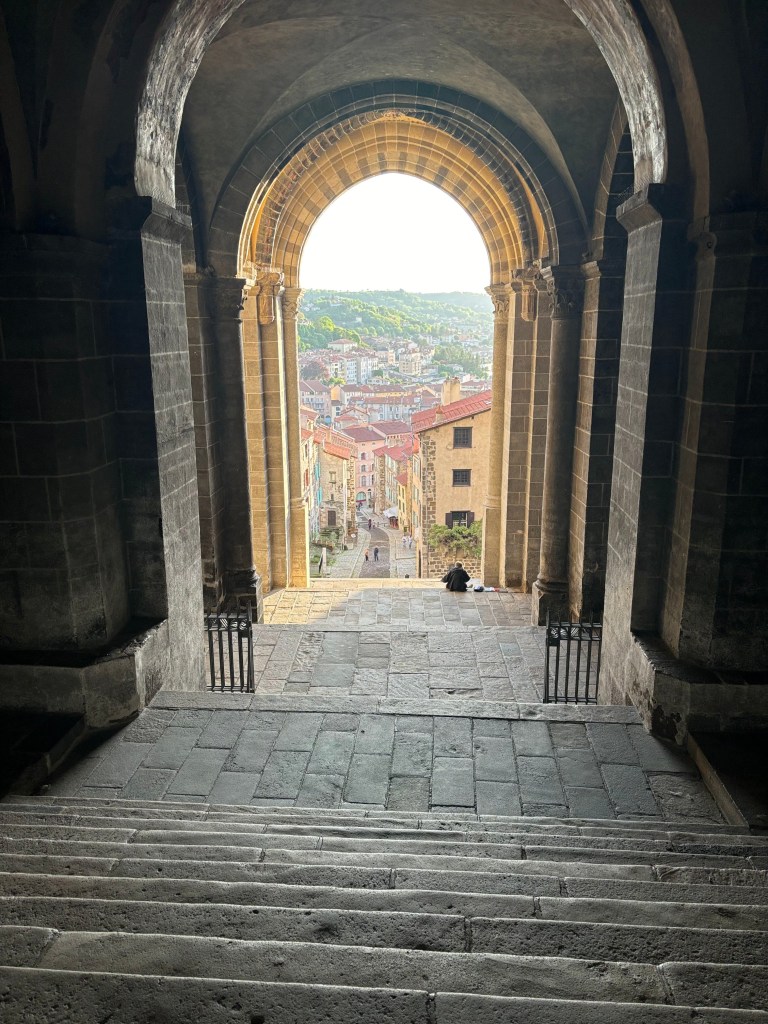
The interesting feature of the front entrance is that because the Cathedral is built on such a steep hill, when you enter, the steps come up through the floor. So when we came in via a back door, we thought that the entrance was in fact steps down to the crypt!

The next day we ventured further into the Auvergne region to Le Mont-Dore. The reason for visiting is in 1975, at the tender age of 11, Charlie went to Le Mont-Dore on a school ski trip and wanted to see if he remembered anything in the area. It is unlikely that the hotel they stayed at in La Bourboule, a little way down the valley was still standing, as when he stayed, they could see stars through their bedroom roof! He did remember that the hotel overlooked the river, the Dordogne, which runs through both towns.

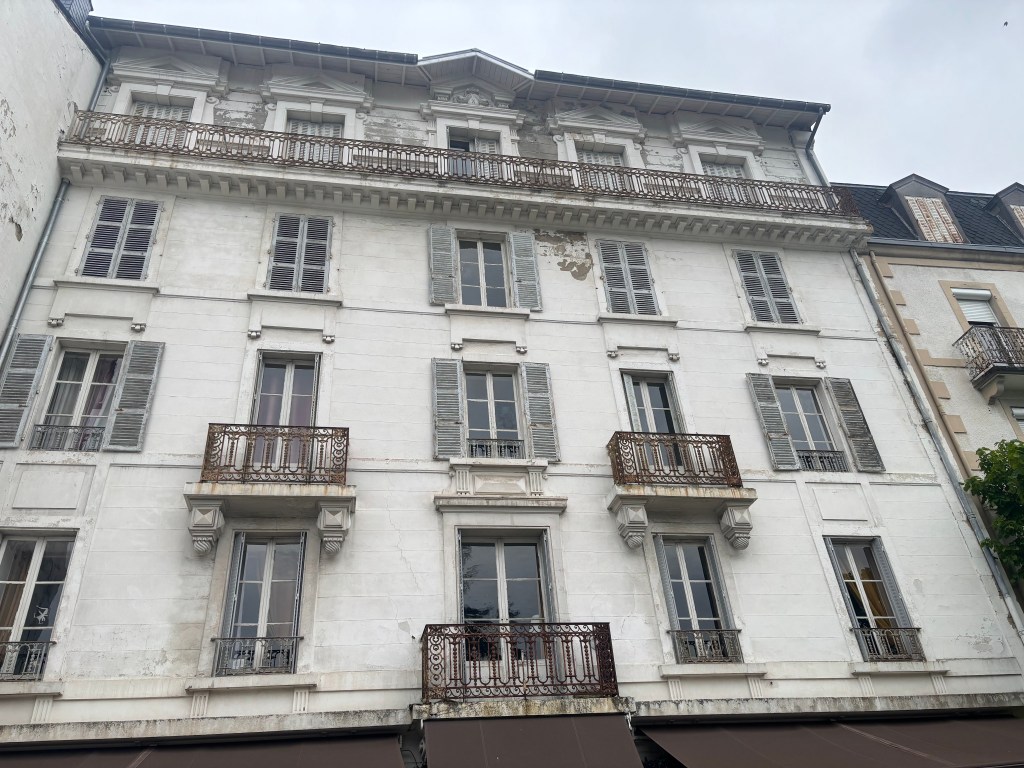
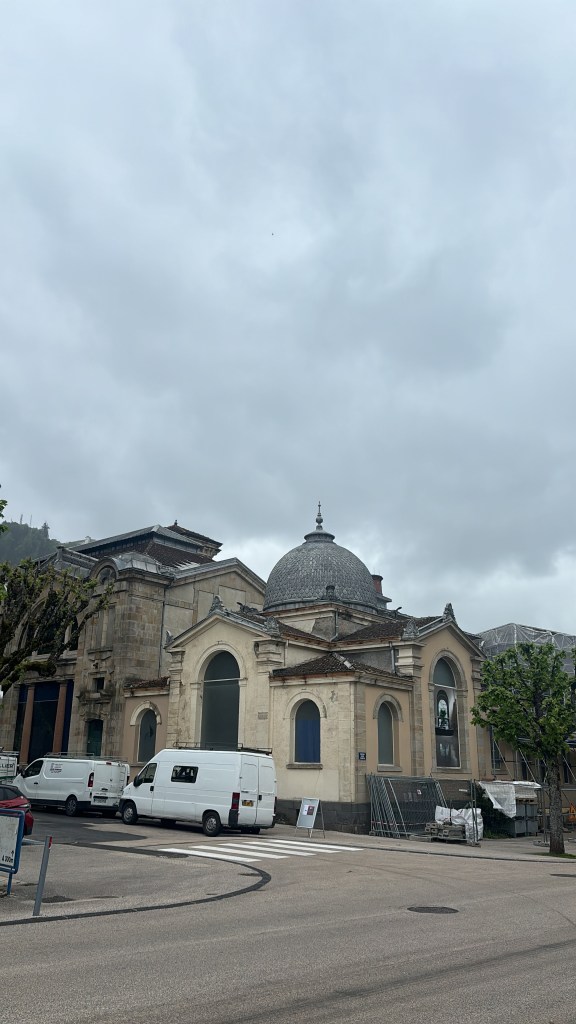
The weather worsened the higher we travelled and on arriving at our campsite in Le Mont Dore, we knew we had a short window to get the moped out and ride up the valley to the ski area. We were hoping a couple of lifts might be open for visitors to access the summit but no luck. We aren’t carrying any proper walking gear with us, which you would need as the conditions were not ideal, with rain sweeping in and low cloud obscuring visibility. We had a brief look and then made our way further down the valley to La Bourboule. Both towns have an air of faded grandeur and the population in the area has declined enormously since the 1970’s. La Barboule is a 19th C spa town with thermal baths, grand, faded houses and a rather run-down looking Casino. We had a walk around and found the area where Charlie’s hotel was probably located but it didn’t spark any particular memories.

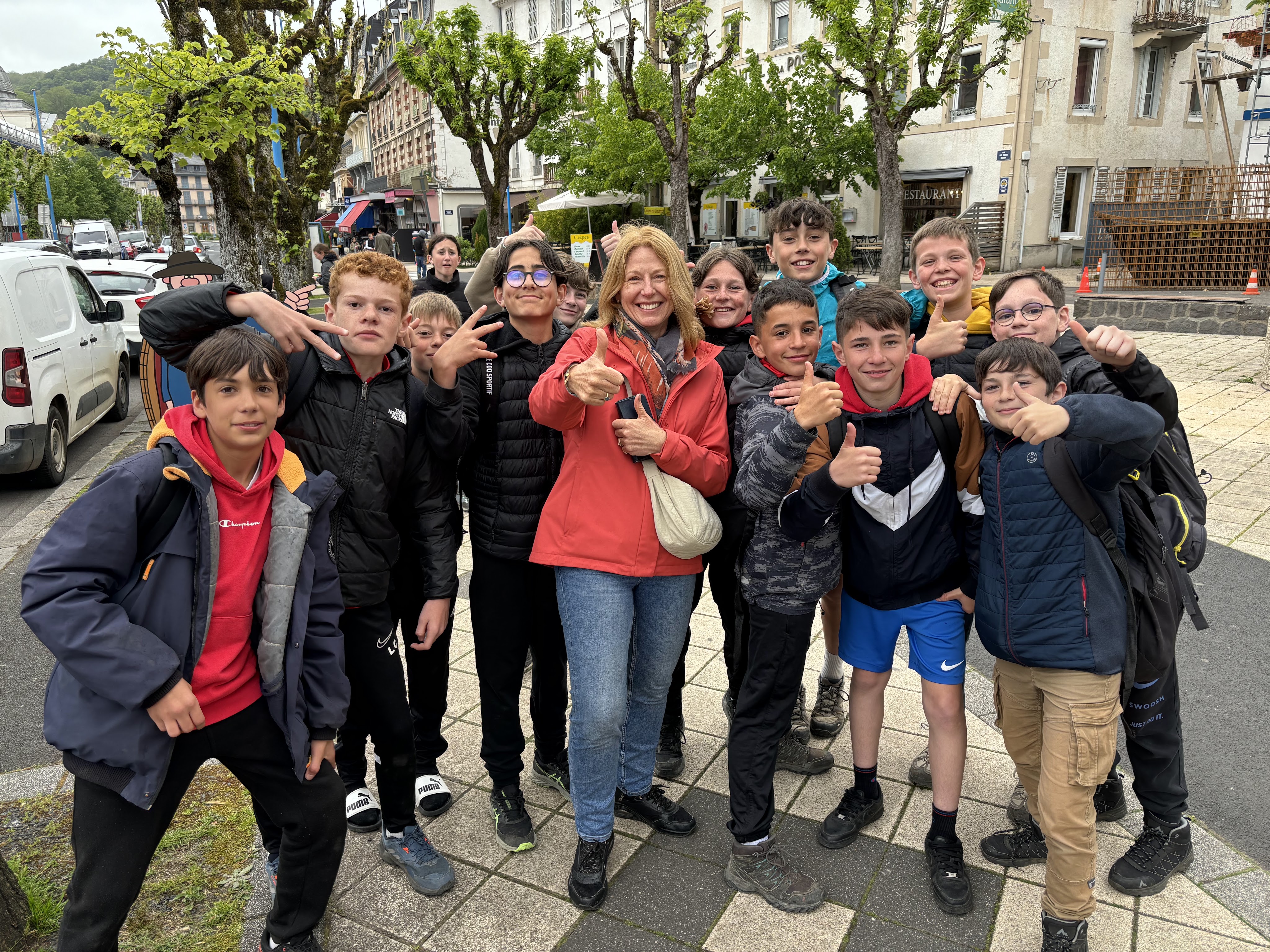
As we walked through the town, a group of young French school children on a outward bound holiday, stopped to chat to us, took photos and insisted that we took one of them!

After stopping at a supermarket, we arrived back at the motorhome, just as the heavens truly opened!

We woke to yet another wet day and started to move north, leaving behind the high, mountain meadows of the Auvergne region and began to head into the Loire. It has to be said the weather has been particularly repetitive, grey skies, heavy showers and the occasional burst of sunshine, usually about an hour or two before it sets.

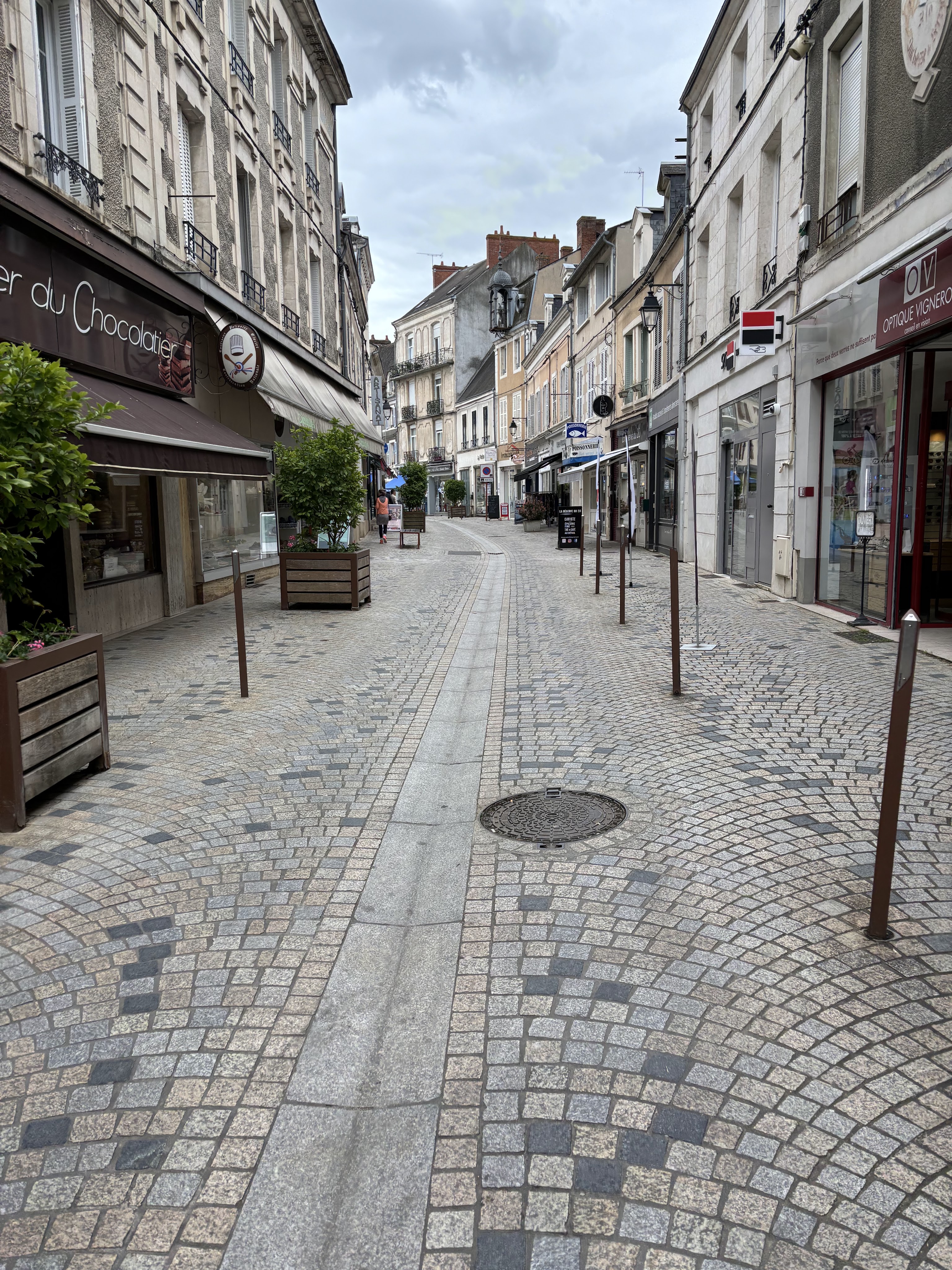
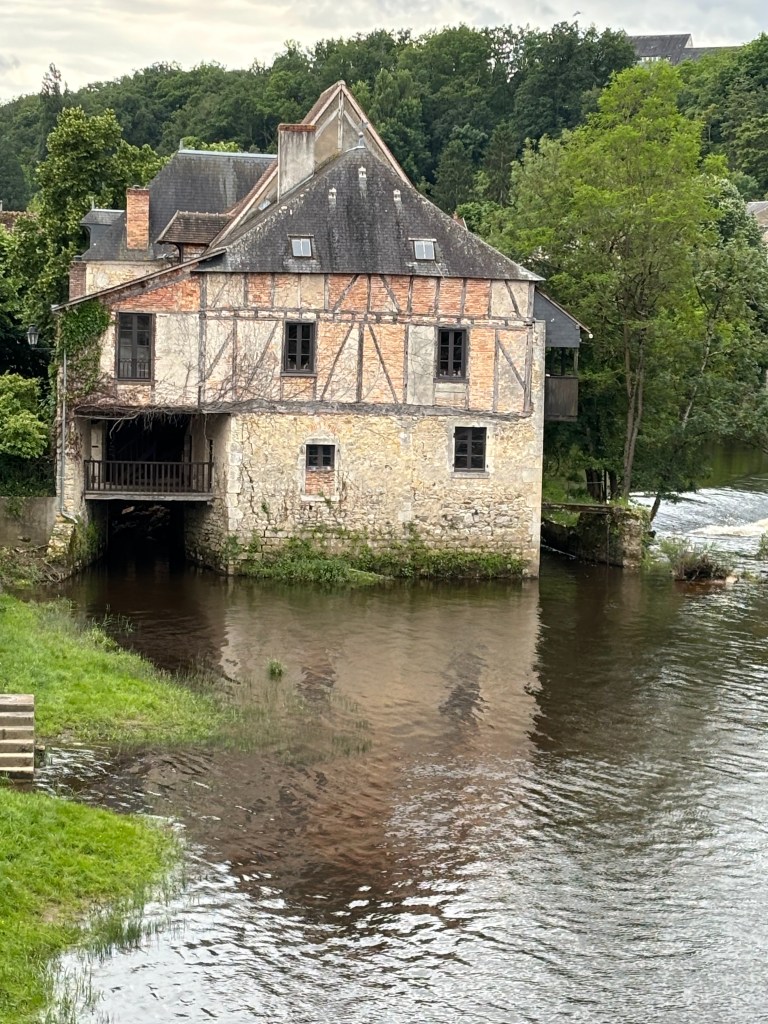
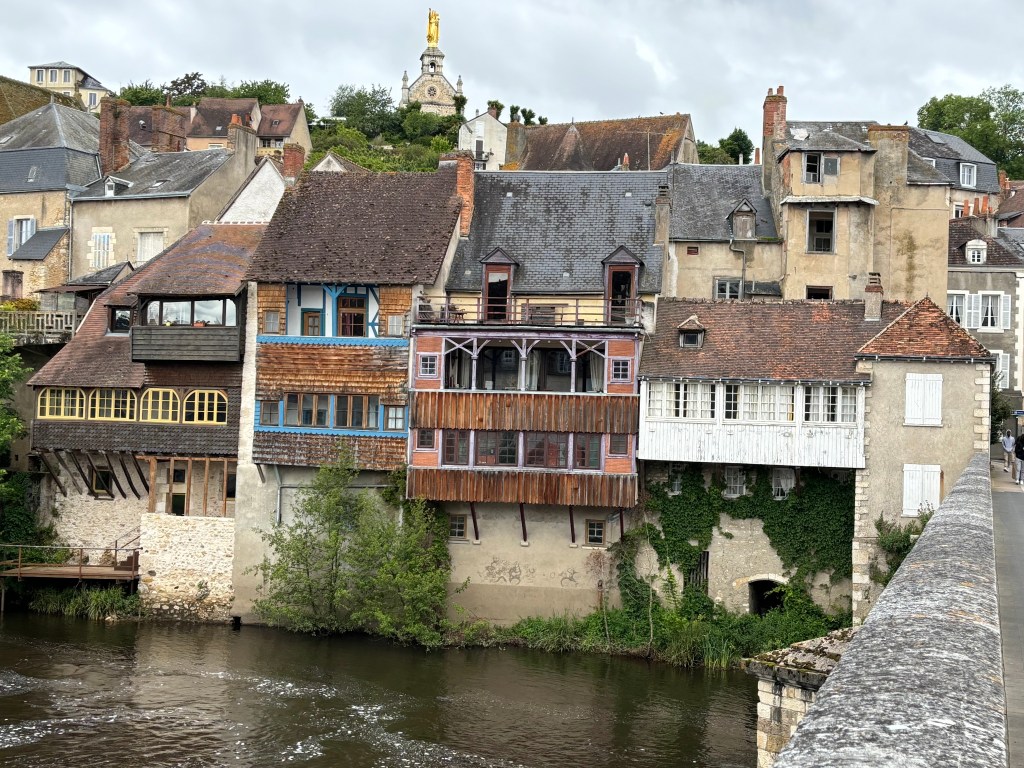
Our stop for the night is Argenton-sur-Creuse, a very ancient town with the remains of a Roman bridge, some very pretty houses and streets, but as dead as dead. We walked into town from the campsite at about 3 pm, purposely giving the French time to return from their 2-hour lunch break! It was deserted, a zombie town. This picture was taken at 3 ish on Thursday afternoon in the main shopping street!

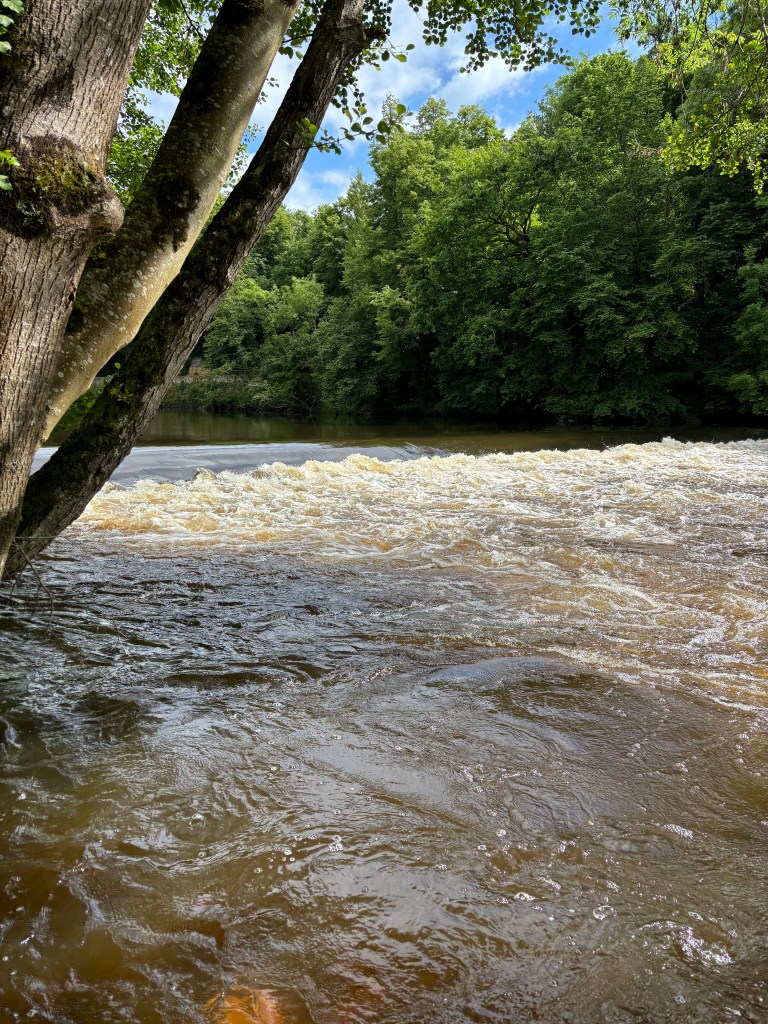
Half the shops weren’t open. There was a recruitment/job agency that was open for a spectacular 2 days a week and still shut between 12 and 2 pm for lunch! As the heavens opened again, we dived into the only cafe that was open and sat out the downpour and then returned for a BBQ of steak, potatoes and salad, in the golden hour, when another thunderstorm had passed and the sunshine appeared, which then set, just as you were enjoying its warmth! Our campsite is on the banks of the River Creuse, but many of the pitches are roped off, as the ground is so wet but we will be lulled to sleep by the sound of the water tumbling over the weir.

Tomorrow, deep into the Loire Valley, to Blois!

Speed, History & Spectacle – A Grand Tour – Part 4

Journeying Beyond the Mediterranean Coastline

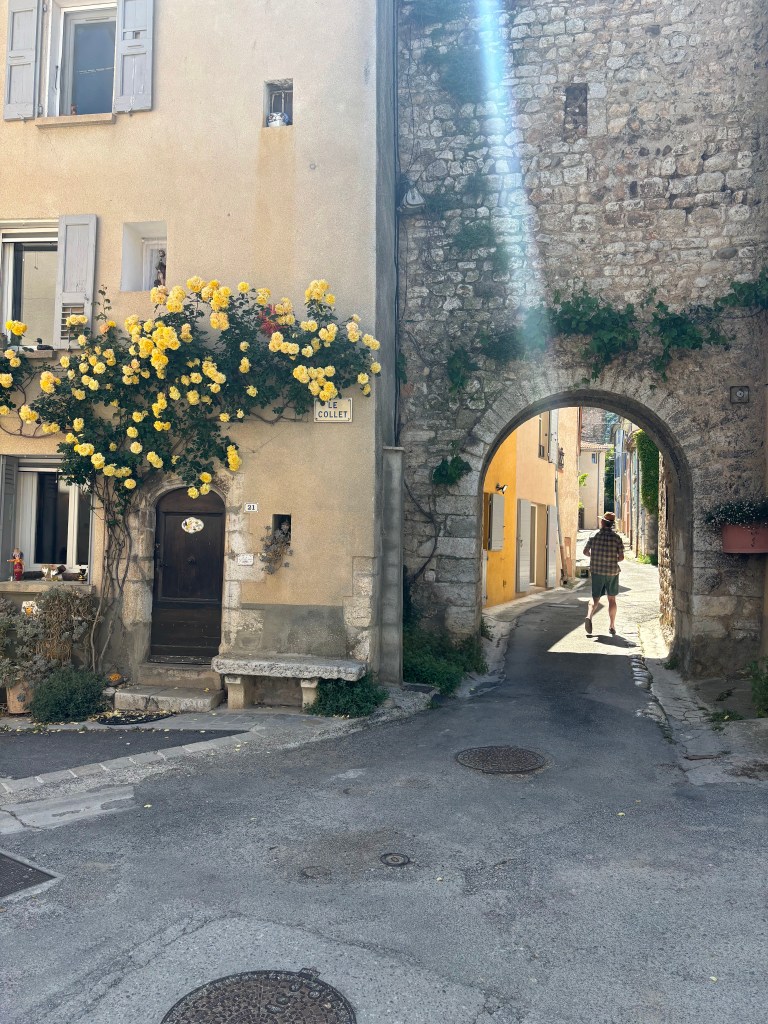
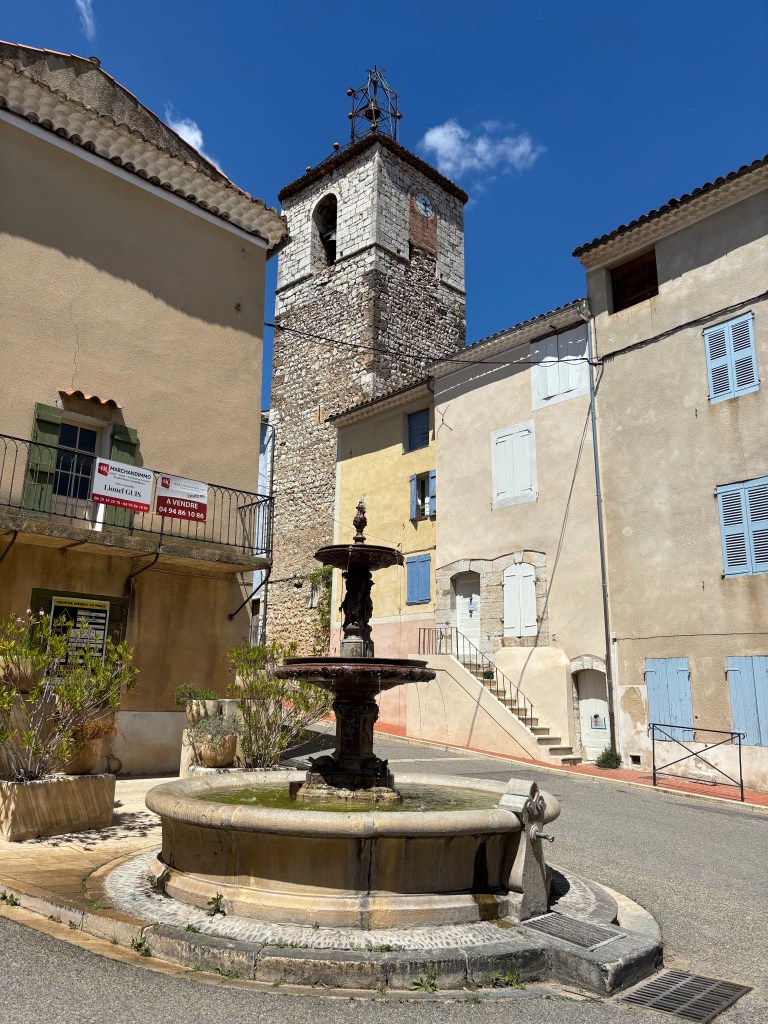
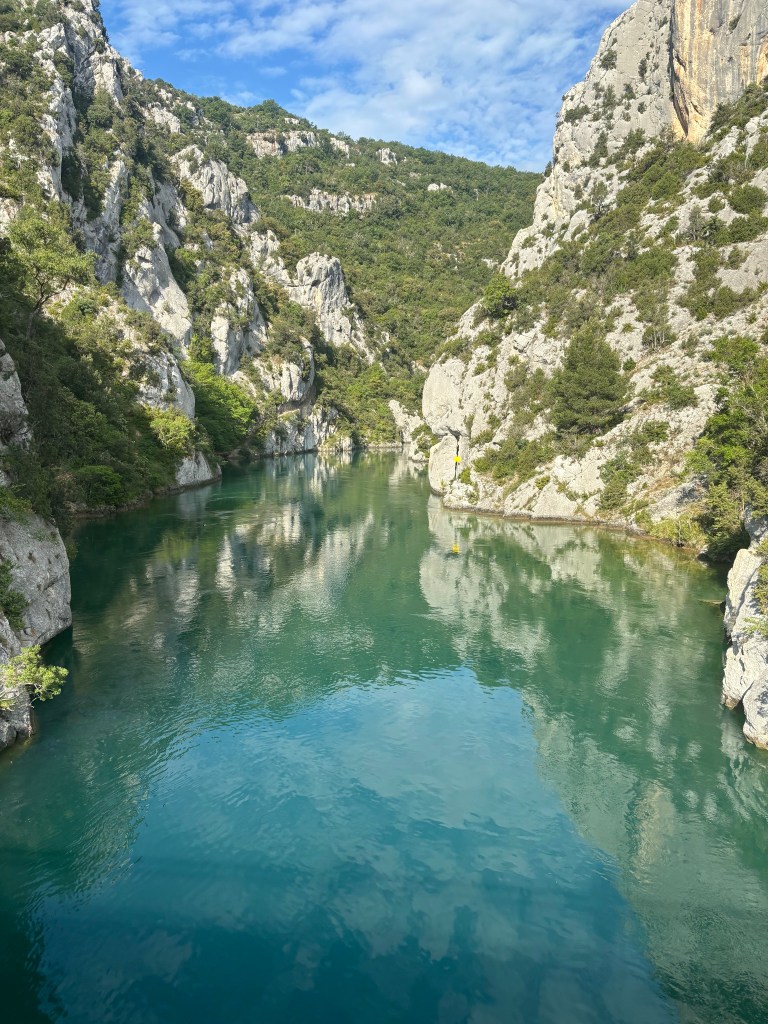
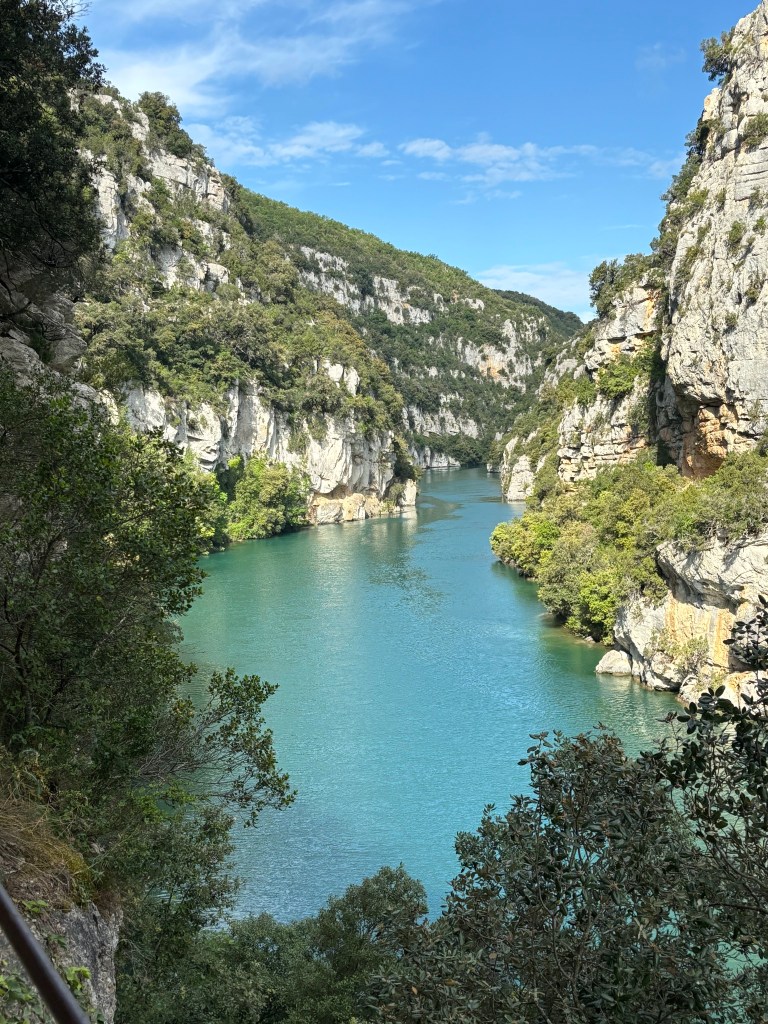
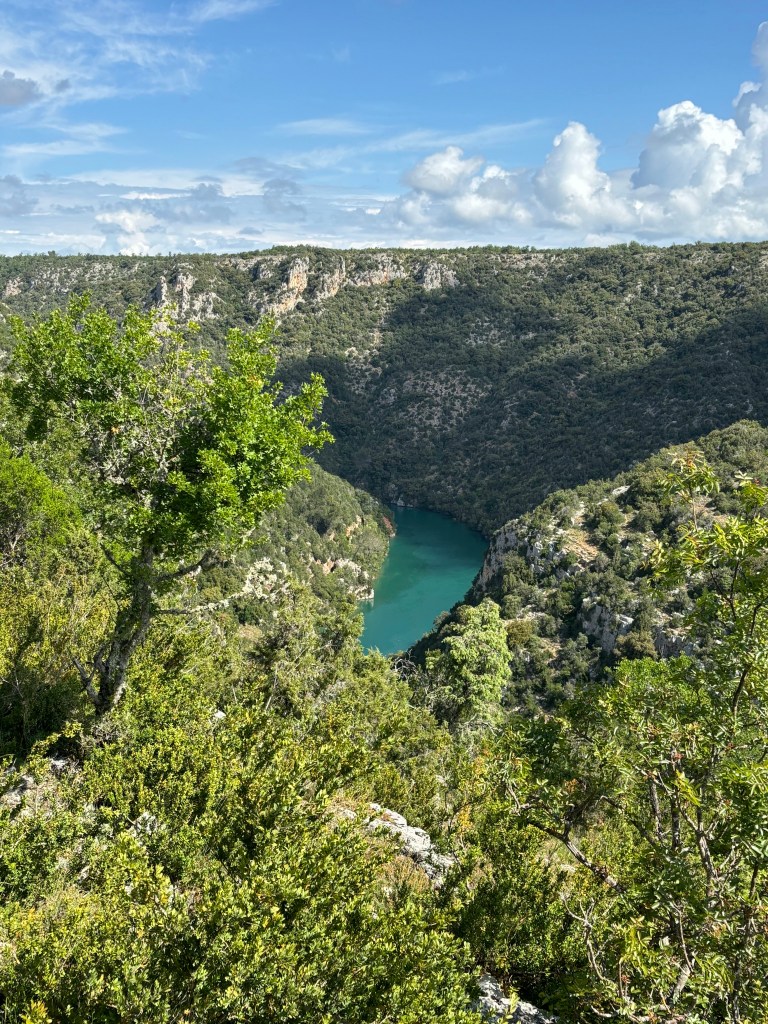
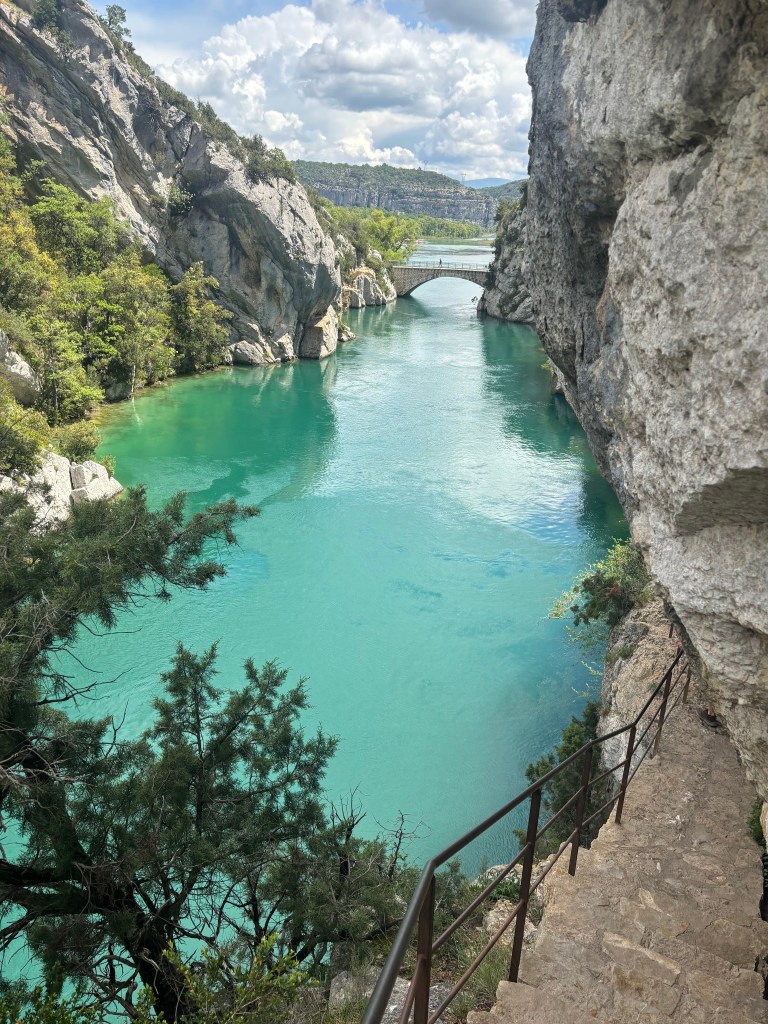
We are now heading inland away from the Mediterranean coastline and our first stop is Quinson, a little medieval village, located on the lower Verdon River. It has the remains of defensive walls and gated entrances into the heart of the village. Our campsite was just outside the village, close to a large lake into which the water from a hydro-electric dam flows before tumbling into the lower gorges of the Verdon. I had seen posts on Instagram of a spectacular walk alongside the Gorge, which climbed up the sides to a small chapel on a summit so that was our reason for coming here.

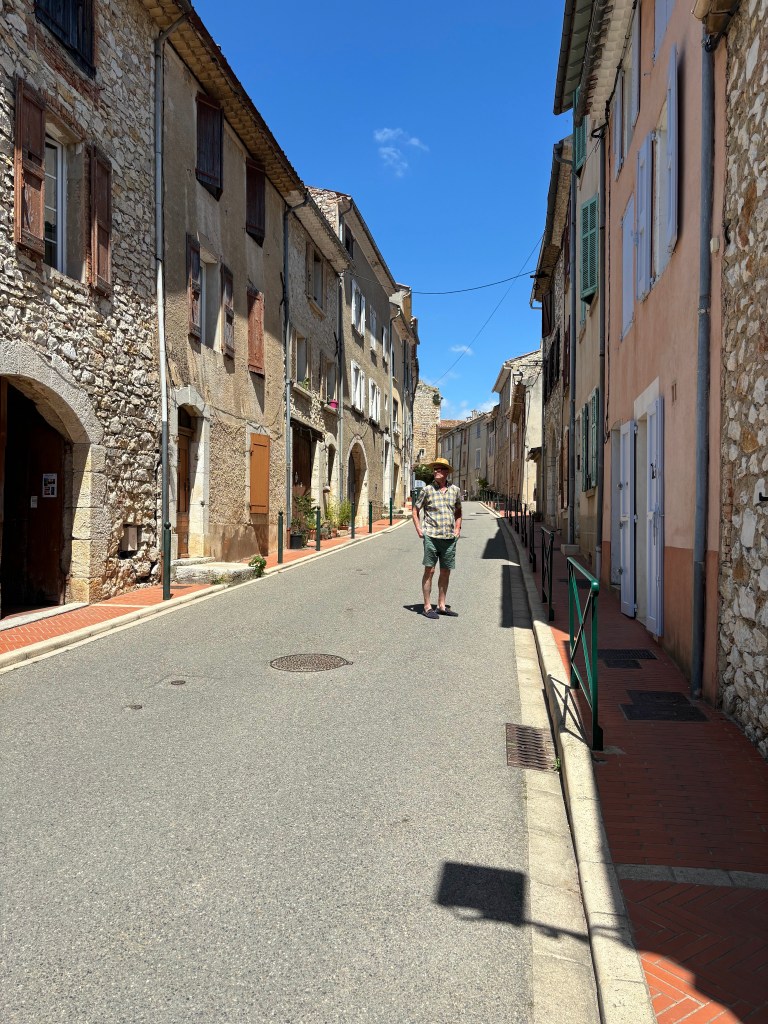
After setting up camp, we walked into the village, where we had to battle with crowds of tourists and residents going about their daily business… or not! The village has a couple of bars, a very small shop and not a lot else, deserted but peaceful and quiet.

The village has lots of fountains with the date 1877 on them. This may be connected to the fact that just outside Quinson, between 1865-1875, a canal was built to supply Aix-en-Provence with water. The canal is about 8ft wide and about 6ft deep, cut into the side of gorge and was still operational until the 1970’s when it became obsolete as the Canal Provence was completed

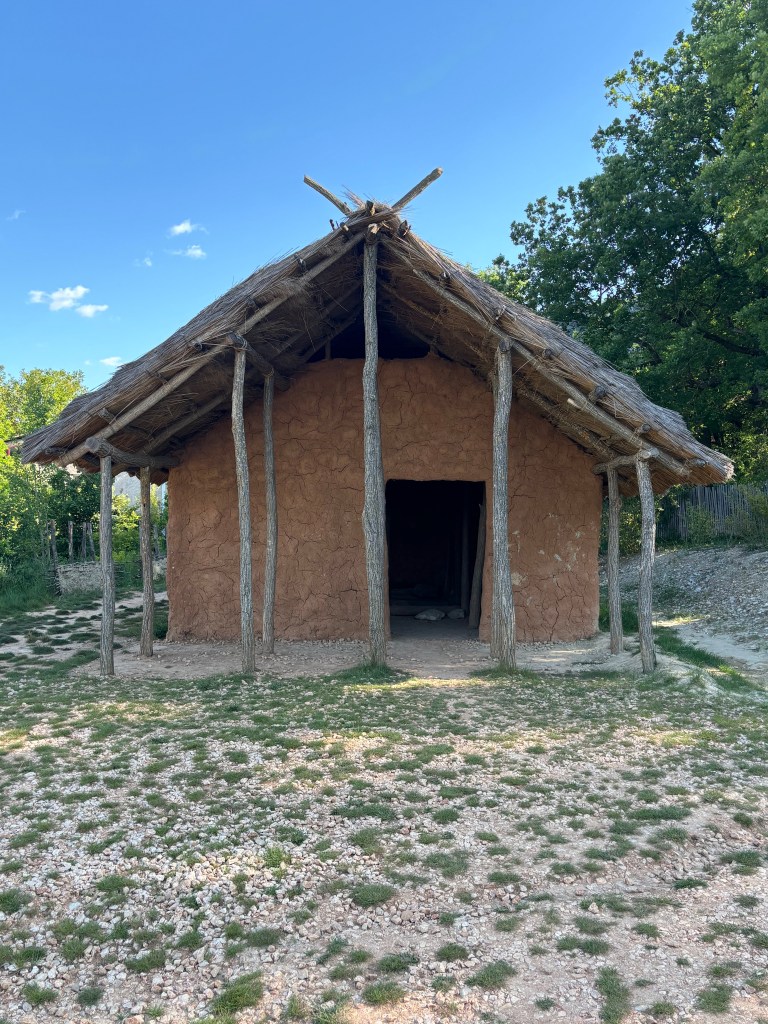
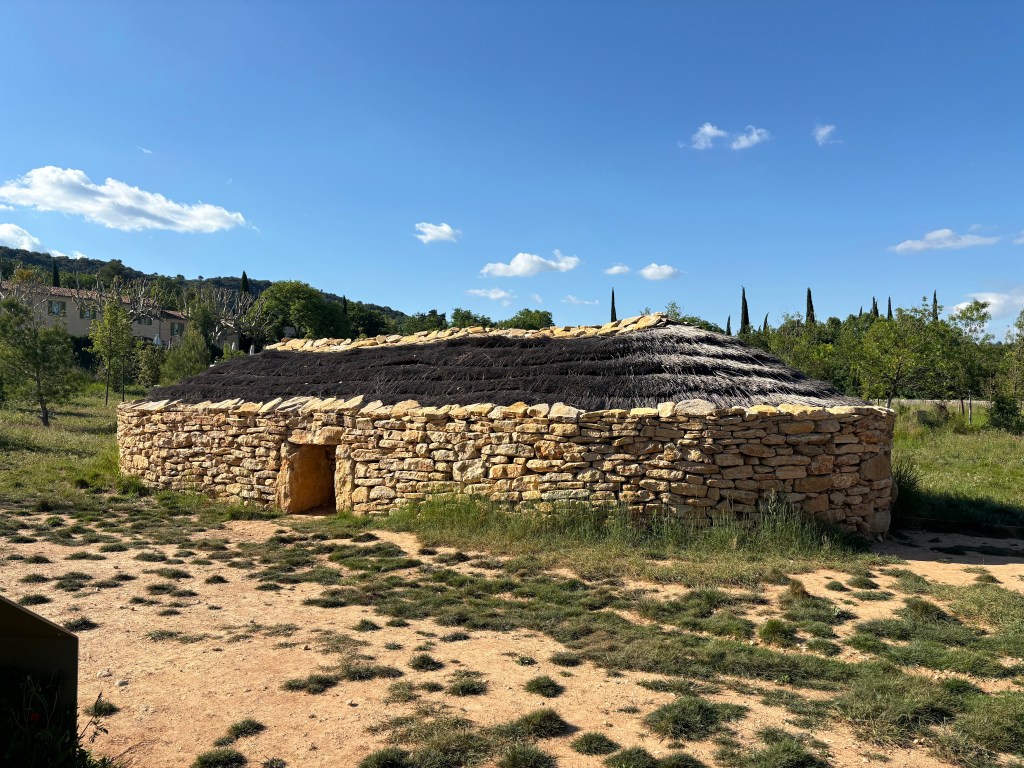
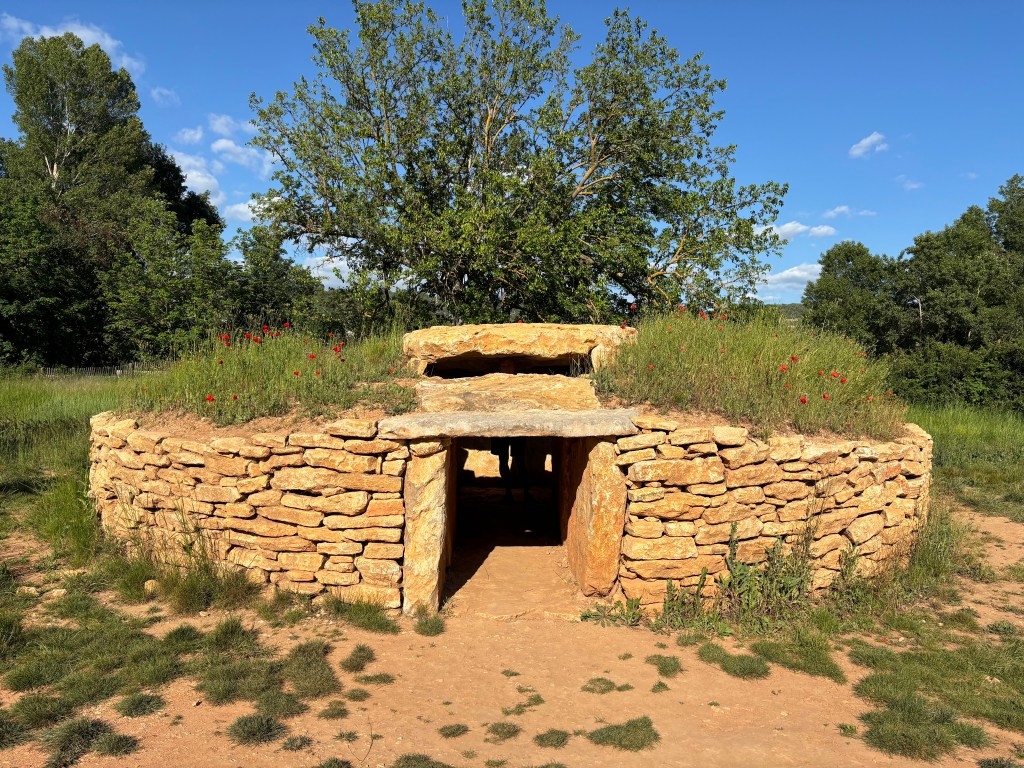
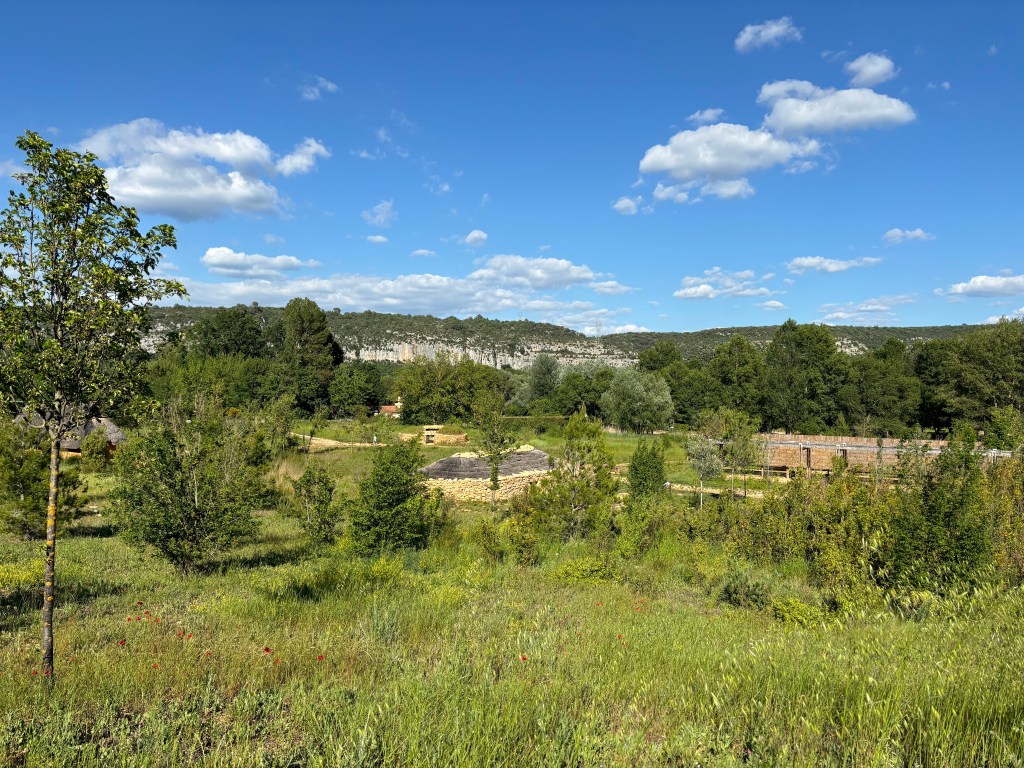
At the edge of the village is The Museum of Pre-History (the biggest pre-history museum in Europe!) which houses bones, pottery and tools found in caves and grottos throughout France. The very modern museum was designed by English architect, Norman Foster. We didn’t visit but just over the road in the park is the ‘Village Prehistorique’, where there are full-sized replicas of various Peolithic and Neolithic dwellings, which was more interesting than it sounds.

The campsite was lovely although no signal at all or wi-fi which wasn’t great for work and although well away from the roads, on both nights, a bird making the most irritating call disturbed our sleep. After some research, I discovered the bird was a Eurasian Scops Owl. This owl does not hoot or twit or twoo, it makes a noise that sounds exactly like a smoke detector does when the battery is running low! The owl made the noise about every 2 seconds for HOURS, as did its friend, who made the same noise, every 2 seconds as well, but in the other 2 seconds. Google the call if you need to hear it.

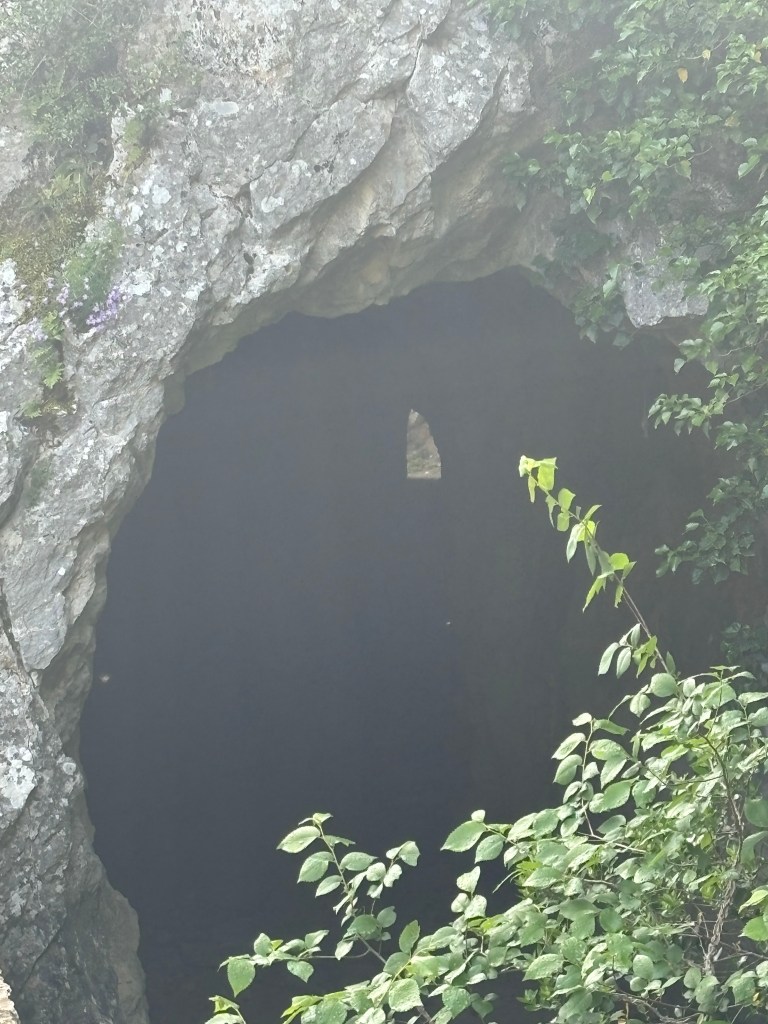
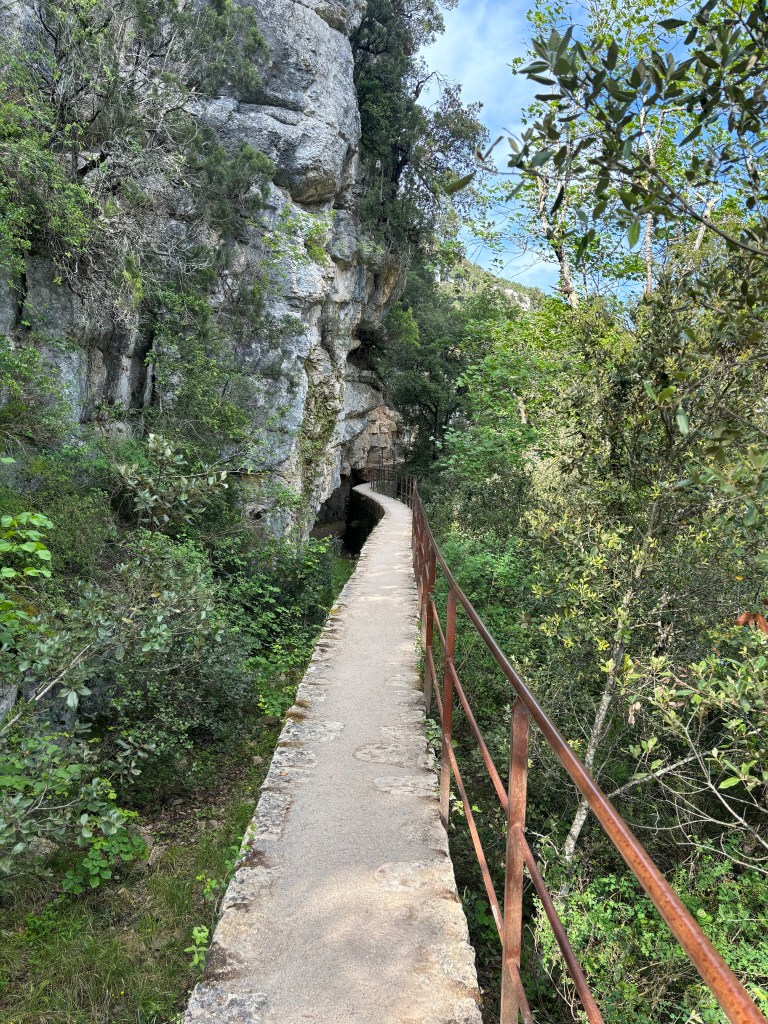
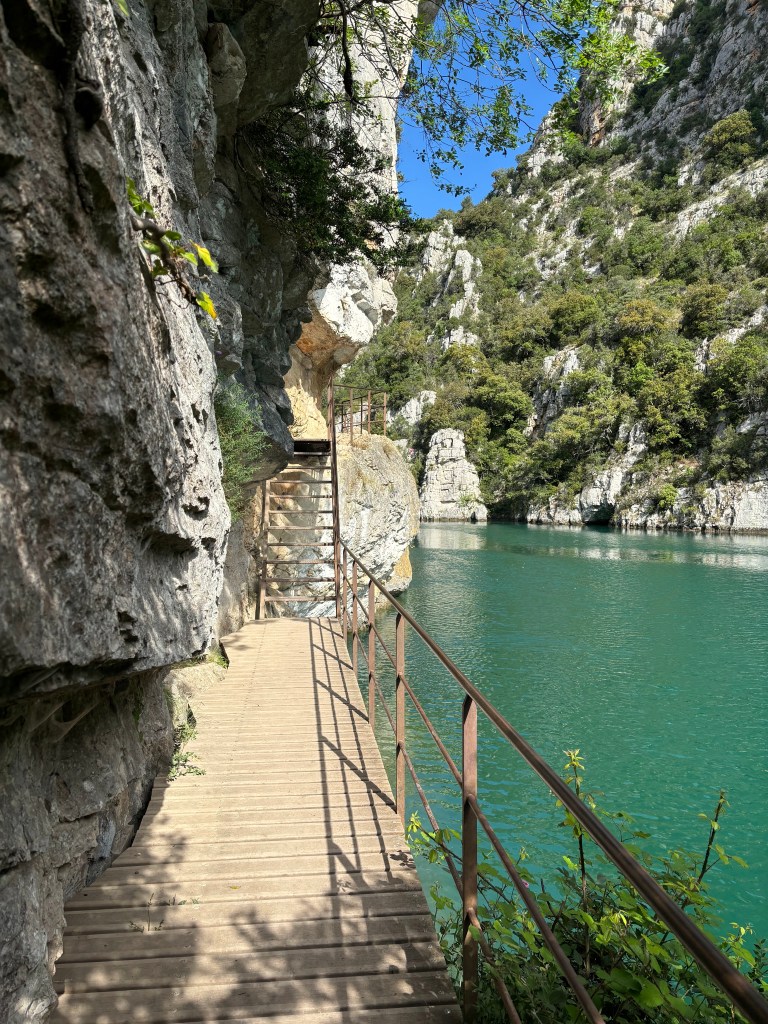
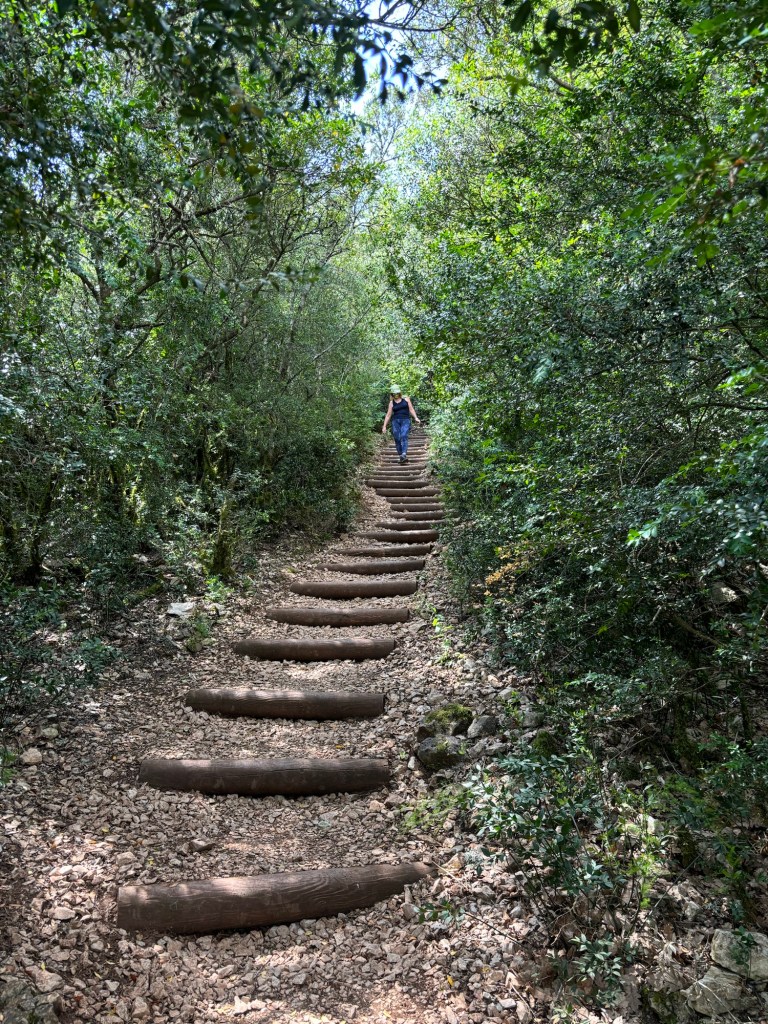
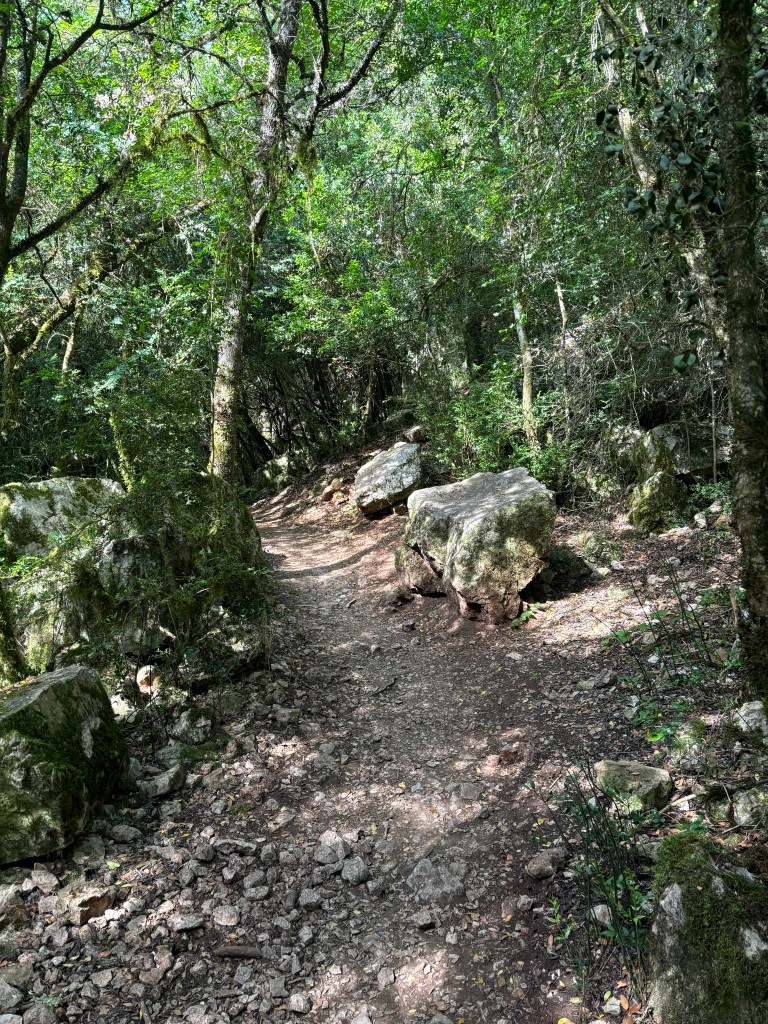
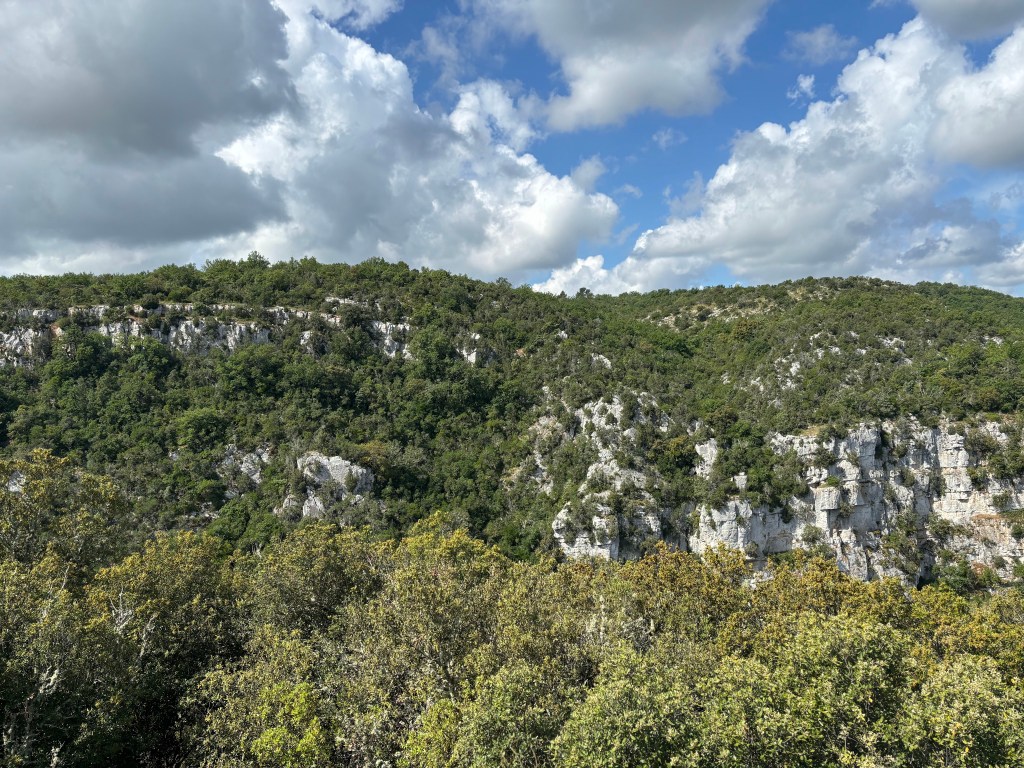
On the morning of Thursday 23 May, we were up relatively early to hike the ‘Canal Guard Trail’. This trail follows the route the keepers of the old canal took when inspecting and maintaining the canal, (this canal was purely a water course not a transport link) and then the trail climbs high above the canal and river to the Chapel of Sainte Maxime. The 10 km round trip was estimated to take about 4 hours by the guide book. The first part of the walk is cut into the side of the gorge, sometimes drops into the canal itself and goes through one of the many tunnels, and then leaves the river’s edge and makes it way from the bottom of gorge, through trees covered in moss, fallen boulders and rocks to the top where the Chapel is situated. We sat for a while taking in the view and put our names in the Visitors’ Book. We managed to find enough space to squeeze onto the last page of the current book. On the altar there was a stack of least 10 large A4 completed books and no sign of a new one for those visitors behind us.

We decided not to return the way we had come but to take the alternative route back, this path was steep with hundreds and hundreds of steps all the way back down the gorge to the river. Hard on the knees especially when some of the steps had drops of more than a foot.

Earlier, when we had made our way up the gorge, we only saw one other couple making their way along the path. They were the noisiest couple, they did not stop talking LOUDLY, it didn’t matter whether we were behind or in front, their voices reverberated around the gorge disturbing the peace and any wildlife. If they’d auditioned for a Ricola advert, they would have got the job hands down! Luckily, once we entered into the valley and started our ascent, their voices were swallowed up by the dense vegetation or perhaps they were swallowed up by a pissed off wild animal!

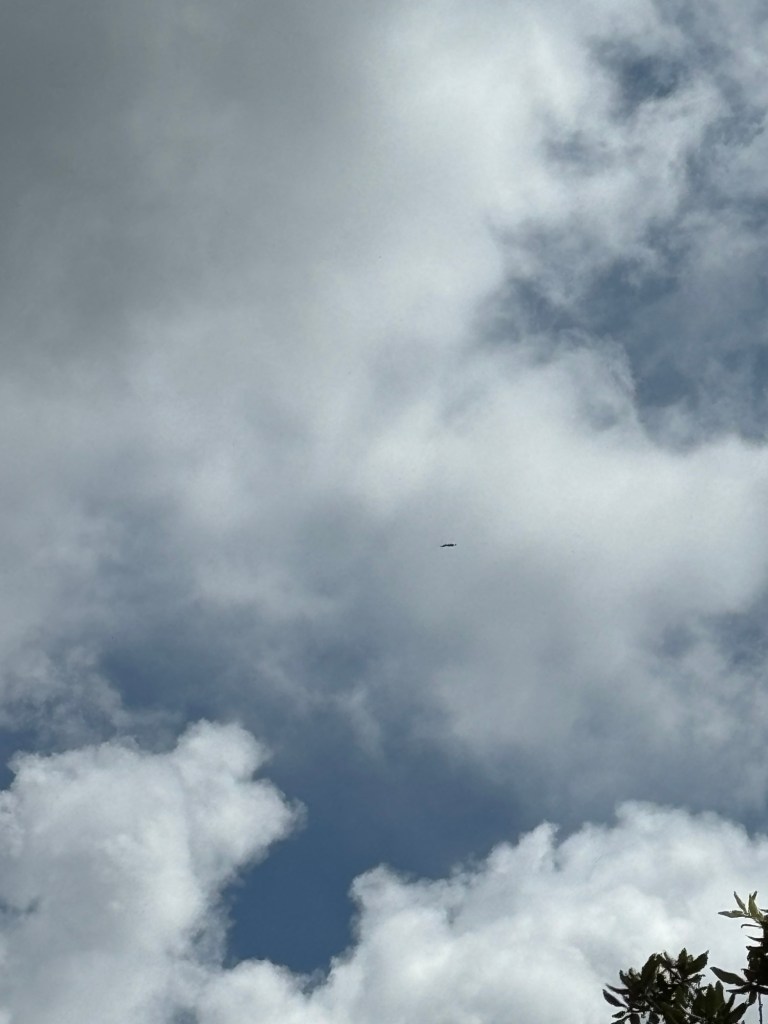
As we neared the end of the hike, the trail became very busy. We were glad we had taken the decision to go early before the crowds. A bonus was that we were fairly sure we spotted one of the Golden Eagles that live in the area, catching the thermals, way, way above us.

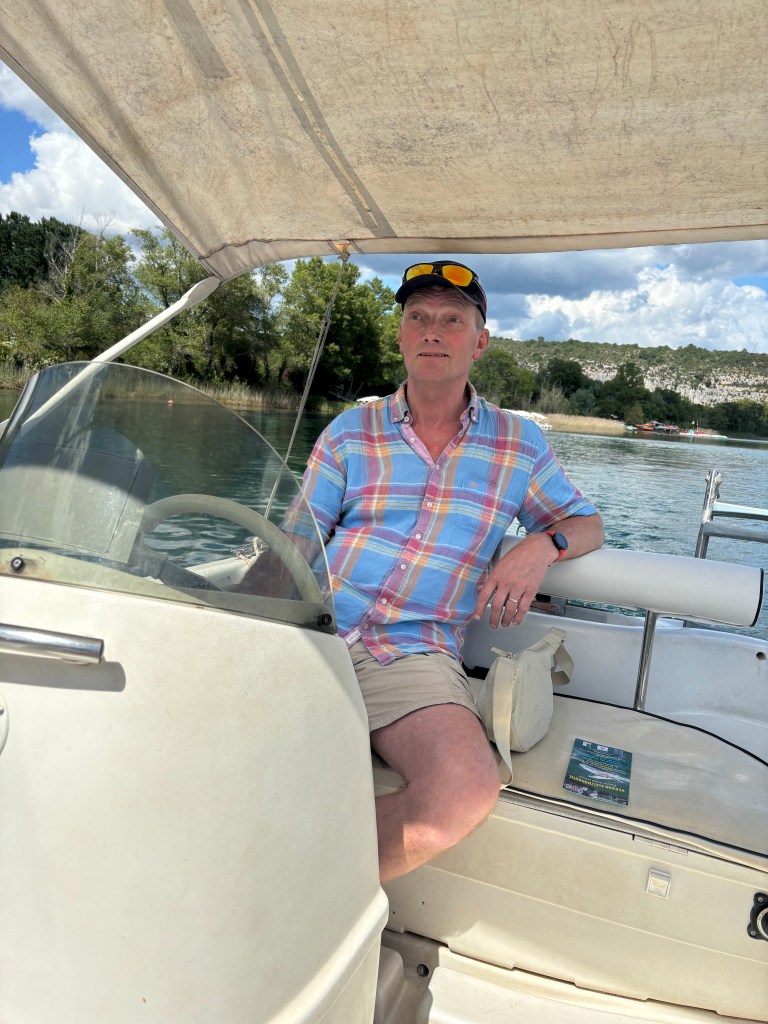
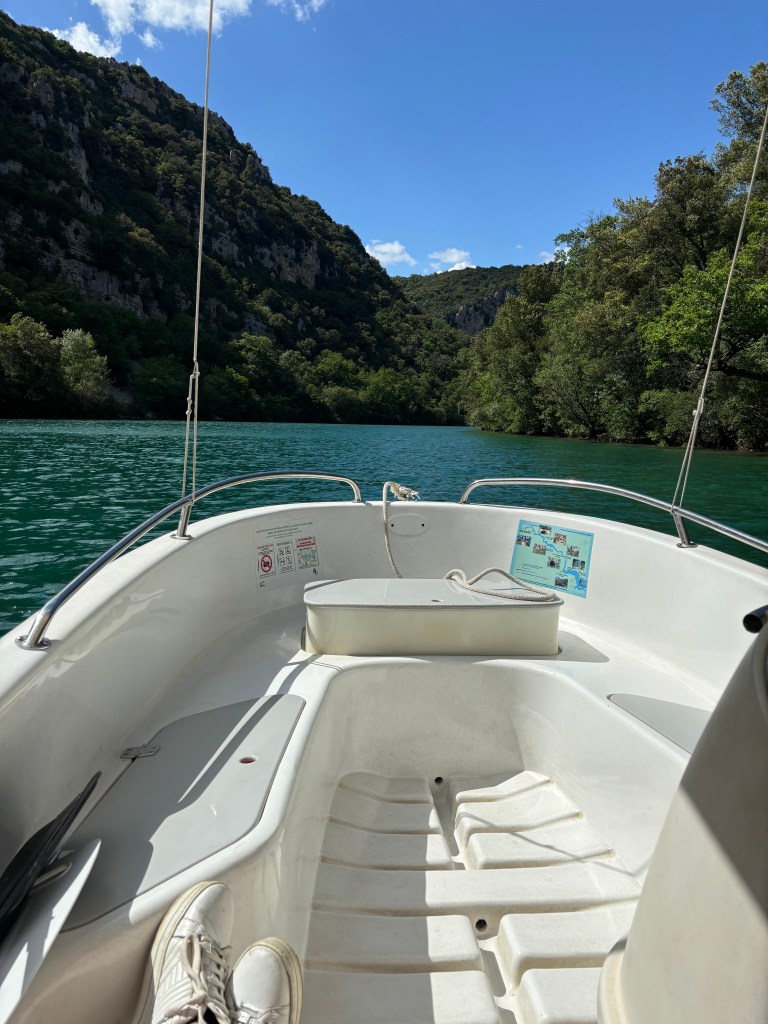
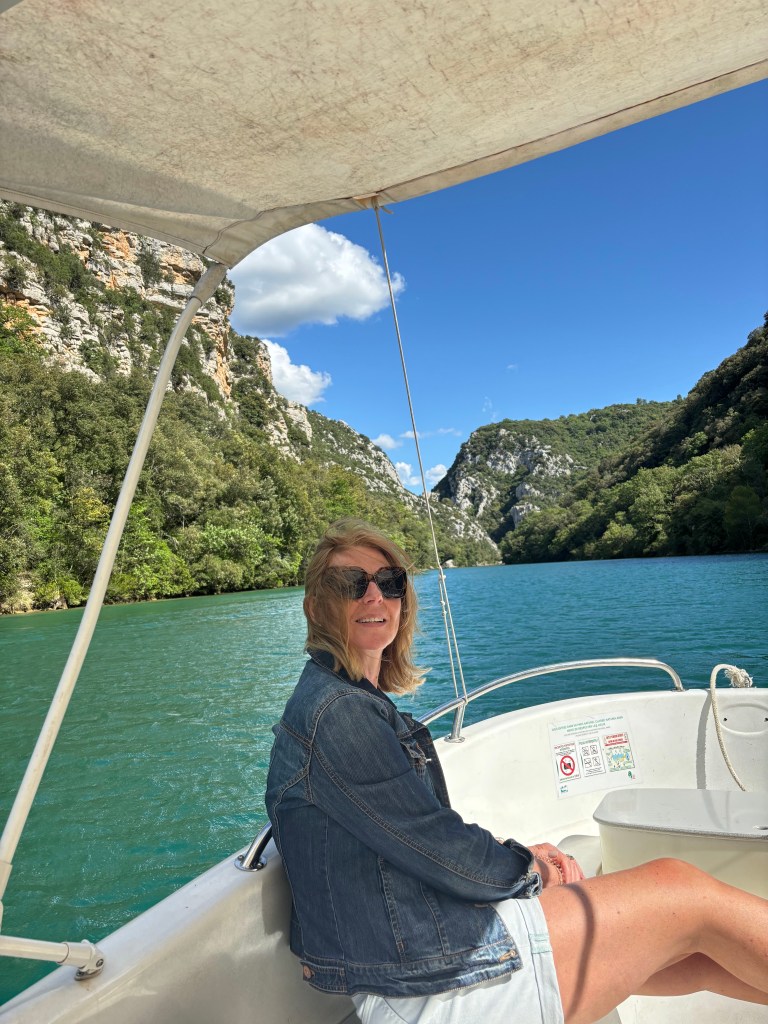
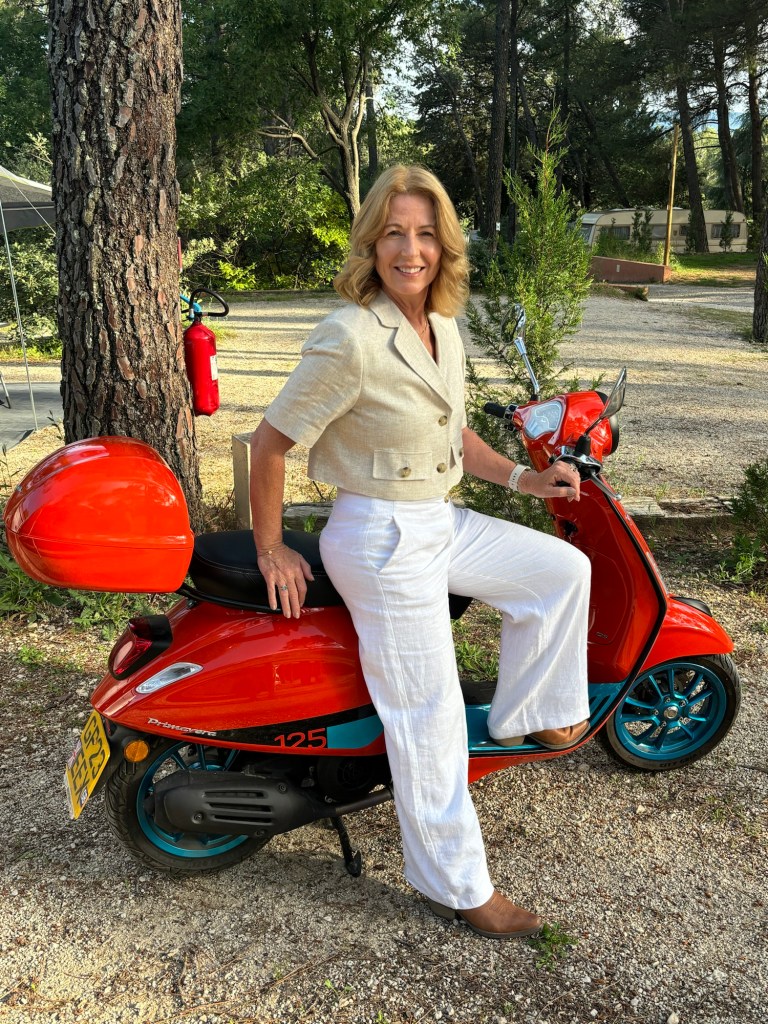
We arrived back at camp just as a few showers swept in, which we waited out, before taking the moped to explore. The roads are very quiet and we passed fields of poppies, olive trees, cows, vines and spectacular views. The moped is very quiet and, as amazing as it is when Charlie is driving, we don’t whizz. You can see, smell and experience so much more if you are pottering. We stopped at a little roadside bar/restaurant for lunch as a few more showers rolled in. Late in the afternoon, as the clouds passed and the sun came out, we hired a little electric boat and motored up the river, gaining a new perspective on where we had walked that morning.

We returned to our campsite and found we had new neighbours.

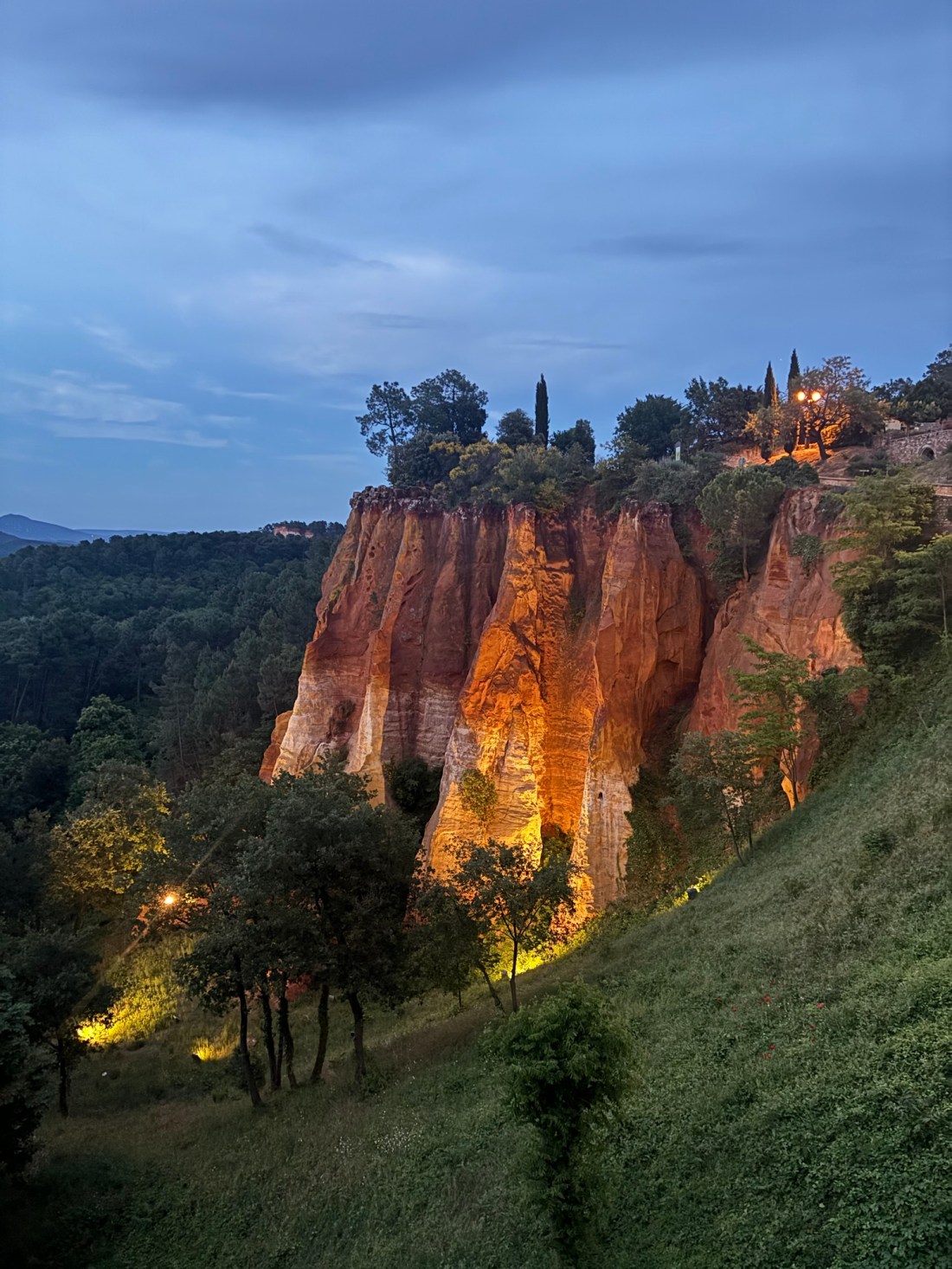
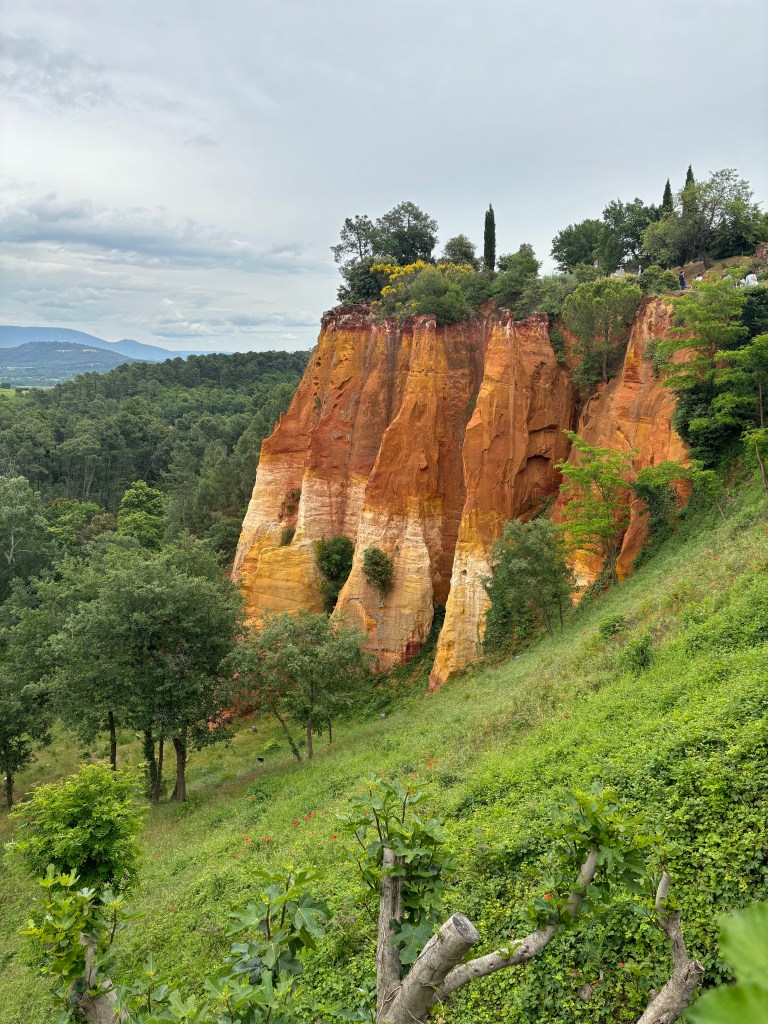
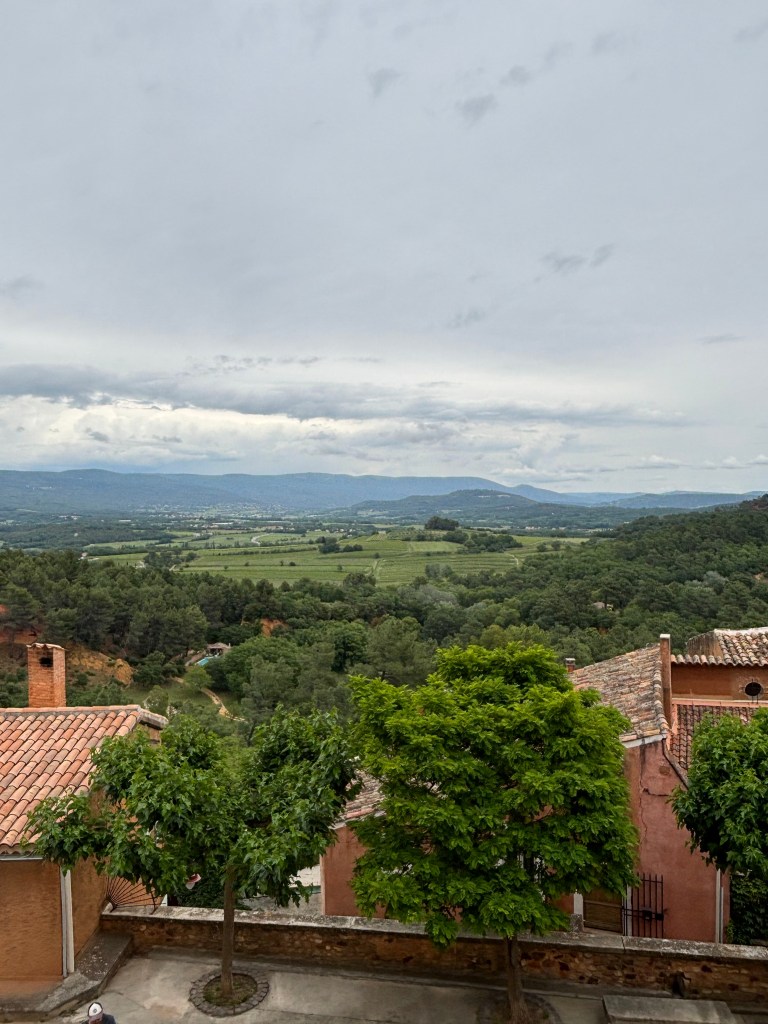
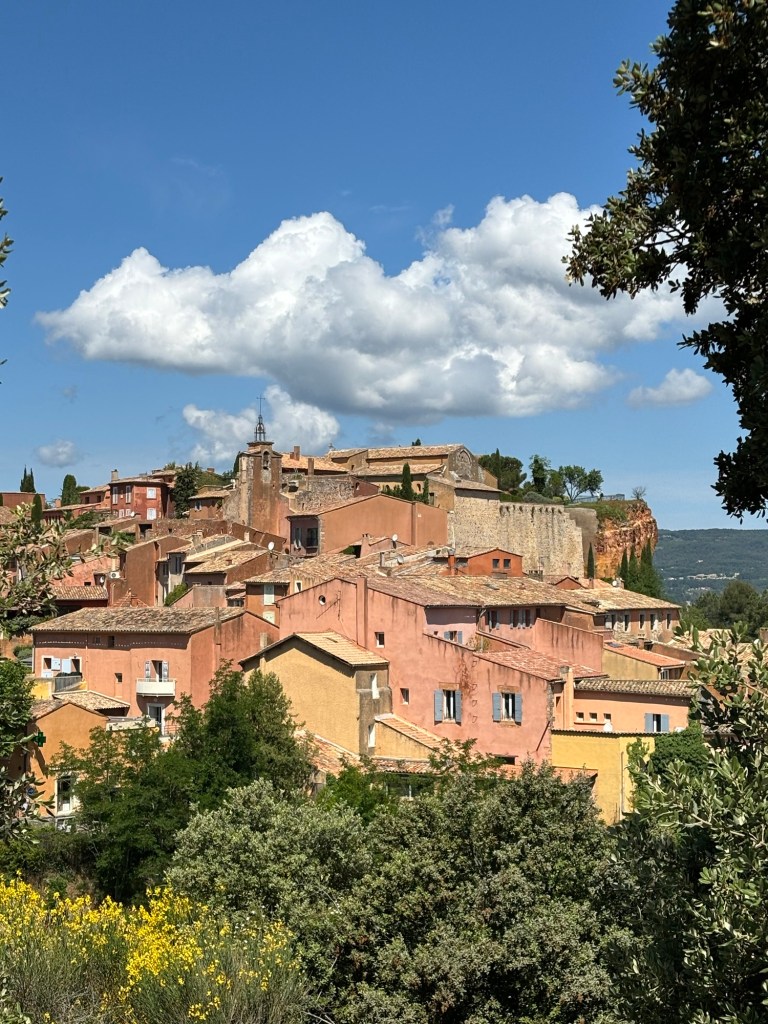
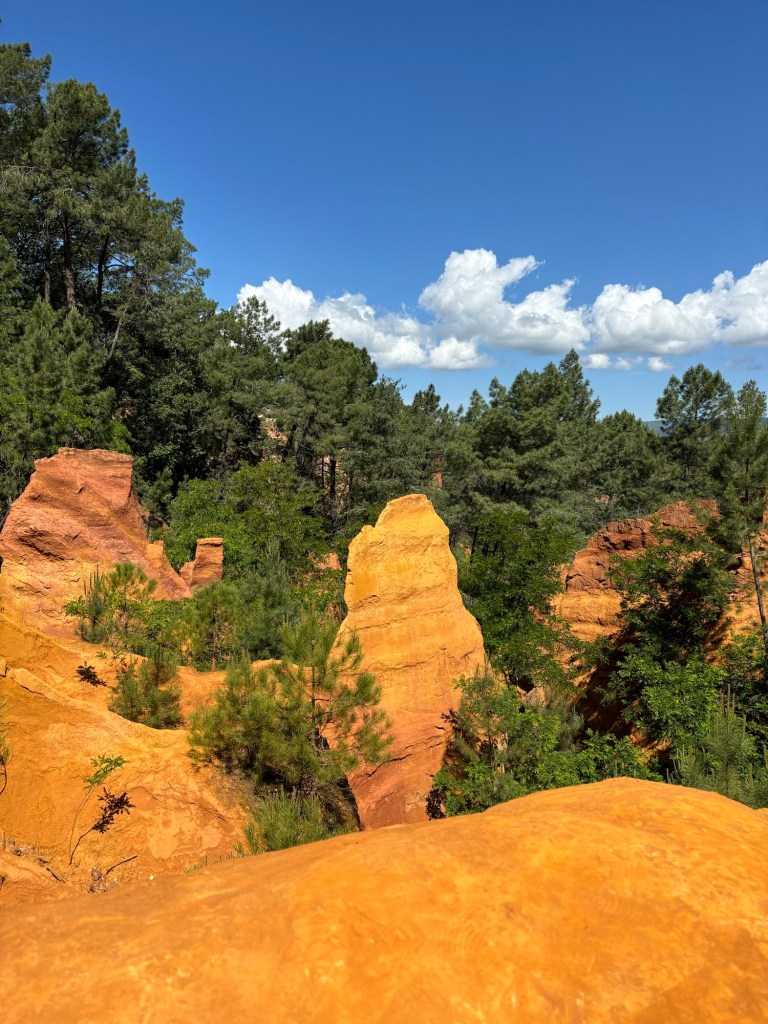
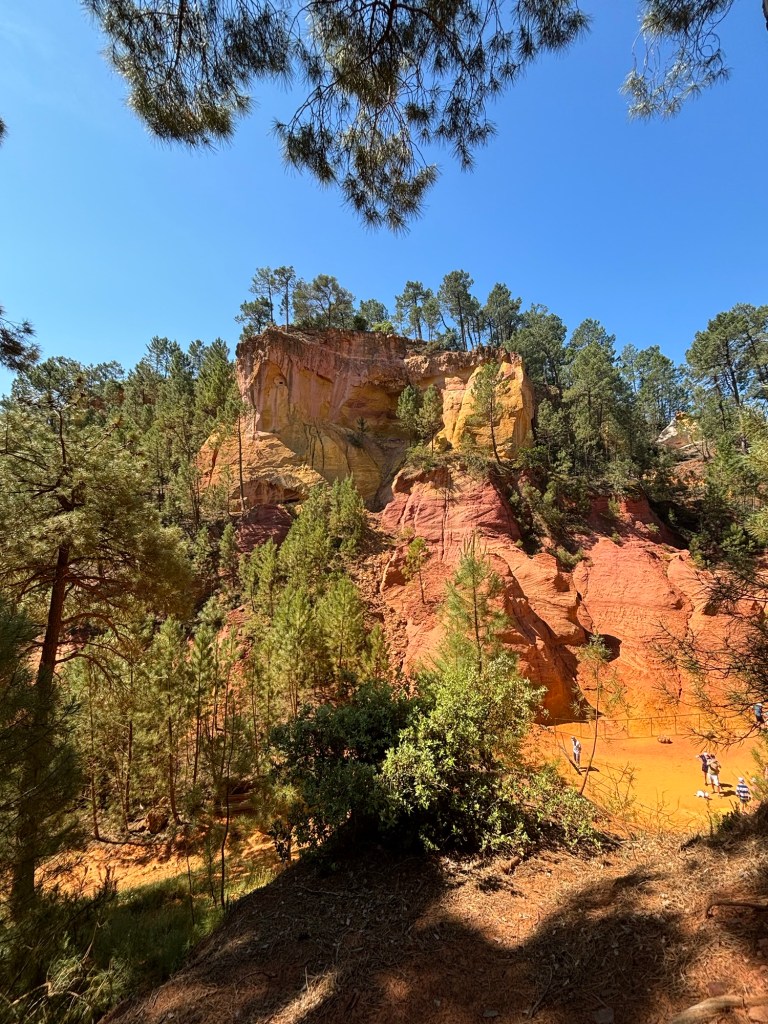
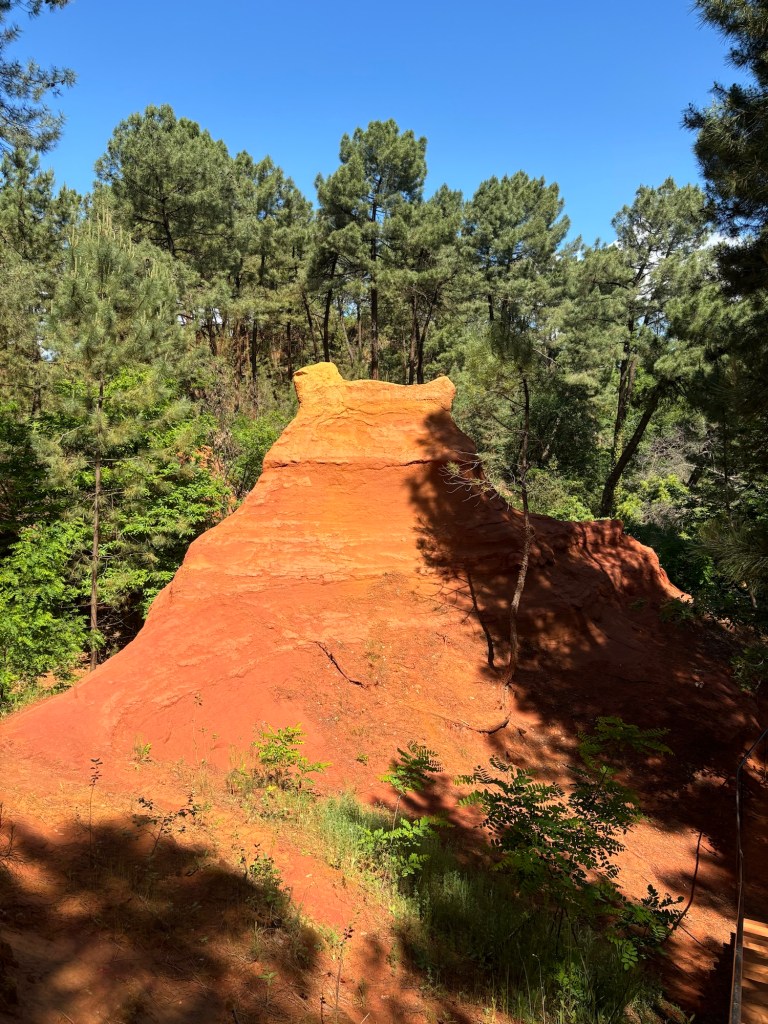
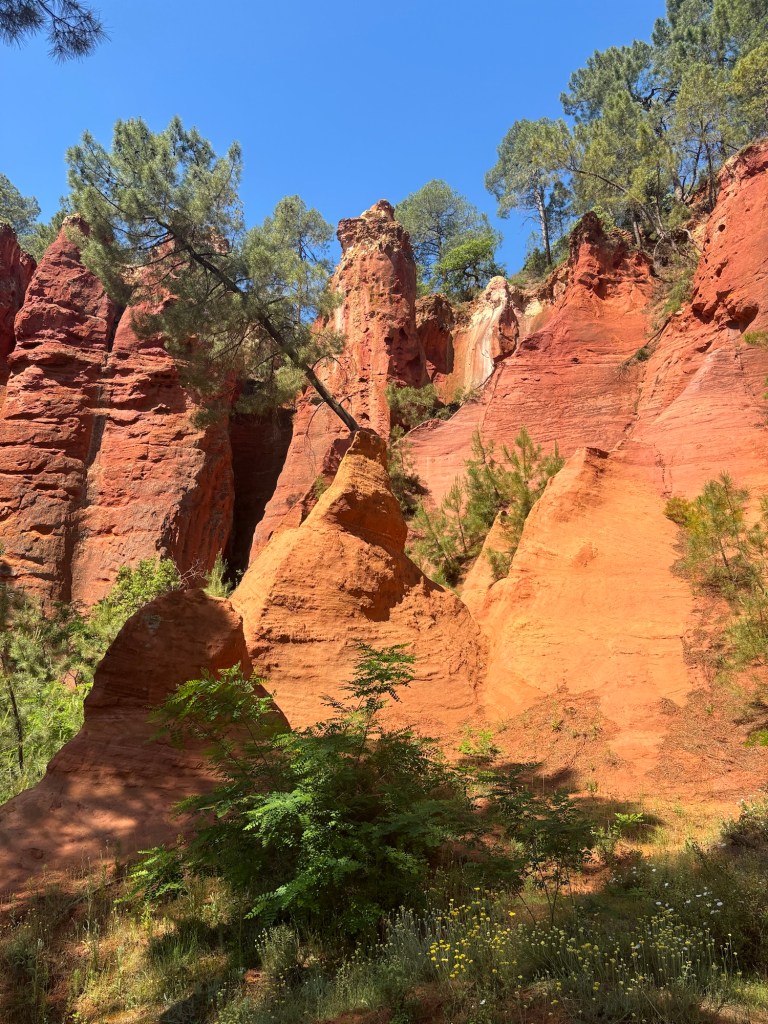
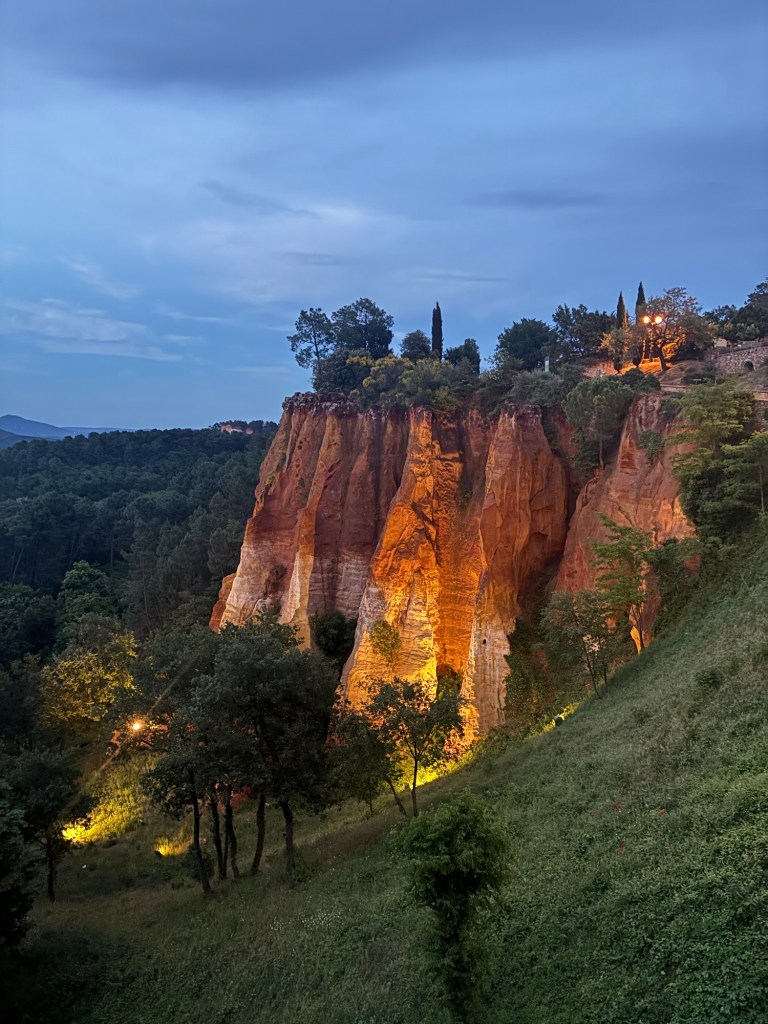
On Friday morning we packed up and set off for Roussillon, in the Luberon region, known as one of the most beautiful villages in France. Our campsite for the next 3 days is just outside the village, set among pine trees. The areas is scarred in the most beautiful way by the remnants of ochre mining, the earth colour ranges from dark reds to vibrant yellows

After setting up, we hopped onto the scooter and made our way into the village. It is very beautiful but for the first time, we encountered a village busy with tourists, drawn by the spectacular landscape and the village itself.

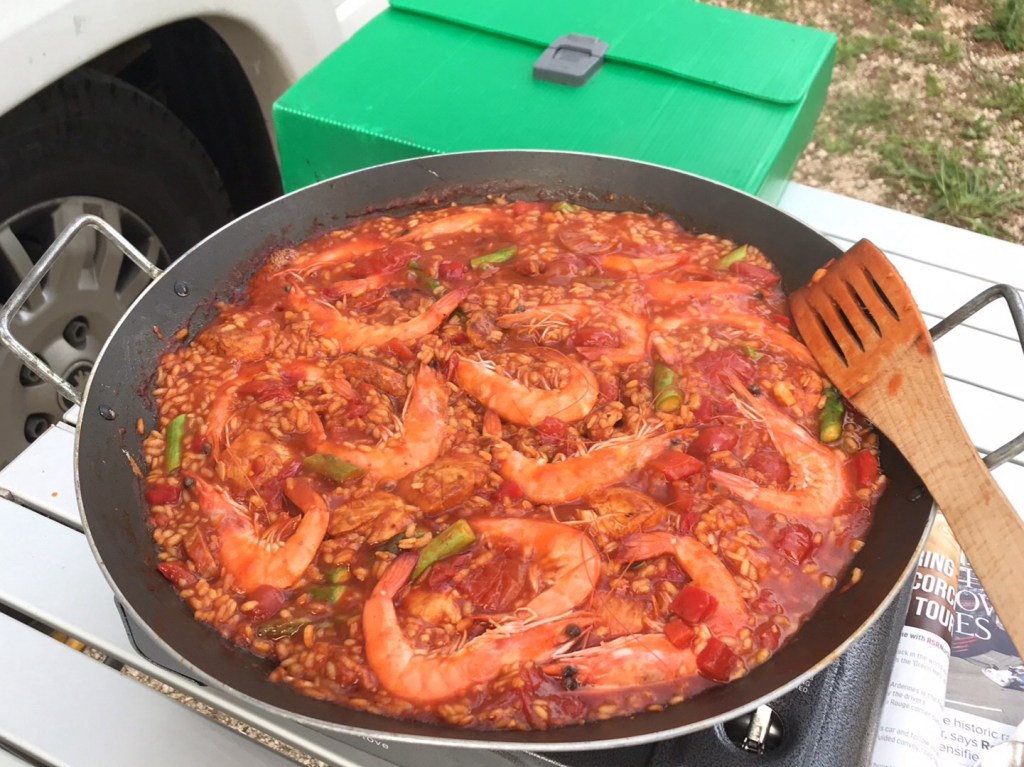
We returned to the campsite for an afternoon of work and paella for tea.

The next morning we returned to the village to walk The Ochre Trail. This a short, easy wander through the spectacular coloured cliffs of a former ochre mine. The trail is marked and has walkways, you can do the 30 min or 60 min version. We did the 60 min which in reality took us a little over 30 mins with stops. The scenery is breathtaking.

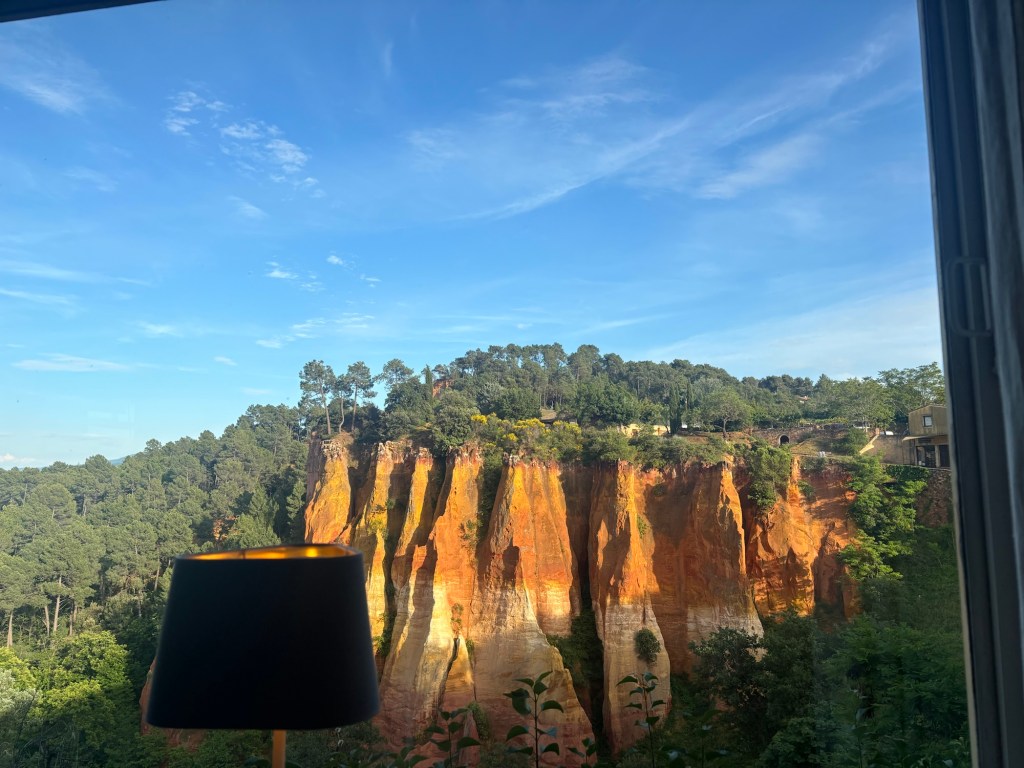
A lazy afternoon followed and then in the evening, we went into the village for dinner, where our table overlooked the spectacular cliffs in the village centre.

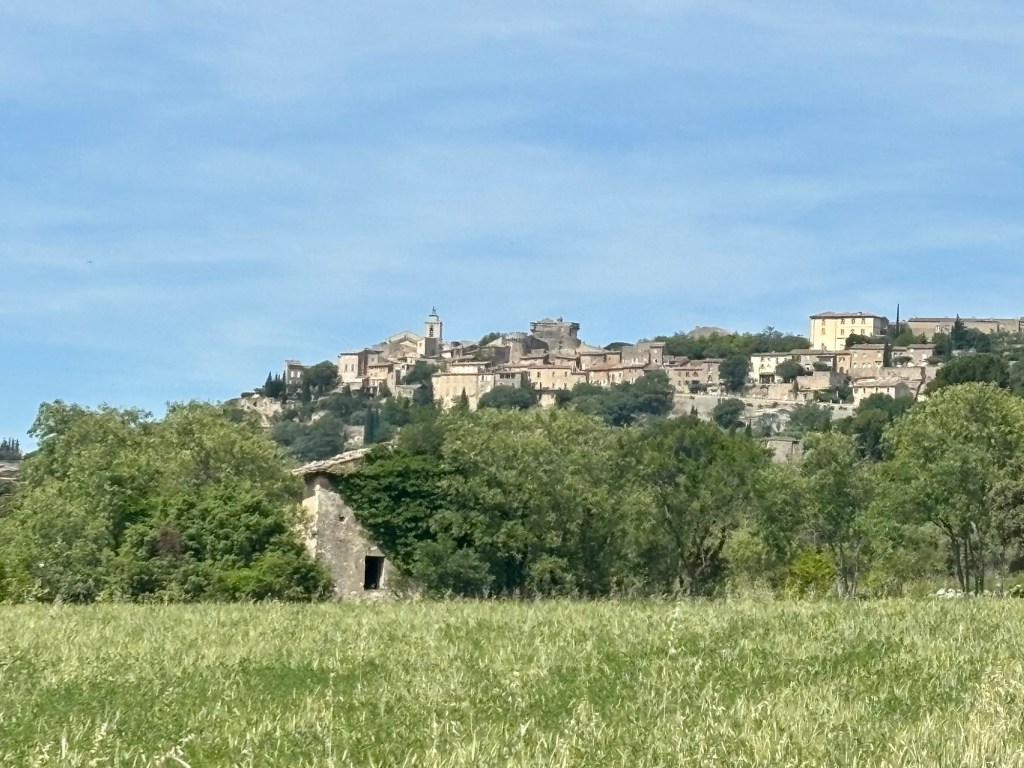
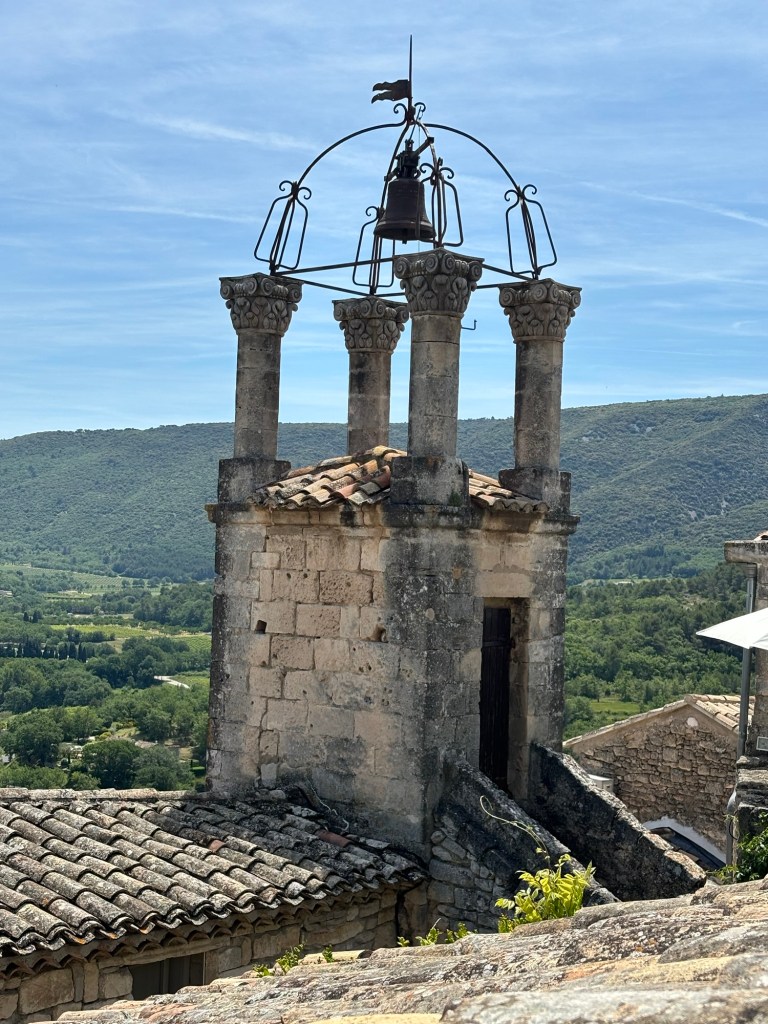
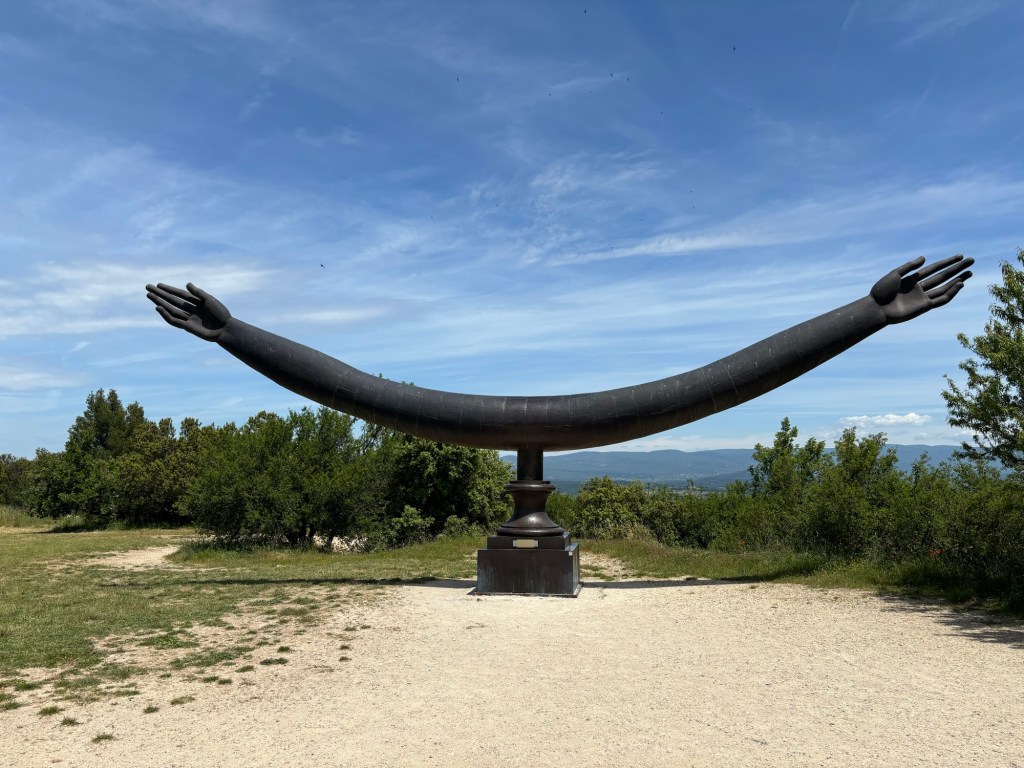
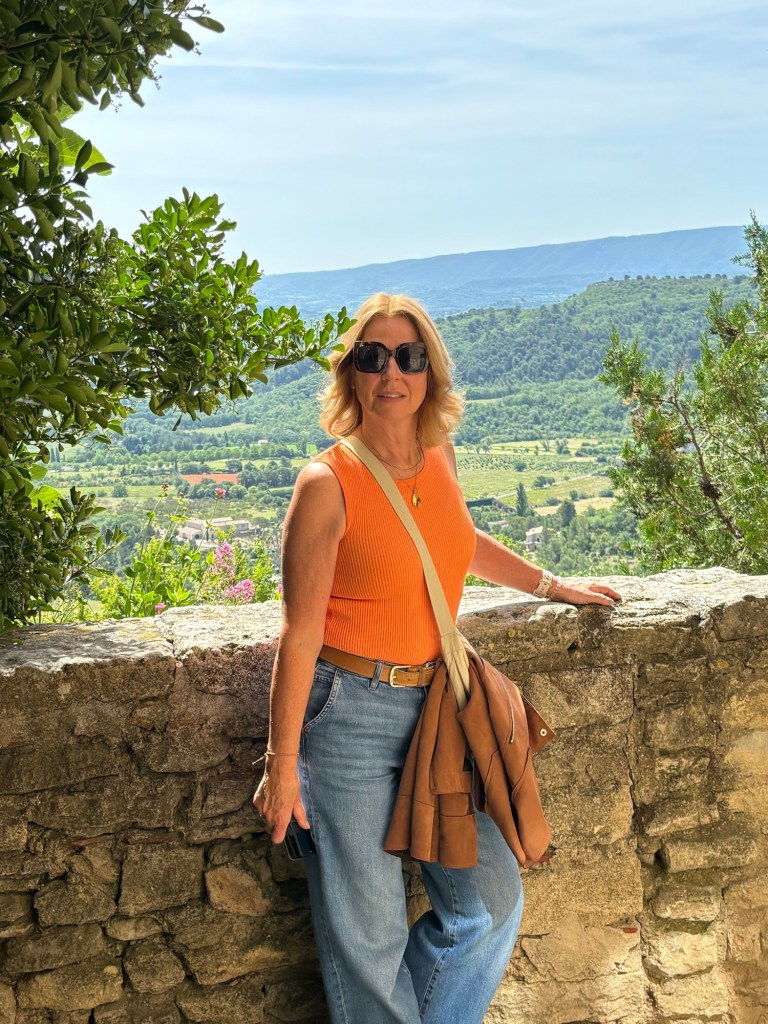
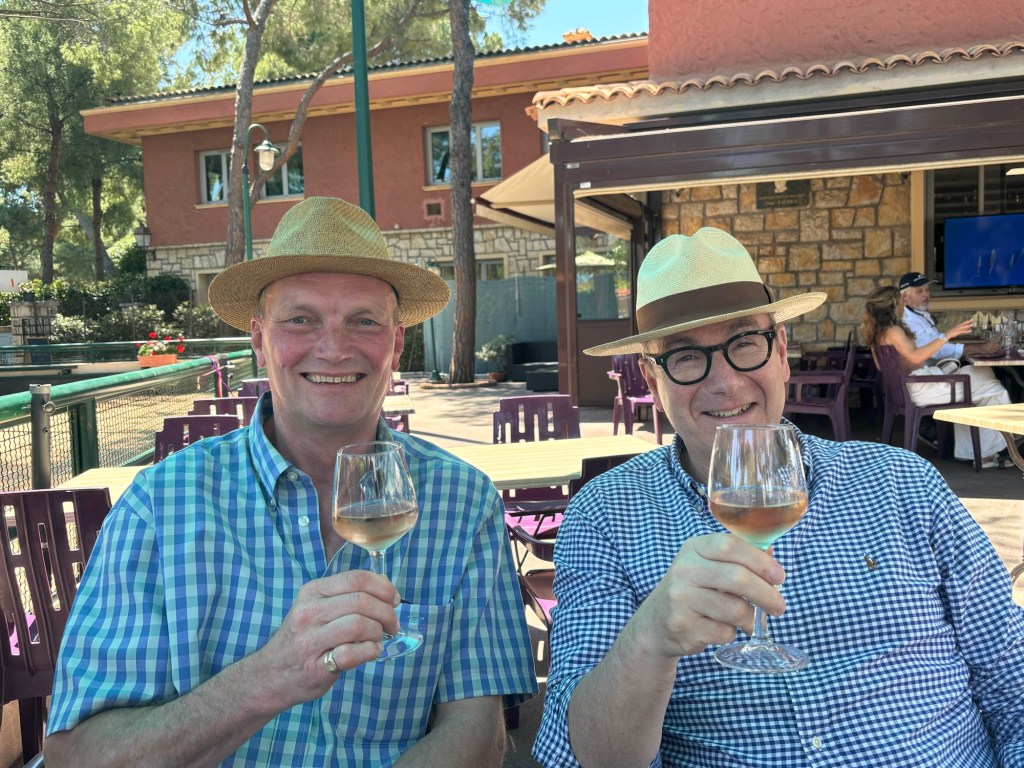
Sunday was planned around the Monaco GP due to start 3 pm French time. We spent the day scootering around the countryside, soaking up the scenery and popping into another couple of the ‘most beautiful villages in France’ – Gordes and Lacoste.

Gordes was busy, goodness knows what it will be like at the height of the season. Managed to get photos without too many tourists in them.

Lacoste was the home of the infamous Marquis de Sade, whose chateau is now owned by Pierre Cardin. Lacoste was deserted apart from the couple of restaurants where the majority of customers were cyclists.

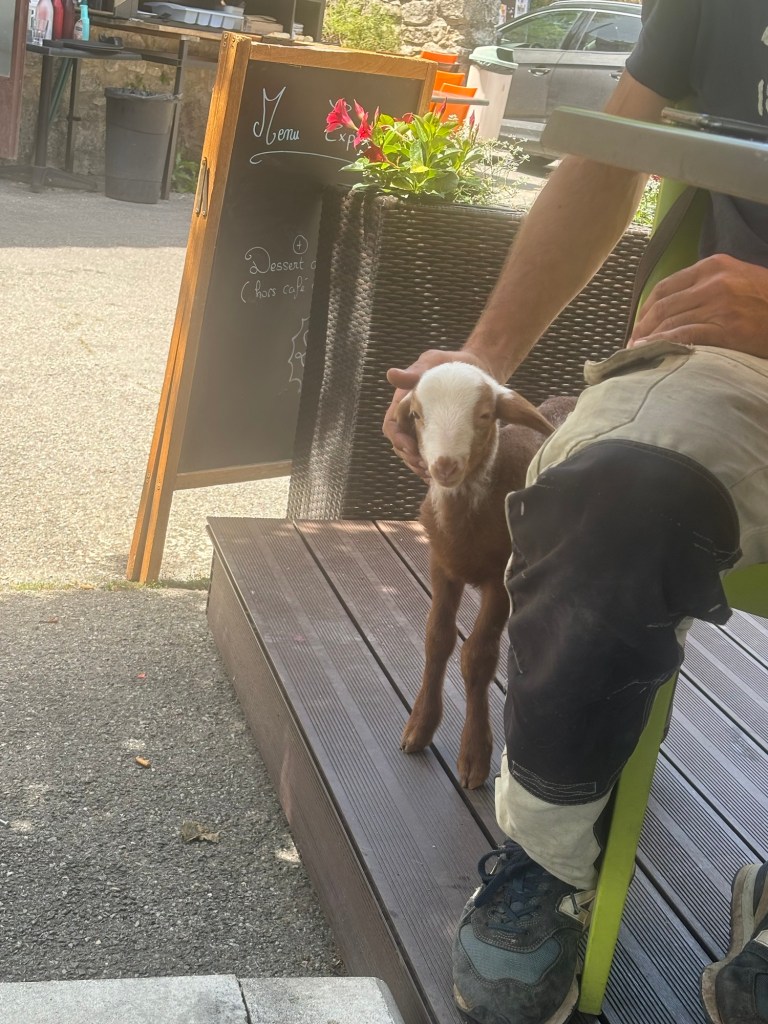
The highlight of the day however was lunch! Not my Salade de Chèvre Chaud or Charlie’s Carbonara, as delicious as they were, but our dining companions!

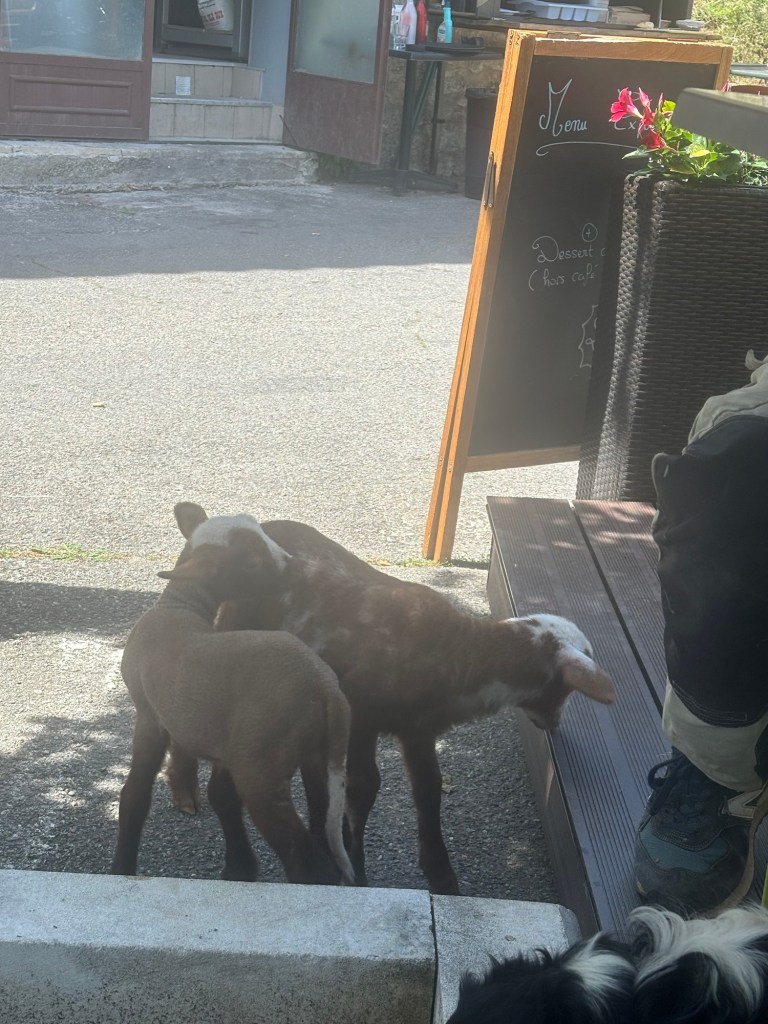
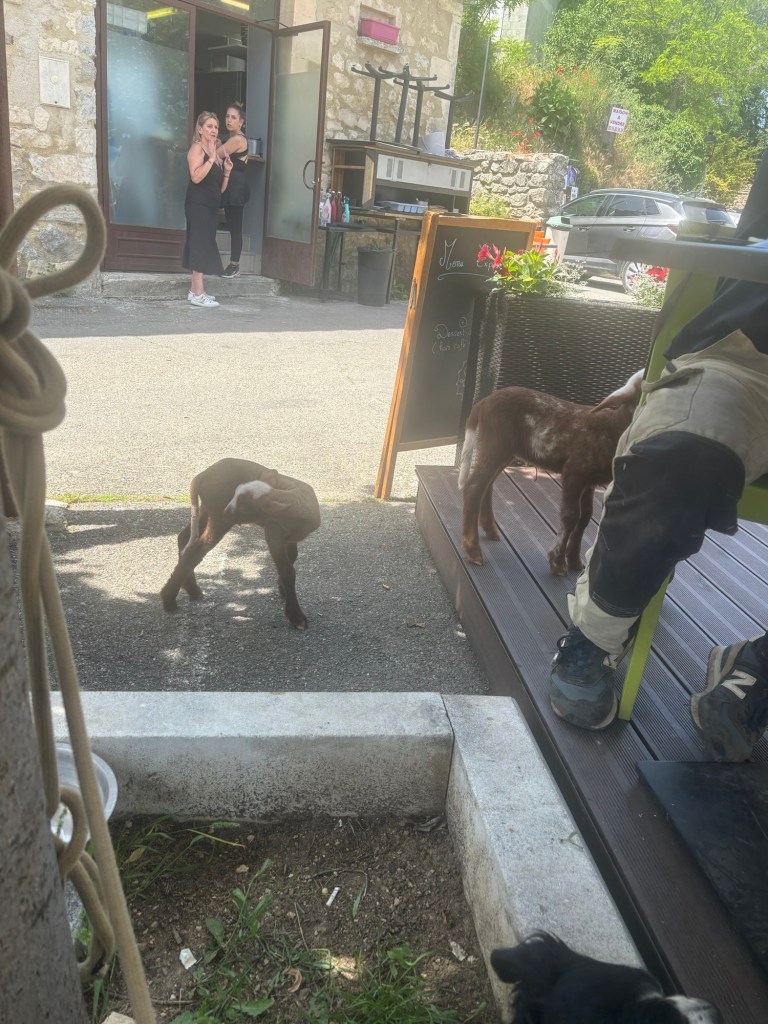
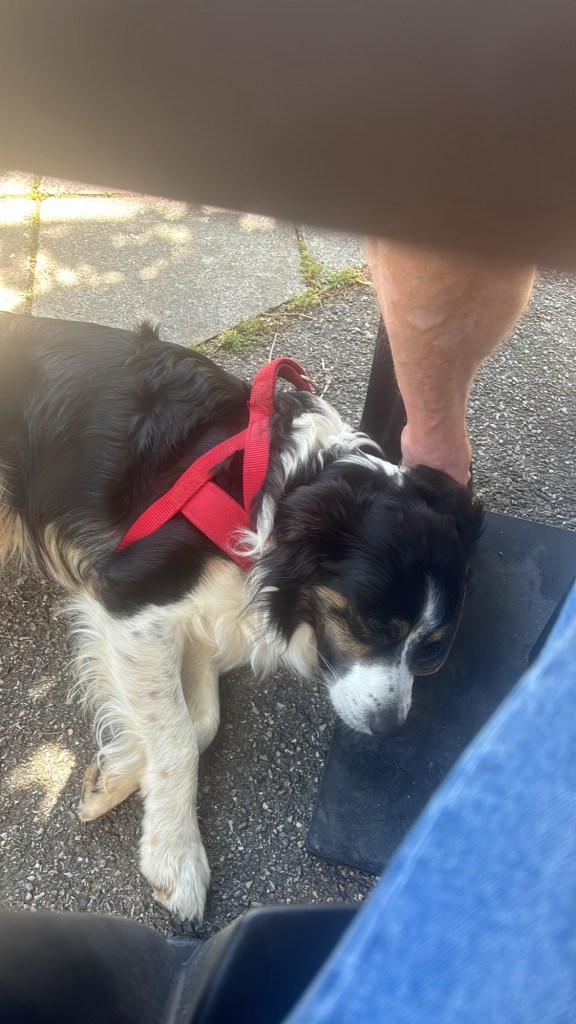
A local shepherd and friend were having Sunday lunch accompanied by 2 bottle fed lambs, one 10 days old and one 15 days old and his sheepdog.

We were sat on terrace and they wandered about, never straying far, but every now and then, the shepherd would baa at them, and they would trot back. The sheepdog kept an eye and gave them the occasional motherly lick. It wasn’t long, before all three fell asleep, the dog on Charlie’s feet and lambs by my chair. So any single guys who want to be ‘babe magnets’, don’t just get a cute dog, get lambs as well!

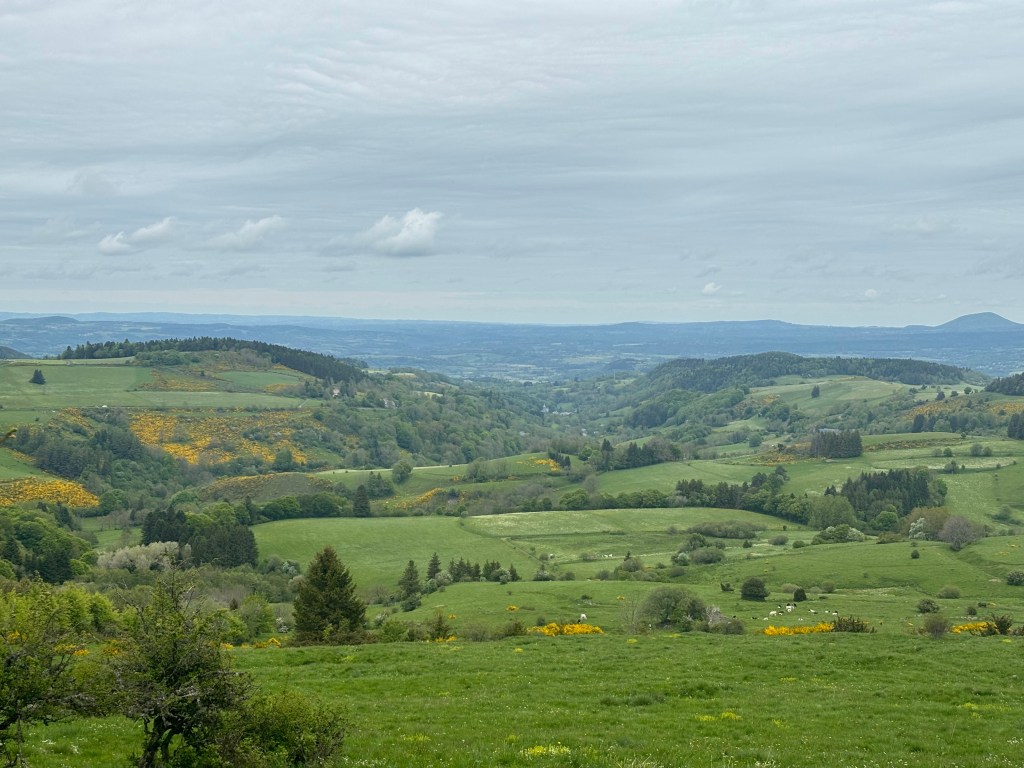
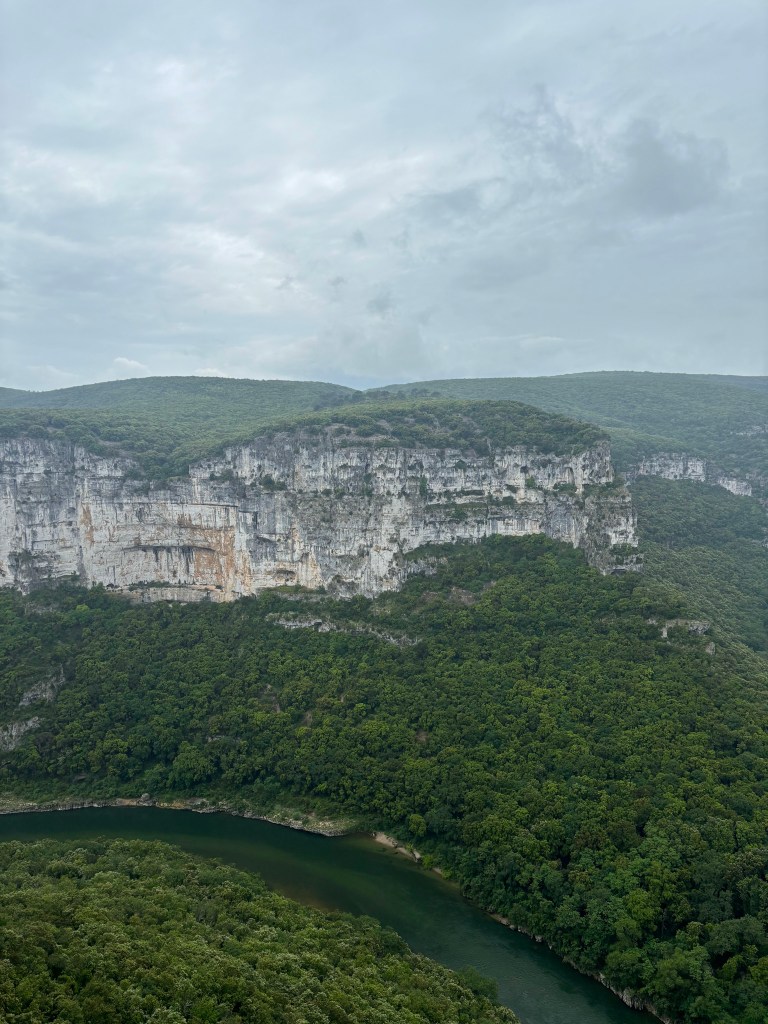
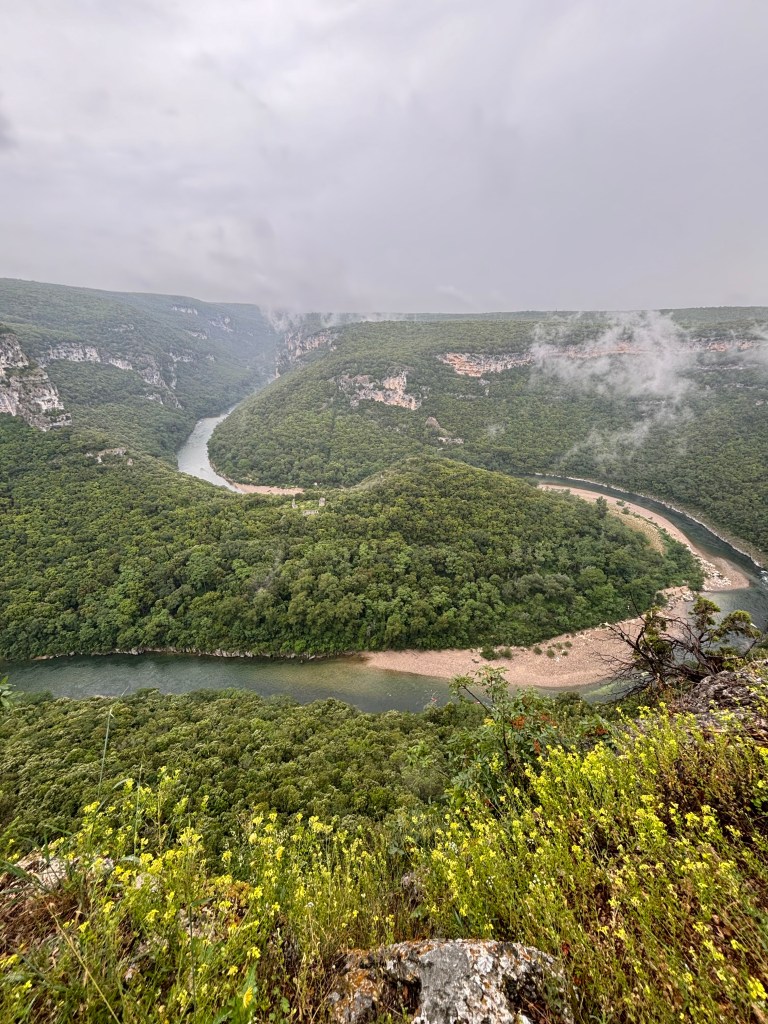
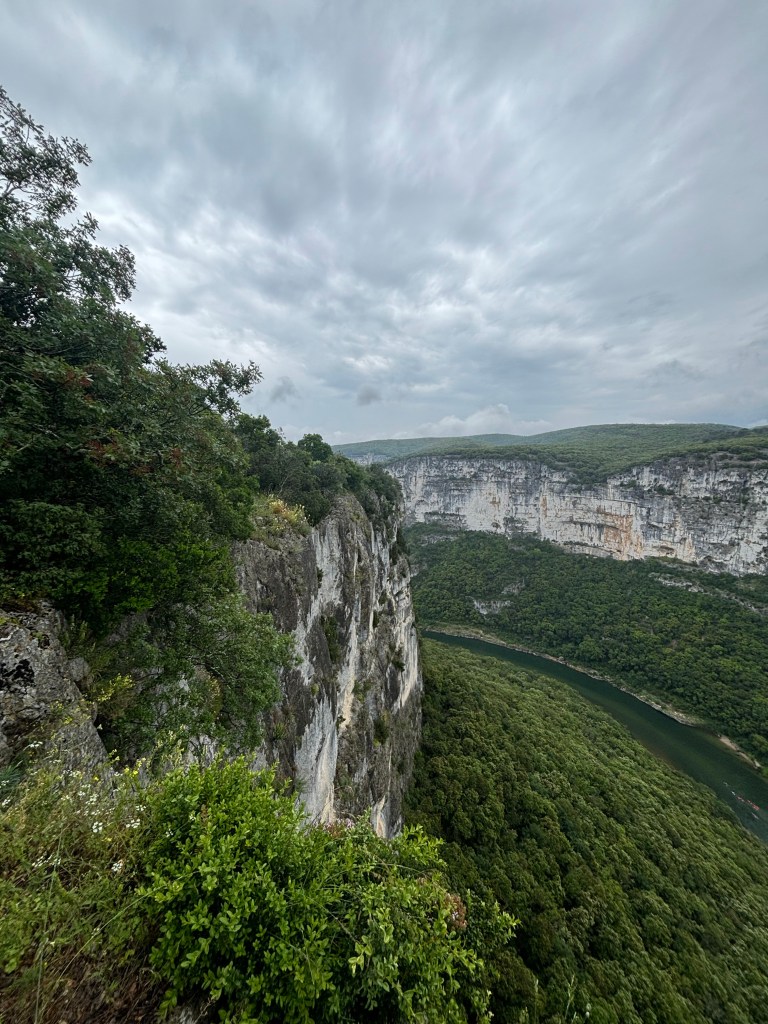
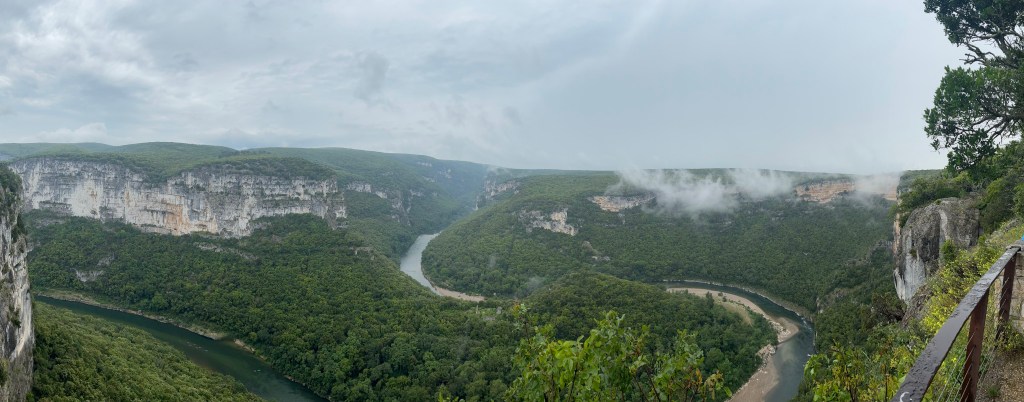
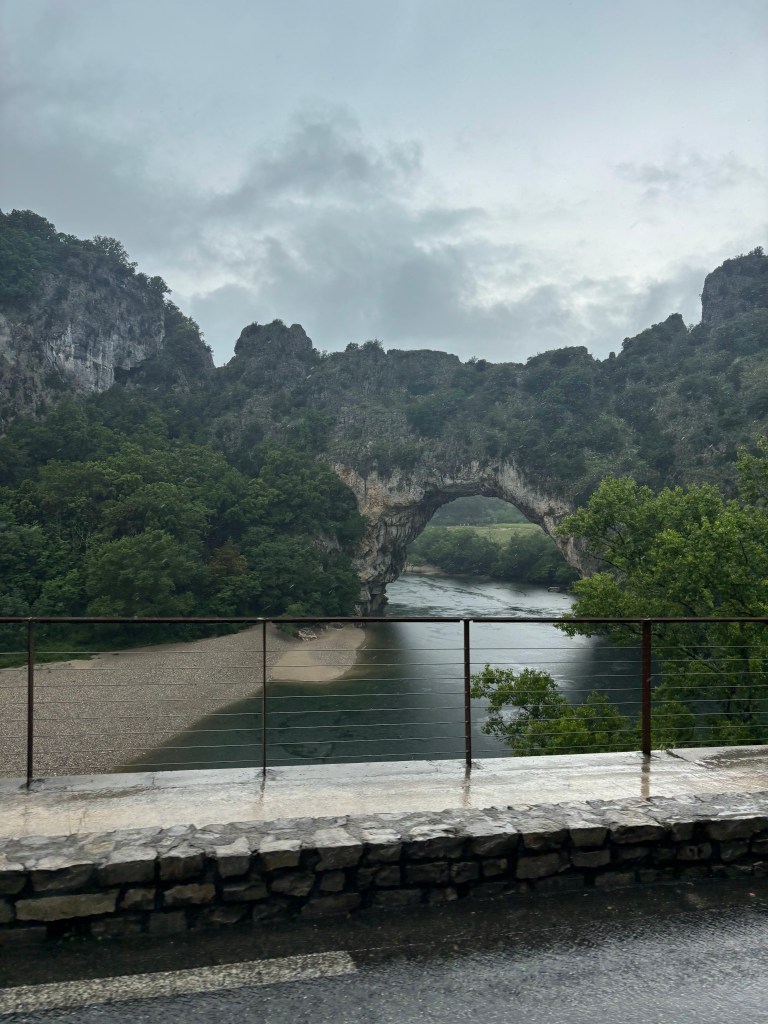
After the sun came the rain, but Monday 27th was a travelling day. We wound our through the Gorges de l’Ardeche, in the rain and cloud, stopping for the odd photo. As we neared Le Puy, our stop for the next 2 nights, we found ourselves driving through a verdant, green plateau of rolling meadows, where we pulled over for lunch inside the van, watching the rain stream down the windows.

Le Puy is the home of the Puy Lentil and was marked very jauntily at a roundabout, with ‘cartoon’ statues of ‘lentils (looking like fat green peas), perched on gold thrones and wearing crowns. And they say the French have taste…

Today’s weather also marked my mood, I can’t finish this part of my blog without mentioning the dreadful news I heard today. Georgie Campbell, an accomplished horsewoman, was tragically killed whilst riding in an eventing competition on Sunday. I had only met Georgie and her husband Jesse, a few times however Georgie has been a brilliant mentor, teacher and friend to my niece, Sophia. I feel so sad for Jesse, the families and friends and my niece, Sophia. A great loss. Rest in Peace Georgie.

Speed, History & Spectacle – A Grand Tour – Part 2

Menton & Monaco

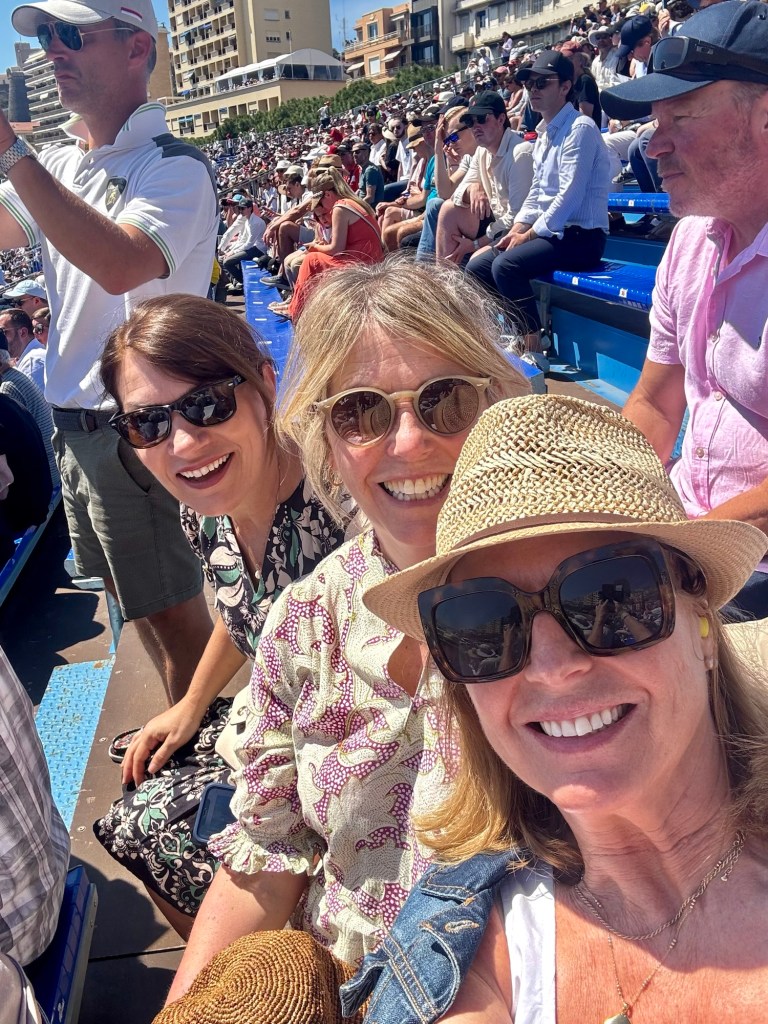
Our party of 10 consisted of some seasoned motorsport fans and some new to it, who really just wanted to hang out in Monaco!

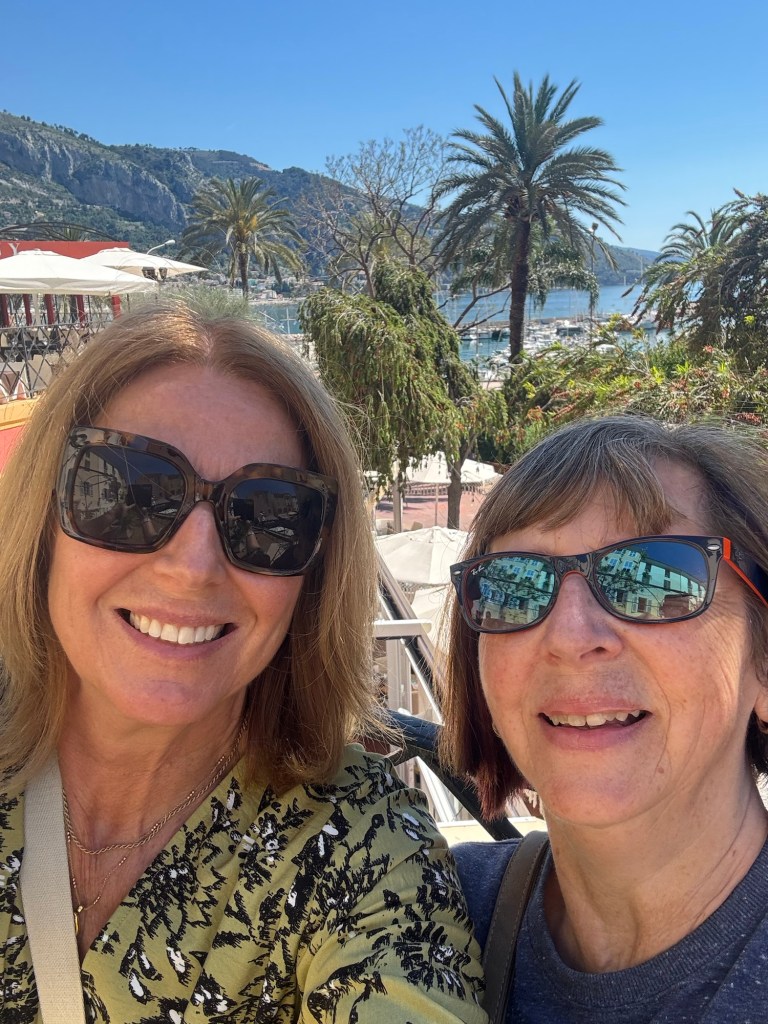
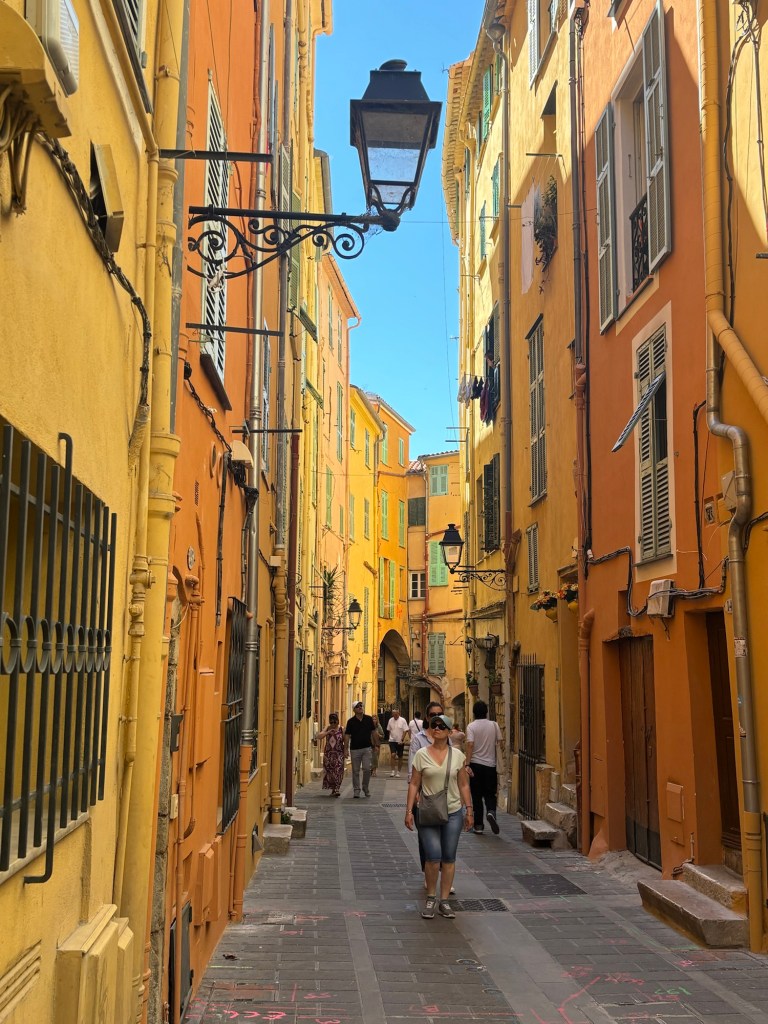
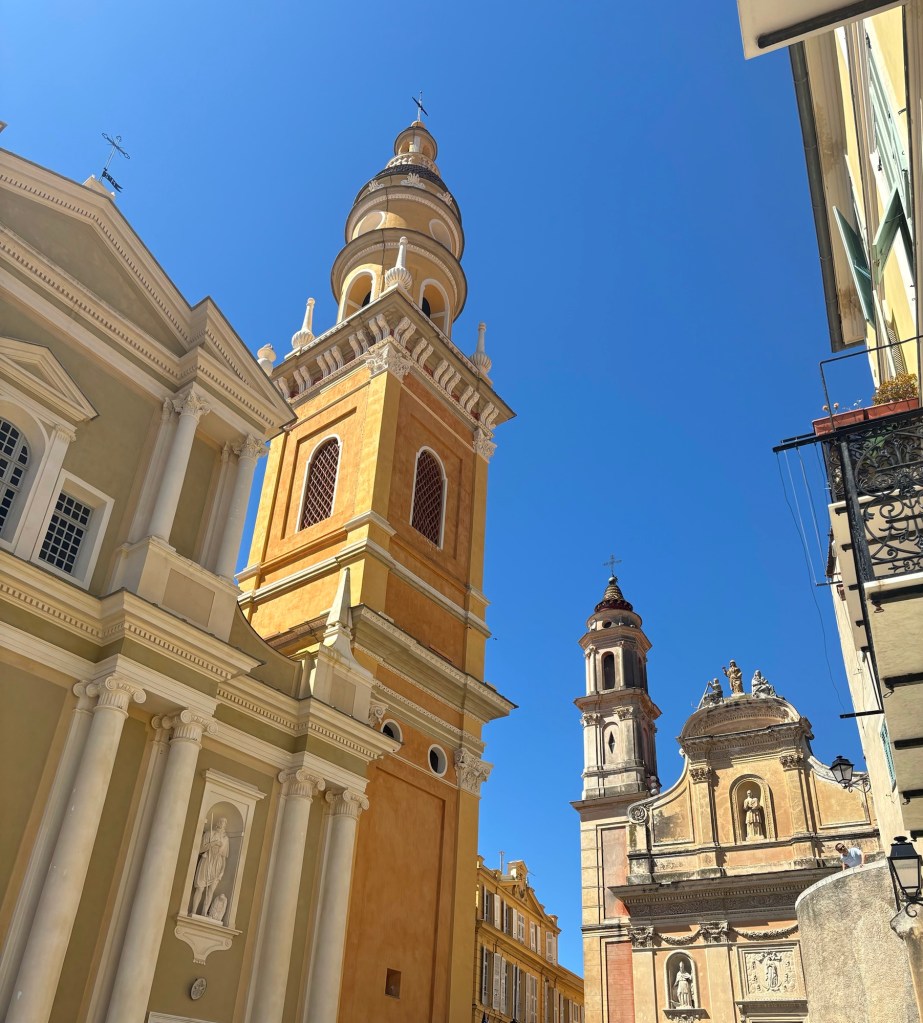
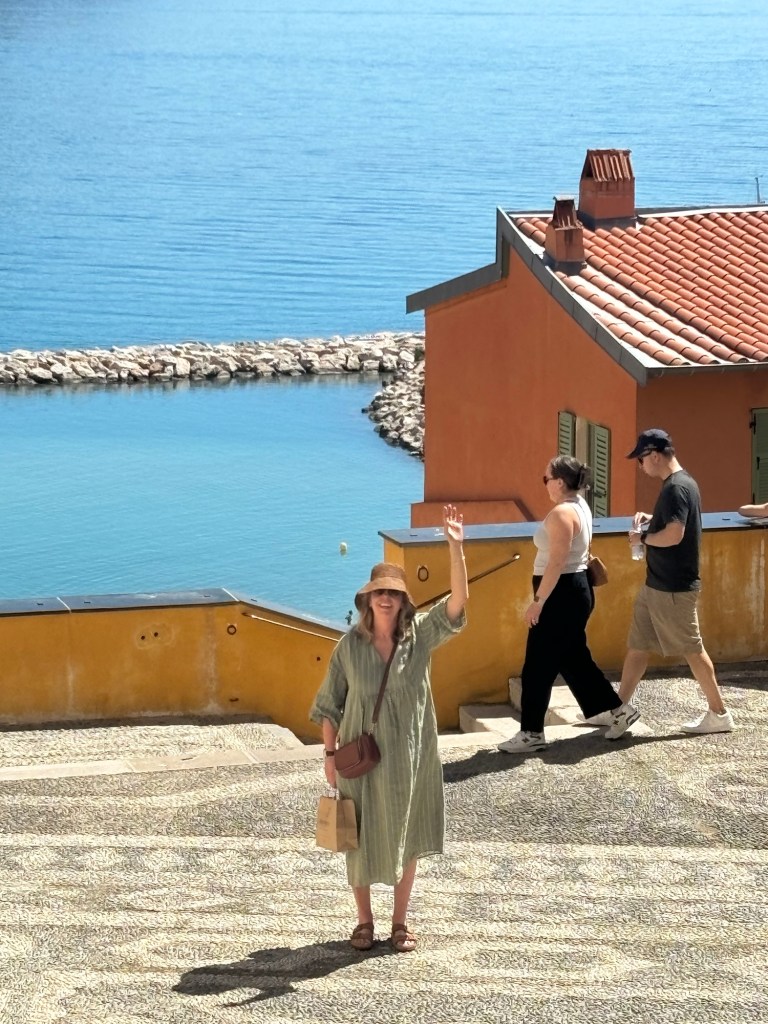
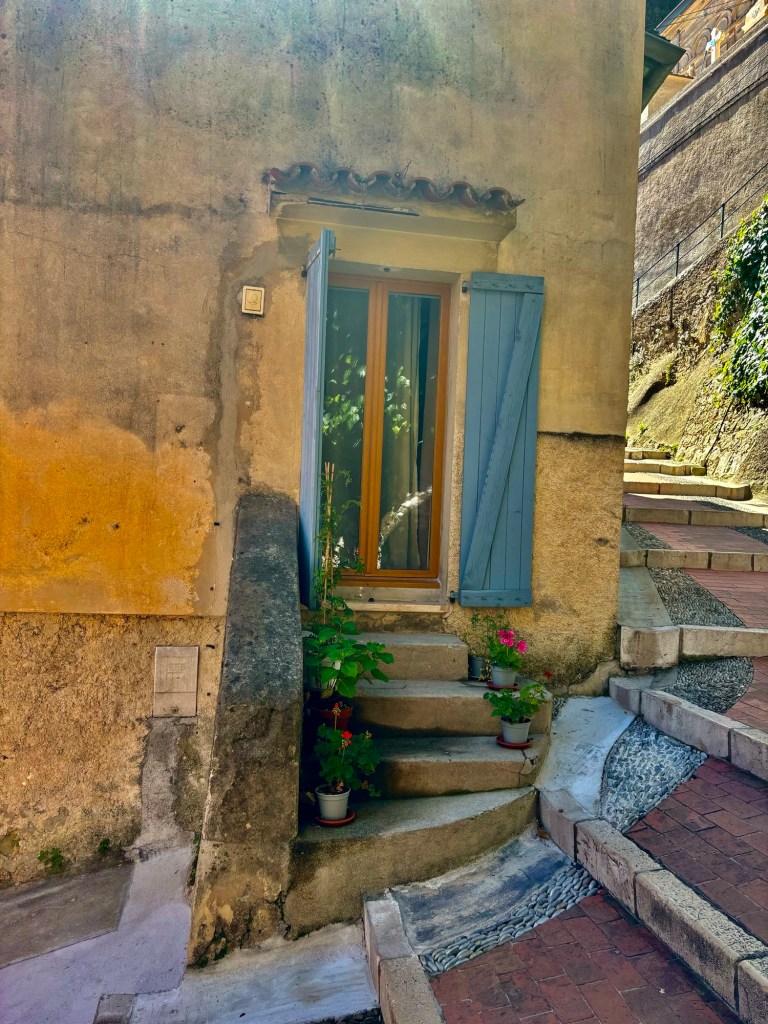
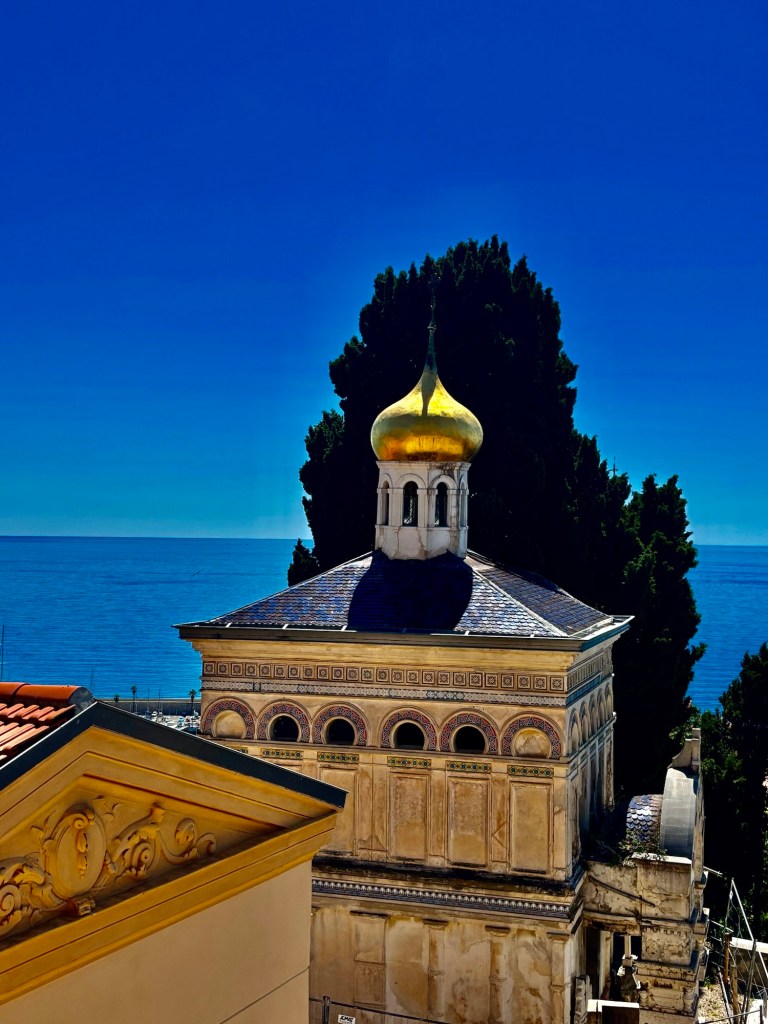
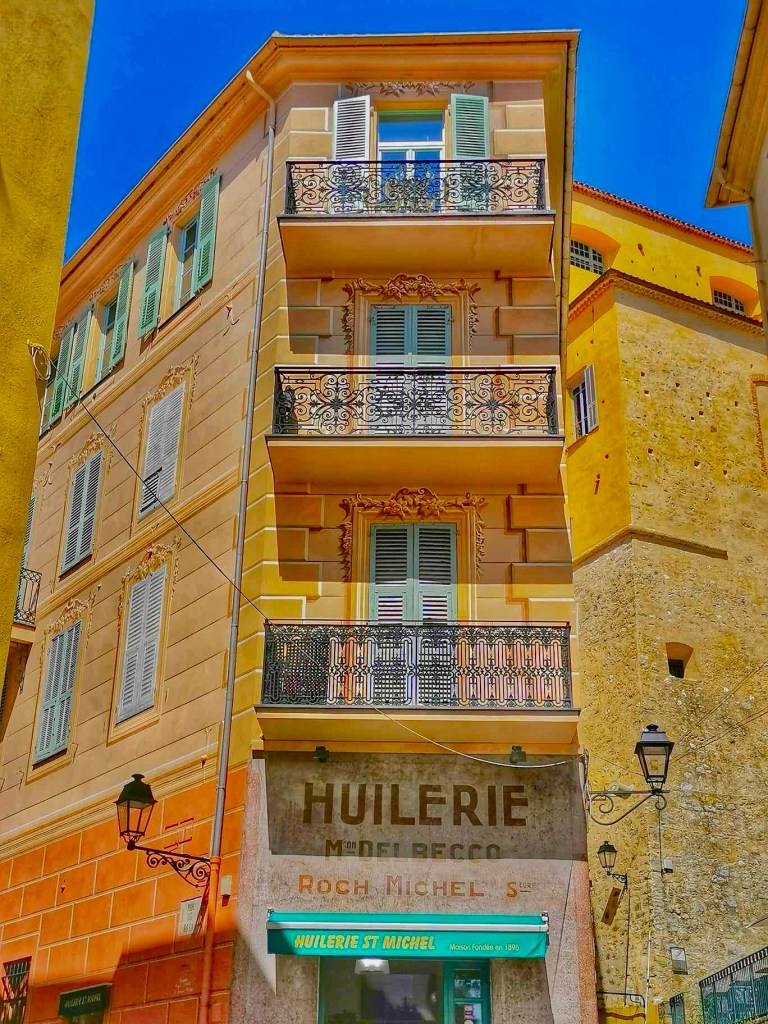
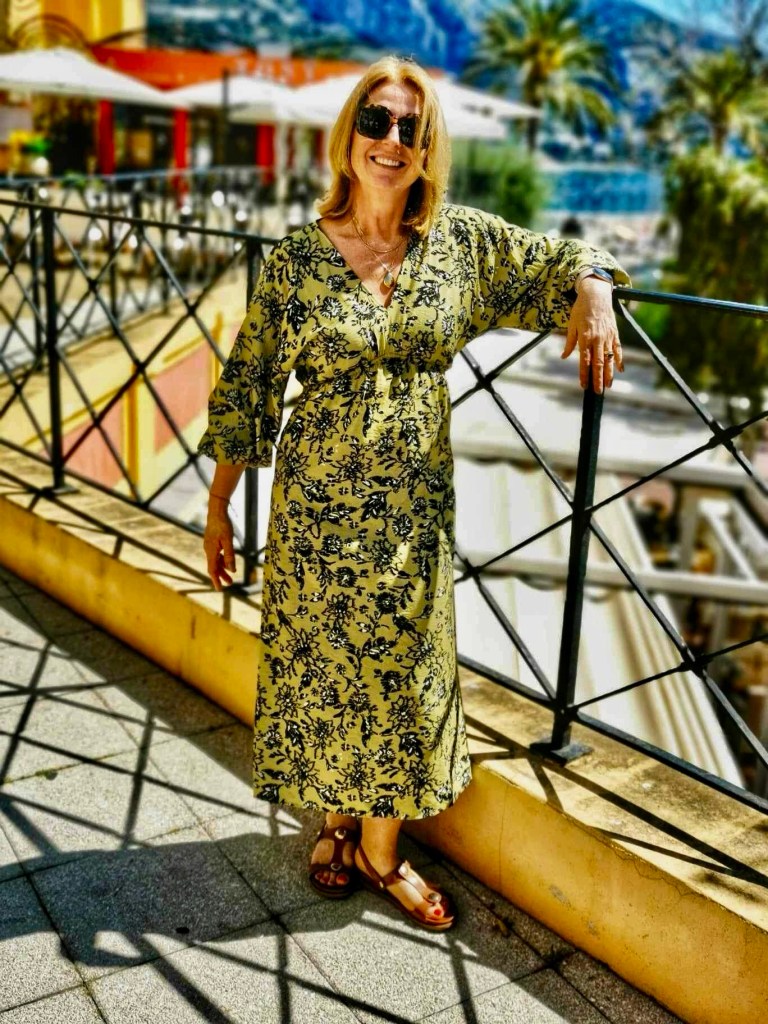
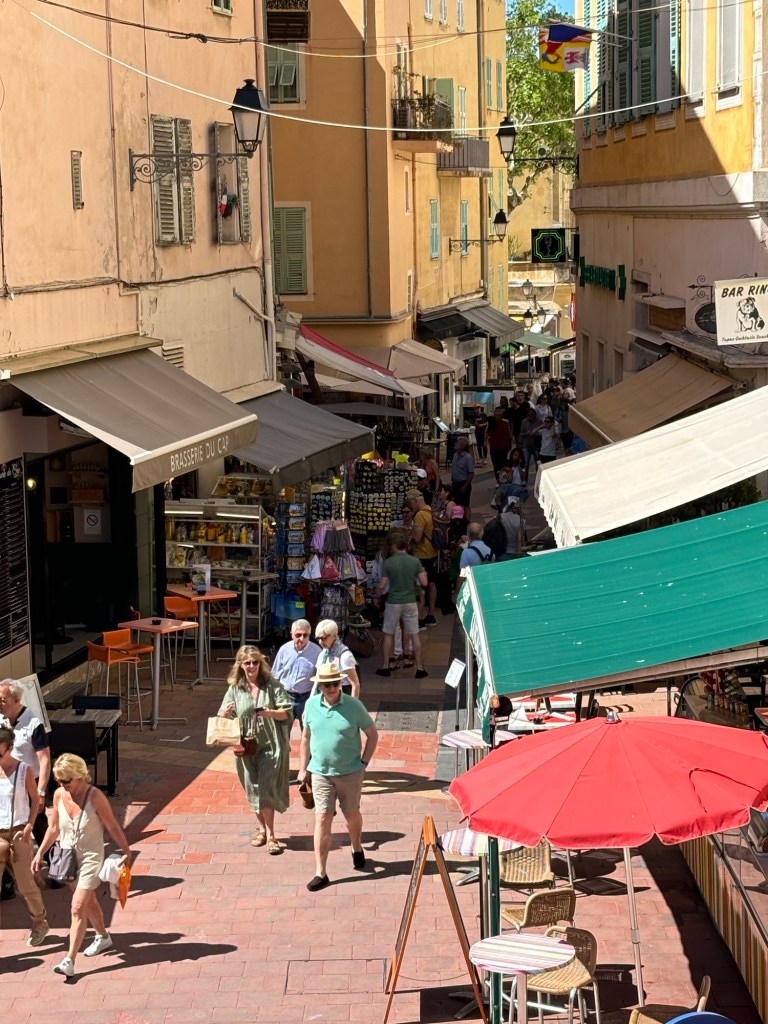
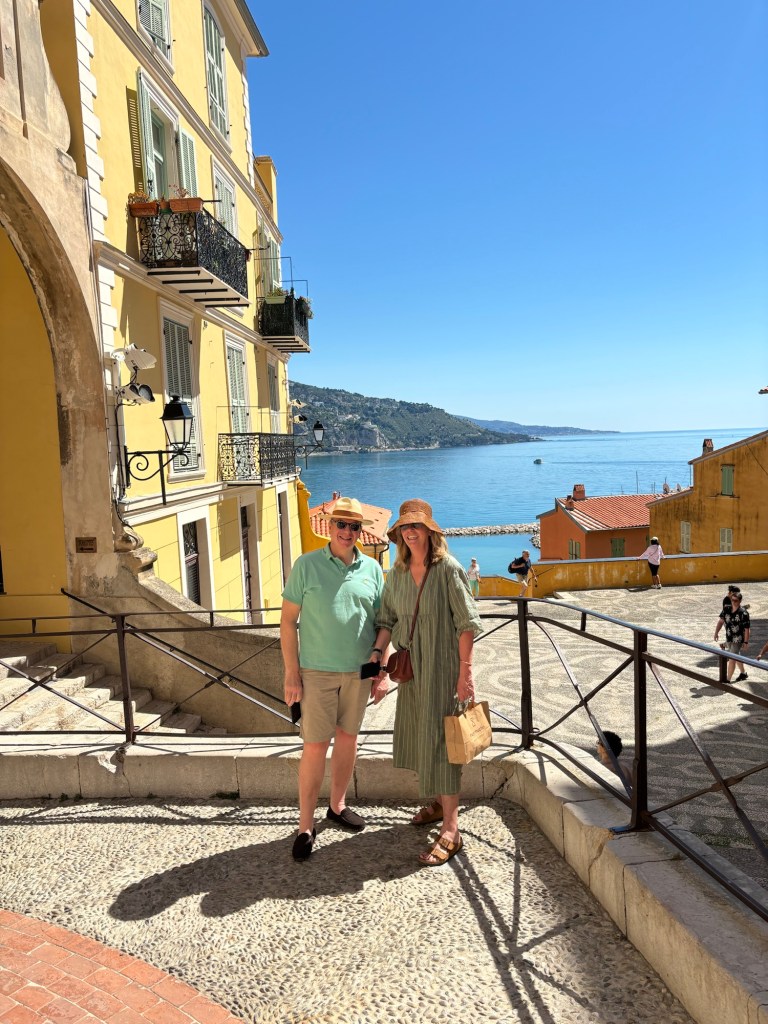
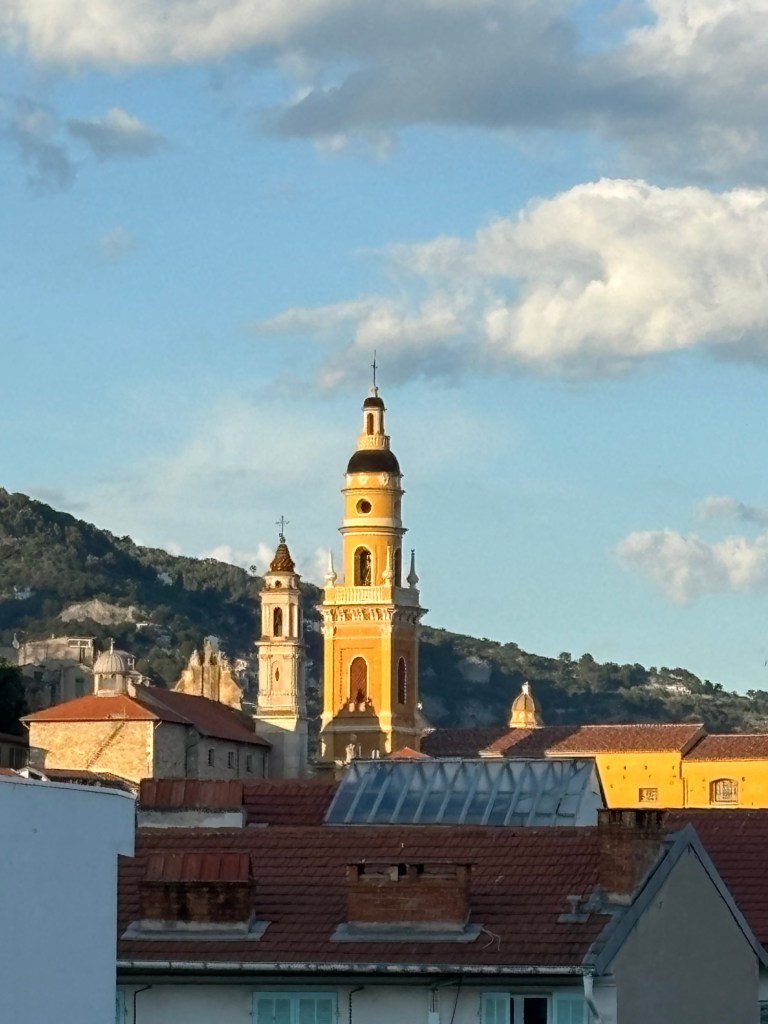
Thursday evening and Friday was spent exploring Menton and moving from one bar/restaurant to another. If you are ever in this part of the world, do visit Menton. It is beautiful, but be prepared for lots of uphill when exploring the old town. Only 10 mins by train into the centre of Monte Carlo, it is an ideal base from which to explore this part of France & Italy.

Out, Out…!
Sightseeing in Menton
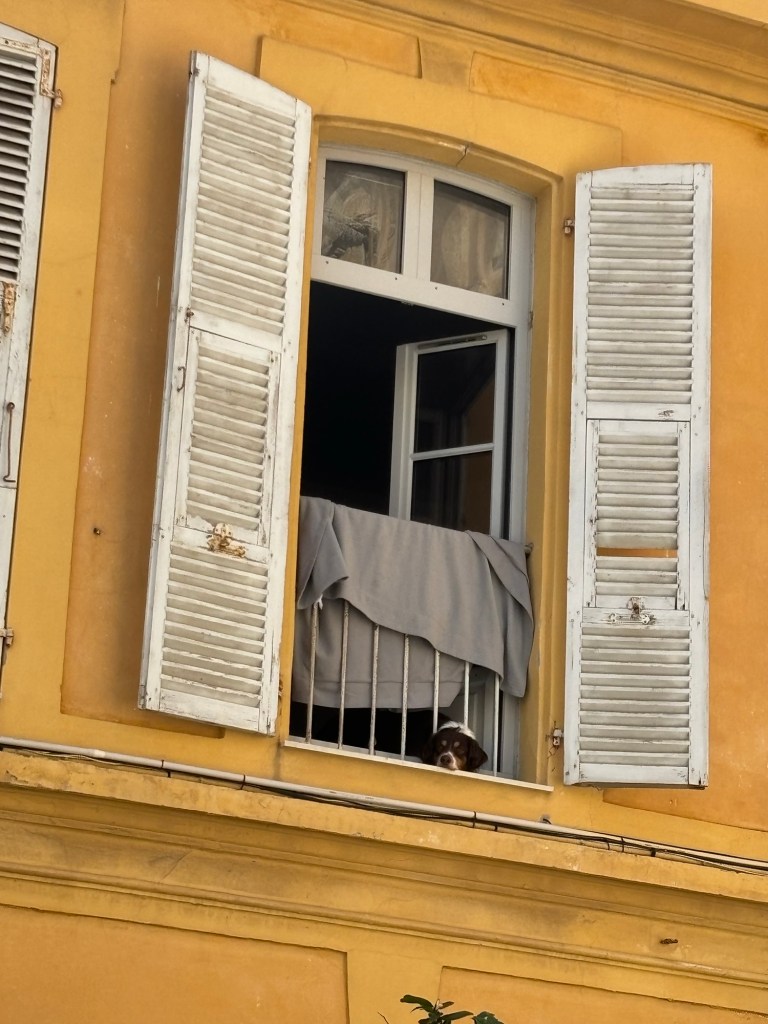
Ever get the feeling you are being watched?
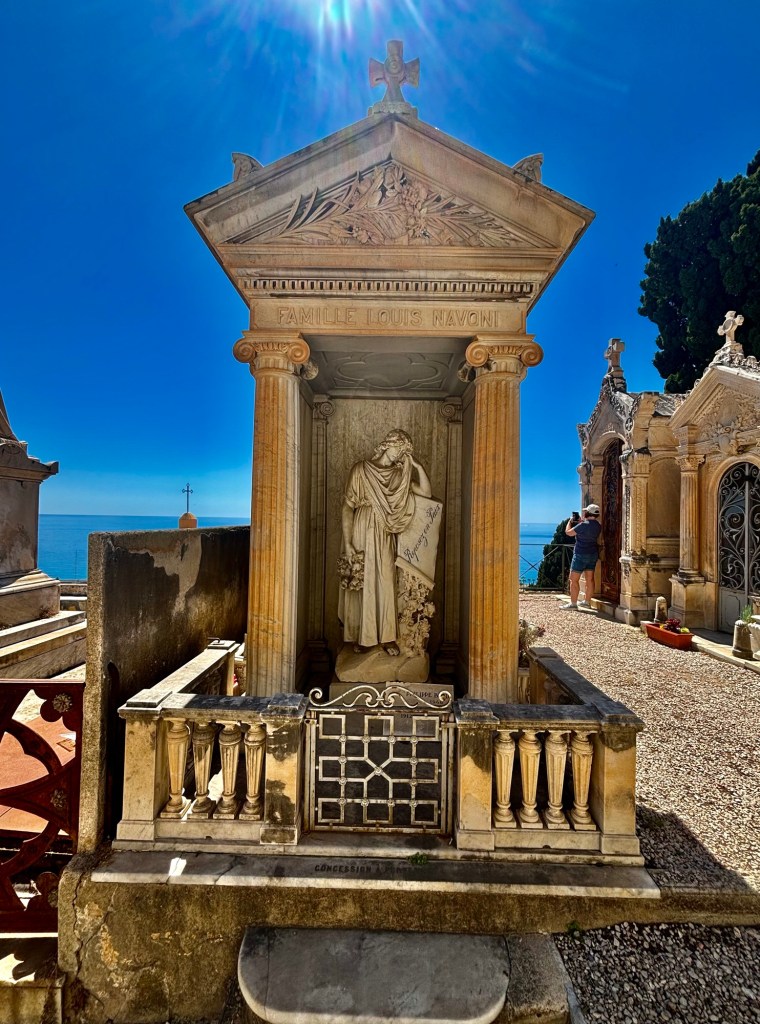
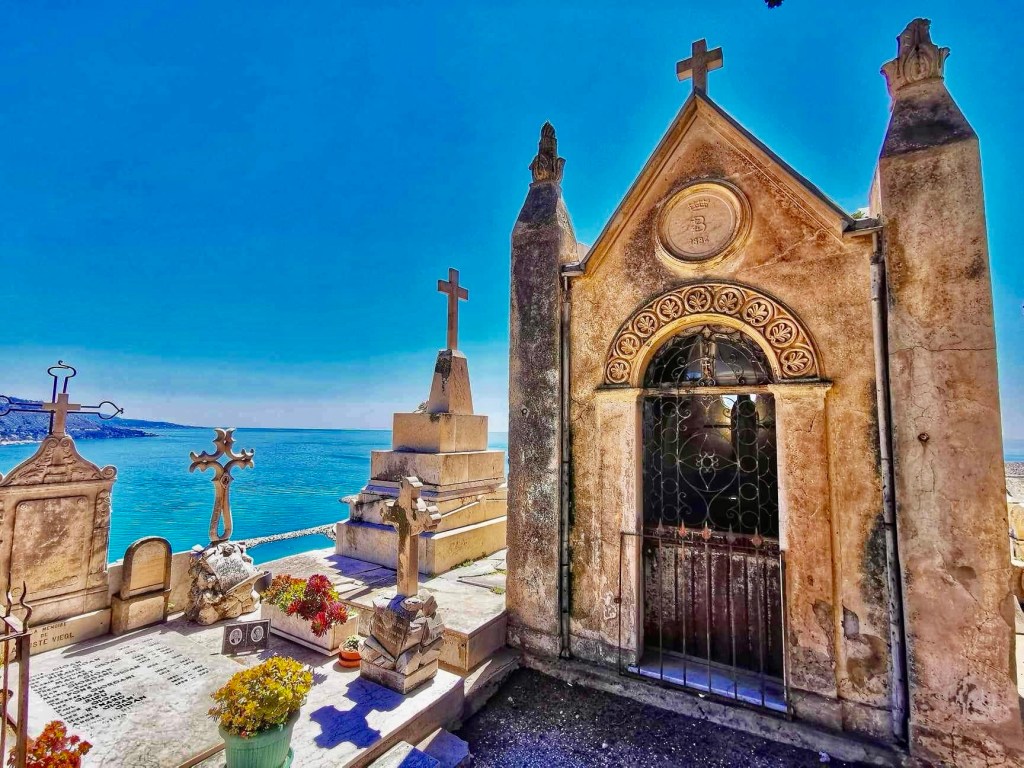
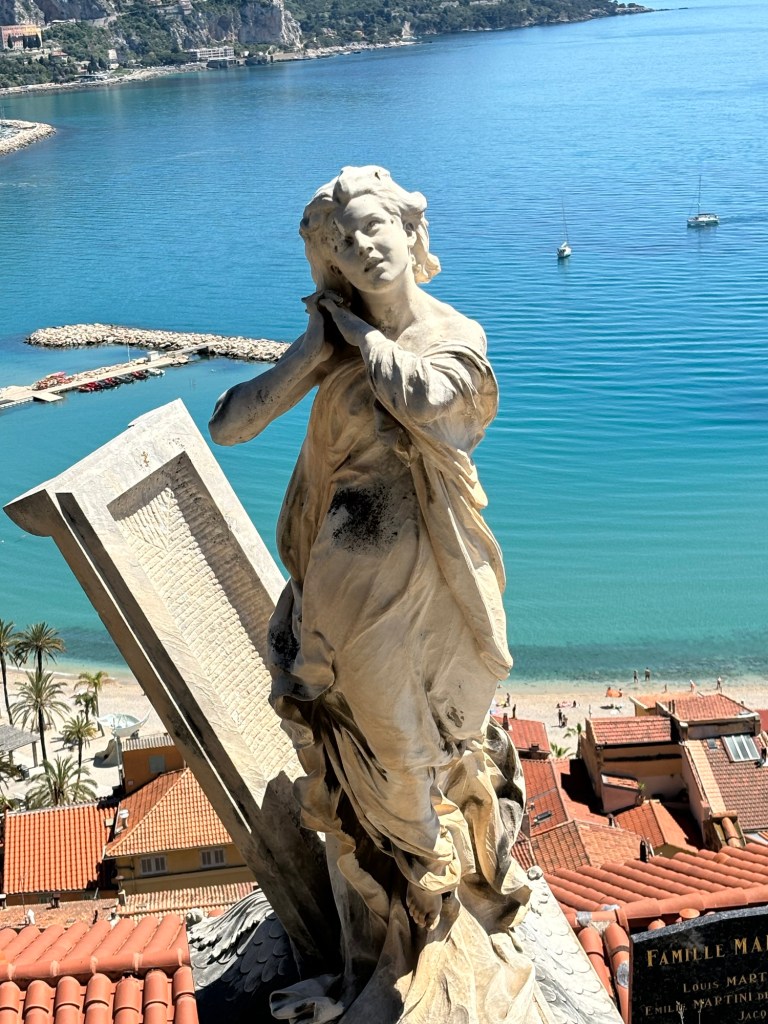
Nothing like a visit to the Cemetery, which is located at the highest point of the town, to brighten your day!

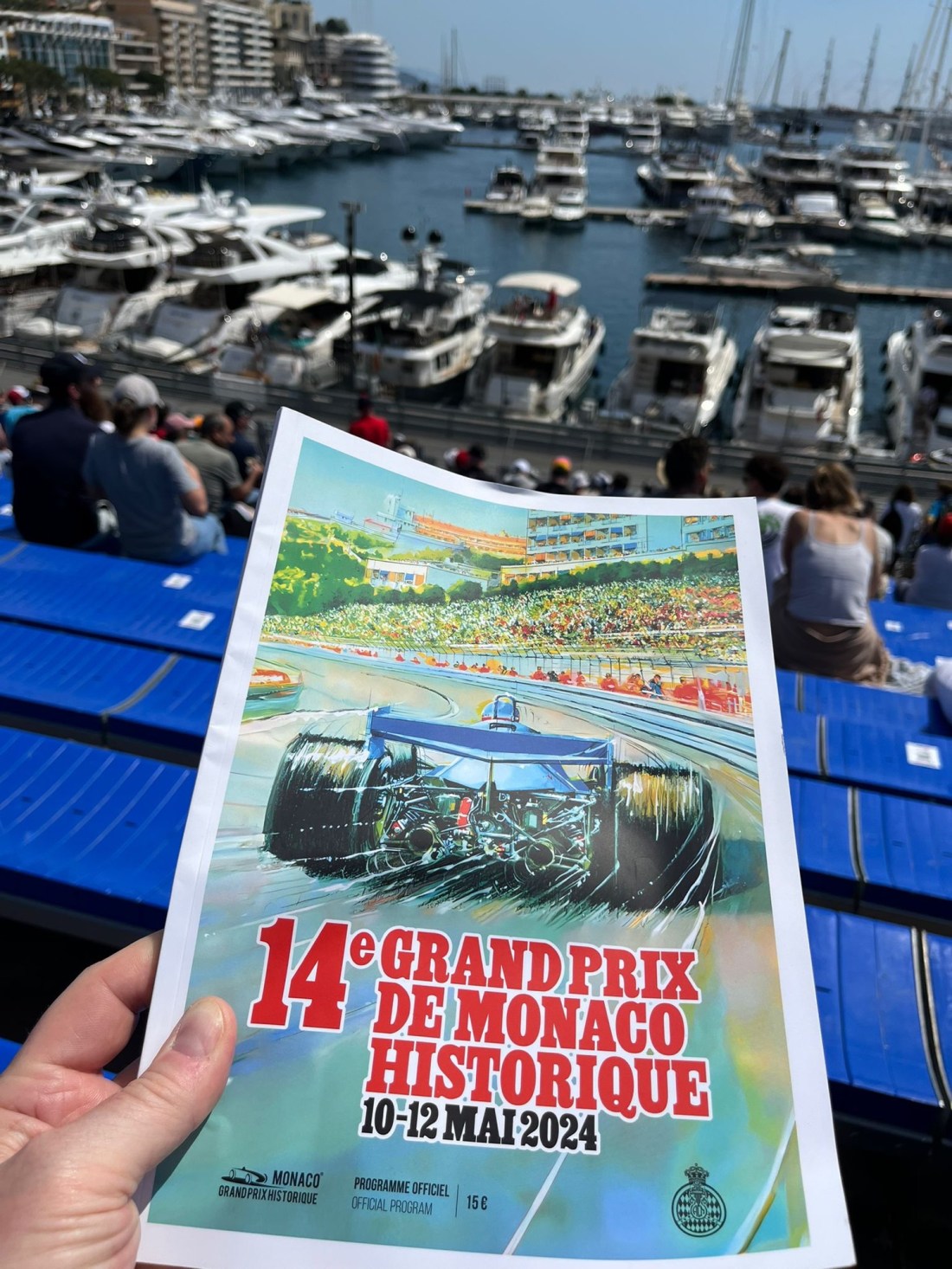
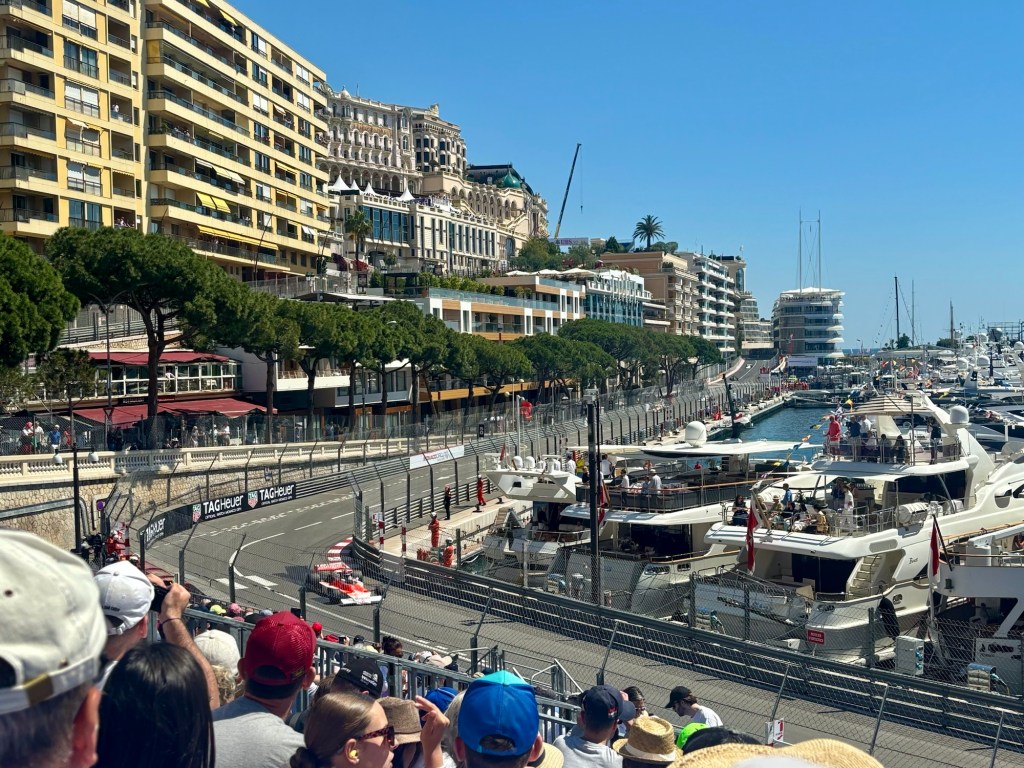
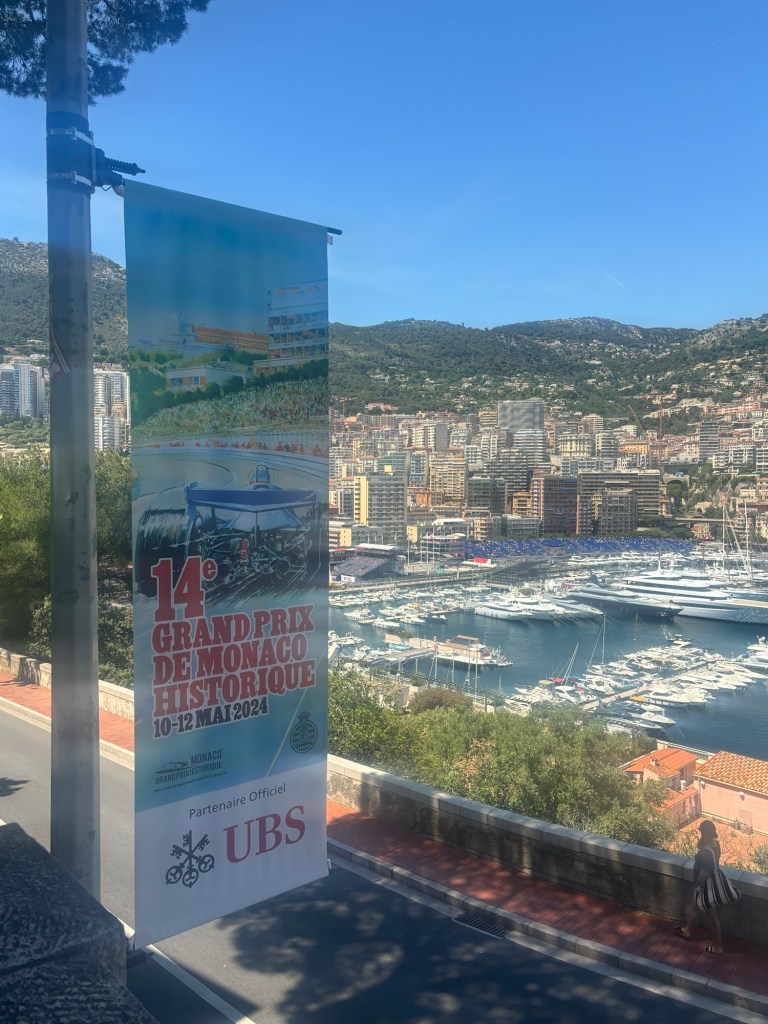
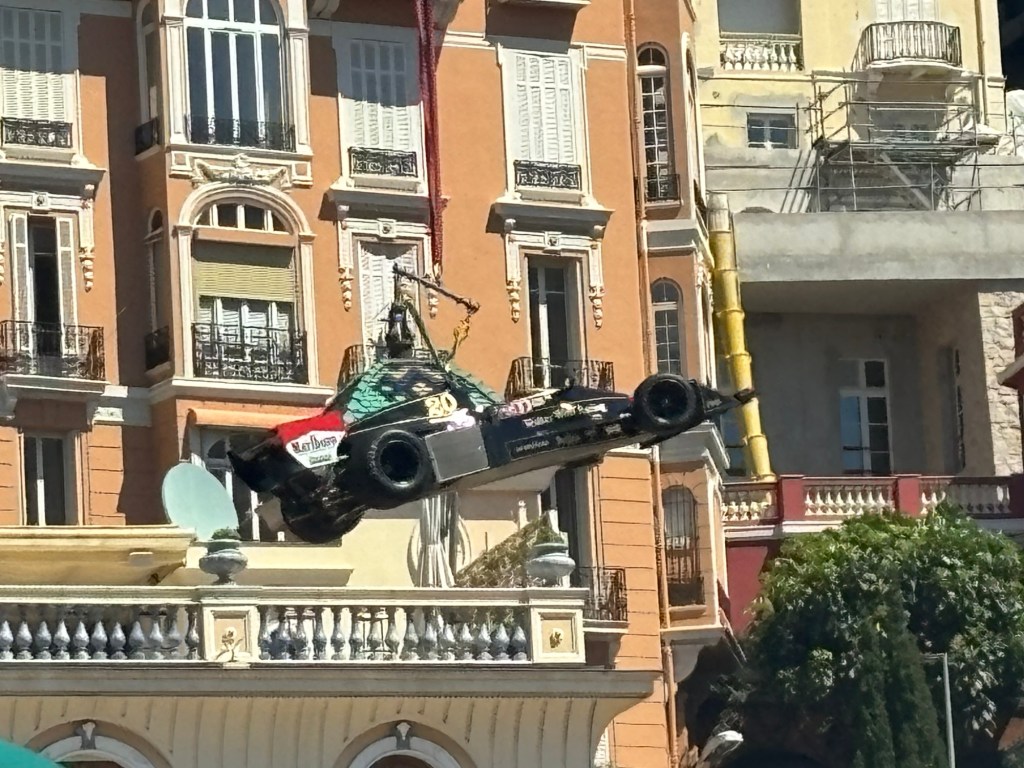
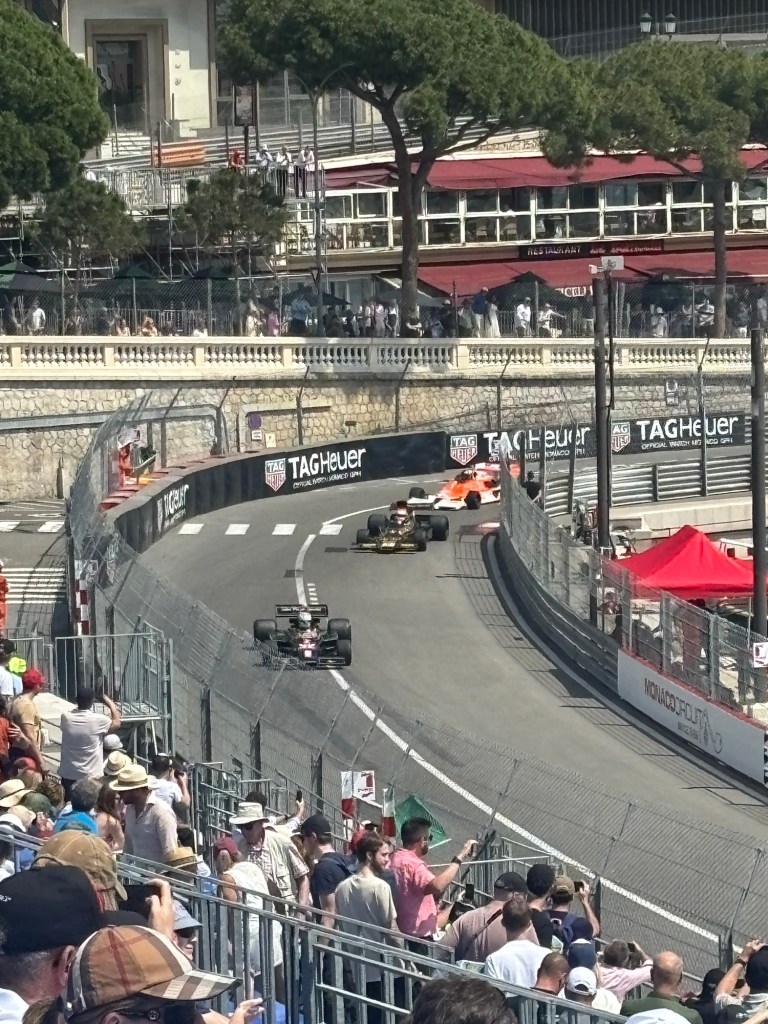
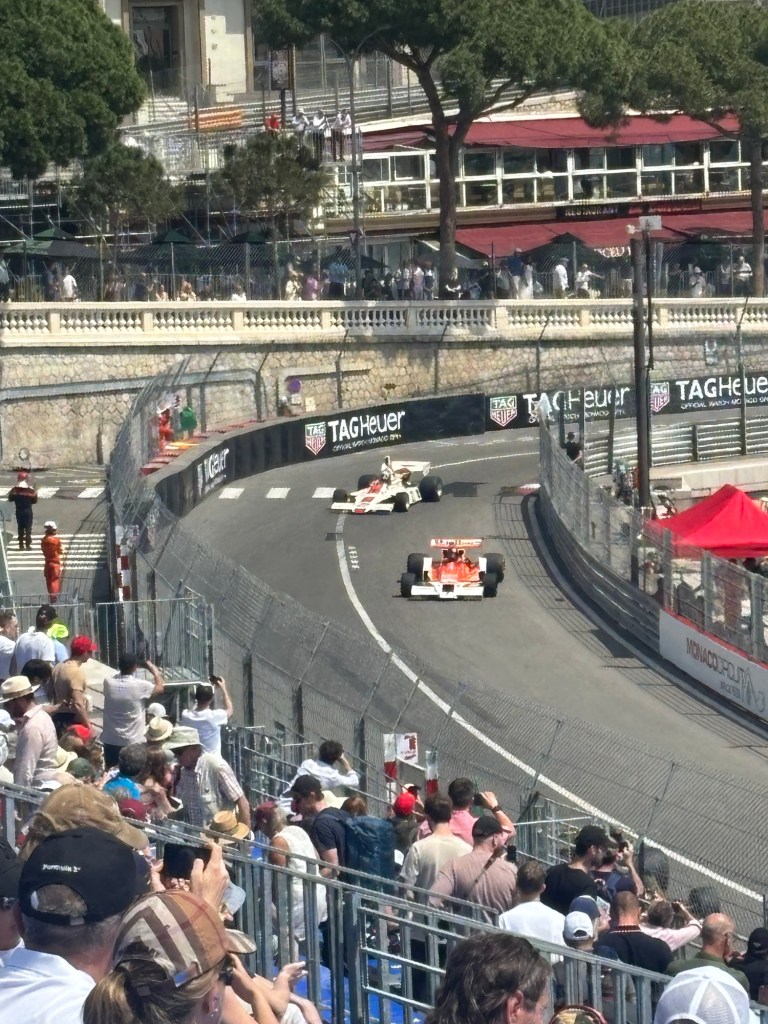
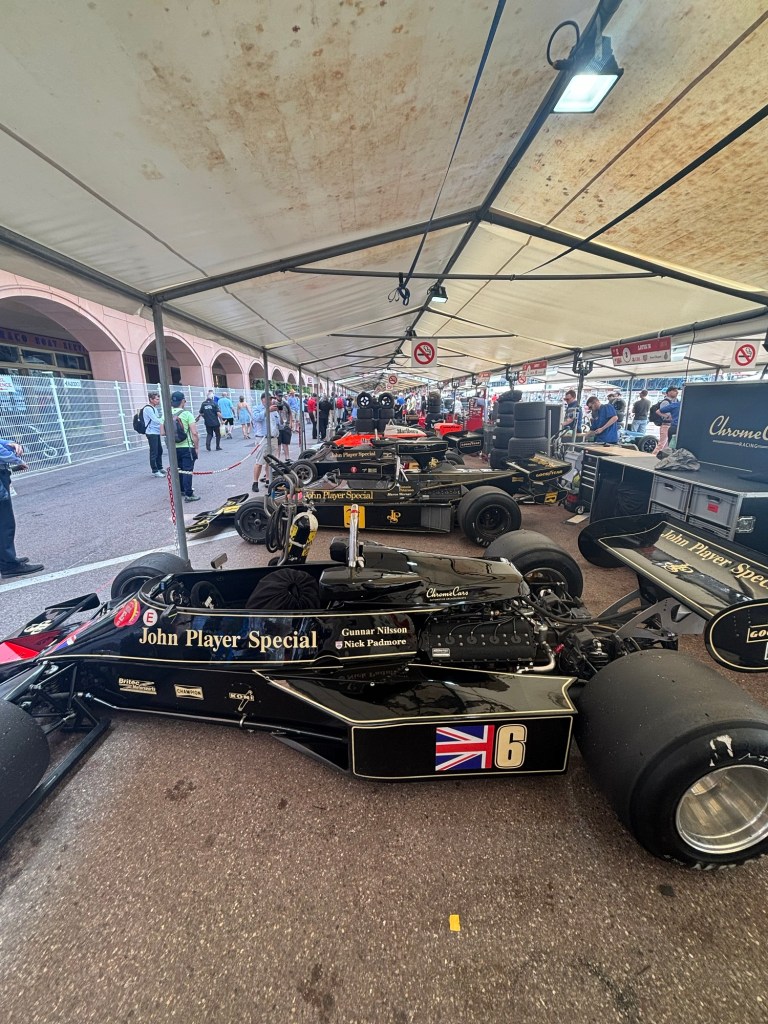
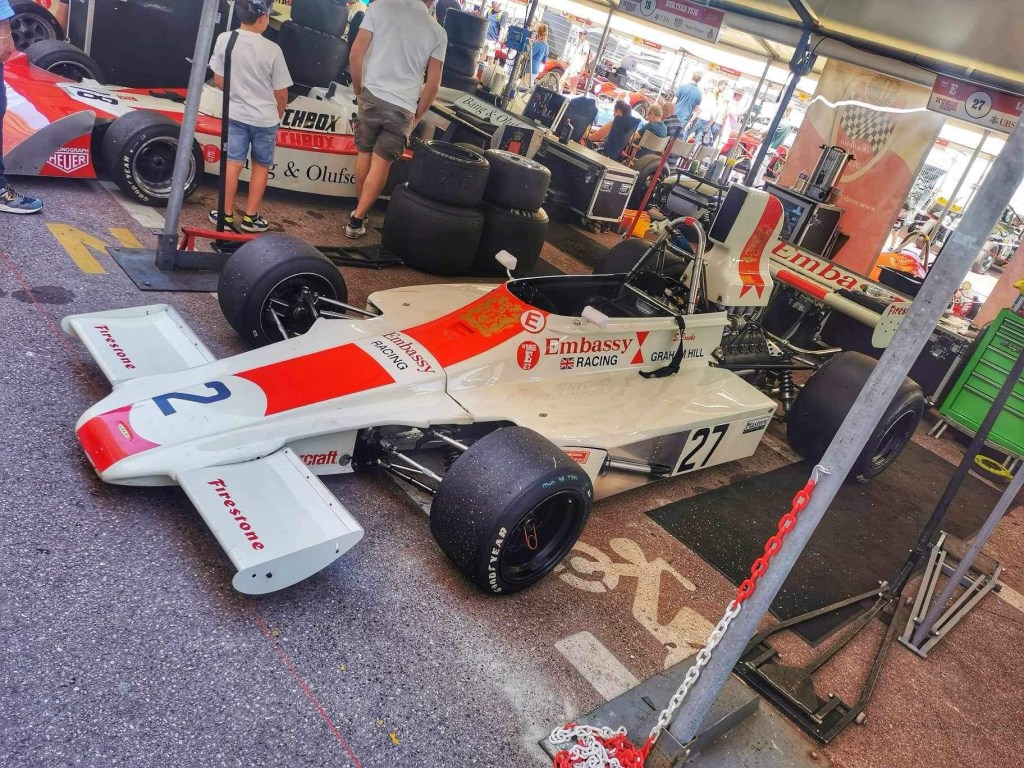
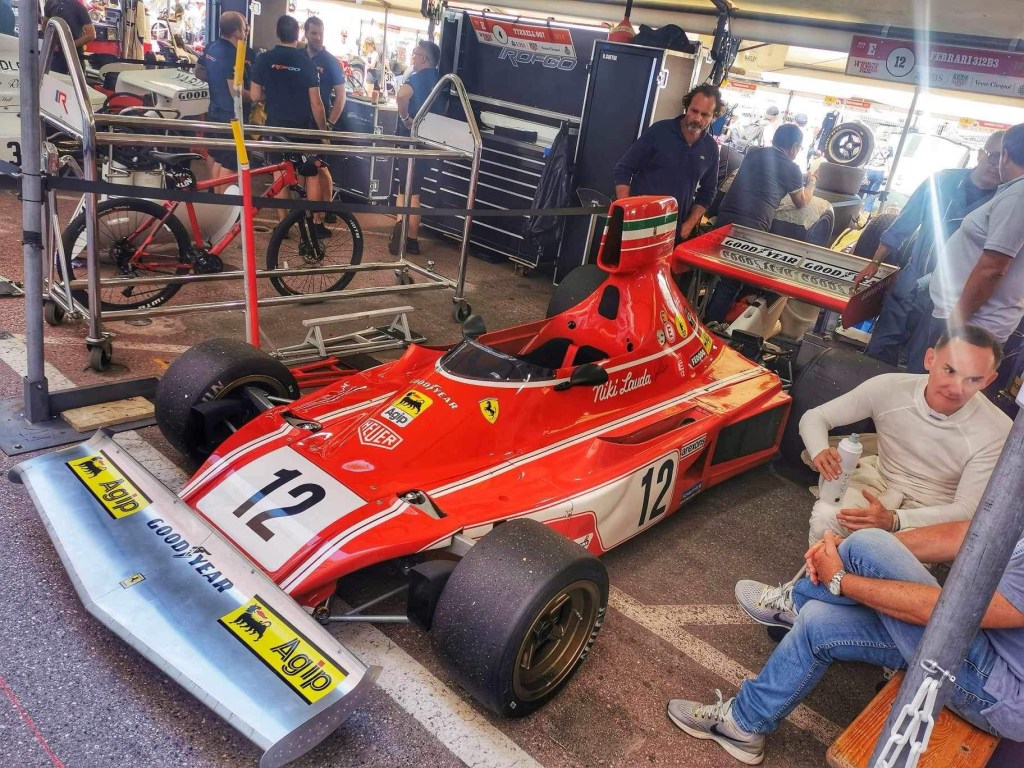
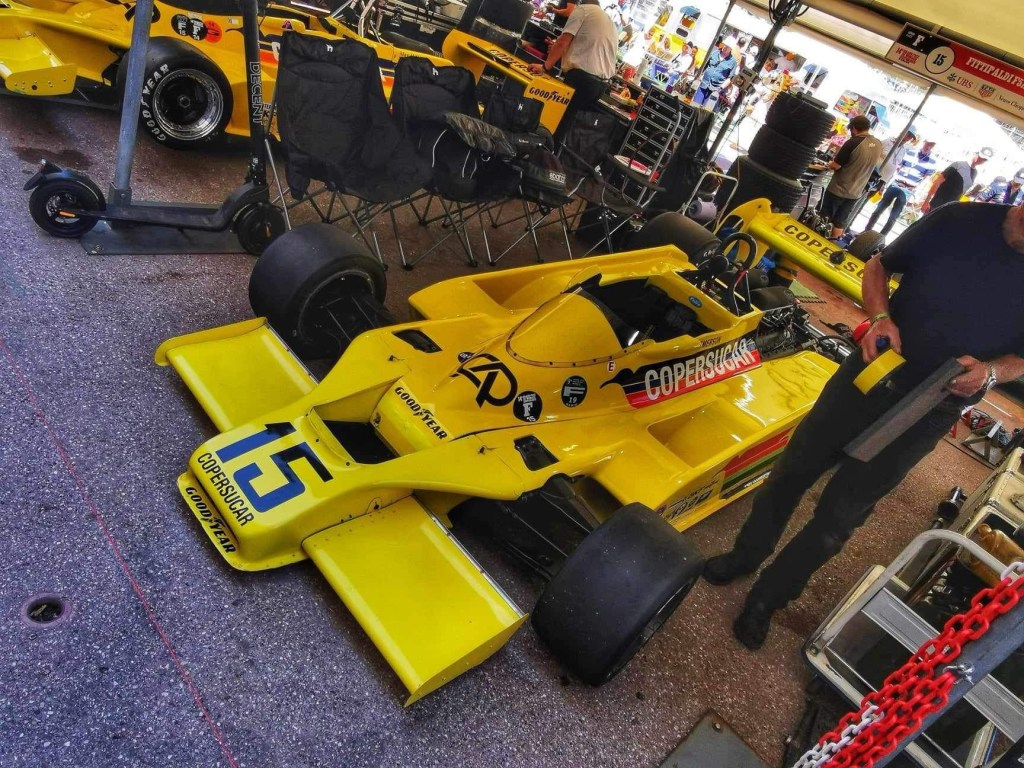
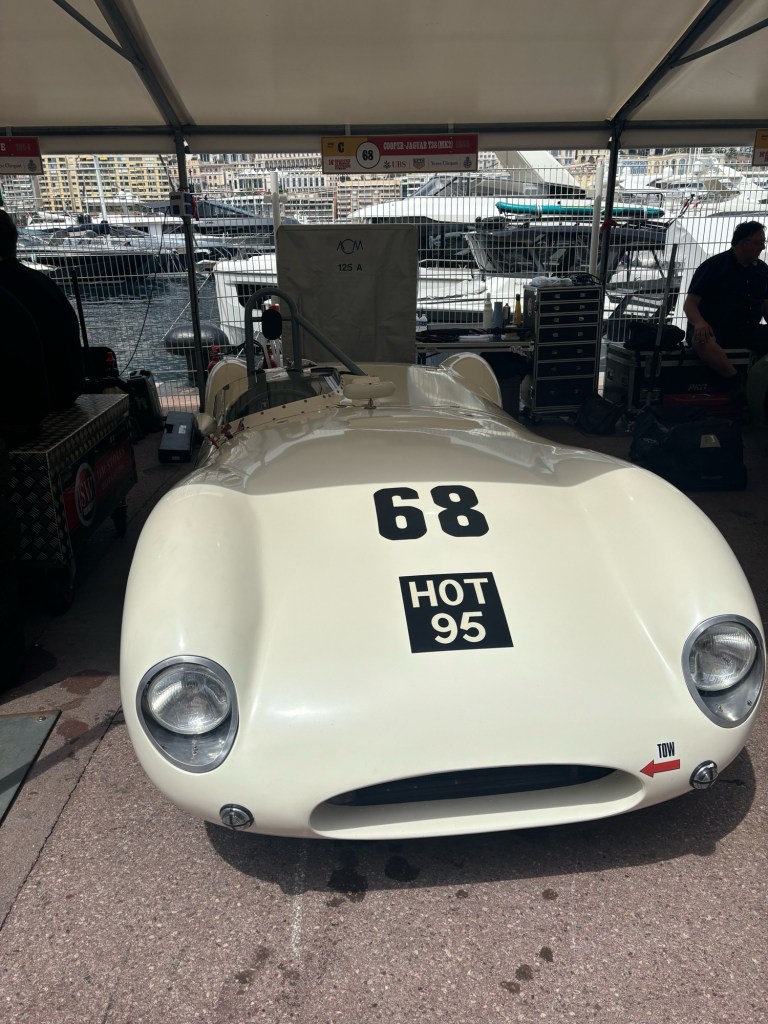
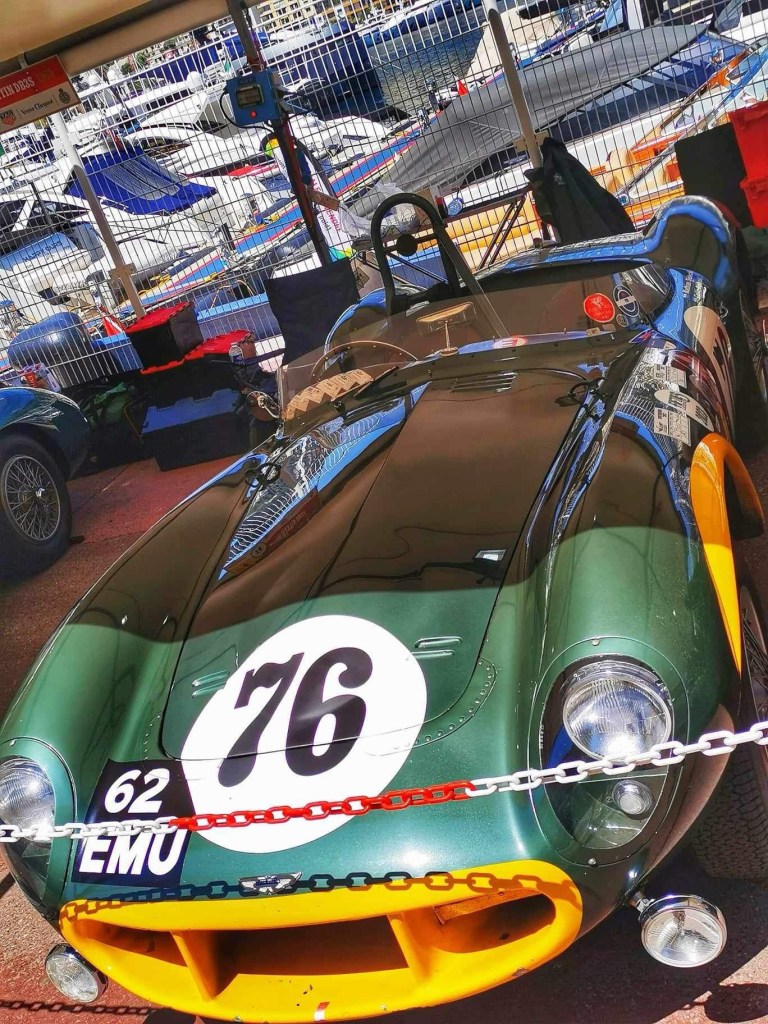
The Monaco Historic is a series of races for F1 and Sportscars from the pre-war era through to the mid ’80’s. The cost of attending is 1/10th of the price of the Monaco Grand Prix and far more accessible, allowing entry to the Paddock, where you can spot famous faces from the world of motorsport and see cars from times gone by, that were driven by Stirling Moss, Ayrton Senna, Graham Hill and Niki Lauda and the like. Fernando Alonso, Lando Norris, Oliver Bearman, Bruno Senna and Ari Vatenen were in town, Adrian Newey was competing in several races, Prince Albert popped down the Palance and Patrick Dempsey (actor turned Le Mans Winner and racing team owner) were a few of the famous faces spotted.

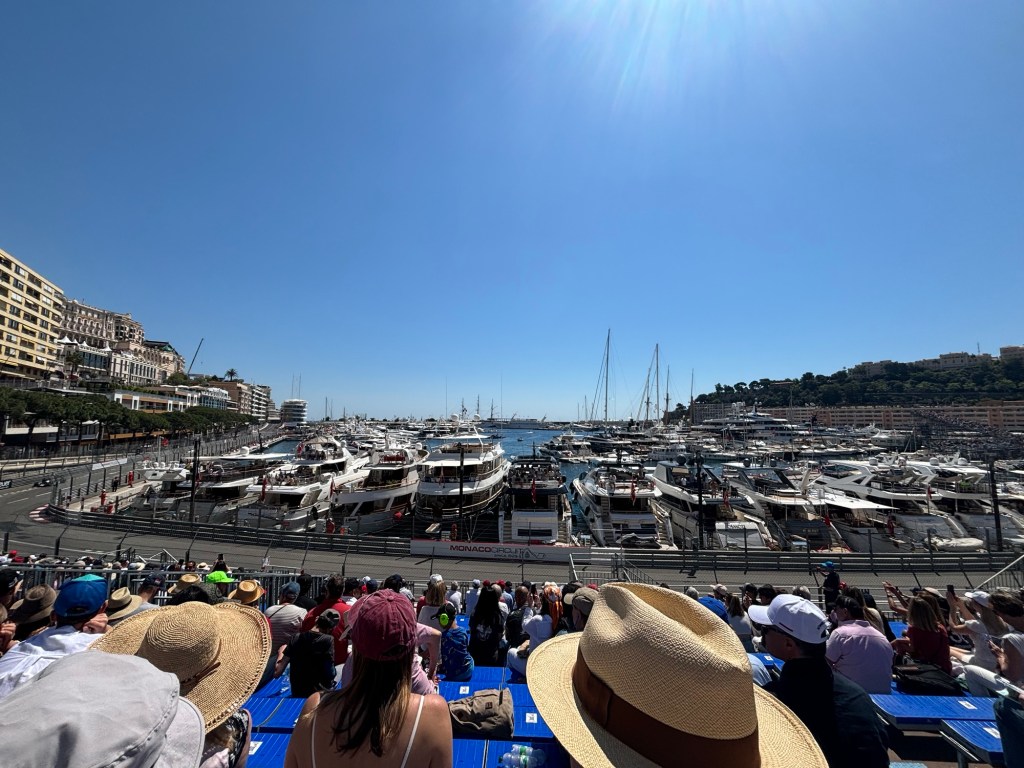
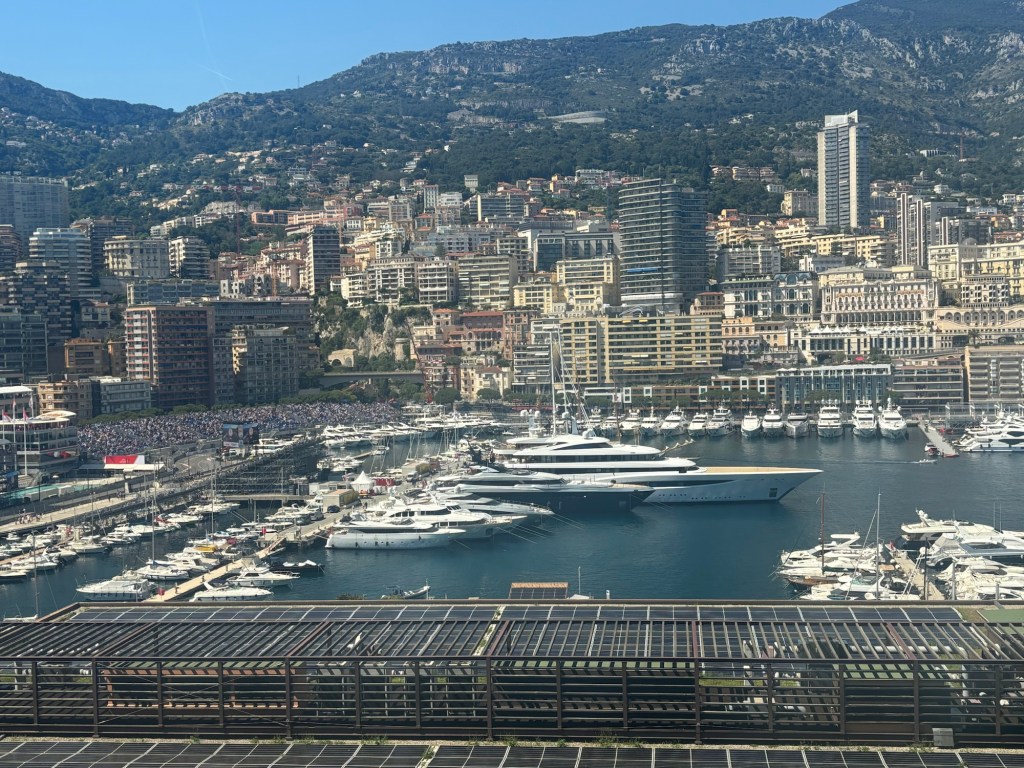
We had seats in the Grandstand overlooking the harbour for Saturday and Sunday, the weather was hot and we envied those sitting on their yachts, watching the races, on their comfortable sofas, being waited on hand and foot.

Watching the action and picking out a yacht!

We took the opportunity to walk up to the Palace and to visit the Cathedral where Prince Rainier and Grace Kelly were married and are now both buried. On the steps of the Cathedral, a large tour group guided by 3 priests gathered to have a photo. Our friend, Greg, stepped in to take the photo for one of the priests. Whilst Greg snapped away the group began to sing…

Whilst wandering the streets surrounding the palace, which overlooks the harbour and the town, we found a hidden bar where we could look down on Monaco and the yachts.

Friday and Saturday consisted of practice and qualifying with the races taking place on Sunday. The racing was hard fought and competitive and British drivers topped the podium to win five out of the eight races. So, the moral of the story is to forget Eurovision and watch something that the British excel at!

Recovery and Racing Monte Carlo Style
Down at the Paddock

After a day at the circuit, there is nothing better than returning to Menton for a relaxing swim in the sea and then heading out to dinner with our friends and Harry.

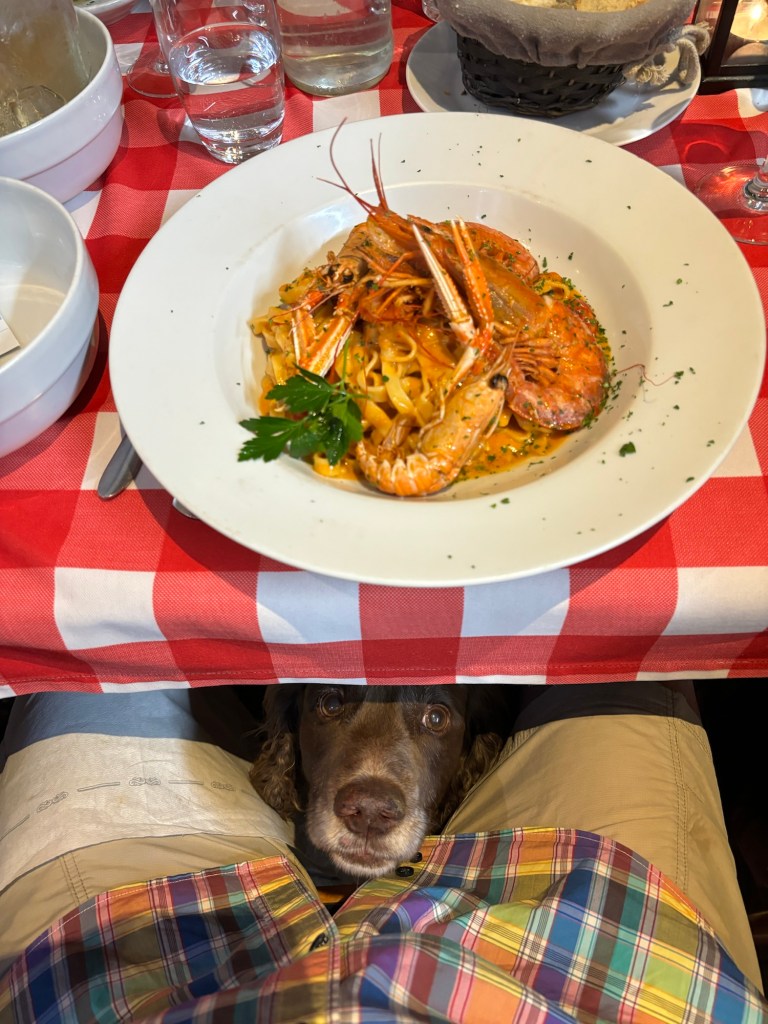
Can you spot Harry?

Speed, History & Spectacle – A Grand Tour – Part 1

We have embarked on a 6-week road trip where we will be working from our motorhome whilst travelling, we have 4 destinations where we are meeting friends and attending events but in between we are going where the wind blows us, or to be honest, after the winter we have had, where the SUN is!

We left the UK on Monday 6 May and our first port of call was Menton, on the French/Italian border just east of Monaco. We were meeting eight friends who were arriving in Menton on Thursday 9th May for the Monaco Historic Grand Prix – a 3 day extravaganza of historic motorsport which takes place every 2 years.

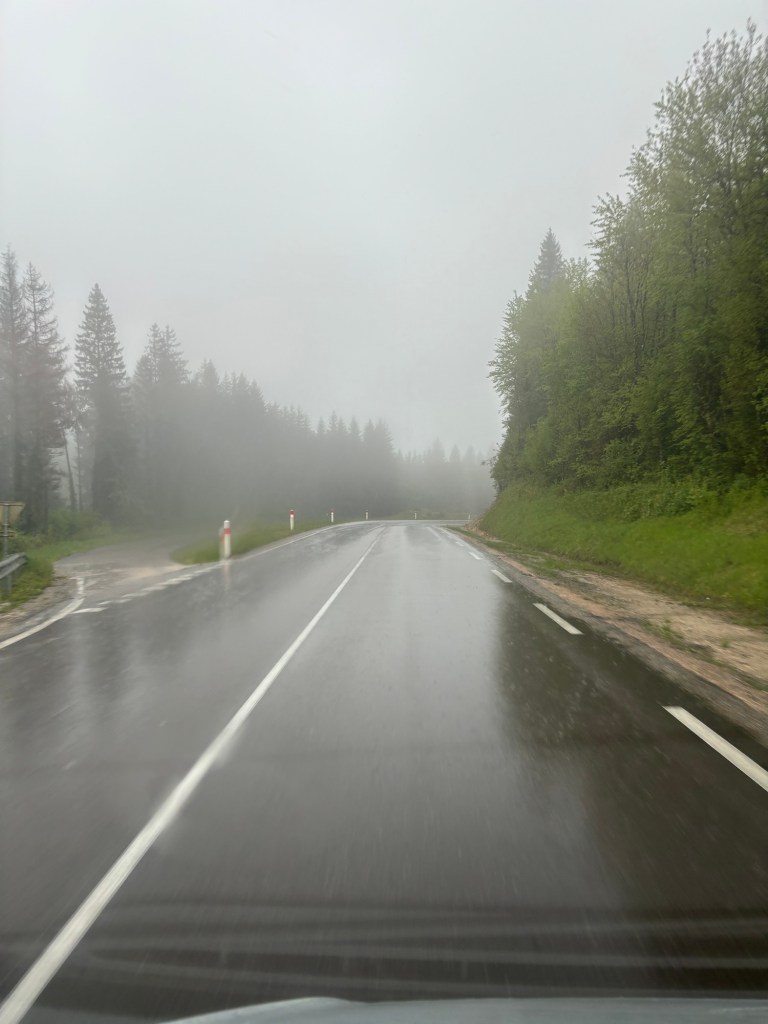
Our plan was to go South as quickly as possible to escape the awful weather but France has been having awful weather too! We drove 486 miles on day 1 and the weather remained as miserable, grey and rainy as Kent. We arrived in a tiny village, Bois-de-Gand in the Jura region in the early evening.

We travel without much advance planning and pitch up where we can. As we didn’t have an idea of how much progress we would make on day 1, we had not booked a spot anywhere. However, we have joined France Passion, which allows motorhomes to stay at hundreds of farms, vineyards and rural businesses for free, but you are encouraged to purchase local produce from your hosts. We have never been disappointed, sometimes the pitches are amazing and sometimes you are in the farmyard next to a tractor and the pigs but the produce is always delicious and provided many a lovely meal.

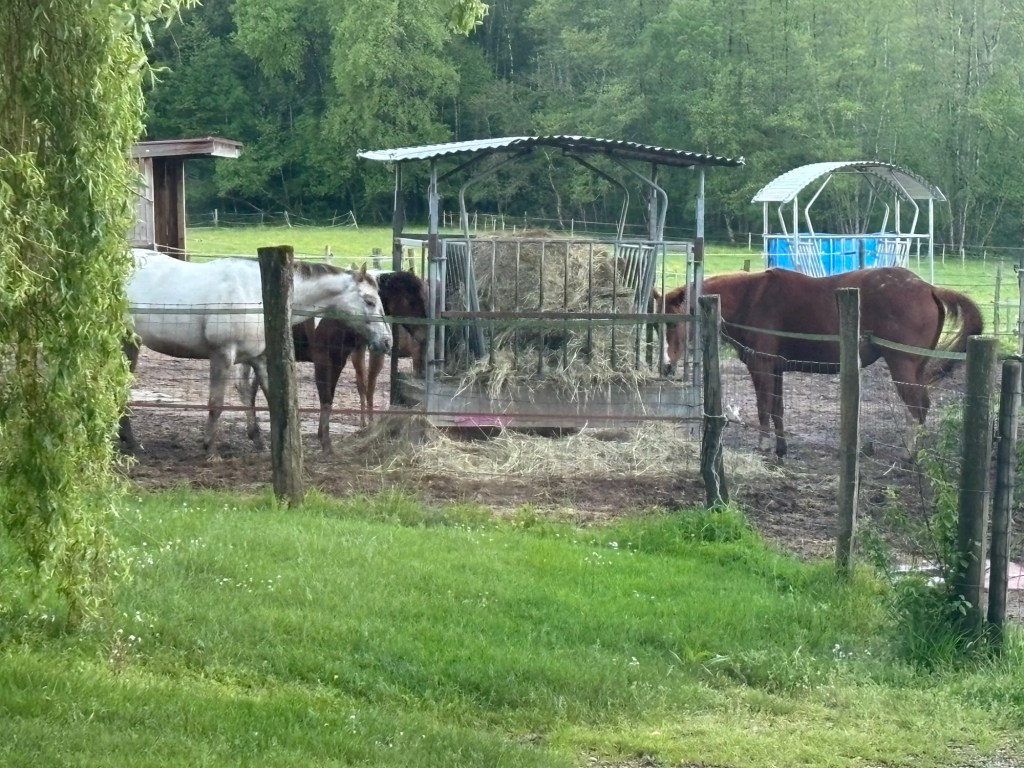
On this occasion, the nearest France Passion stop was at a ‘ranch’, down a windy rural road. The listing promised an American style ranch with a restaurant serving roast chicken and chilli next to paddocks full of horses. What’s not to like…? We maneuvered carefully down a narrow, private track to arrive in a farmyard with around 8-9 horses milling in the paddock. We didn’t want to pull onto the grassy area, as we knew from the amount of rain we had driven through, that would not be a good idea.

I jumped out to find the host. I found him carrying logs indoors for his fire (that’s how cold it still is) and I noticed he had limited mobility but he welcomed us and said just park in the yard and that we could plug into the electric, which was a bonus. Charlie parked the motorhome in a small space between a car, a tree and a big log pile and our host then returned in an electric wheelchair to tell us the restaurant was no longer open as he had become extremely ill and disabled and basically had to shut his business, but he was happy for us to stay. Luckily we had food on board and after a quick meal, we turned in, as we had been up since 4 am that morning and it was now getting on for 9pm.

The view

The only sounds during the night were the snuffles of the horses and the hoots of owls. We woke early the next morning and quietly left as our host had not stirred, leaving a generous contribution towards the electricity.

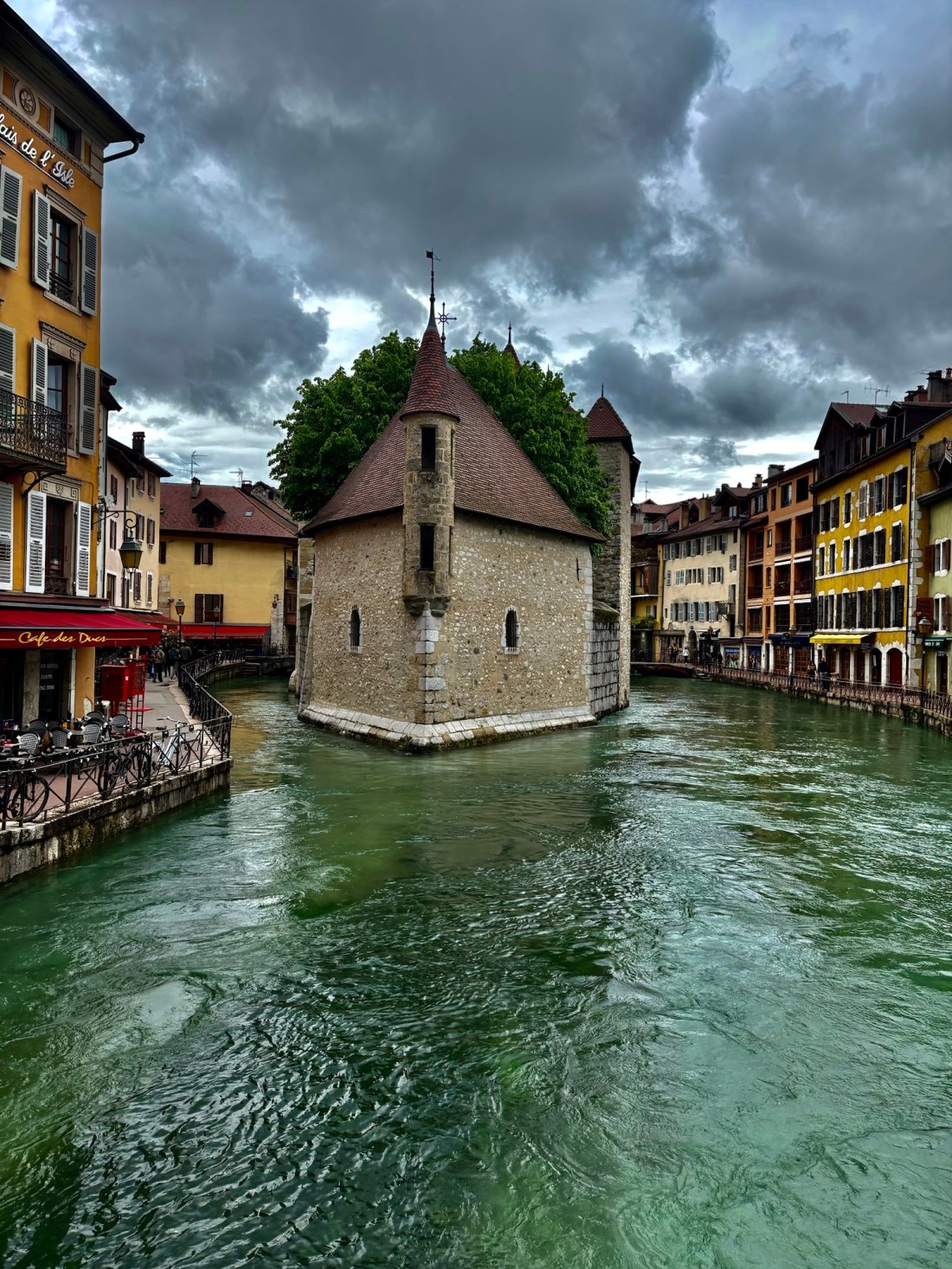
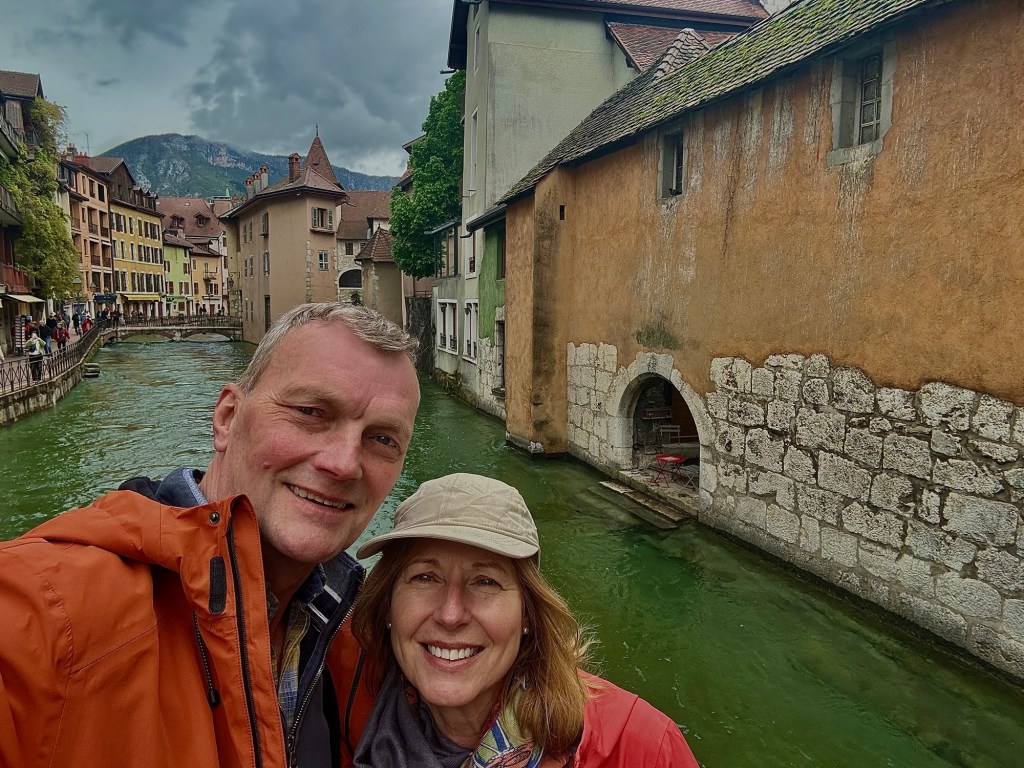
The weather did not improve, driving rain and low cloud dogged our drive south to Annecy. We arrived early afternoon. We located several proper campsites just outside the town, the 3rd campsite had a space for us. This time, the site owner, Gilbert was not worried about his grass and parked us, alongside a couple of other motorhomes,, where we made similar deep ruts in the muddy, soaked field, but Gilbert just shrugged in a Gallic way and said it hadn’t stopped raining for months ,what could he do! We unloaded our scooter and headed the 20 minutes into the town for a well-deserved lunch.

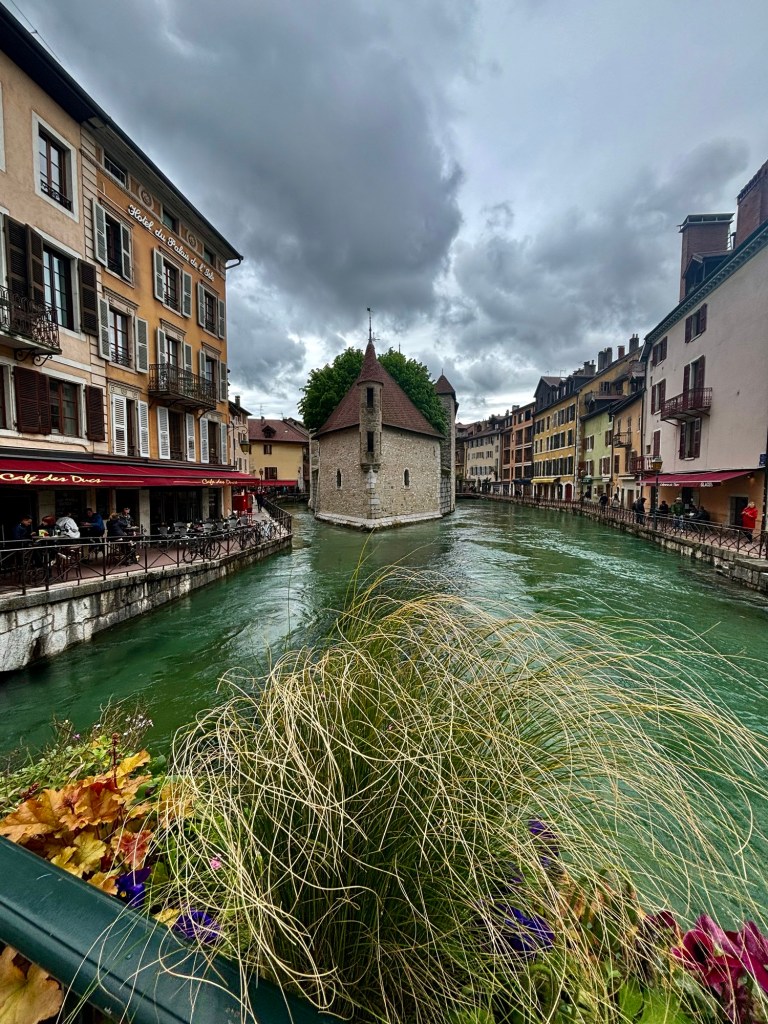
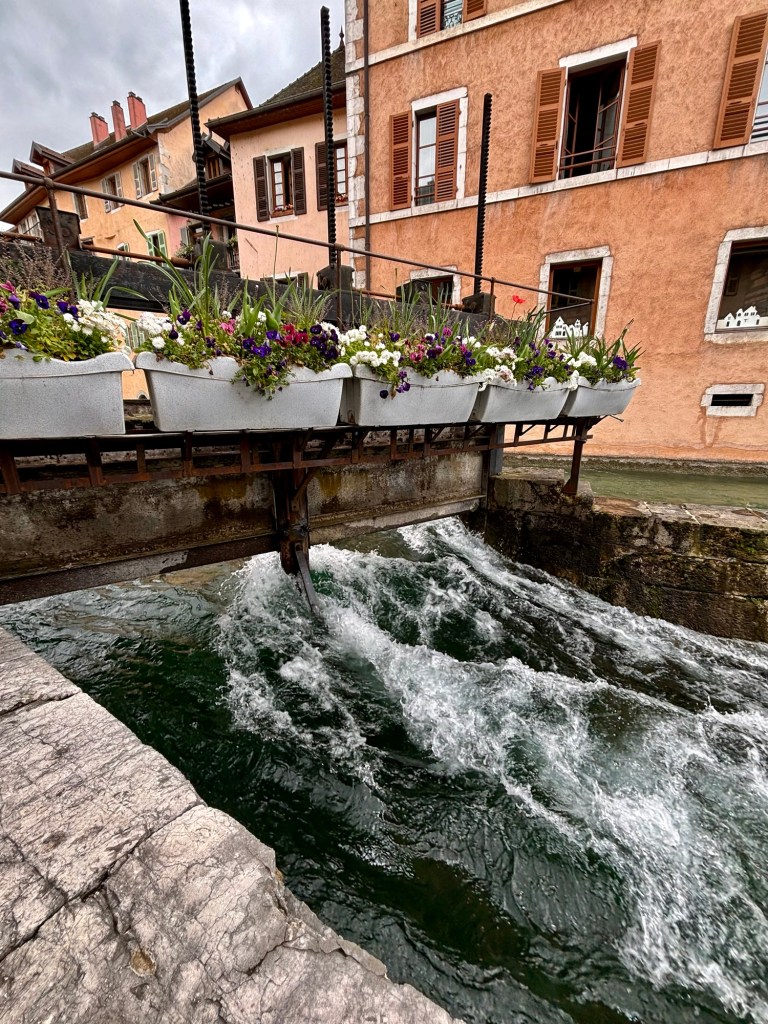
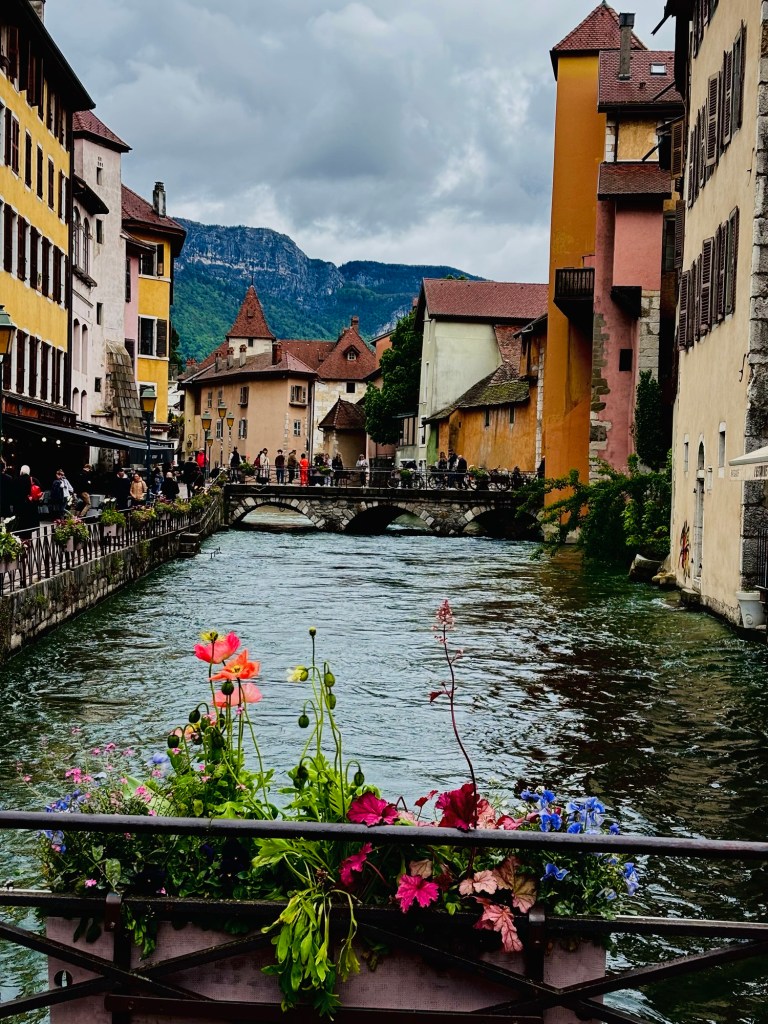
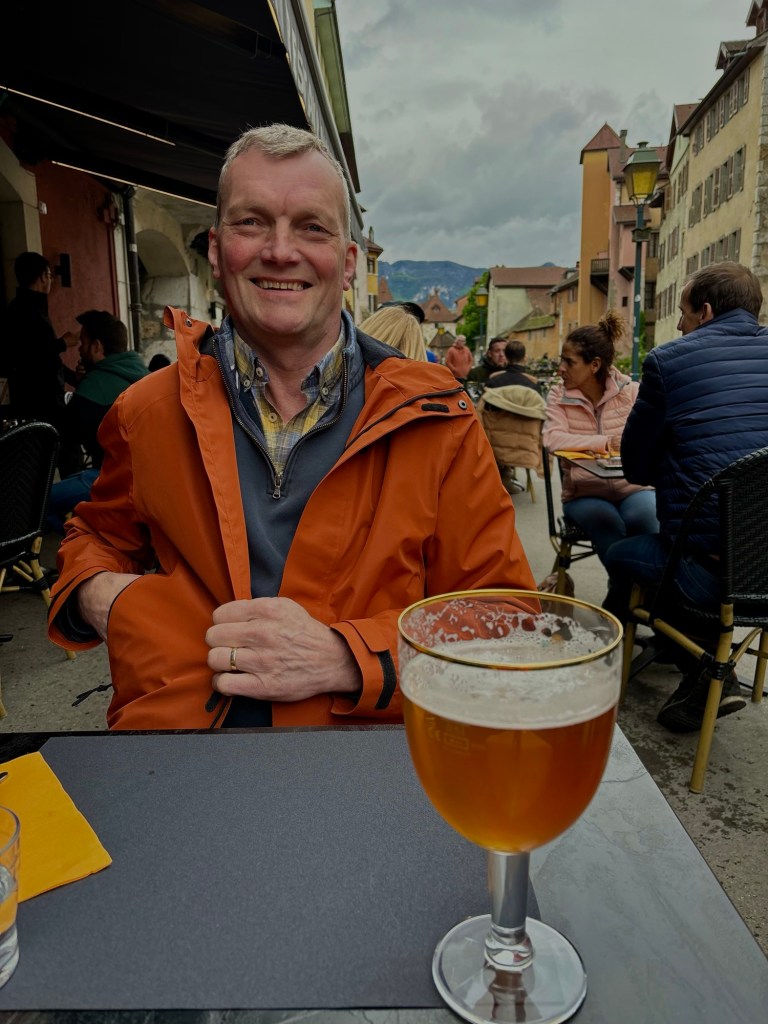
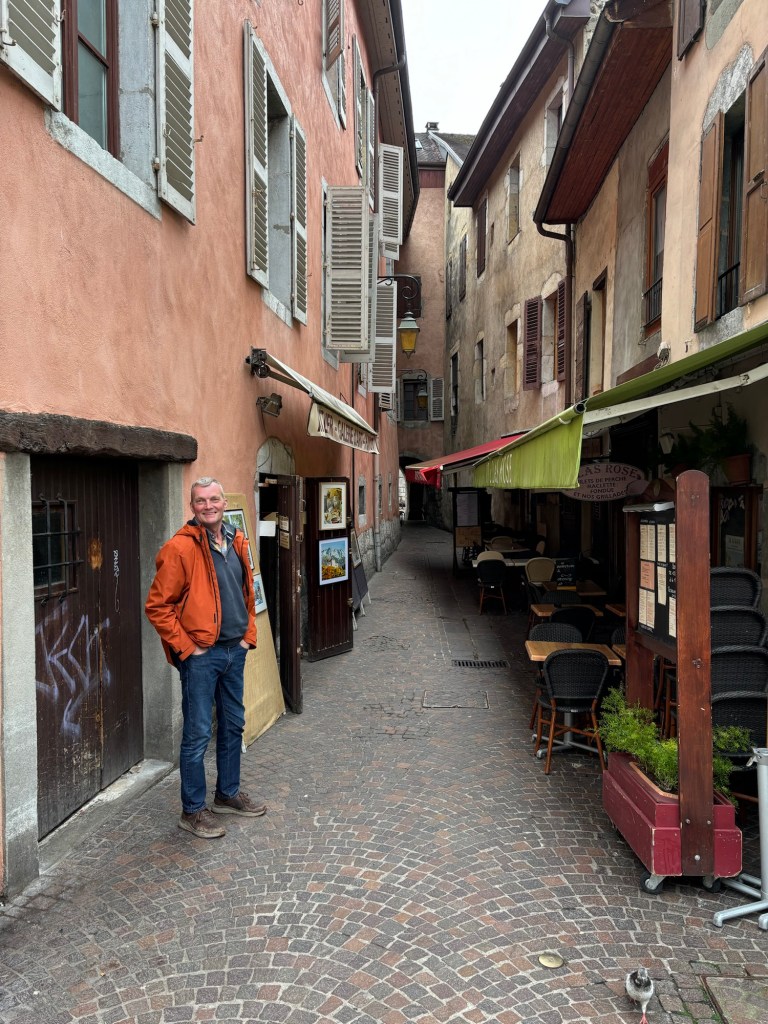
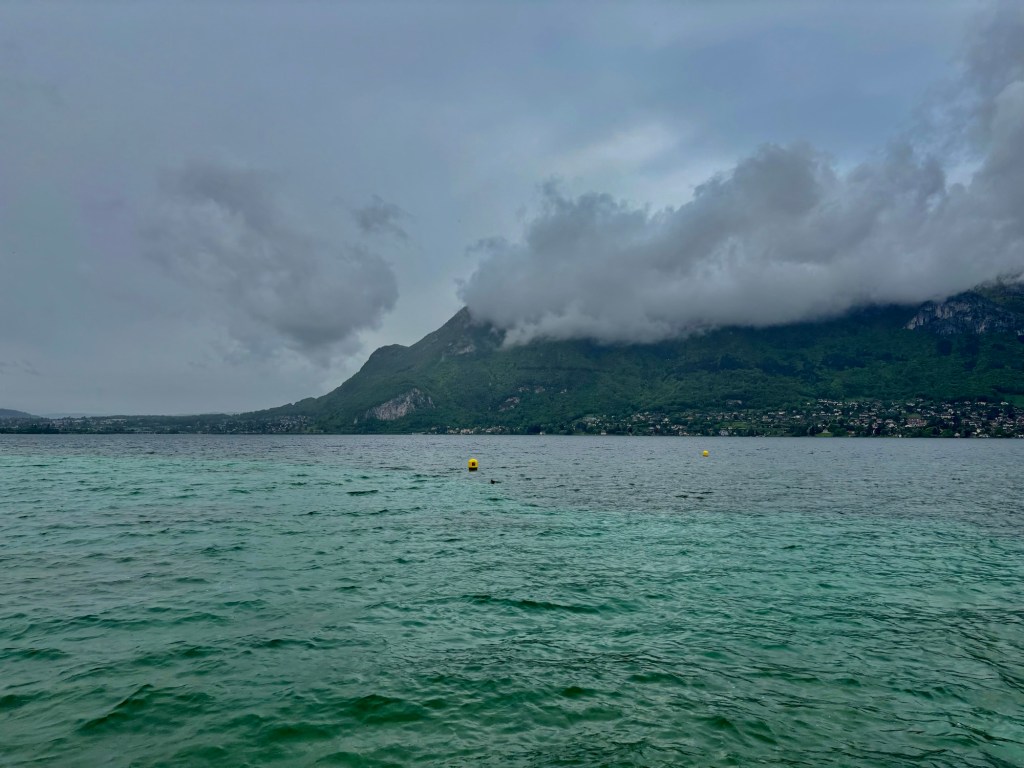
Annecy is beautiful, even in the rain. We joined other lunch goers, sat under cover and under blankets by the picturesque ‘canal’, eating tartiflette – it felt like we were in a ski resort. Even the ducks looked miffed with the weather. We headed back to camp early evening and decided to have a walk along the lake shore, just across the road from our campsite, but rain put an end to more than a ten minute stroll so we had another early night!

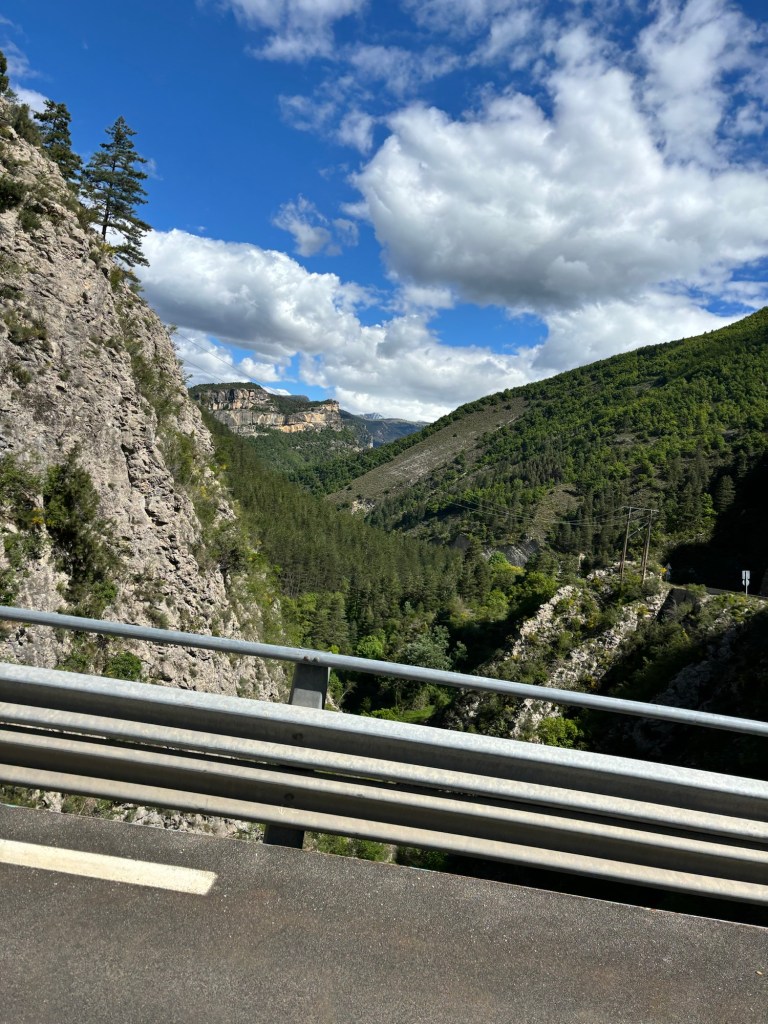
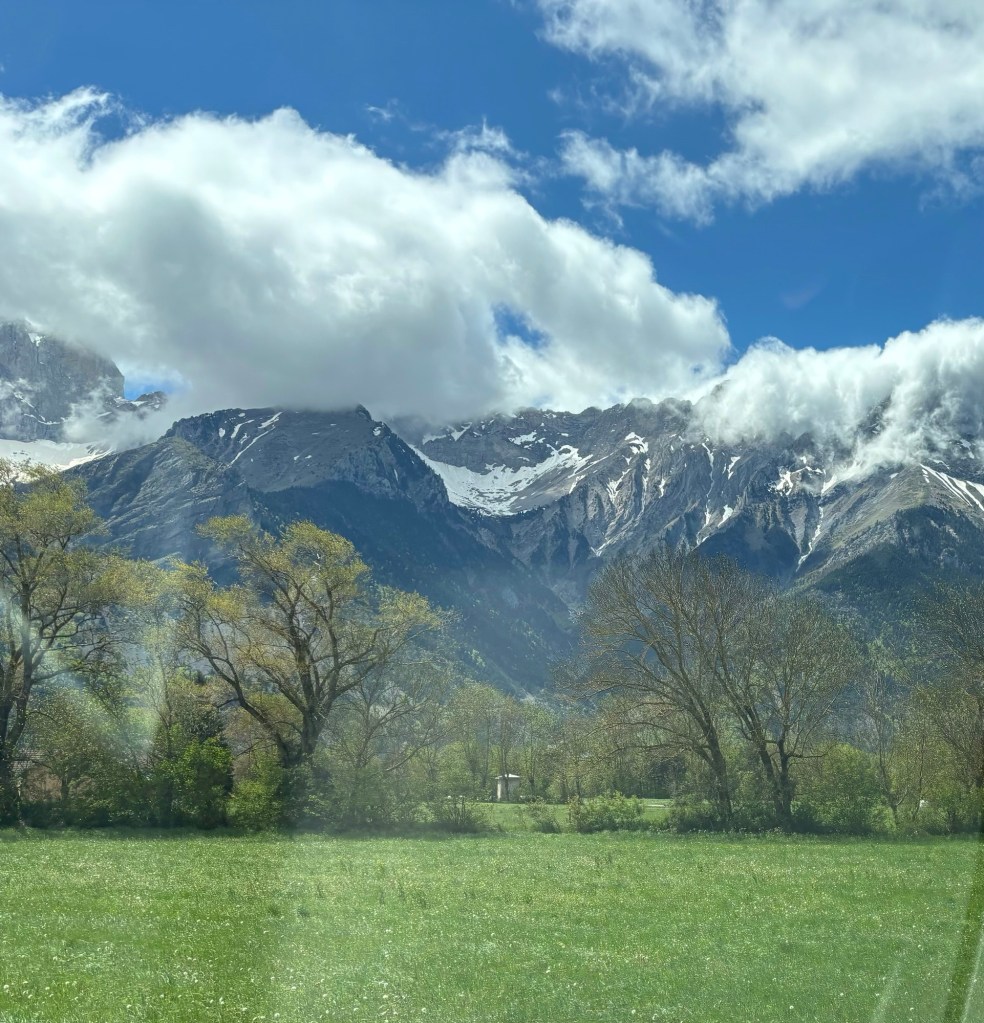
Driving around 450km further south, we headed to Saint-Andre-les-Alpes, in the Alpes-de-Haute-Provence region, and at last we spotted some blue sky. We had driven through Le Verdon Gorge, which has spectacular scenery, windy roads, steep drops into steely blue rivers and lakes. We have driven this way before so made a decision to take the shorter route, which is not as spectacular. We may return to a campsite up in the heart of the Gorge later on in this trip, it just depends on that weather.

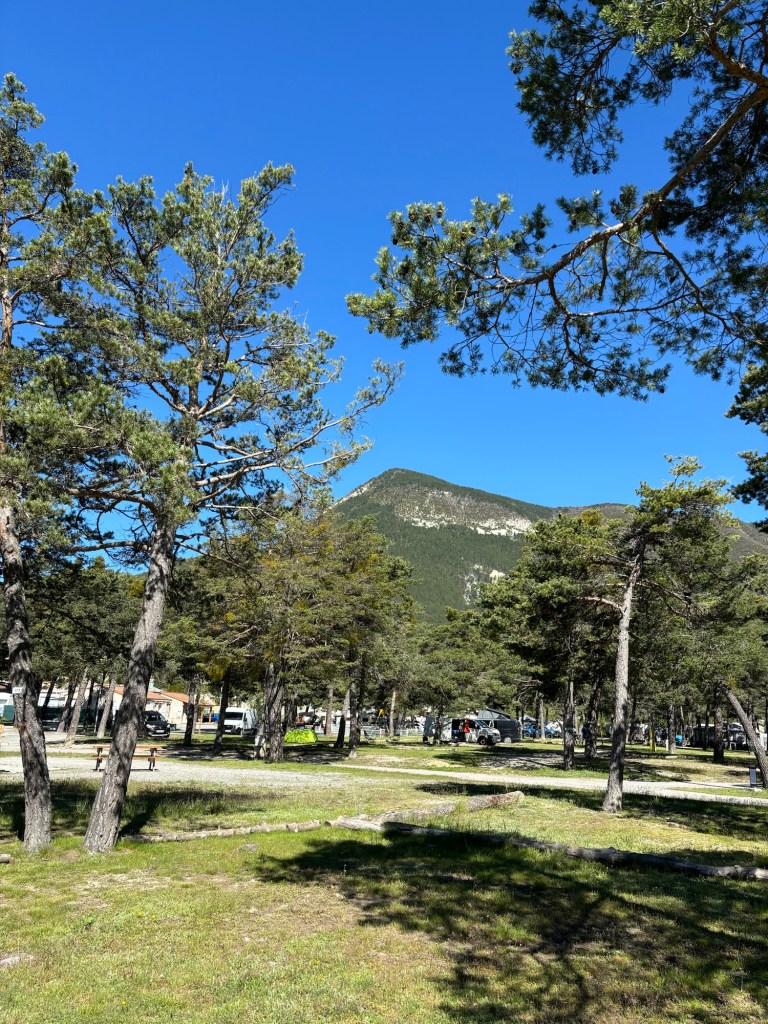
Saint-Andre-les-Alpes is a paragliders’ paradise and our campsite, set in pines under the steep hills was mainly populated by adventuring young men, who were either cycling or paragliding. We finally got to sit in the sun which was a relief after the cold and grey. We walked into the village, had a drink in the square that soon filled up, as people queued for oysters at a street vendors or sat in the bars. We had booked a table at a lovely restaurant, just off the square and finally began to relax. It’s amazing what a change in weather can do for your spirits.

Thursday saw the final push to Menton, the road became straighter as we left Le Verdon area behind. There was a huge traffic jam on the motorway that took you inland past Nice, and the city traffic looked smoother. Well, that was a wrong move as everyone had had the same idea. Nice had massive roadworks and diversions in place, but once clear of Nice, we rejoined the motorway, passing Monaco and then dropped into Menton and then took the very tricky drive up the steep, mostly u-bend road to our campsite, on the hill above Menton. We were parking the motorhome until Monday and we were de-camping to a hotel in the town, where our friends were staying. Luckily, Anita and Greg who live in France, were arriving at the same time and offered to come and pick us and our luggage up, saving several trips on the scooter!

By 8 pm that evening, we had a complement of 10, as the others arrived via Nice airport and the weekend could truly begin…

Menton

Le Weekend – Le Mont-Saint-Michel

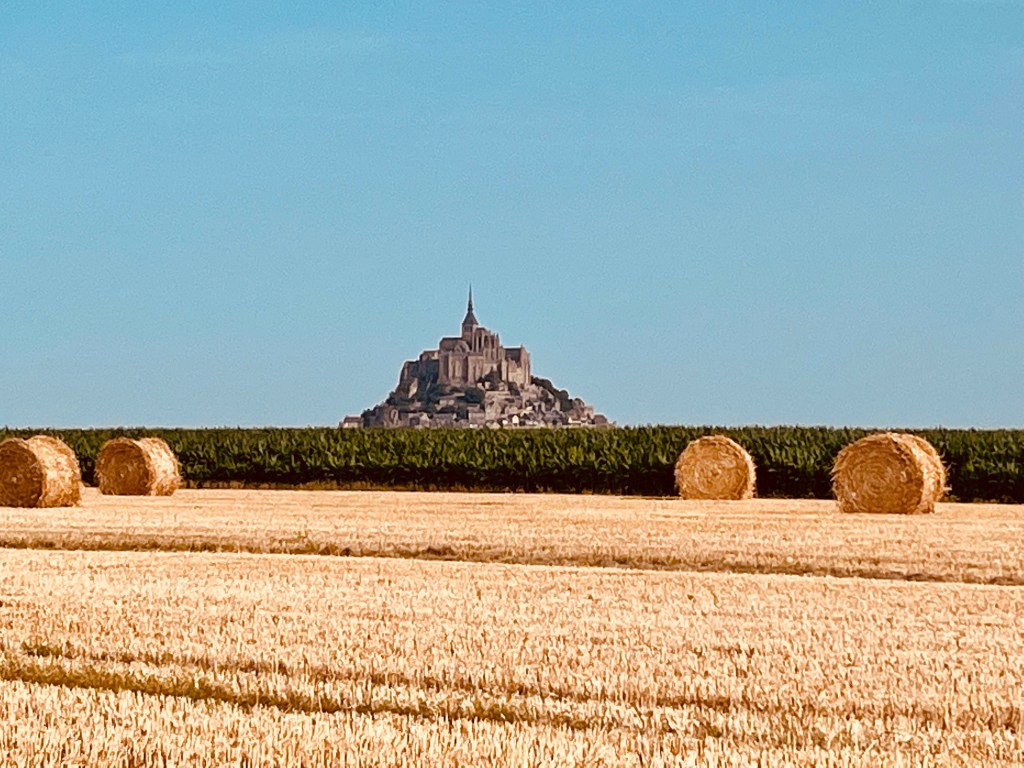
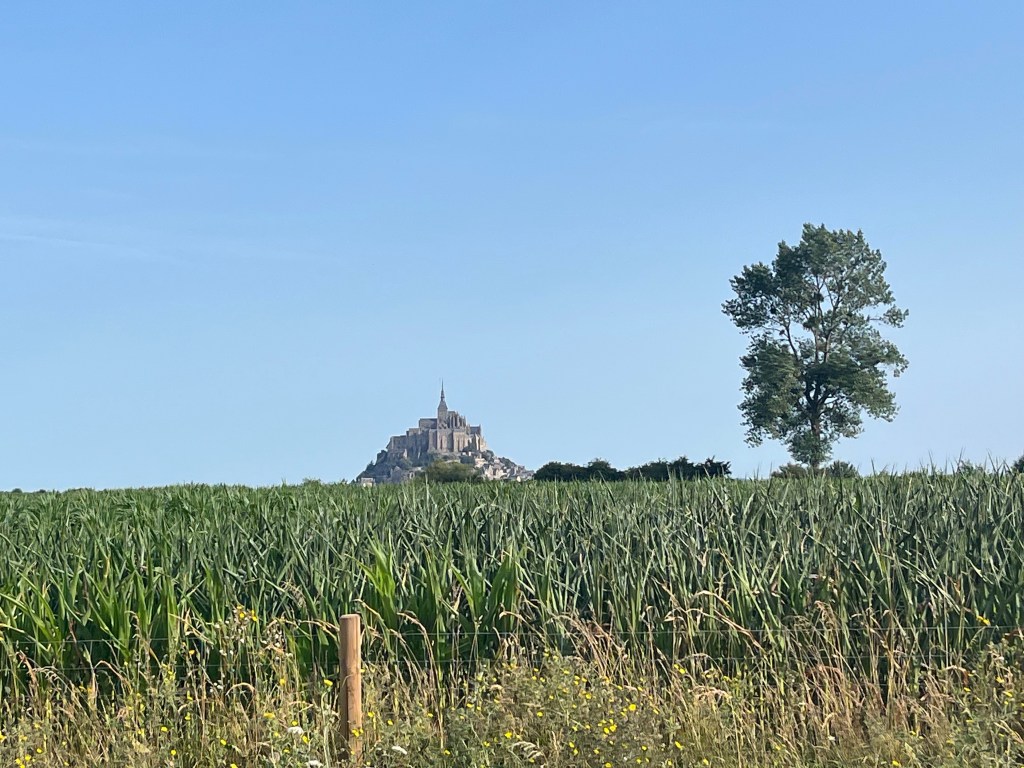
Straw, Corn & Le Mont

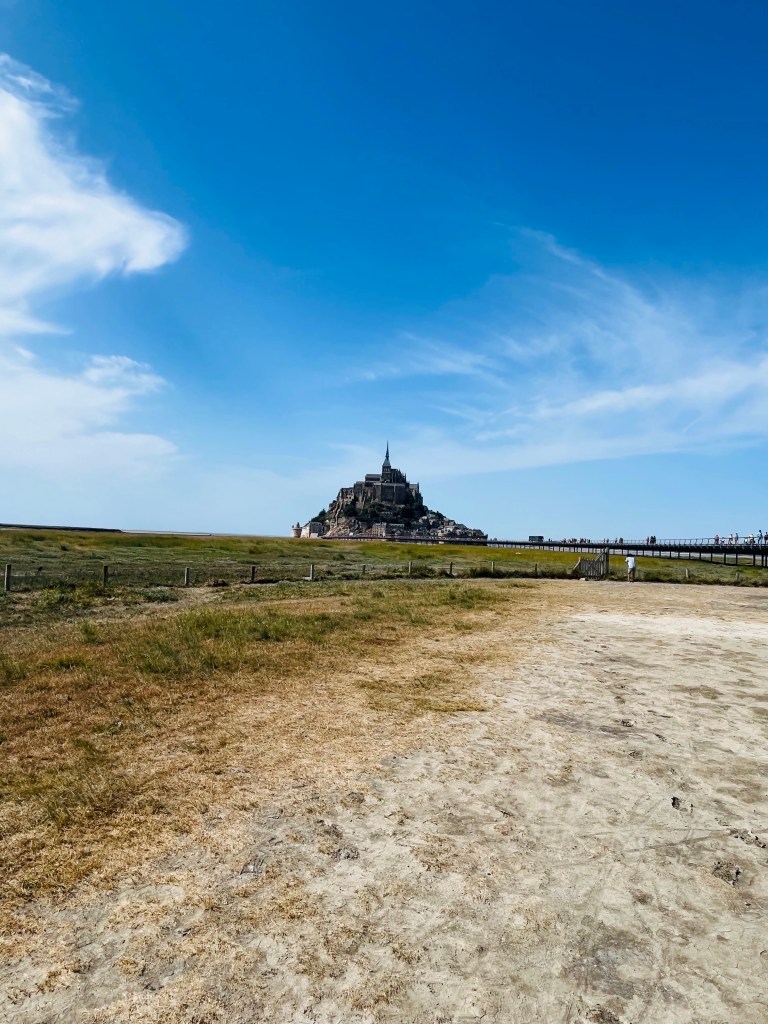
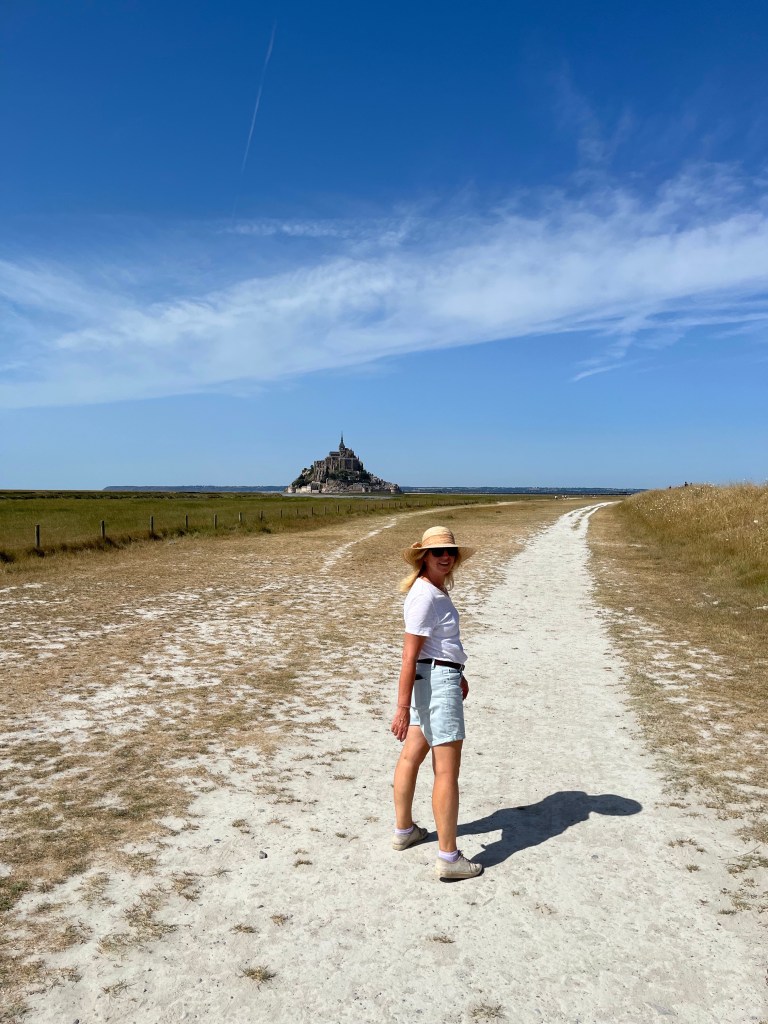
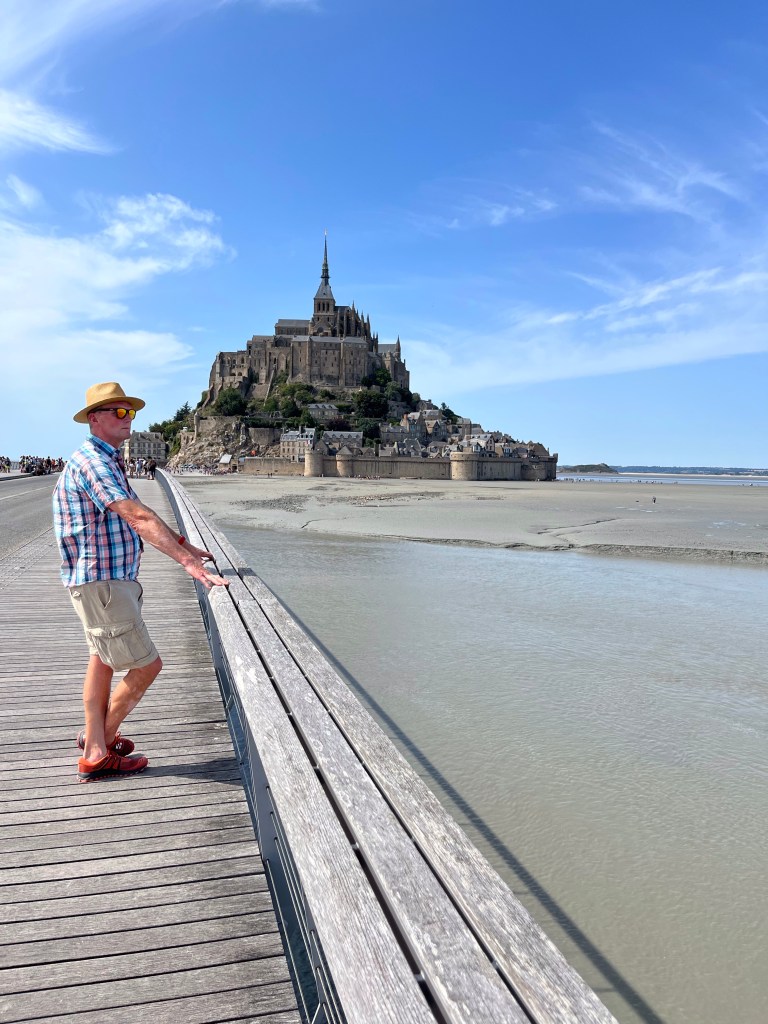
The drive from Le Crotoy to Mont Saint Michel was a bit painful, a 3 hour drive turned into nearer 5 hours, there was a big queue to cross the double bridge at Le Havre and other hold ups but we arrived mid afternoon. We had booked the nearest campsite to the Mont. There are huge car parks on the mainland, similar to the set up at theme parks, then you walk into the small village area, where there are restaurants, a couple of hotels, a big gift shop and the campsite. Access by vehicle into this area is restricted and we were given a code to get through the barrier to access the campsite. This is an extra 9Euros on top of your campsite fee. Once you are in the village area, you can either catch a free shuttle bus across the causeway to the Mont, walk or cycle the mile & a half. Cycling to the Mont is on trial until September, usually you would park your bike in the village area and take the shuttle or walk.

Approaching Le Mont-Saint-Michel across a sea of corn

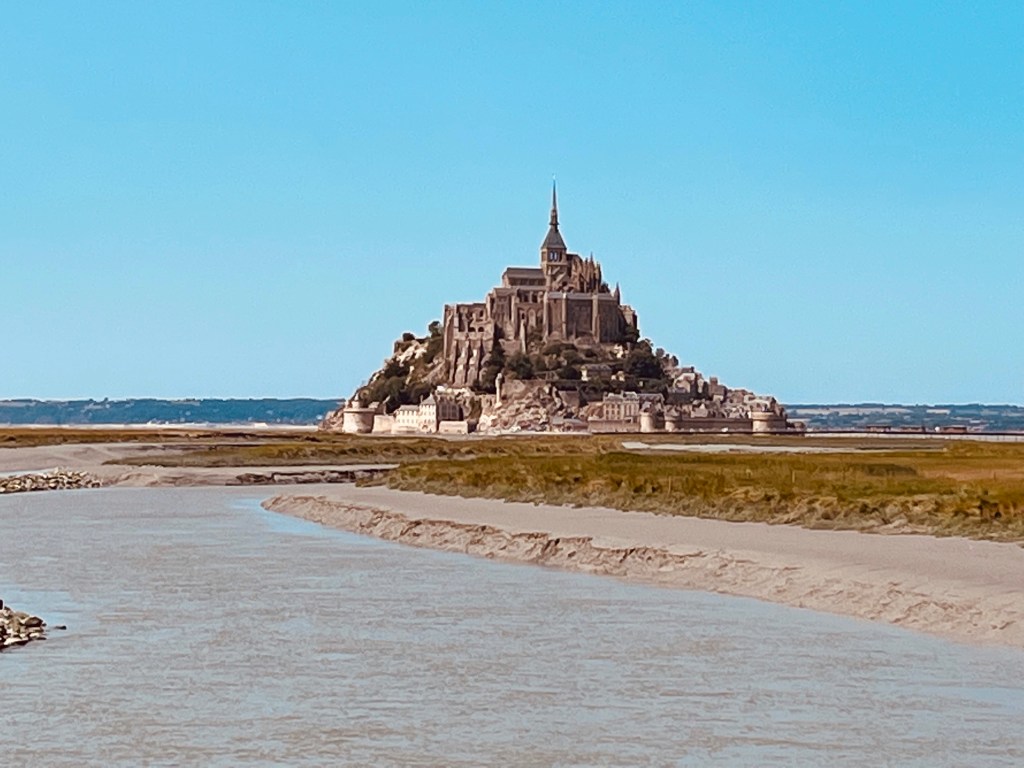
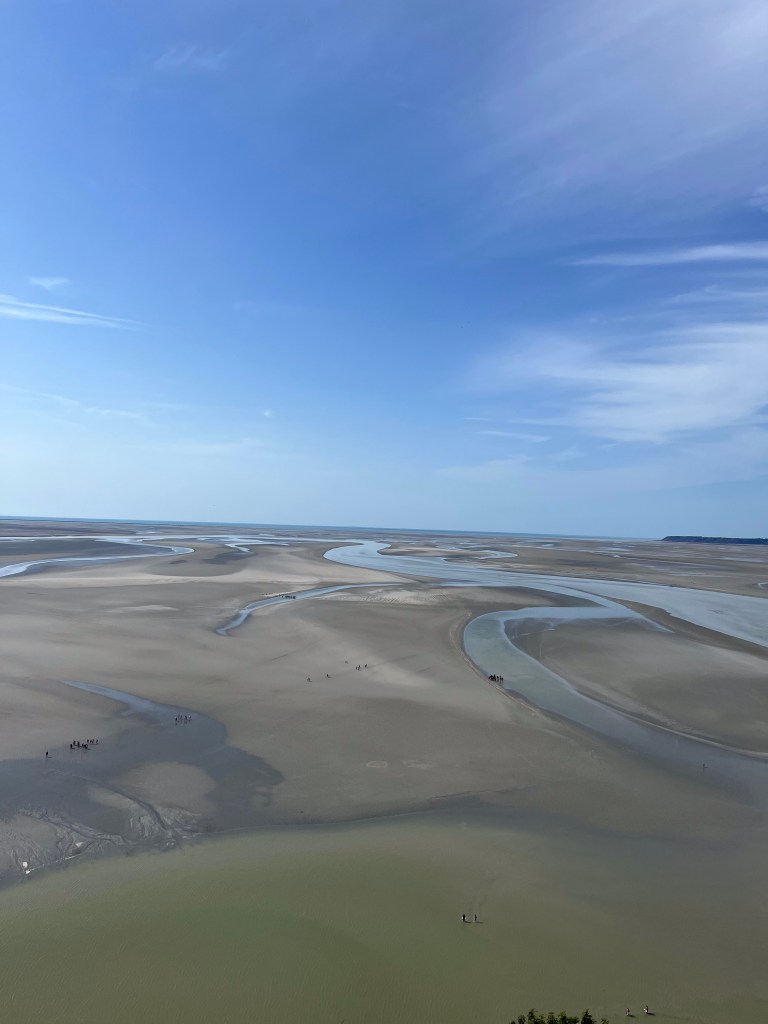
After a late lunch, we set off to walk to the Mont, the temp was still in the high 30’s, but there was a breeze coming off the sea, but as it was low tide, the sea was 15 km away!

The tide goes out 15 km, this view is zoomed in from the dam
The walk
Definitely Titfer weather
It’s a long & dusty road…
On the causeway – it looks quiet but it was a lucky shot, the bus queues are on the other side and Charlie is disguising the bus behind him!

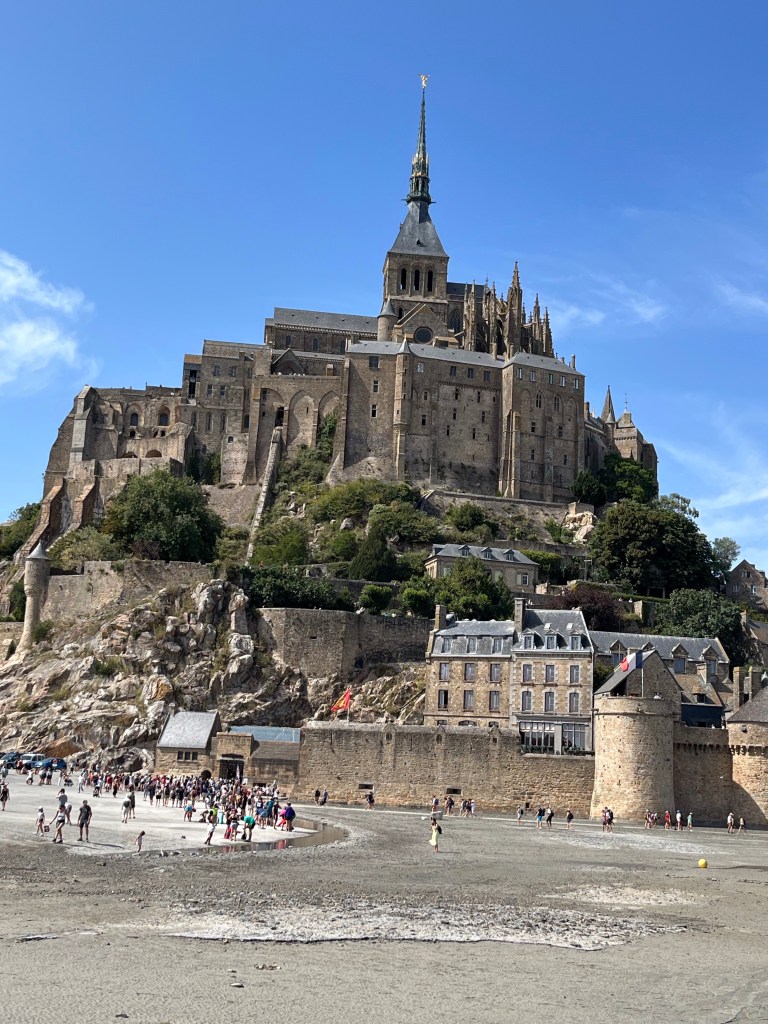
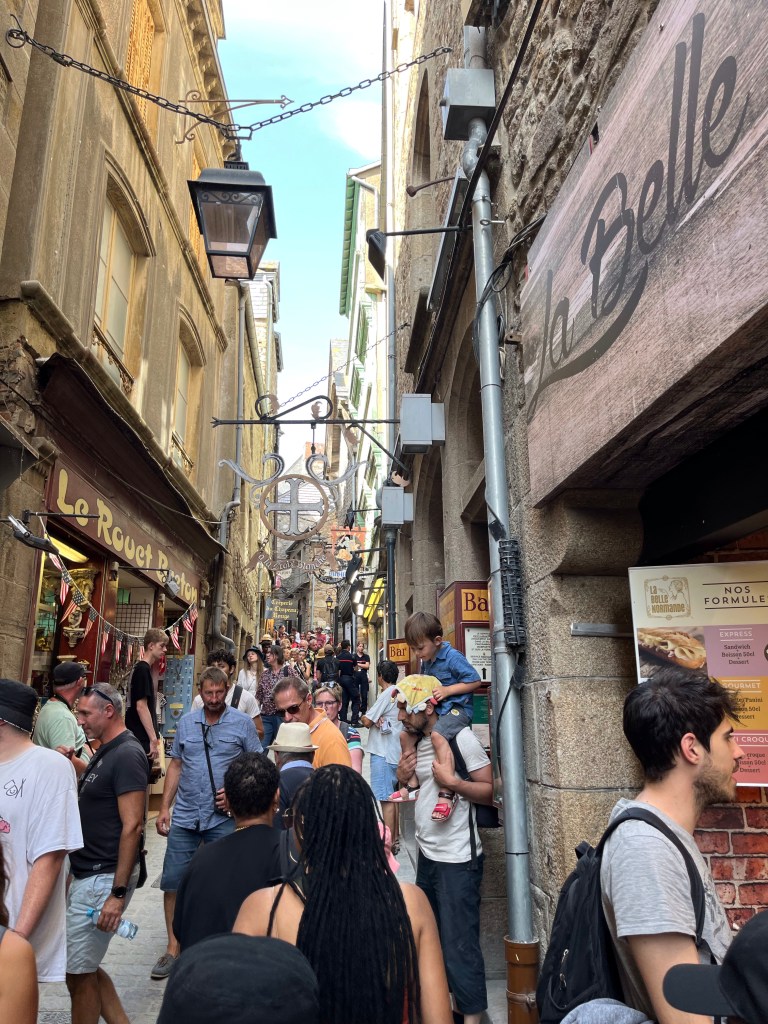
Once you are on the Mont, top tip avoid the lower village area! When we walked through the main entrance you are greeted by a medieval street, but the overwhelming feeling was that I had been transported to Disney or the Shrek film where Shrek and Donkey visit Duloc. Avoid this area like the plaque, head for the ramparts or any side street to make your way to the Abbey, unless you want to jostle with the crowds for crepes, frites, ice cream and naff souvenirs at overinflated prices.

Beauty lost in the bustle
It’s official – the tide is out!

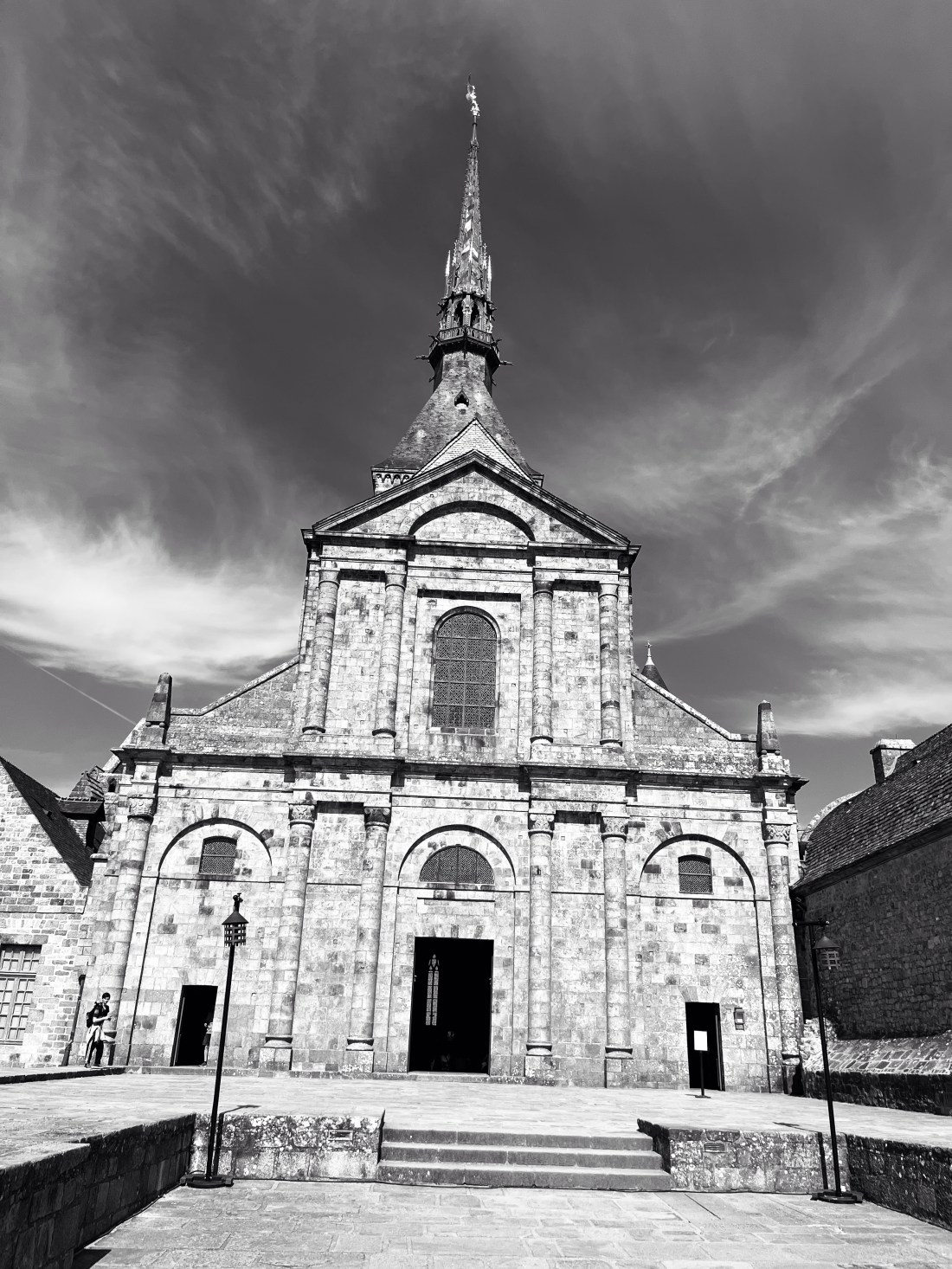
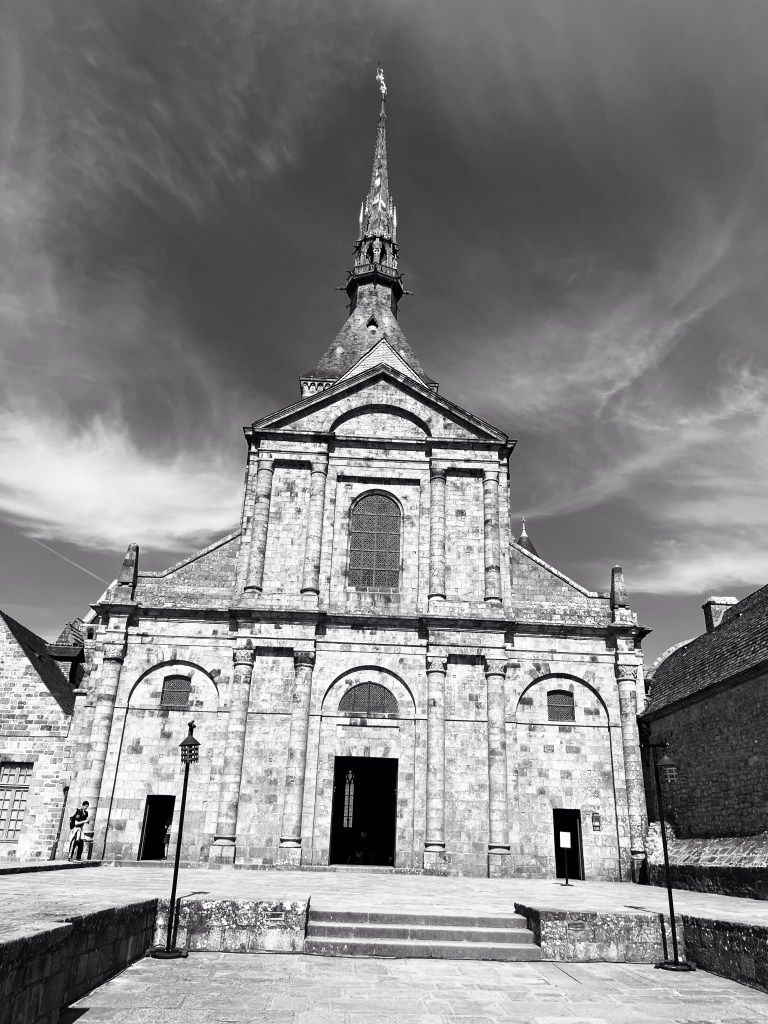
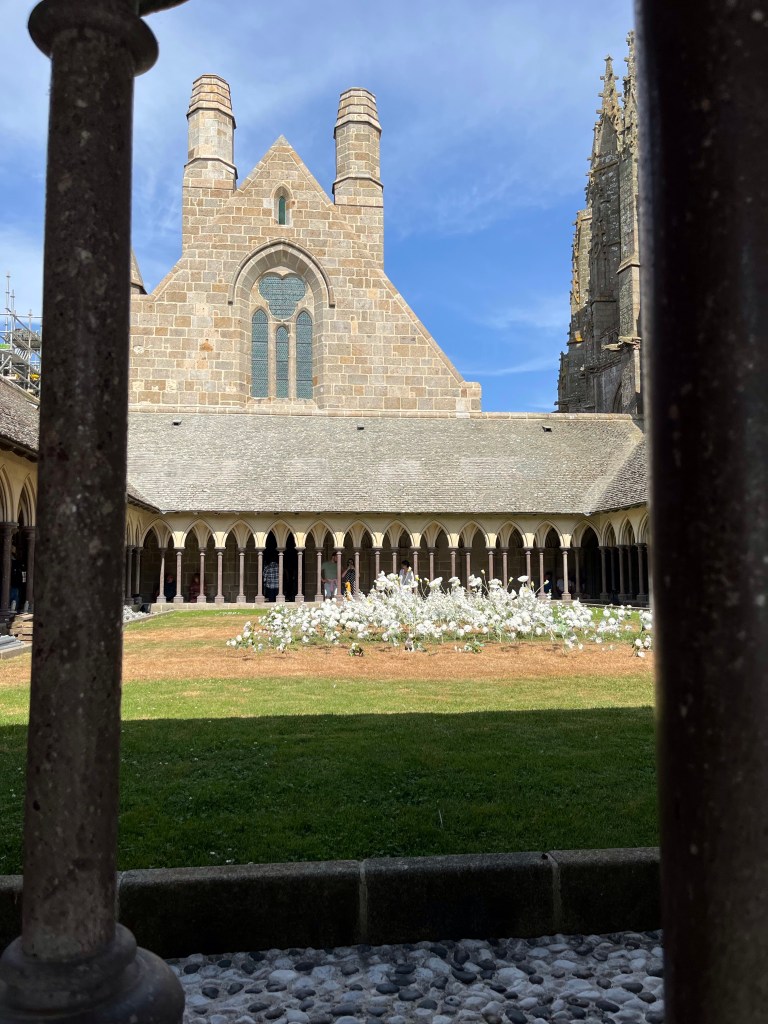
Not many visitors actually head for the top of the Mont as you have to pay to enter the Abbey, but it is quieter, cooler and architecturally impressive. The engineering and technical expertise required to build such a huge structure on a rocky, steep sided tidal island is impressive. No wonder it took 1,300 years to build!

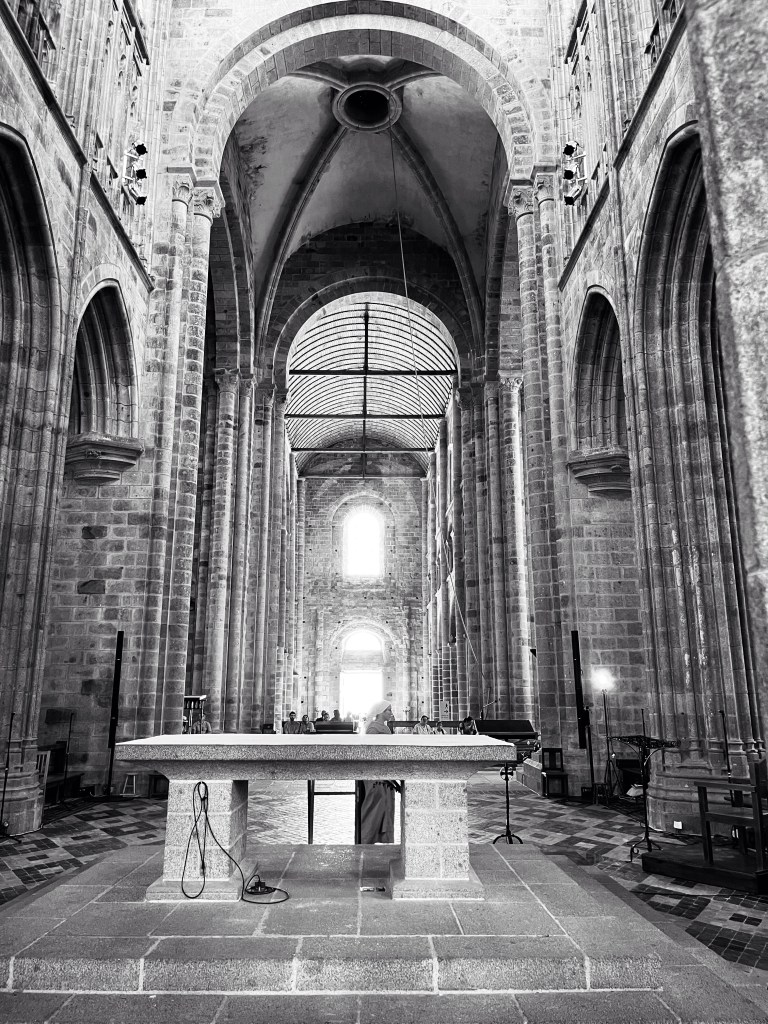
The Nun was standing dead centre and then she moved!

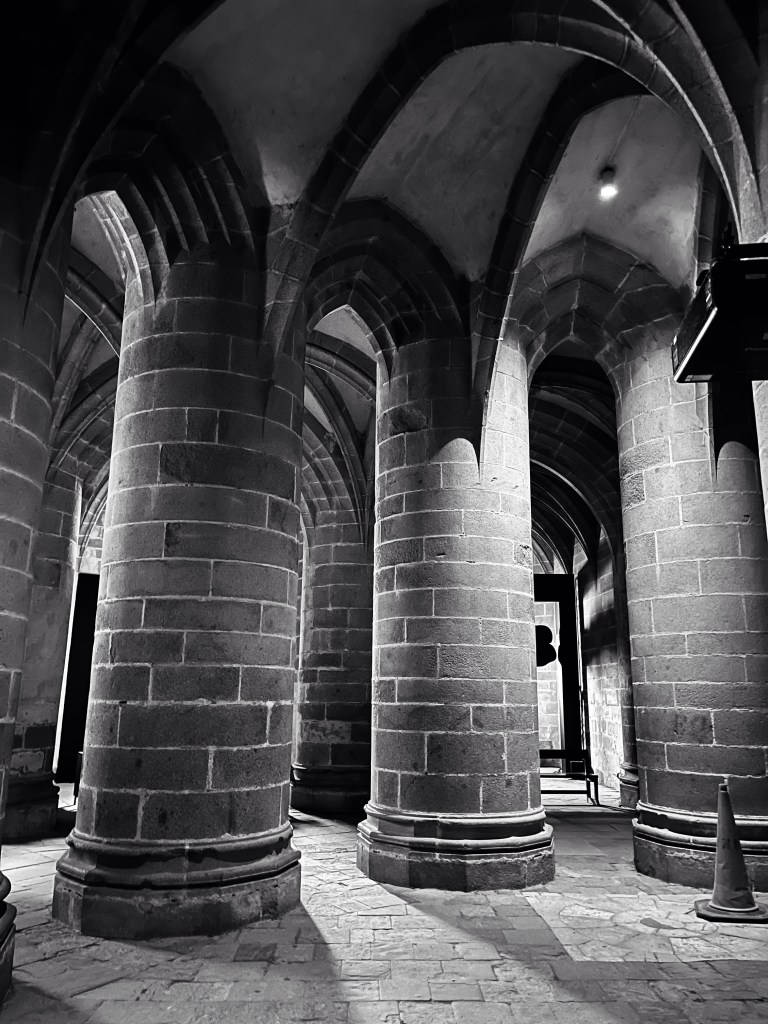
These columns have a circumference of about 8 meters and they hold up the Abbey, the higher up, the lighter the materials used, so wooden vaulted ceilings rather than carved stone and slender pillars.

10 of these huge columns holding up the edifice are visible in this area – we are standing underneath the main Abbey

There is not much to see in the Abbey precincts, which has been a prison and a fortress apart from the impressive architecture and views of estuary. No displays of medieval monastic life, or grim prison conditions. In the evening there is a light show within the Abbey but we didn’t stay for that. There are still a small group of monks and nuns who live at the Abbey but its heyday was in the Middle Ages.

The thin pillars in the cloister

We walked back across the causeway which was marginally quicker than the shuttle bus, as the queues were huge.

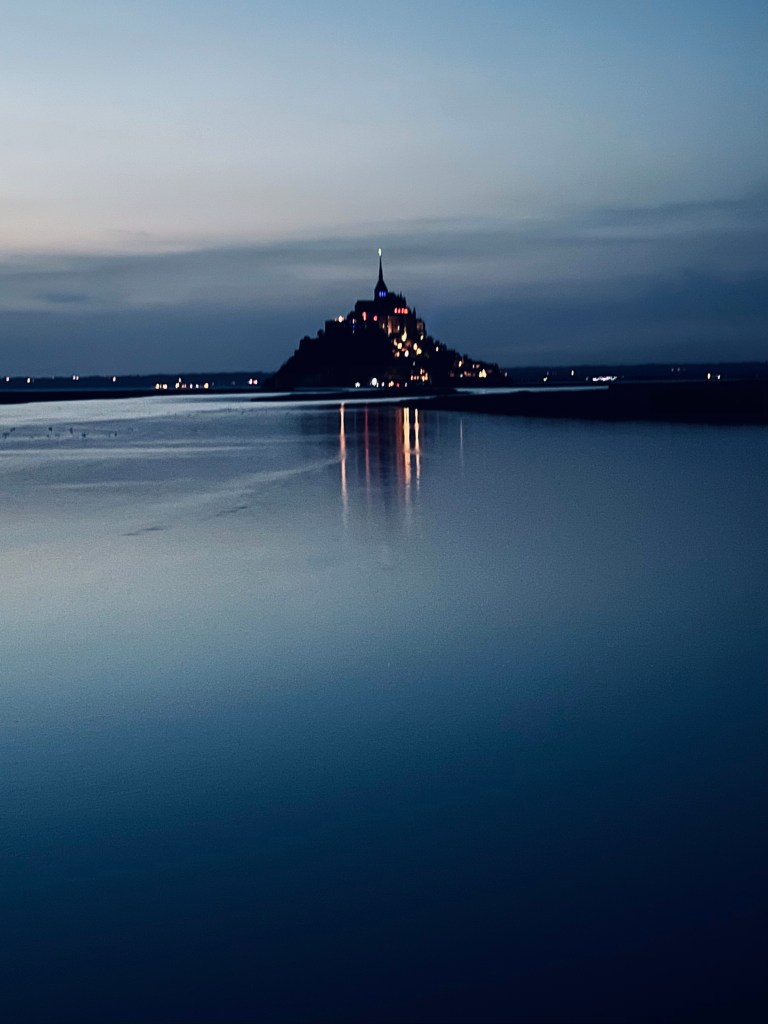
We spent the rest of the warm evening, relaxing on our pitch & it had to be a BBQ for dinner. Temp didn’t drop below 31 until late and about 10.30 pm we walked back out to the dam, to watch the sky darken. We were hoping that the Mont would be dramatically lit at night, but it wasn’t spectacularly so, but I did spend some time trying to get the reflection in the water as the tide was in.

At night

The motorhome was pleasantly cool despite the high temps and we slept really well. Sunday – a day at the beach is planned, after a quick provisions stop.