
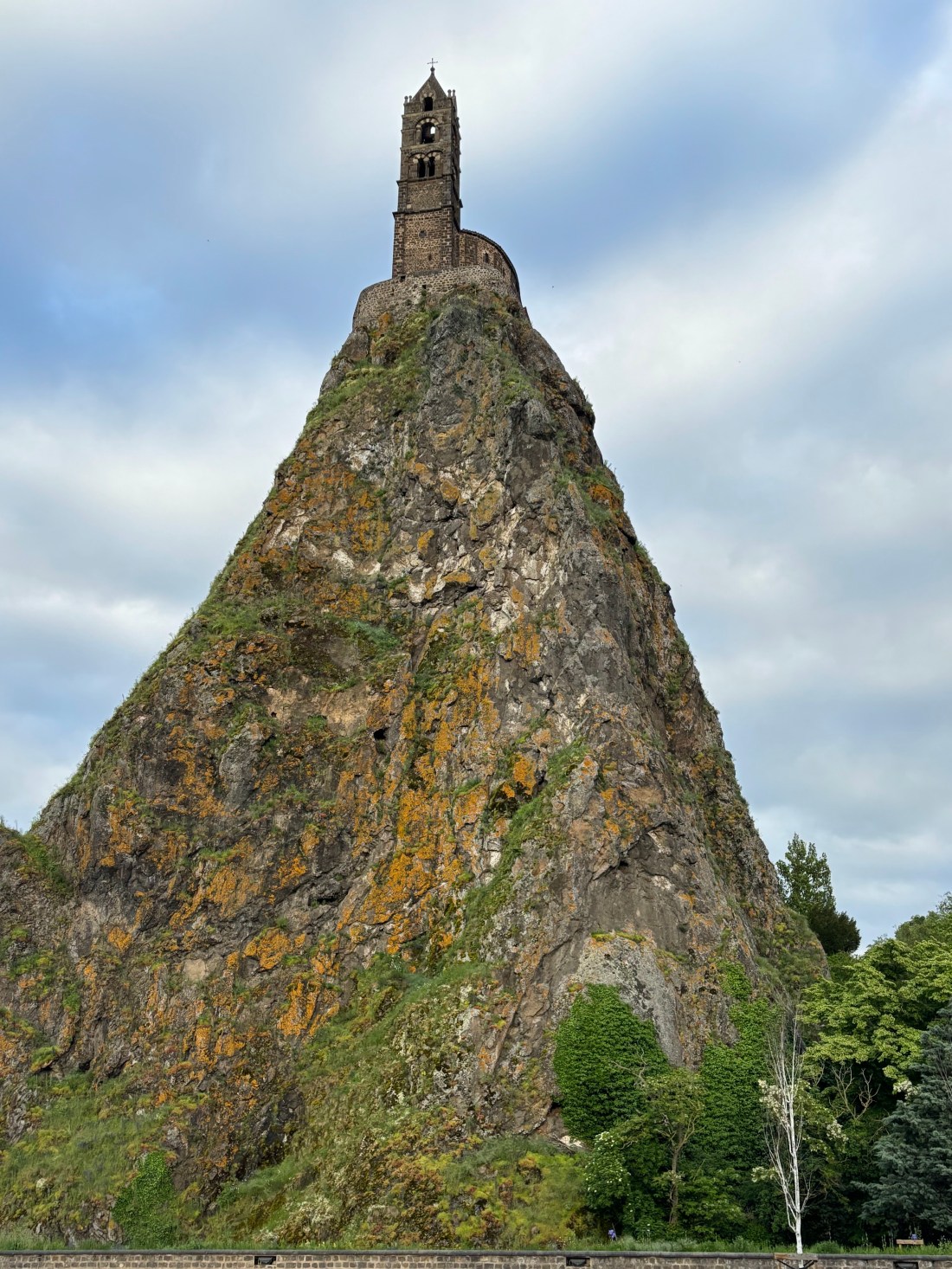
A Journey through France’s Volcanic Landscapes
So we have now ventured into the Land of Volcanoes, the Auvergne in the Massif Central, an area dominated by 450 volcanoes, all of which are either dormant (no-one really knows if they could become active) or extinct.
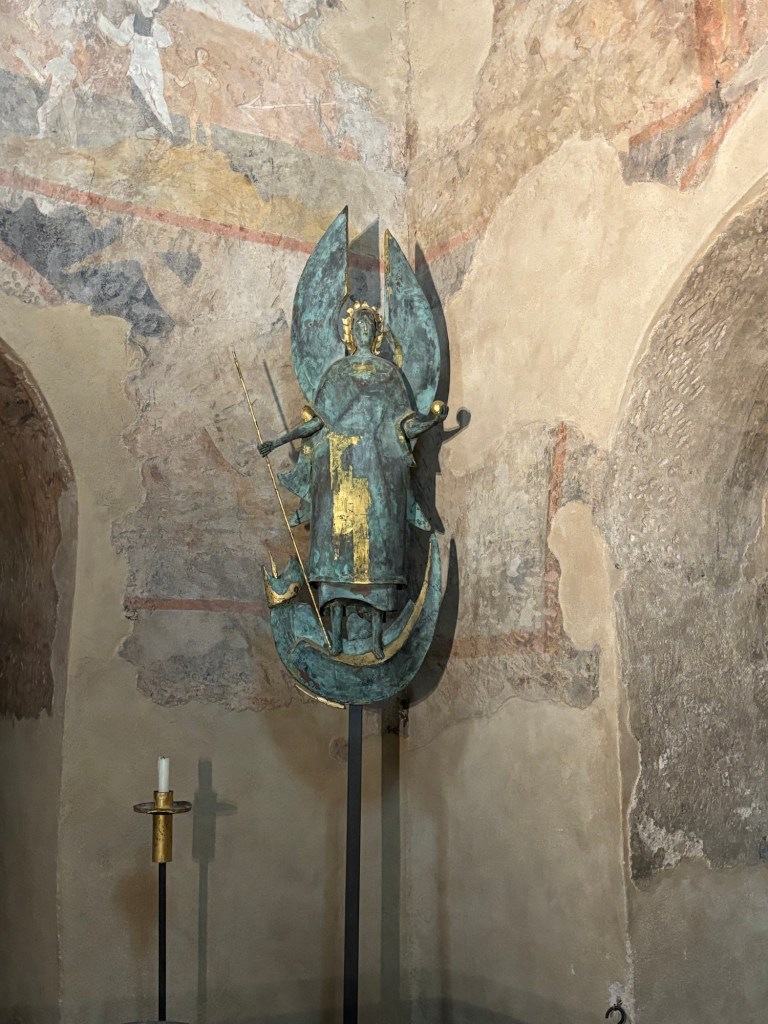
Le Puy, home of the lentil is an ancient medieval city surrounded by high hills and is nestled in the caldera of an ancient volcano. It is the site of religious significance, it is the start of one of the main pilgrimage paths in France that lead to Santiago de Compostella, there are 3 significant religious buildings, The Chapel of St Michel, The Cathedral and a statue of Mary & baby Jesus. Le Puy ranges between 2,000 and 3,000 ft above sea level!
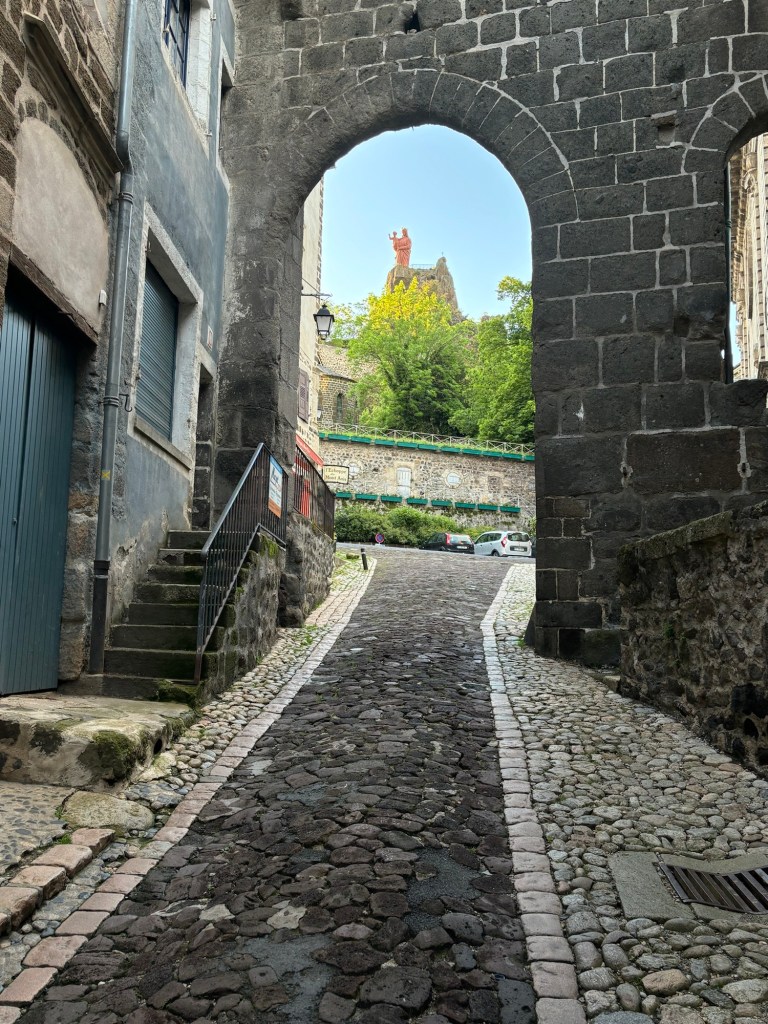
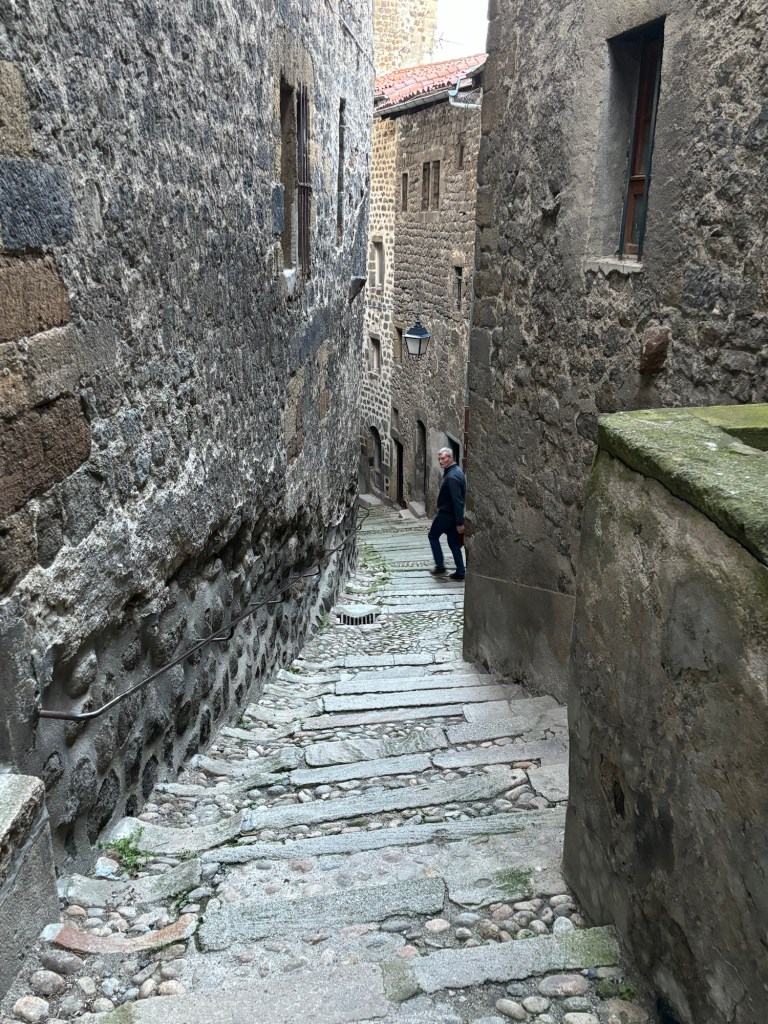
As the city was built in a volcanic region, everything is uphill! The old town is built on a steep hill, the streets paved with cobbles, many made of volcanic rock. These cobbles are no ordinary cobbles, they are not even M&S cobbles, they are big and round and if you are visiting, wear your most sturdy shoes or boots whatever the weather. Flip flops will not cut it, forget it if you have a buggy, you will break it or the baby, forget wheelchairs unless you want to kill Granny! If you hate stairs or steep slopes, don’t venture into the old town, the only way is UP.
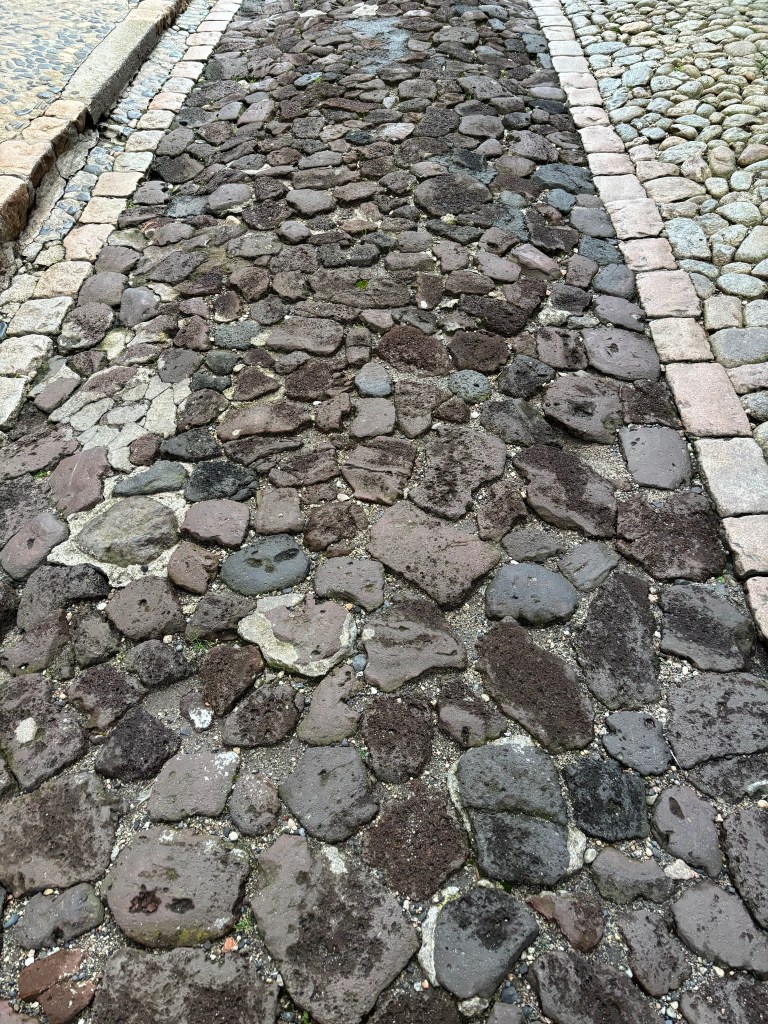
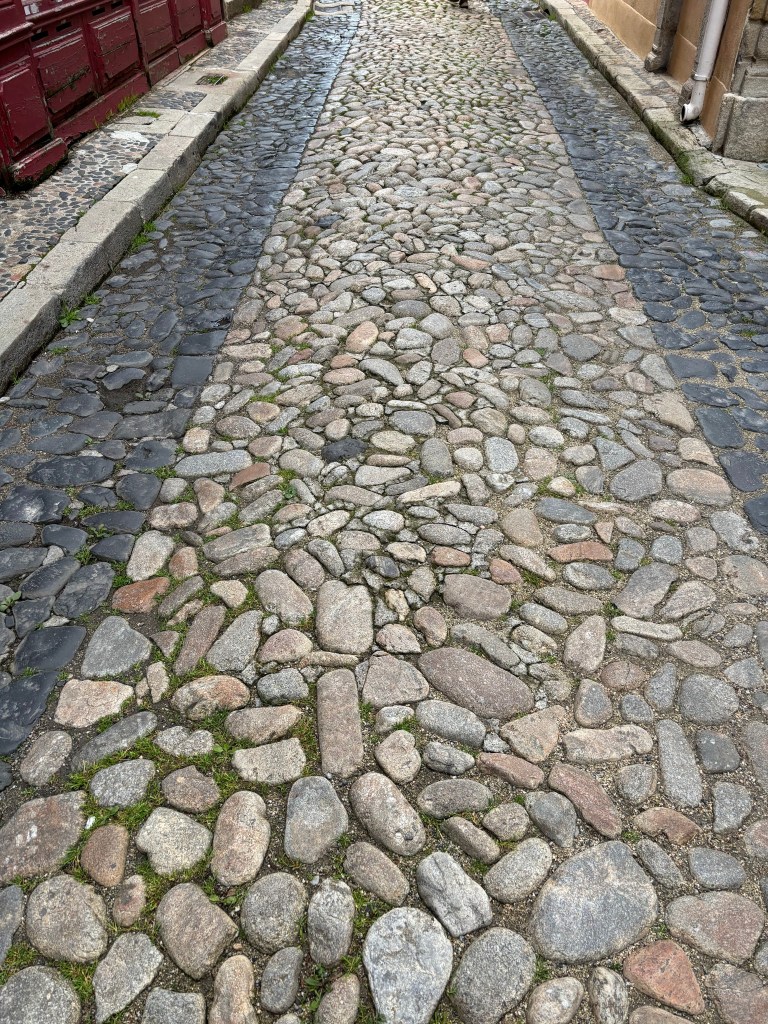
On our first night we strolled into town and walked up to the Cathedral entrance, I think it is one of the steepest streets I’ve ever encountered and there are about 60 steps to get the entrance. Once you get through the gate there are more but the Cathedral was closed for the night.
After working all morning and waiting for the rain to pass, our mission was to visit all 3 of the major religious sites in the couple of hours before they closed.
First stop The Chapel Saint-Michel d’Aiguilhe – perched on a rocky pinnacle, built in the 10th Century with later bits added. It is a quite a climb and the views are impressive!

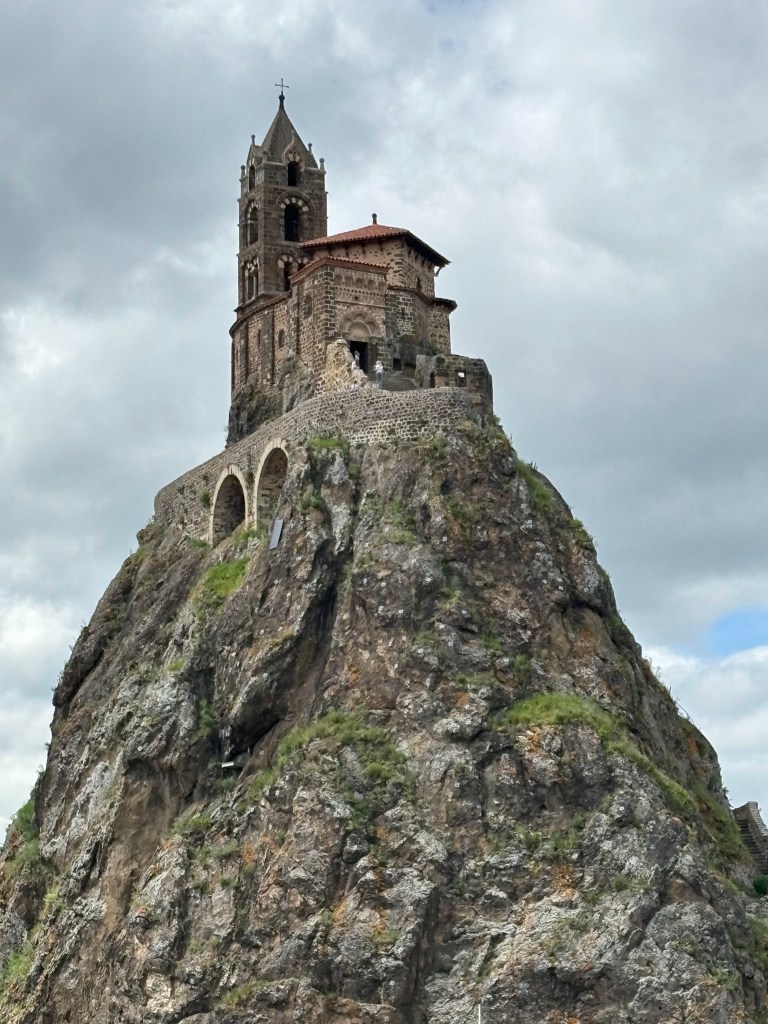
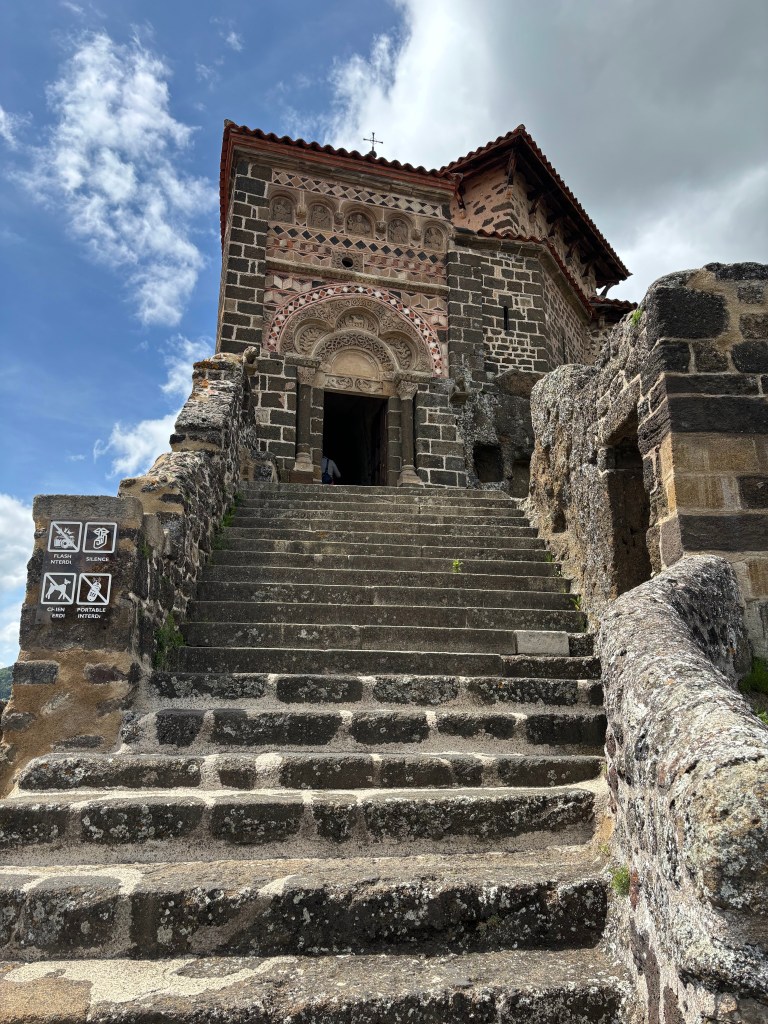
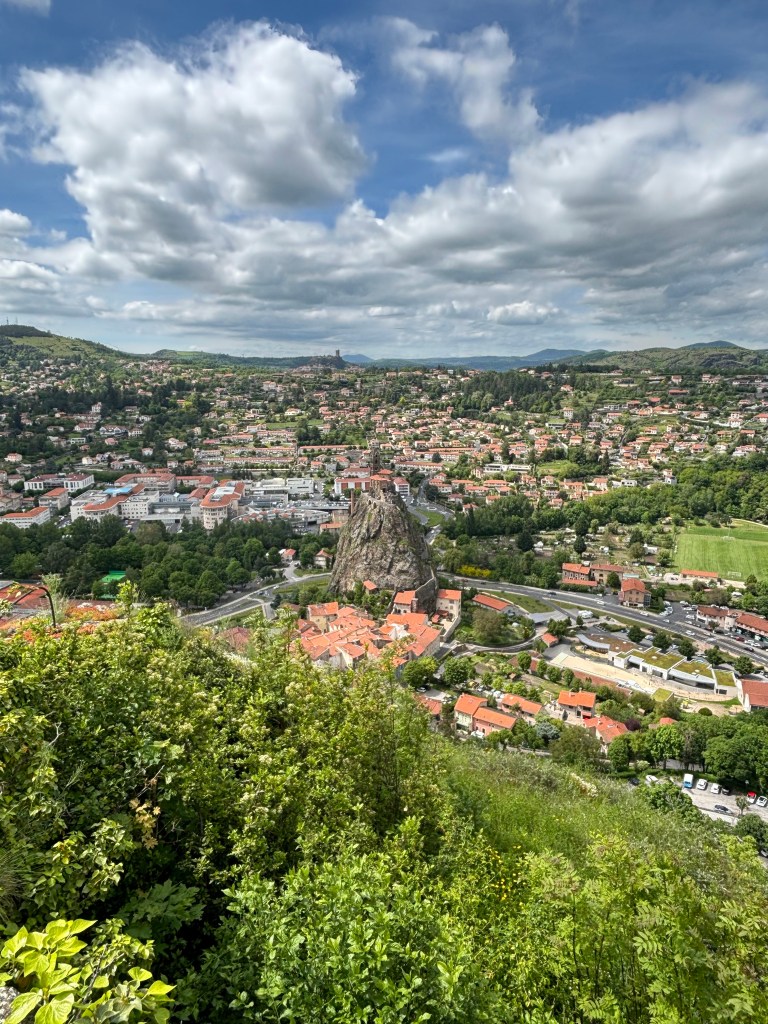
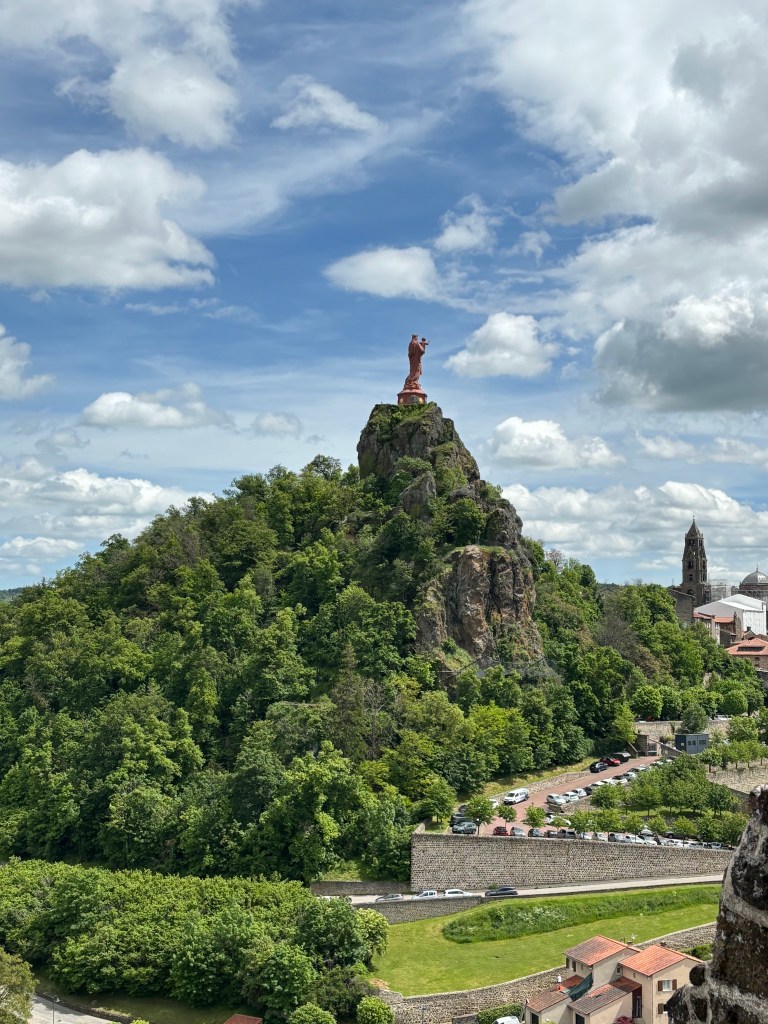
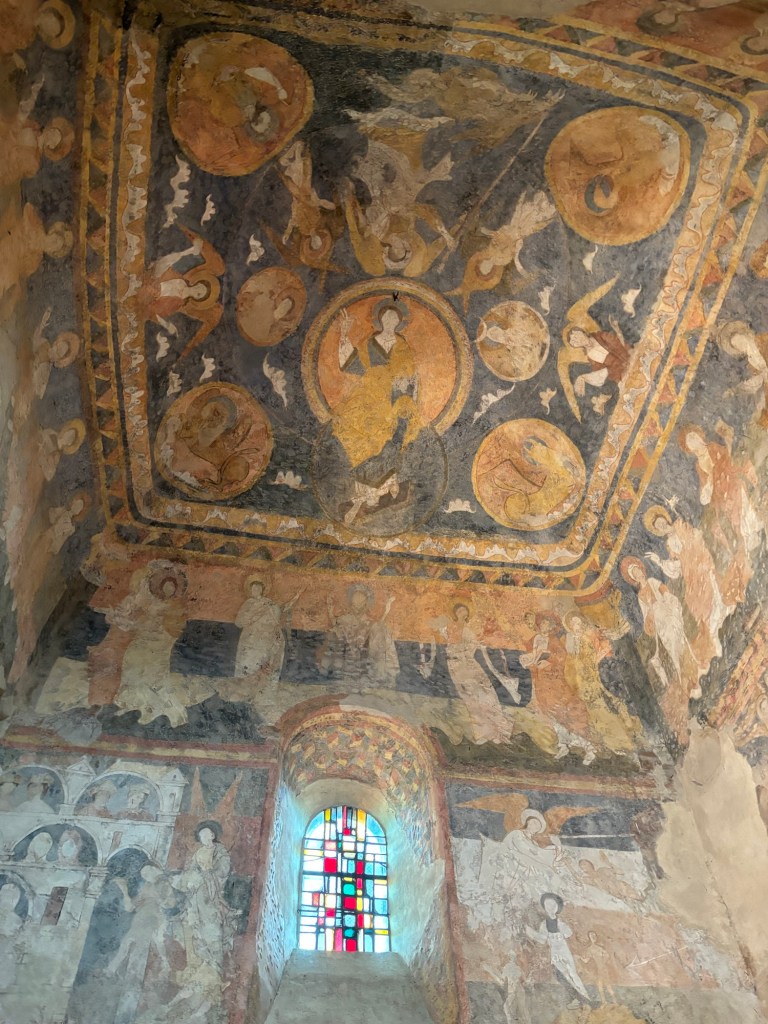
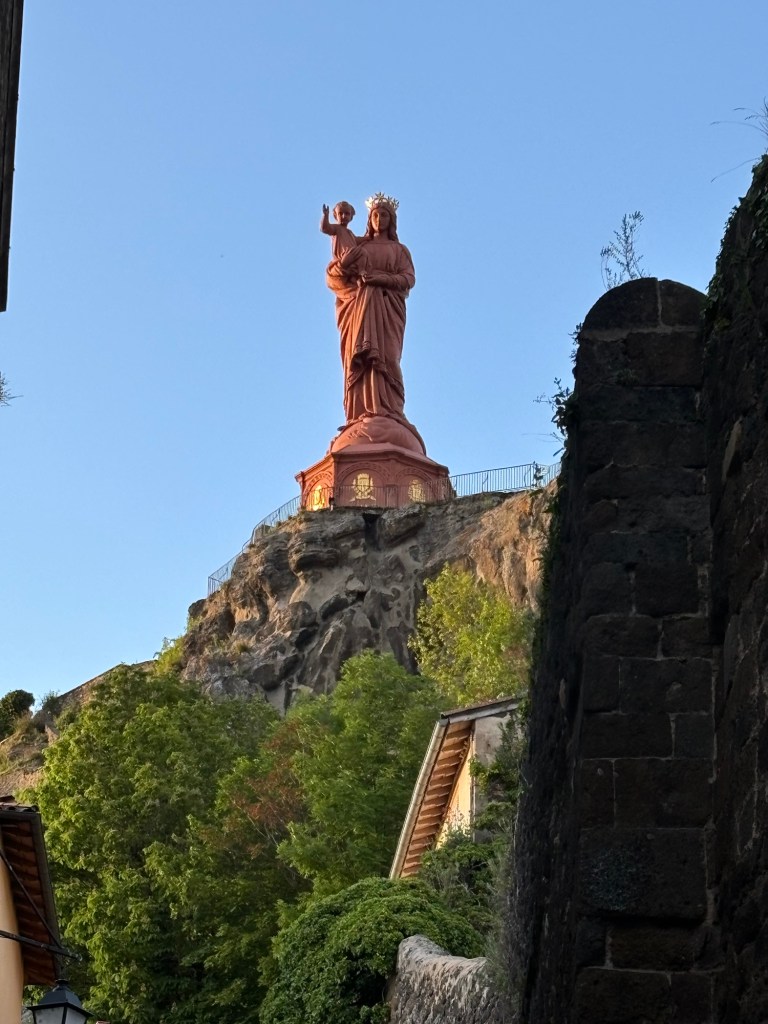
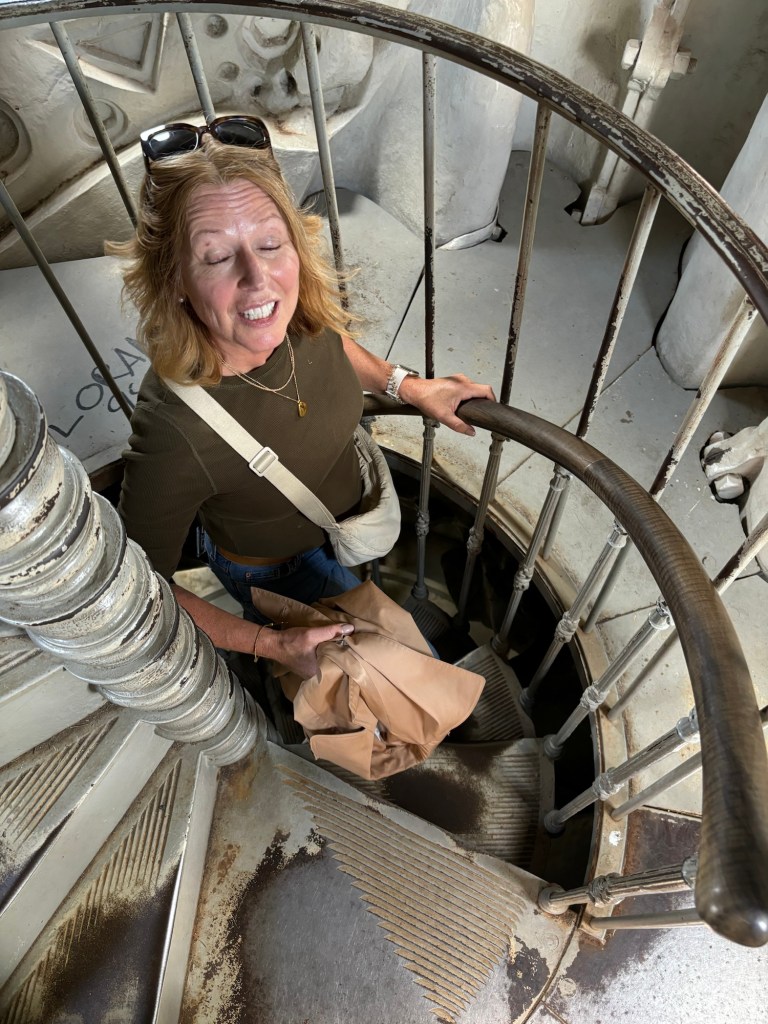
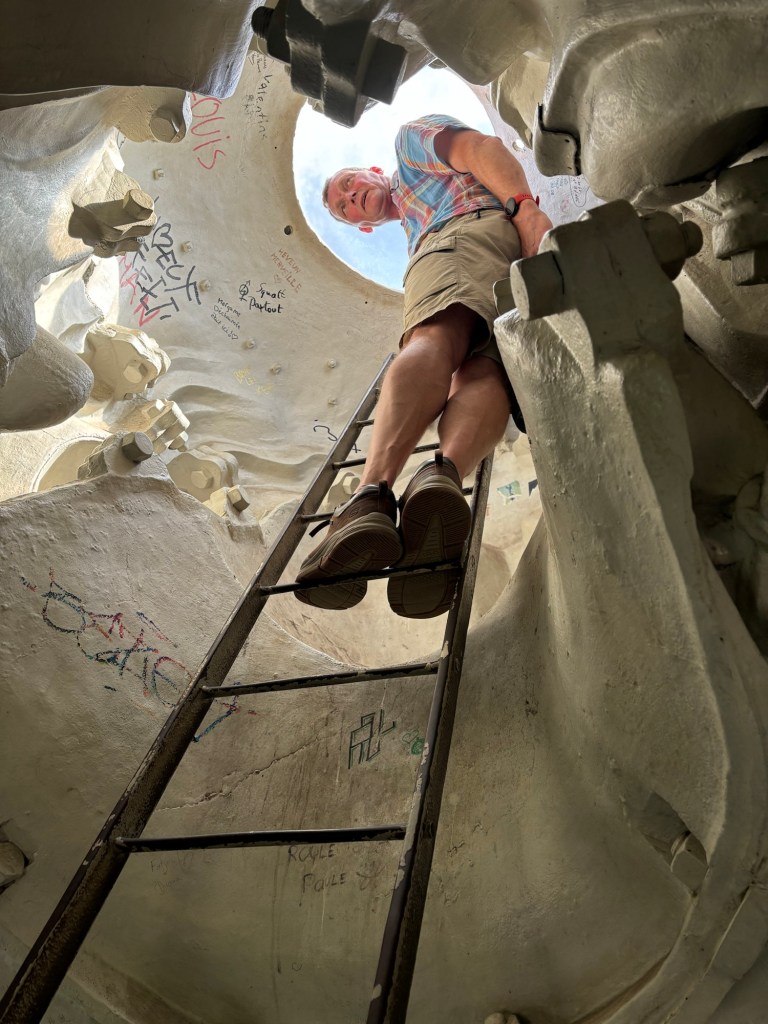
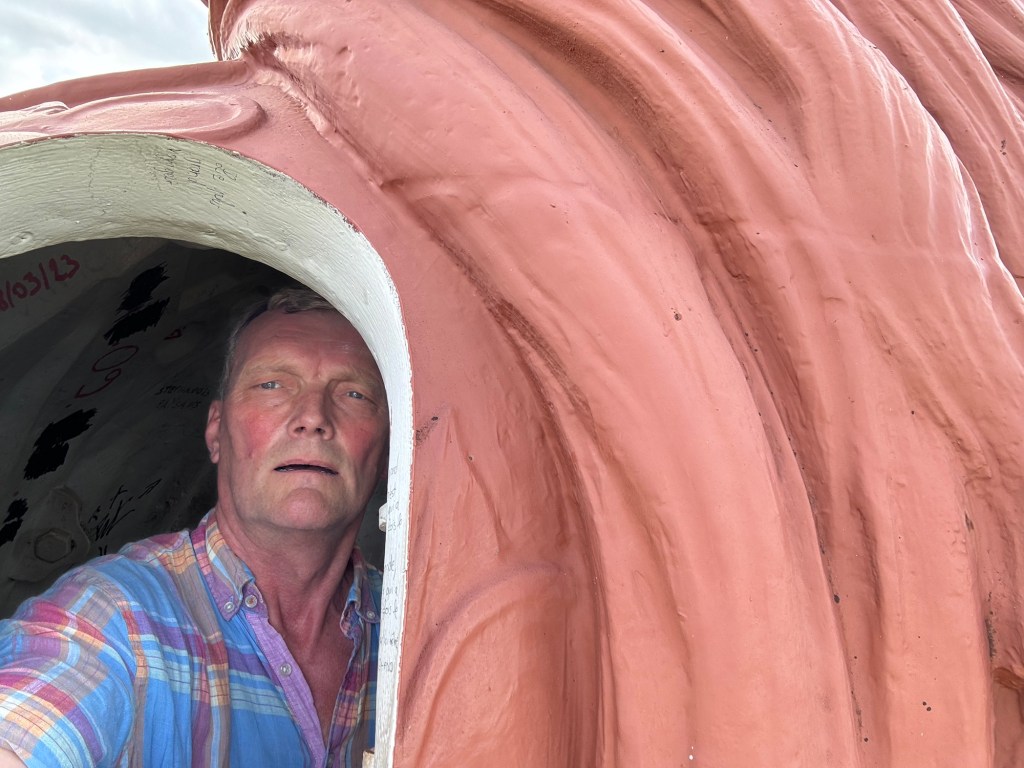
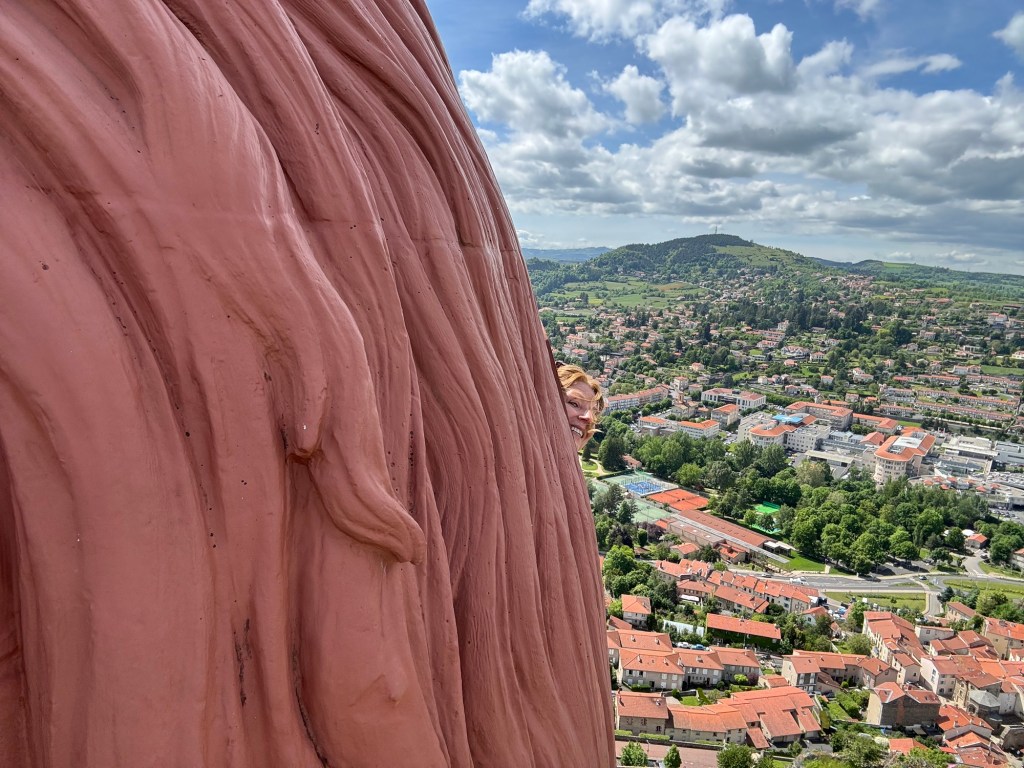
From the Chapel Saint Michel, the statue of Mary & Jesus towers above it height wise. So across town, up through the narrow, cobbled streets and we began the second climb of the day. The unique feature of the statue is that it is built out of cannons seized during the Crimean War and given to the town by Napoleon III. Once you have reached the base of the statue, you can climb right to the top, into the head of Mary, above her crown. You start by climbing up stone steps, then a steep spiral staircase until you are in the head, then you can climb a ladder so that your head pops out of the top of Mary’s, above her crown. There is a perspex viewing bubble to stop the more adventurous, paragliding, abseiling or just throwing themselves off. It is not for the faint-hearted, in both senses of being not very good with heights or you have a heart condition. You are now at about 3,000 ft above sea level.
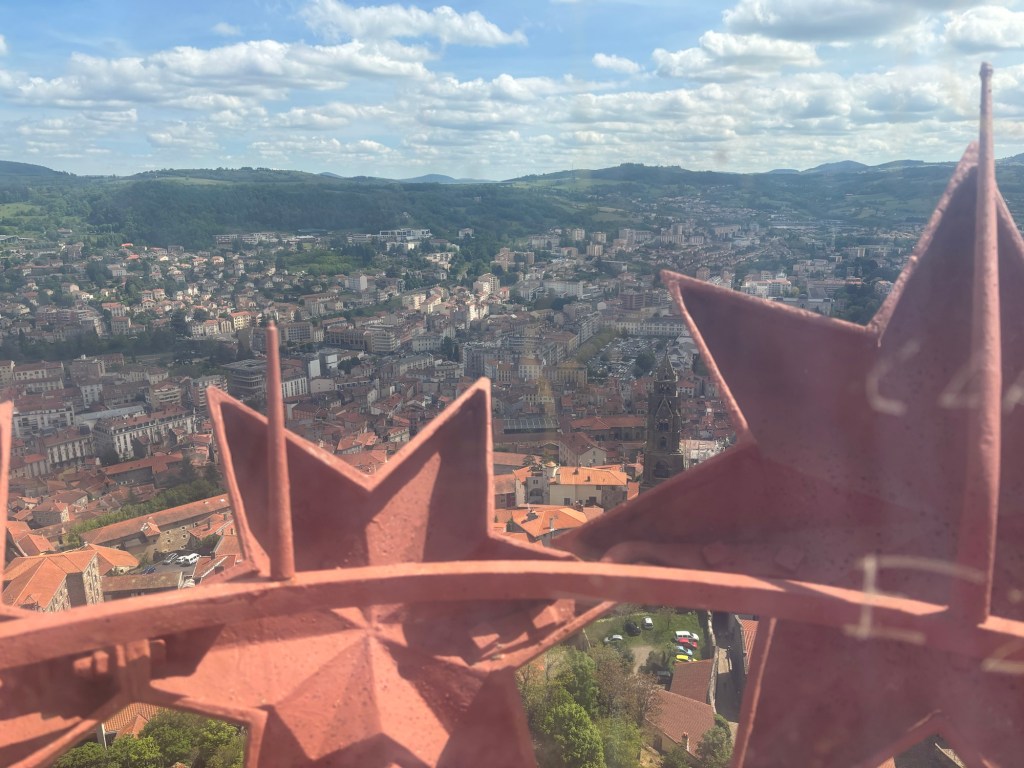
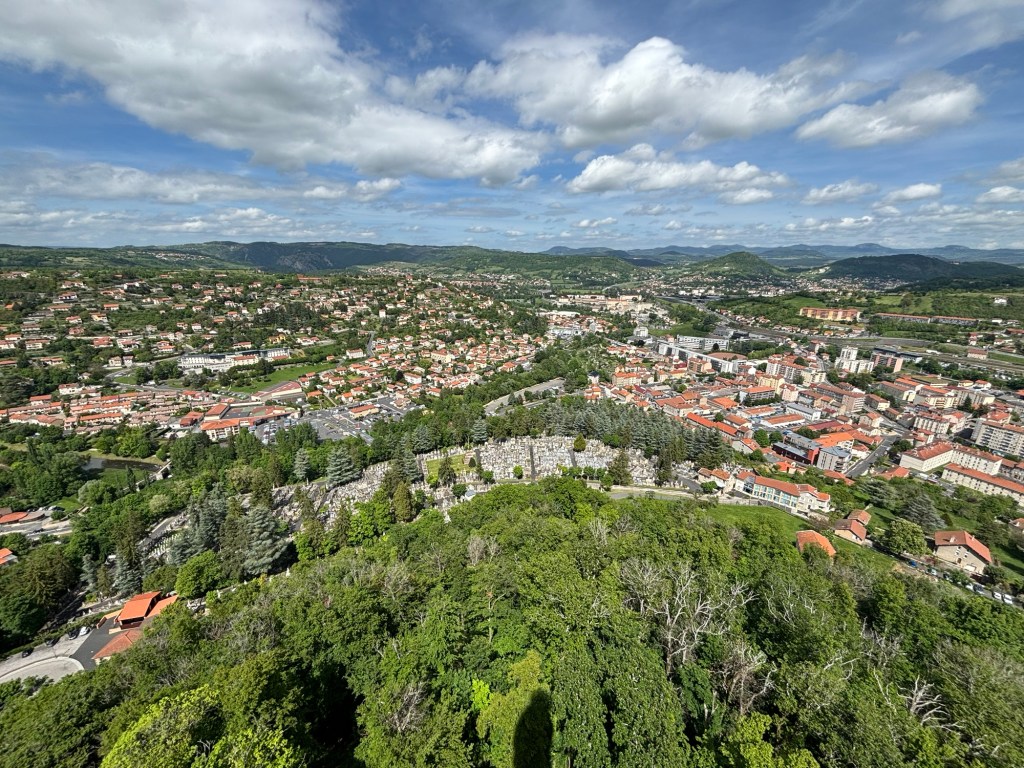
We stopped for a well-deserved ice cream before making our way to the Cathédrale Notre-Dame du Puy. The previous evening we had walked up to the front door of the Cathedral, but it was late and the gates were closed, so we entered by the back door, as the Cathedral is just below the statue.
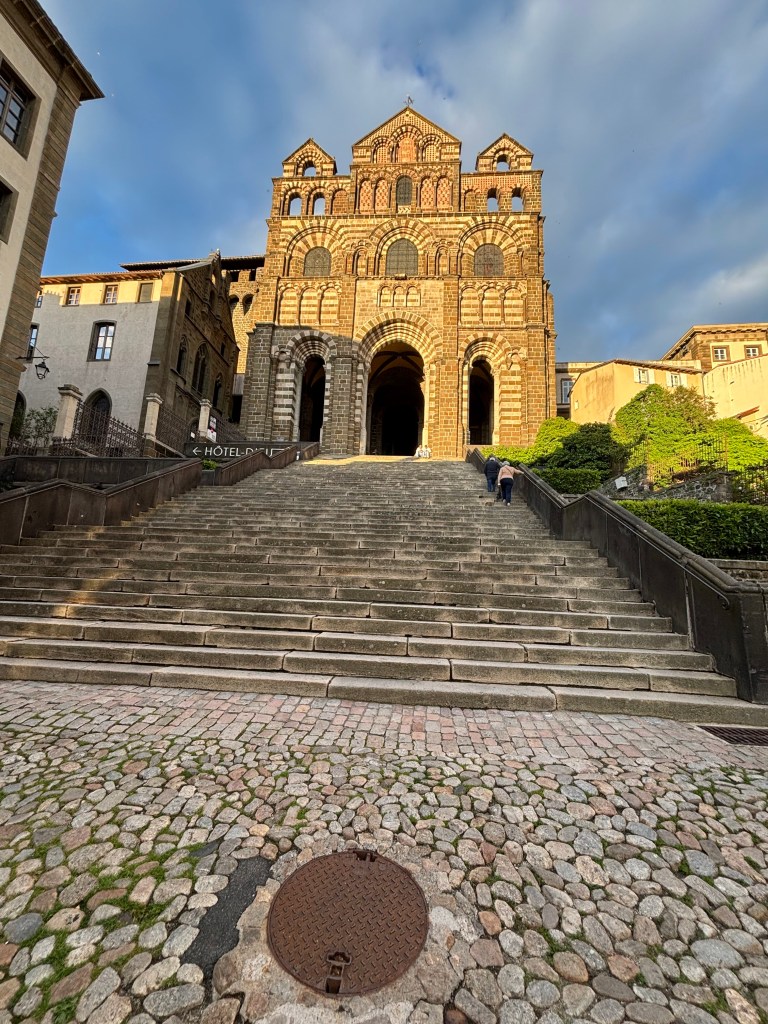
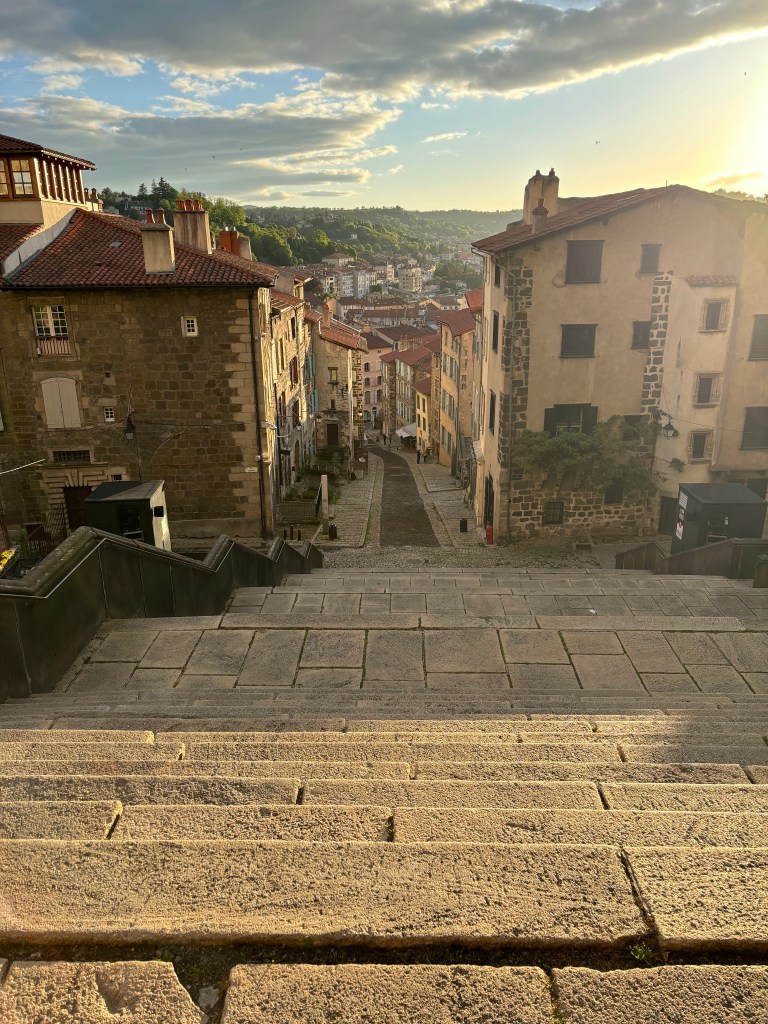
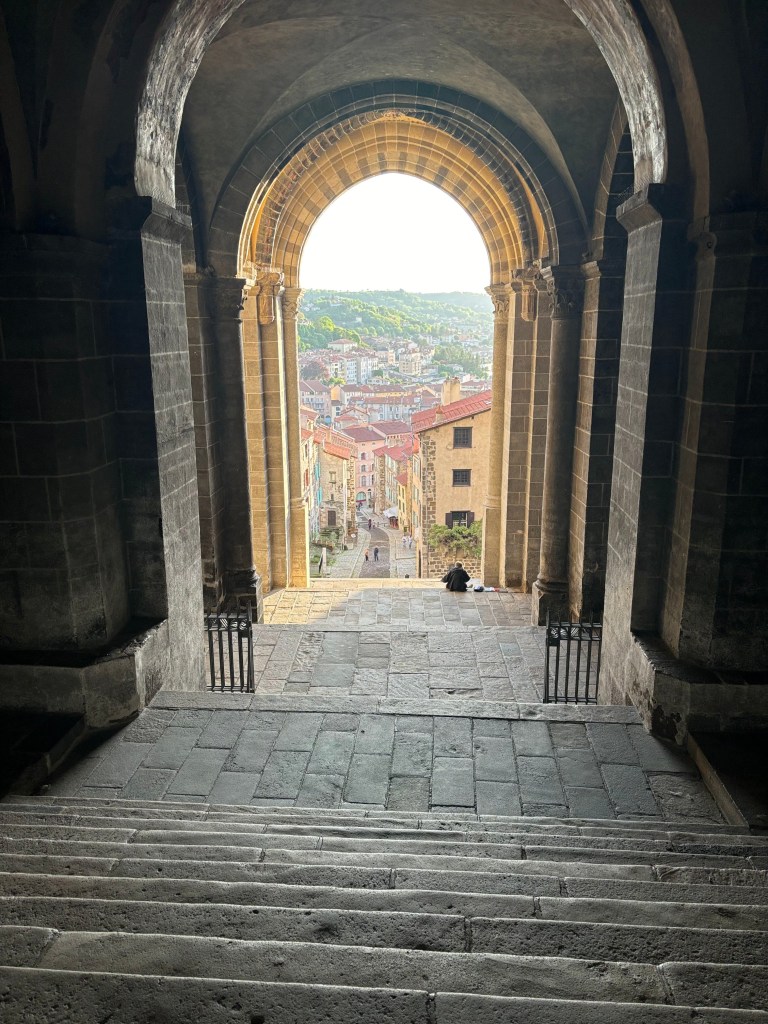
The interesting feature of the front entrance is that because the Cathedral is built on such a steep hill, when you enter, the steps come up through the floor. So when we came in via a back door, we thought that the entrance was in fact steps down to the crypt!
The next day we ventured further into the Auvergne region to Le Mont-Dore. The reason for visiting is in 1975, at the tender age of 11, Charlie went to Le Mont-Dore on a school ski trip and wanted to see if he remembered anything in the area. It is unlikely that the hotel they stayed at in La Bourboule, a little way down the valley was still standing, as when he stayed, they could see stars through their bedroom roof! He did remember that the hotel overlooked the river, the Dordogne, which runs through both towns.
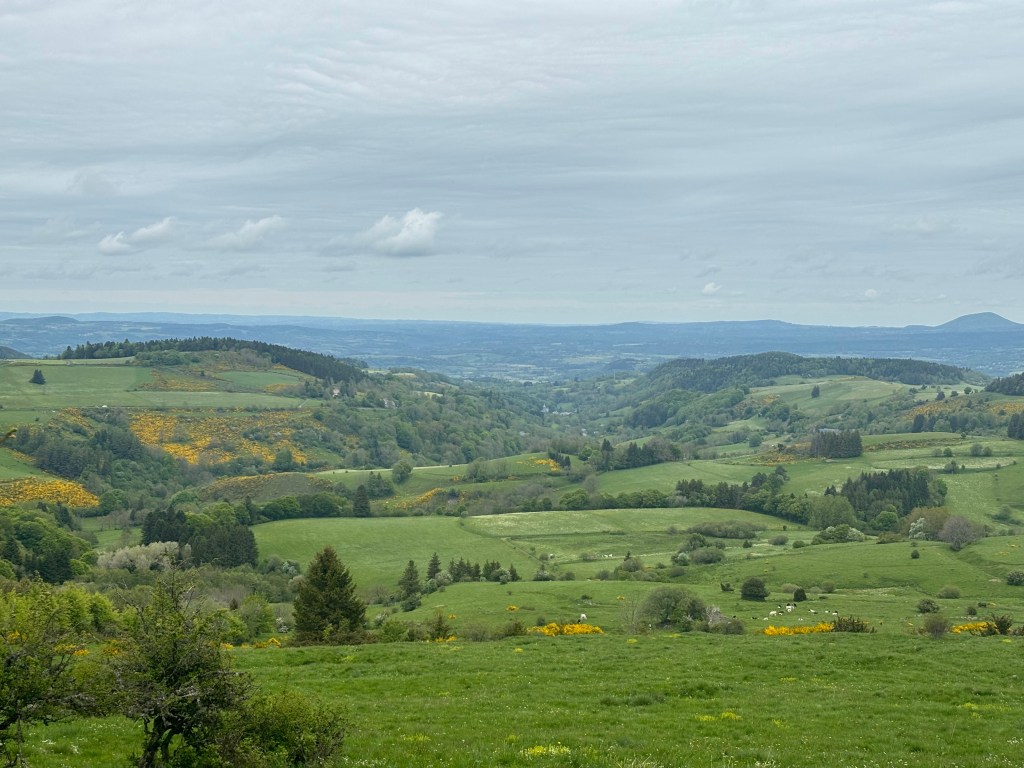
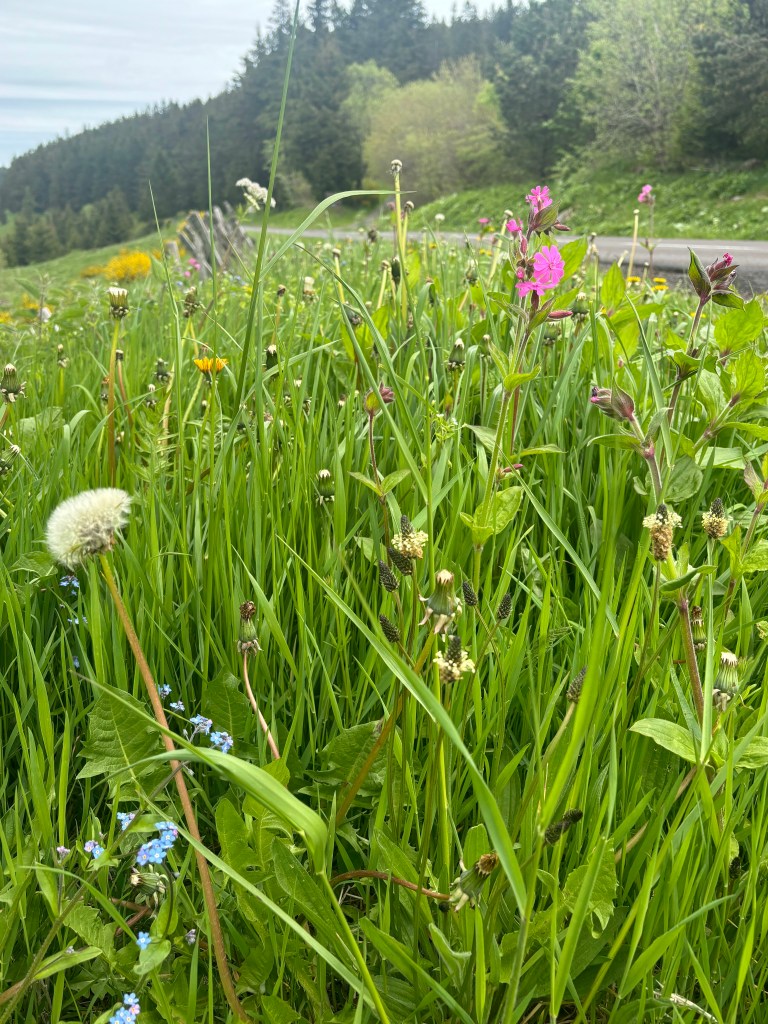
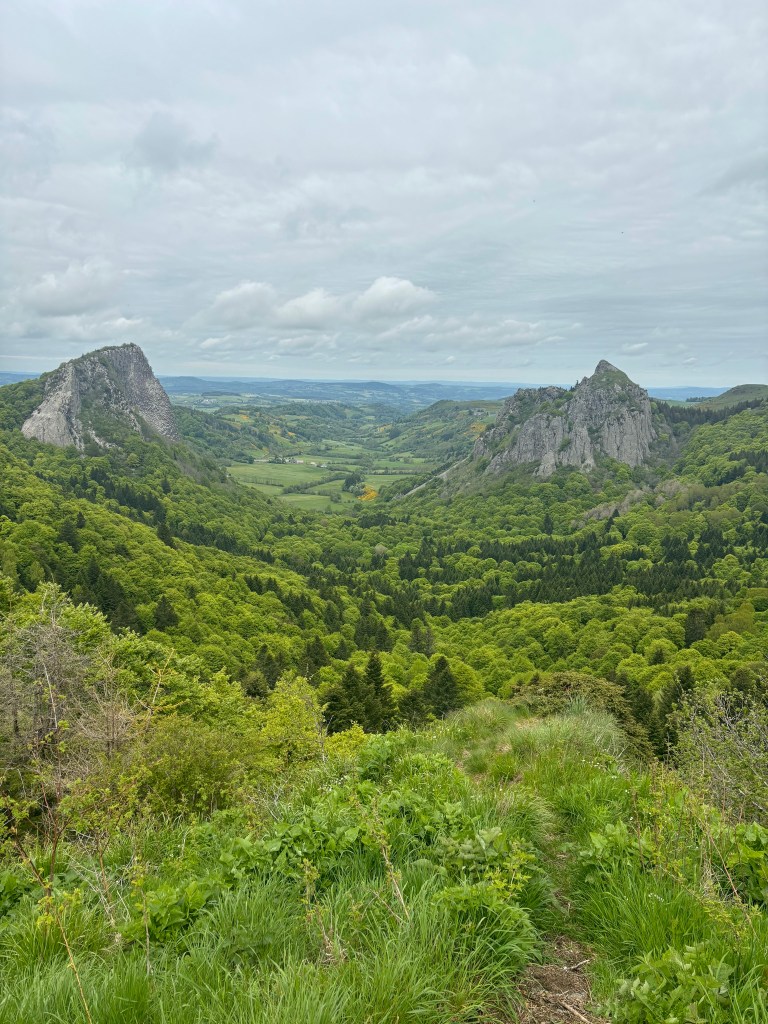
The weather worsened the higher we travelled and on arriving at our campsite in Le Mont Dore, we knew we had a short window to get the moped out and ride up the valley to the ski area. We were hoping a couple of lifts might be open for visitors to access the summit but no luck. We aren’t carrying any proper walking gear with us, which you would need as the conditions were not ideal, with rain sweeping in and low cloud obscuring visibility. We had a brief look and then made our way further down the valley to La Bourboule. Both towns have an air of faded grandeur and the population in the area has declined enormously since the 1970’s. La Barboule is a 19th C spa town with thermal baths, grand, faded houses and a rather run-down looking Casino. We had a walk around and found the area where Charlie’s hotel was probably located but it didn’t spark any particular memories.
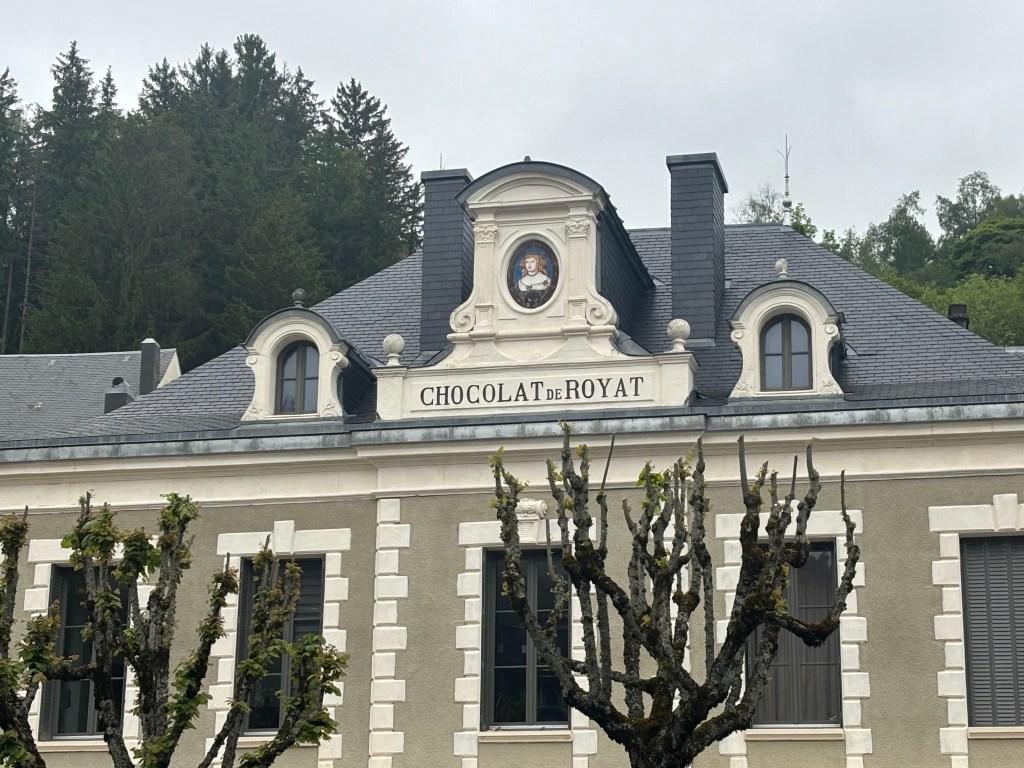
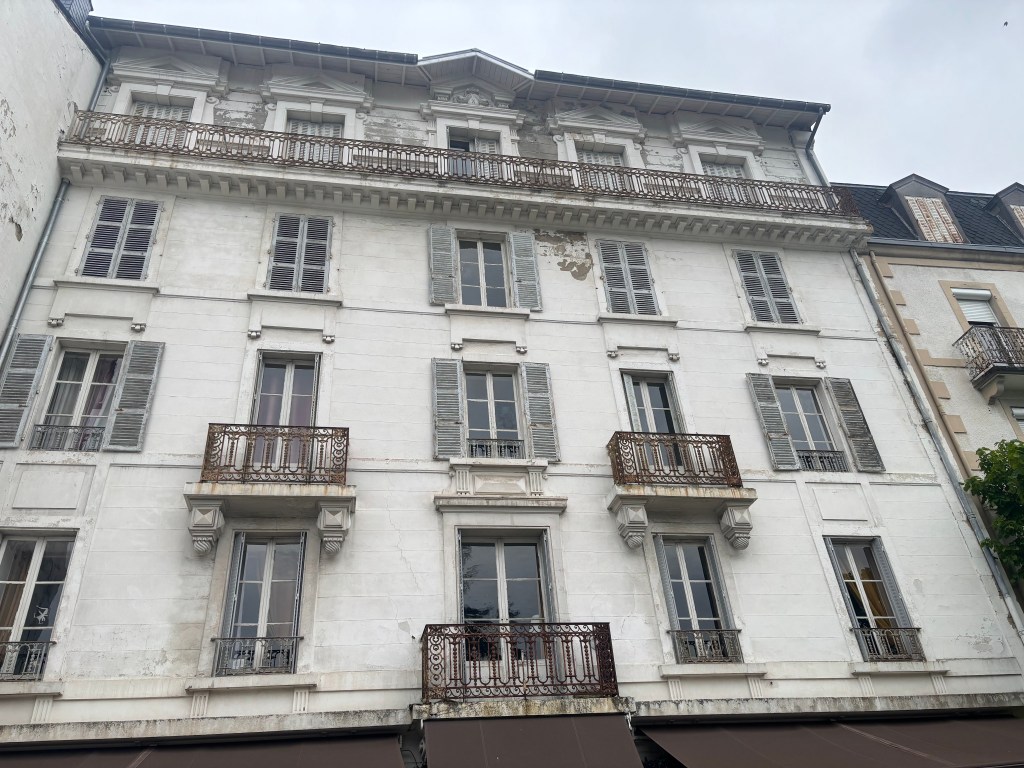
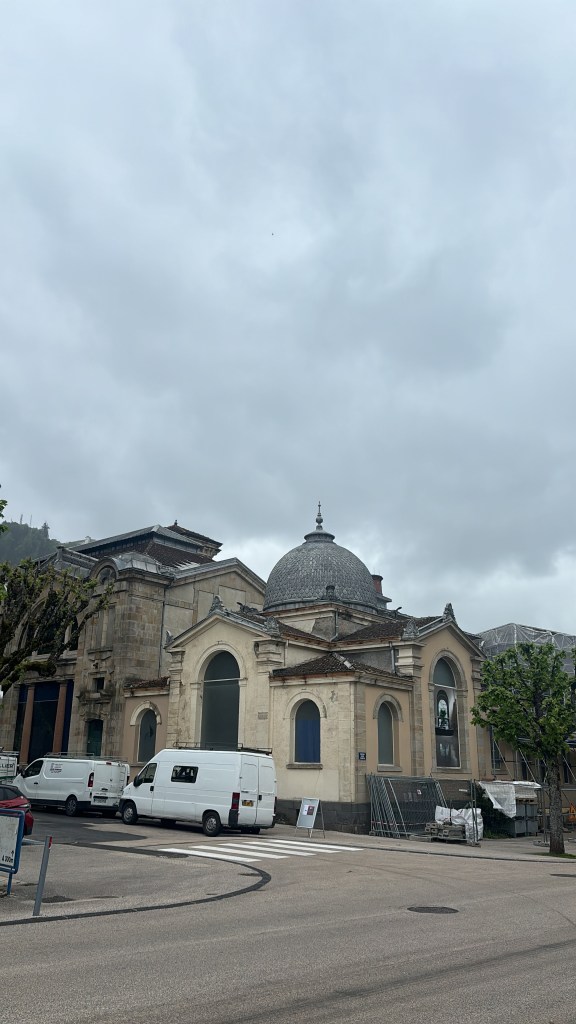
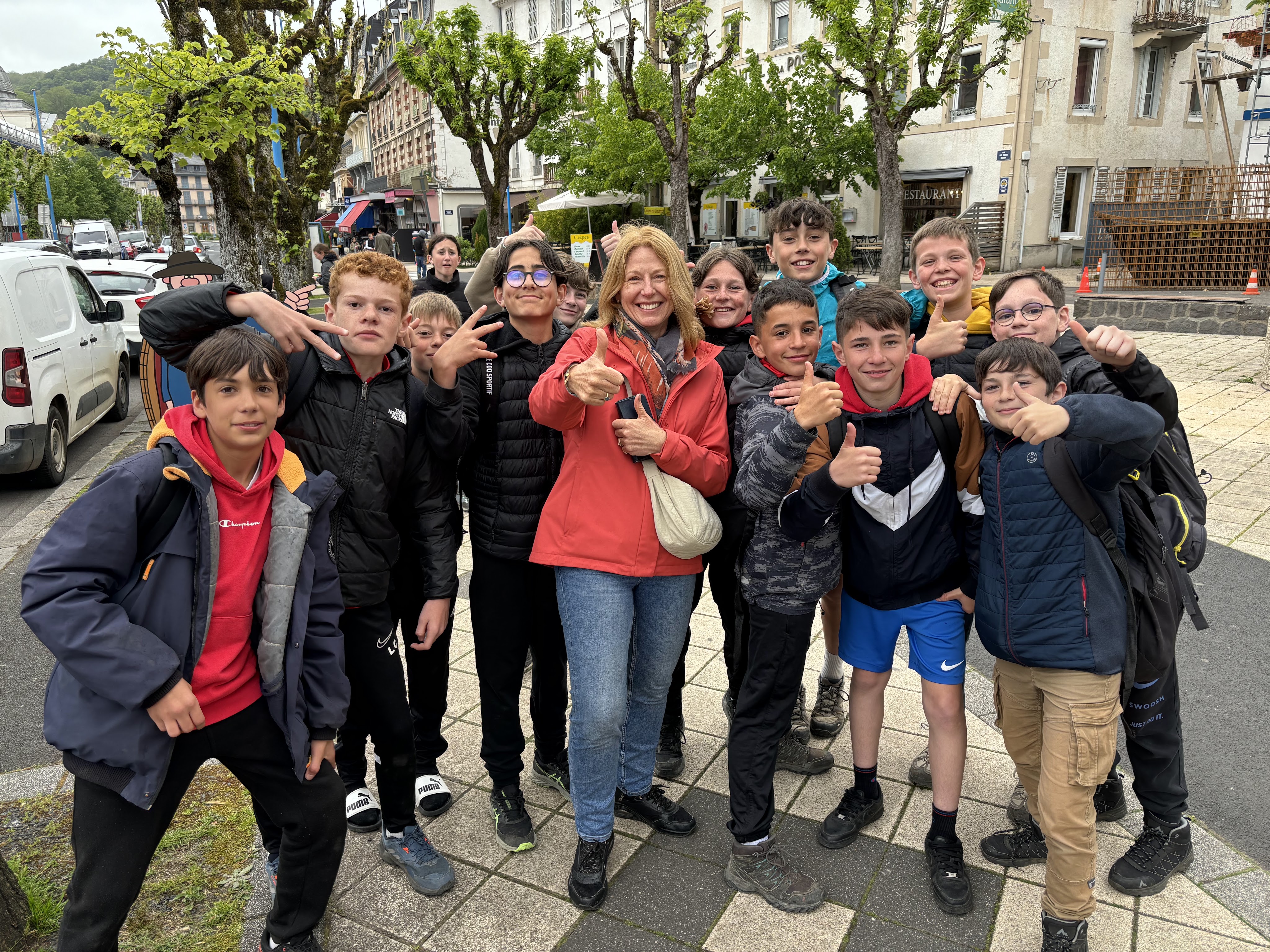
As we walked through the town, a group of young French school children on a outward bound holiday, stopped to chat to us, took photos and insisted that we took one of them!
After stopping at a supermarket, we arrived back at the motorhome, just as the heavens truly opened!
We woke to yet another wet day and started to move north, leaving behind the high, mountain meadows of the Auvergne region and began to head into the Loire. It has to be said the weather has been particularly repetitive, grey skies, heavy showers and the occasional burst of sunshine, usually about an hour or two before it sets.
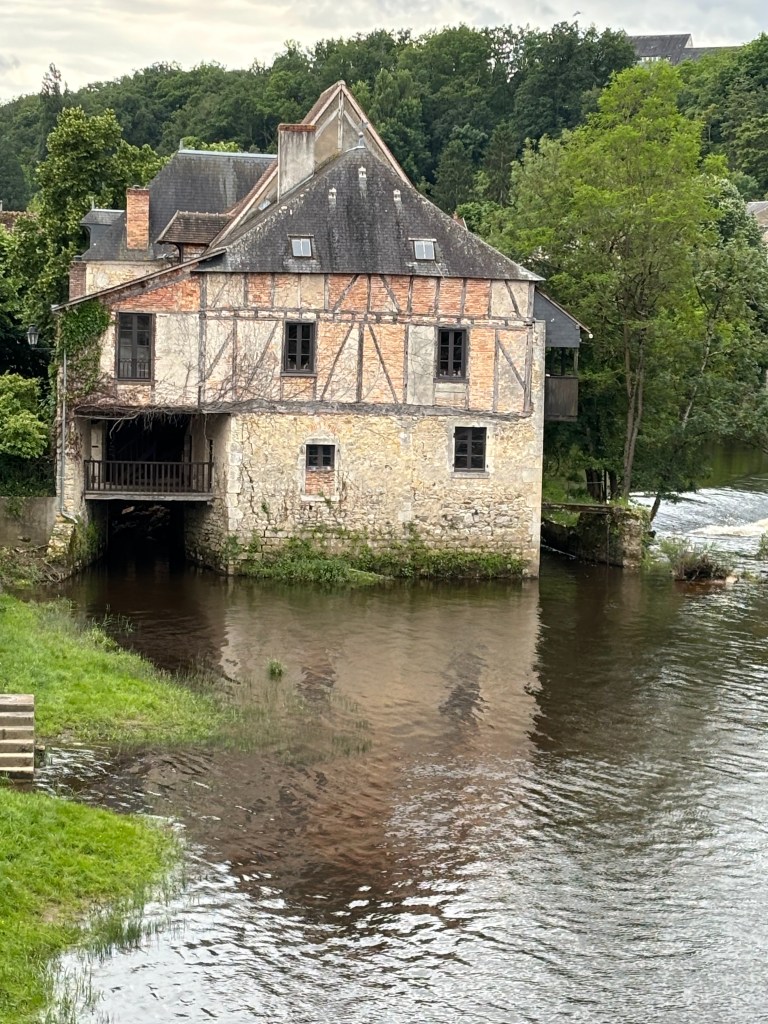
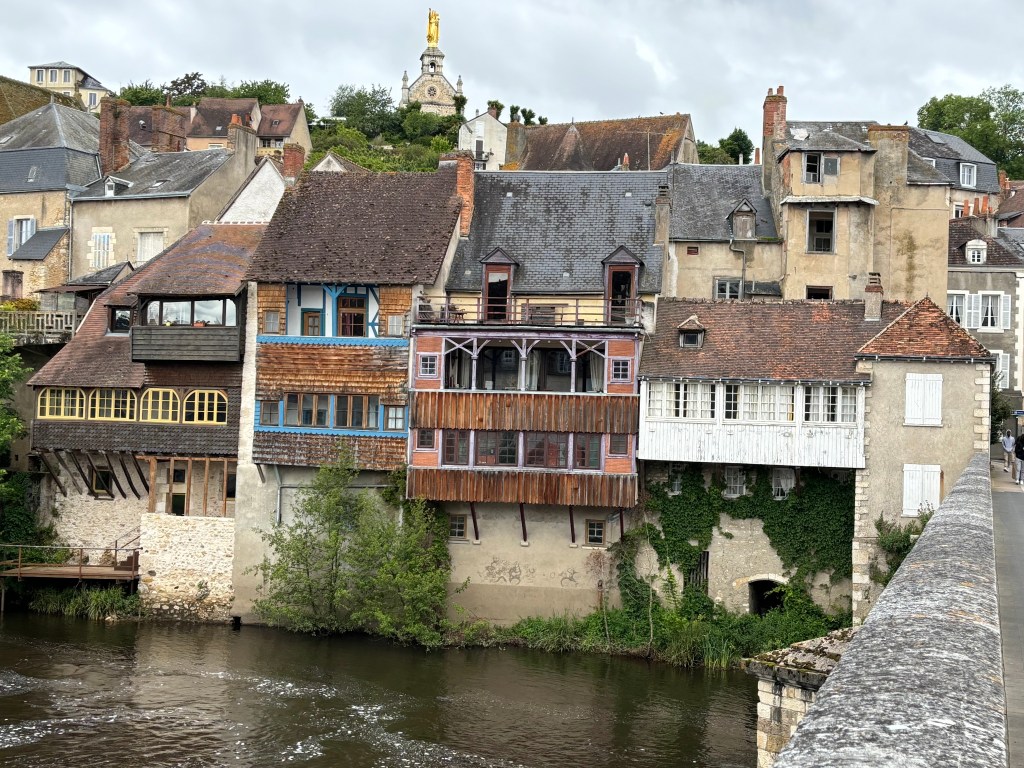
Our stop for the night is Argenton-sur-Creuse, a very ancient town with the remains of a Roman bridge, some very pretty houses and streets, but as dead as dead. We walked into town from the campsite at about 3 pm, purposely giving the French time to return from their 2-hour lunch break! It was deserted, a zombie town. This picture was taken at 3 ish on Thursday afternoon in the main shopping street!
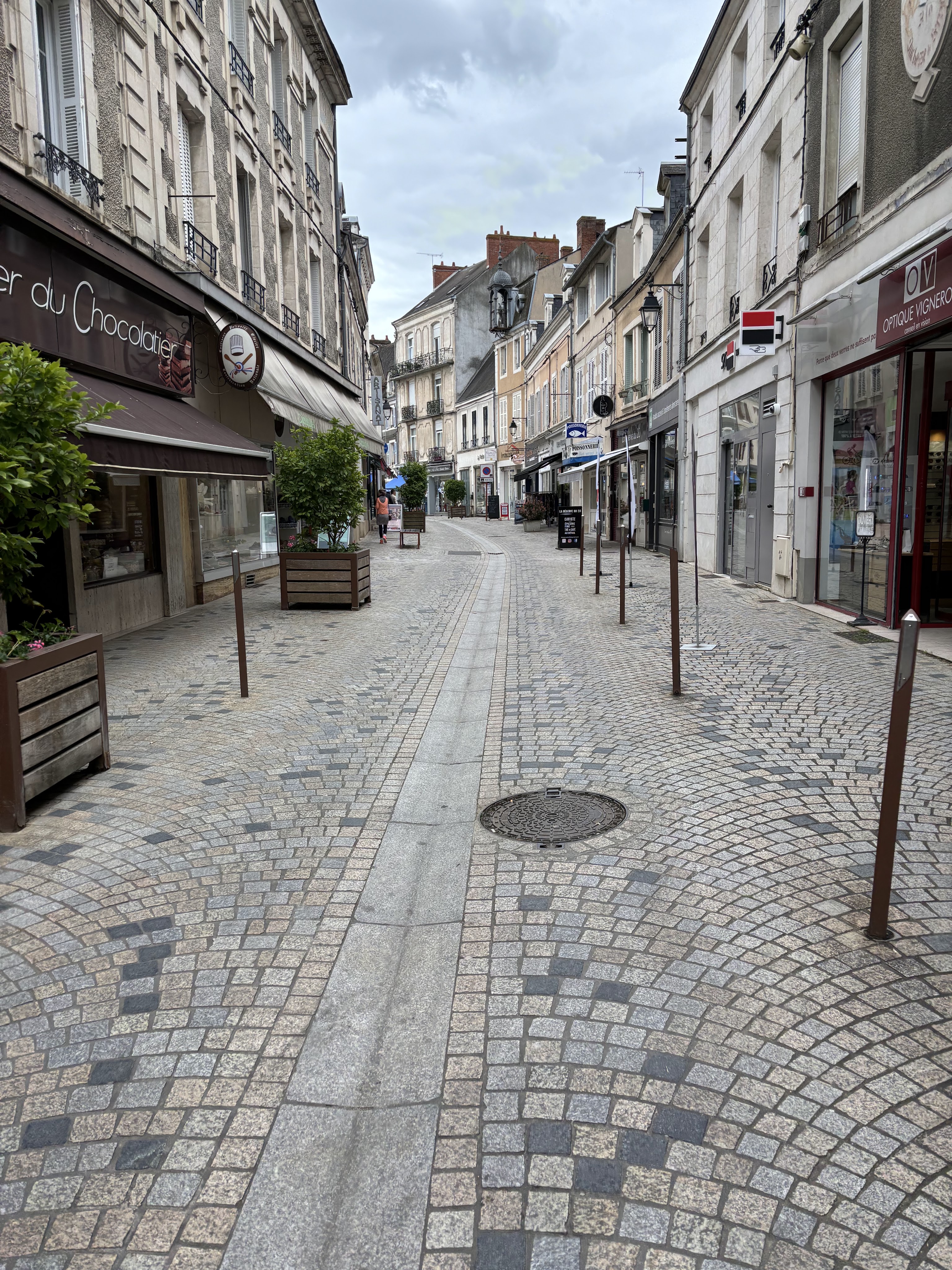
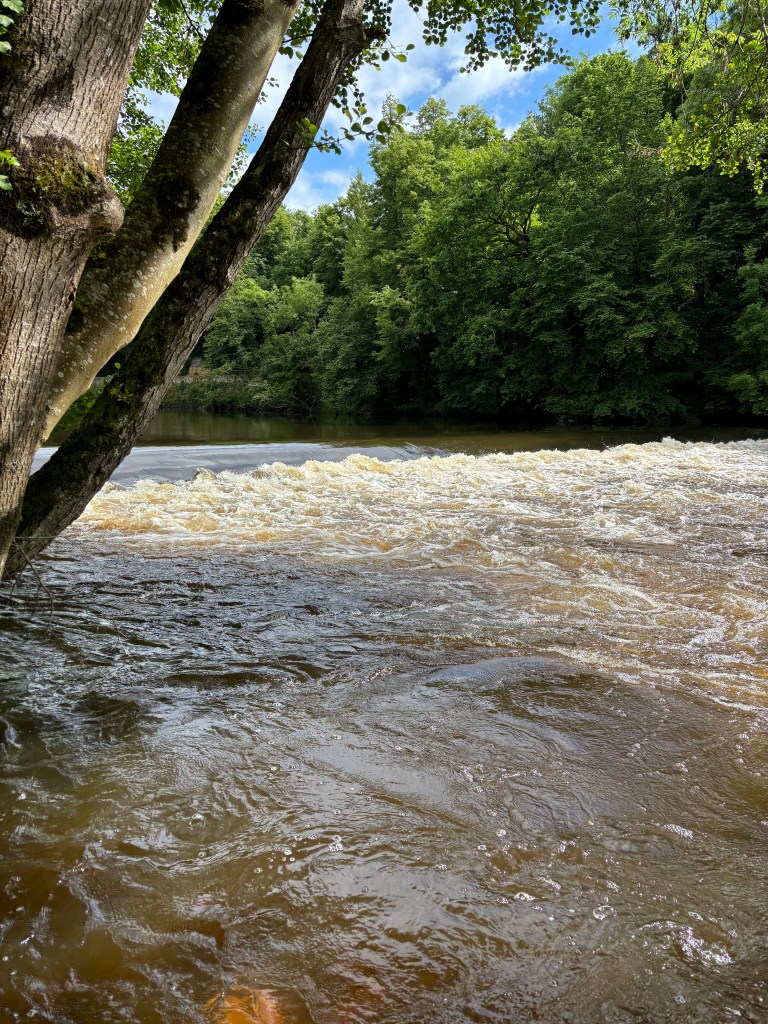
Half the shops weren’t open. There was a recruitment/job agency that was open for a spectacular 2 days a week and still shut between 12 and 2 pm for lunch! As the heavens opened again, we dived into the only cafe that was open and sat out the downpour and then returned for a BBQ of steak, potatoes and salad, in the golden hour, when another thunderstorm had passed and the sunshine appeared, which then set, just as you were enjoying its warmth! Our campsite is on the banks of the River Creuse, but many of the pitches are roped off, as the ground is so wet but we will be lulled to sleep by the sound of the water tumbling over the weir.
Tomorrow, deep into the Loire Valley, to Blois!
 RoundandAbout